


Lifestyle and prognosis after percutaneous coronary intervention: from revascularization to long-term management
 0
0 Abstract
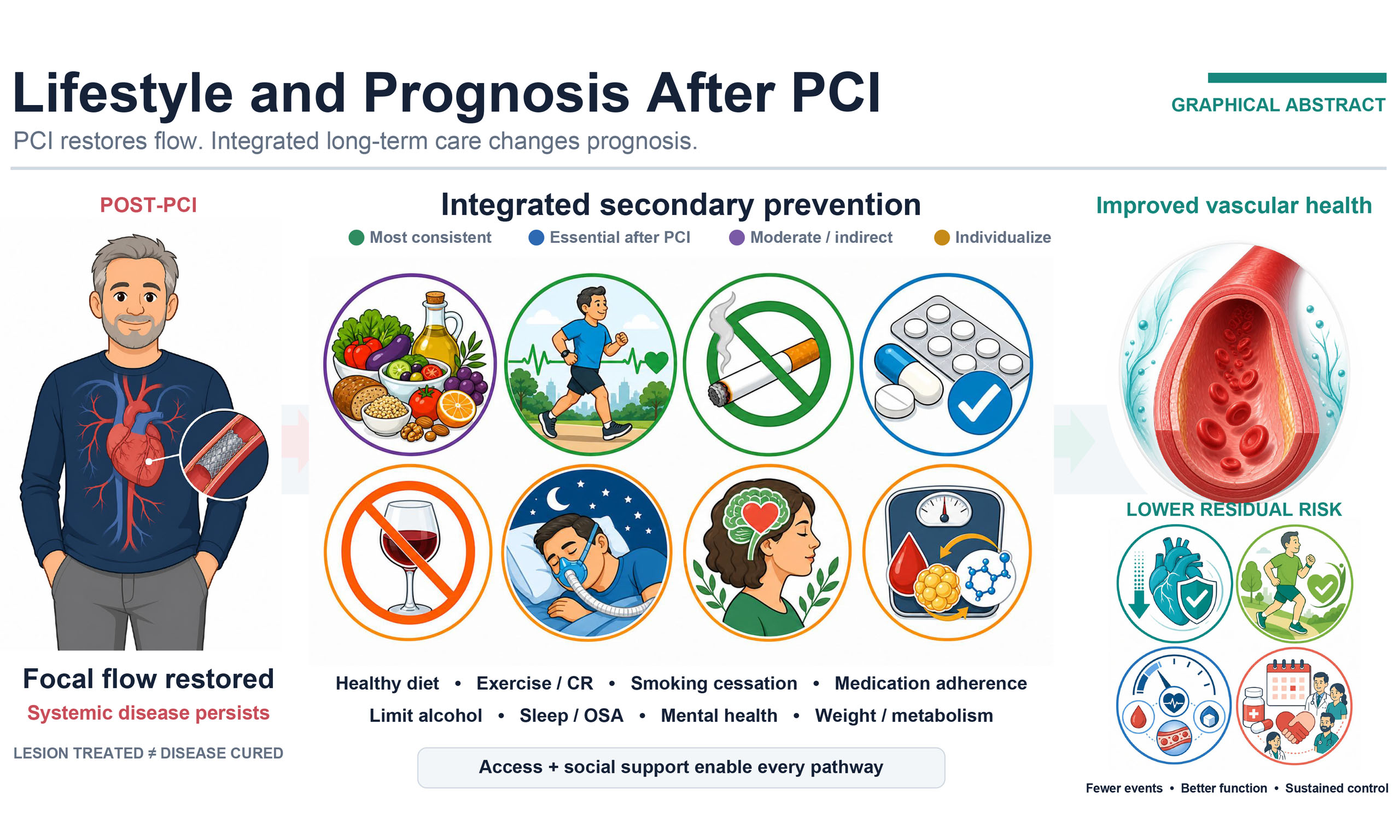
Percutaneous coronary intervention (PCI) restores coronary blood flow but does not stop systemic atherosclerosis or remove the risks associated with untreated lesions, residual ischemia, medication non-adherence, and adverse health behaviors. This narrative review examines how diet, exercise, smoking, alcohol, sleep, psychological health, body weight, social conditions, and medication adherence affect prognosis after PCI. We distinguish randomized from observational evidence and indicate whether findings come directly from PCI populations or are extrapolated from broader coronary disease. The most consistent evidence supports exercise-based cardiac rehabilitation and smoking cessation. A Mediterranean diet has randomized support in secondary prevention, but direct evidence after PCI is limited to a small, short-term biomarker trial. Evidence for alcohol, sleep, psychological interventions, weight management, and digital care is less certain and is often observational or indirect. Lifestyle care should be combined with appropriate lipid-lowering, antithrombotic, anti-inflammatory, and cardiometabolic treatment. We provide a practical follow-up framework from discharge onward and identify research gaps in intervention timing, comparative dietary strategies, cost-effectiveness, and delivery in settings with limited resources.
Keywords
INTRODUCTION
Over the past three decades, the global burden of ischemic heart disease (IHD), particularly coronary artery disease, has remained substantial despite major advances in prevention and treatment[1-3]. In 2021, approximately 254.3 million people were living with IHD worldwide; IHD accounted for 8.99 million deaths and 188.4 million disability-adjusted life-years[1-3]. Against this background, percutaneous coronary intervention (PCI) has expanded rapidly and continued to evolve technically[4]. PCI can restore epicardial blood flow without open surgery and is widely used for acute coronary syndromes (ACS) and selected chronic coronary syndromes[5-7]. More than 600,000 PCI procedures are performed annually in the United States, and procedural activity also remains high across Europe and Asia[8,9].
Despite these advances, patients who undergo PCI remain exposed to substantial residual cardiovascular risk. Contemporary trials and registries continue to report clinically meaningful rates of major adverse cardiovascular events despite new-generation drug-eluting stents and secondary-prevention treatment[10,11]. This persistent risk reflects progression of untreated plaques, incomplete revascularization, residual ischemia, microvascular dysfunction, inflammation, and lipid abnormalities[12,13]. Rehospitalization, repeat revascularization, prolonged pharmacotherapy, and long-term follow-up also impose a substantial economic burden[14-16]. Reducing recurrent events after PCI therefore remains an important clinical priority.
Lipid-lowering and antiplatelet therapy are essential after PCI, but they do not eliminate recurrent risk. Many patients remain vulnerable because medication adherence is suboptimal and atherosclerosis is a systemic disease. In a contemporary US cohort of adults with prior myocardial infarction, only 36.5% received the full combination of guideline-recommended secondary-prevention medicines for which they were eligible[17]. Population-level data after PCI also show incomplete achievement of guideline-recommended lipid levels[18]. Residual inflammatory and triglyceride risk may also persist despite well-controlled low-density lipoprotein cholesterol[19]. Lifestyle factors directly shape this remaining risk through their effects on inflammation, thrombogenicity, endothelial function, metabolic health, and long-term adherence. Accordingly, guidelines from the European Society of Cardiology (ESC) and the American College of Cardiology/American Heart Association (ACC/AHA) place lifestyle modification and cardiac rehabilitation at the center of secondary prevention[20-22]. However, those documents address broad chronic coronary disease populations and provide limited space for the post-PCI transition.
This review therefore addresses a focused question: which lifestyle recommendations are supported by direct post-PCI evidence, which rely on extrapolation from broader coronary populations? We examine diet, exercise-based cardiac rehabilitation, smoking, alcohol, medication adherence, sleep, psychological health, body weight and metabolic status, and social conditions.
METHODS AND APPROACH TO EVIDENCE APPRAISAL
We searched PubMed/MEDLINE and the reference lists of major cardiovascular guidelines and systematic reviews for English-language publications from January 2015 through July 2026. Search terms covered PCI, coronary revascularization, secondary prevention, residual risk, diet, cardiac rehabilitation, physical activity, smoking, alcohol, sleep, depression, obesity, metabolic syndrome, medication adherence, digital health, and social determinants. Earlier landmark studies were included when they remained important to current practice.
We gave priority to PCI-specific randomized trials, prospective cohorts, registries, and meta-analyses. When direct evidence was unavailable, we used studies of myocardial infarction or established coronary disease and stated that the evidence was indirect. Because this is a narrative review, we did not perform formal study selection, risk-of-bias scoring, or meta-analysis. The interpretive summaries in the table and figure are descriptive rather than formal Grading of Recommendations Assessment, Development and Evaluation (GRADE) assessment. They consider study design, risk of bias, consistency, directness to PCI, precision, effect size, and dose-response.
DIET AFTER PCI
Diet is a key determinant of long-term prognosis after PCI, as it shapes the persistent metabolic and inflammatory milieu following revascularization. Dietary patterns are more clinically relevant than isolated nutrients because foods are consumed in combinations that jointly influence low-density lipoprotein cholesterol (LDL-C), triglycerides, blood pressure, glycemia, body weight, inflammation, and satiety[23]. In CORonary Diet Intervention With Olive Oil and Cardiovascular PREVention (CORDIOPREV), 1,002 patients with established coronary heart disease were randomized to a Mediterranean or low-fat diet and followed for a median of 7 years; the Mediterranean strategy reduced the primary cardiovascular outcome [adjusted hazard ratio (HR), 0.72; 95% confidence interval (CI), 0.54-0.96][24]. This is the strongest head-to-head dietary evidence in secondary prevention, but it was a single-center, open-label study; 82.5% of participants were men, and the cohort was not restricted to recent PCI. The more direct trial enrolled only 120 patients recently treated with coronary stents and followed them for 3 months. Mediterranean and low-fat diets both improved fatty-acid profiles, with larger increases in n-3 fatty acids under the Mediterranean diet, but no clinical outcome was evaluated[25]. Thus, PCI-specific support is biologically coherent but based on a small surrogate-endpoint trial rather than demonstrated reductions in stent thrombosis or recurrent events.
Evidence for the Dietary Approaches to Stop Hypertension (DASH) diet, healthful plant-forward, Portfolio, and lower-carbohydrate patterns is more indirect. DASH lowers blood pressure in feeding trials, and healthful plant-based or Portfolio scores are associated with lower coronary risk, but the relevant studies largely involve general or primary-prevention populations[26-28]. Lower-carbohydrate studies use inconsistent thresholds, frequently lack information on replacement nutrients, and show that outcomes differ when carbohydrates are replaced by unsaturated plant fats rather than saturated fat or animal foods[29,30]. No adequately powered trial has compared Mediterranean, DASH, plant-forward, and high-quality lower-carbohydrate strategies after PCI. Accordingly, the Mediterranean pattern has the best overall secondary-prevention support, while selection among other patterns should be driven by hypertension, diabetes, hypertriglyceridemia, renal function, cultural acceptability, affordability, and food access rather than claims of equivalent post-PCI outcome benefit. Across patterns, reducing ultra-processed foods is a reasonable common target, although supporting outcome data remain observational and susceptible to residual socioeconomic and healthy-user confounding[31,32].
PHYSICAL ACTIVITY AND EXERCISE-BASED REHABILITATION AFTER PCI
Exercise-based cardiac rehabilitation (CR) has the broadest randomized evidence among the interventions reviewed. A meta-analysis of 85 randomized trials involving 23,430 patients with myocardial infarction, angina, coronary artery bypass grafting (CABG), or PCI and a median follow-up of 12 months found reductions in cardiovascular mortality [risk ratio (RR), 0.74; 95%CI, 0.64-0.86], myocardial infarction (RR, 0.82; 95%CI, 0.70-0.96), and hospitalization (RR, 0.77; 95%CI, 0.67-0.89), but not all-cause mortality (RR, 0.96; 95%CI, 0.89-1.04) or repeat PCI (RR, 0.84; 95%CI, 0.69-1.02)[33]. The pooled population was clinically heterogeneous; many trials predated contemporary PCI and pharmacotherapy, follow-up was usually short, and low-risk men in high-income settings were overrepresented. PCI-specific cohort studies generally favor CR, but referral, socioeconomic, functional, and healthy-adherer selection can exaggerate outcome differences. Evidence is therefore more consistent for CR in coronary disease overall than for PCI-specific hard outcomes.
Aerobic activity remains the foundation of CR, with progressive resistance training added in clinically stable patients[20,34]. Standard goals of at least 150 min of moderate aerobic activity weekly are useful long-term targets, but they should not be applied as a fixed immediate post-procedure prescription. Early planning should account for ACS versus elective PCI, radial versus femoral access, access-site complications, left ventricular function, residual or staged lesions, ischemic symptoms, frailty, and previous activity. Cardiopulmonary exercise testing is particularly valuable when symptoms, ventricular dysfunction, or residual ischemia make intensity uncertain[34,35]. Persistent angina during rehabilitation should prompt clinical reassessment rather than automatic exercise withdrawal or escalation.
Center-based and home-based CR show broadly similar effects on exercise capacity and health-related quality of life in selected stable patients, but comparative trials are not powered to establish equivalent effects on mortality or stent-related events, and digitally enabled programs may exclude people with limited connectivity or literacy[20,36,37]. Consequently, home or hybrid delivery should be presented as an access-enhancing alternative with risk-based supervision, not as proof that all delivery models are interchangeable. The important implementation target is automatic referral before discharge followed by documented initiation and completion, because an unacted referral does not deliver the trial-level benefit.
SMOKING AND SMOKING CESSATION AFTER PCI
Smoking is consistently associated with recurrent ischemic events and stent thrombosis after PCI, although evidence for clinical outcomes is observational because smoking status cannot be randomized[38-43]. Smokers in PCI cohorts are often younger and have fewer recorded comorbidities, which can create a misleading “smoker’s paradox” in incompletely adjusted analyses. Self-reported smoking, relapse, differences in treatment, and healthy-adherer bias further limit causal interpretation.
The biological link is well established: smoking promotes platelet activation and heightened thrombogenicity after PCI[38]. Smokers in PCI cohorts are often younger and have fewer recorded comorbidities, which can produce an apparent “smoker’s paradox” in incompletely adjusted analyses[39]. A Korean PCI cohort found a dose-response association between pack-years and major adverse cardiac and cerebrovascular events (MACCE)[42]. Because exposure and later smoking behavior were measured observationally, residual confounding remains possible. The findings support early cessation but do not justify a fixed threshold beyond which vascular injury is considered irreversible.
Smoking cessation is associated with lower long-term risk after PCI. In the Korean cohort, people who quit after smoking < 20 pack-years had risks close to persistent non-smokers, whereas heavier former smokers retained greater residual risk[42]. Another contemporary stenting cohort linked sustained cessation with lower 10-year all-cause and cardiovascular mortality[43]. These studies support quitting as early as possible, but the size of benefit should not be read as a randomized treatment effect because relapse and healthy-adherer bias cannot be excluded.
Effective cessation usually requires repeated behavioral support and, when appropriate, medication. In the 302-patient Evaluation of Varenicline (Champix) in Smoking Cessation for Patients Post-Acute Coronary Syndrome (EVITA) trial, varenicline increased 24-week abstinence from 32.5% to 47.3%, although the trial was not restricted to PCI and was not powered for cardiovascular events[44]. In a cohort of more than 27,000 hospitalized patients with coronary disease, early nicotine replacement therapy was not associated with higher short-term mortality or a longer hospital stay[45]. Mobile interventions may help with abstinence and adherence, but they have generally not been tested for their effects on post-PCI clinical events[46,47]. Treatment should begin during hospitalization when possible and should include early follow-up for relapse[48,49].
ALCOHOL CONSUMPTION AND CARDIOVASCULAR OUTCOMES AFTER PCI
Alcohol is the area in which observational and other evidence conflict most clearly. In a Korean insurance cohort of 77,409 PCI recipients followed for 4.0 years, both within-guideline and above-guideline drinkers had lower recorded MACCE risks than non-drinkers (adjusted HRs, 0.84 and 0.83)[50]. However, intake was self-reported during a health examination within 1 year after PCI. Patients who were too ill or disadvantaged to attend were less likely to be included, and the non-drinker group may have included former drinkers who stopped because of illness.
The apparent J-shaped association should not be interpreted as proof that alcohol is protective. People who continue to drink may differ from abstainers in health, diet, income, and treatment adherence. Sick-quitter bias, healthy-user bias, changes in intake, reverse causation, and residual confounding are difficult to remove. Mendelian-randomization studies found no protective threshold for blood pressure or coronary disease[51,52], and a meta-analysis designed to reduce former-drinker and study-quality bias found no significant mortality benefit with low-volume intake[53]. No randomized trial has assigned alcohol consumption after PCI.
Patients who do not drink should not be advised to start for cardiovascular protection. Those who drink should avoid binge drinking and should consider reduction or abstinence, especially when they have atrial fibrillation, hypertension, cardiomyopathy, liver disease, problematic use, or important bleeding risk[54-58]. Current evidence does not identify a dose that improves prognosis after PCI. Alcohol use should be reviewed again during follow-up because intake may change after discharge.
MEDICATION ADHERENCE AND GUIDELINEDIRECTED MEDICAL THERAPY AFTER PCI
The long-term benefit of PCI also depends on adherence to indicated guideline-directed medical therapy (GDMT), particularly antiplatelet and lipid-lowering treatment and, when clinically indicated, renin-angiotensin-system inhibitors, beta-blockers, and other cardioprotective medicines[20,59]. Medication adherence is not a lifestyle factor in the usual sense, but it is a modifiable behavior with immediate importance after stent implantation.
Adherence declines over time, even in clinical trials. In contemporary revascularization trials, use of an antiplatelet agent, beta-blocker, and statin fell from 67% at 1 year to 53% at 5 years. Fewer than 40% remained on all three drugs plus an angiotensin-converting enzyme inhibitor or angiotensin receptor blocker[60].
Common barriers include limited health literacy, the belief that PCI has cured the disease, polypharmacy, complex dosing, adverse effects, medication cost, limited insurance coverage, fragmented follow-up, and poor communication[59,60]. These barriers often cluster with social disadvantage. As a result, observational links between adherence and outcomes may partly reflect healthy-adherer bias or differences in contraindications.
In the functionally complete revascularization cohort, adherence to GDMT declined from 61.2% at 1 month to 35.3% at 3 years. After propensity-score matching, sustained GDMT was associated with lower risks of 3-year MACCE (adjusted HR, 0.52; 95%CI, 0.36-0.75) and ischemia-driven revascularization (adjusted HR, 0.14; 95%CI, 0.07-0.28)[61]. Because treatment was not randomized and adherence changed over time, these results cannot be interpreted as purely causal. Even so, uninterrupted antiplatelet therapy during stent healing has a clear procedure-specific role. Medication access, understanding of missed doses, and a plan for bleeding should therefore be confirmed before discharge.
The appropriate combination and duration of medication should be reviewed over time. Recent evidence questions routine long-term beta-blocker therapy after myocardial infarction when left ventricular ejection fraction is preserved and there is no other indication; benefit is clearer when systolic function is reduced or mildly reduced[59,62]. Adherence should therefore mean taking medicines that remain indicated, not continuing every discharge medicine indefinitely without review.
Practical measures include medication reconciliation, plain-language counseling, simpler regimens, review of affordability, pharmacist support, nurse-led follow-up, and digital reminders suited to the patient’s access and literacy[59,63]. Evidence for individual implementation strategies is heterogeneous, and nurse-led post-PCI studies remain few[63]. Programs should measure access, persistence, bleeding, adverse effects, and clinical outcomes rather than app use alone.
Medication adherence should be managed together with lifestyle care. The immediate priorities are uninterrupted antiplatelet treatment and reliable access to prescribed medicines. Later visits should address adverse effects, regimen complexity, cost, and whether each medicine remains indicated.
OTHER LIFESTYLE DETERMINANTS OF OUTCOME
Sleep duration, sleep quality and circadian disruption
Evidence on sleep after PCI is mainly prognostic rather than interventional. Sleep health includes duration, quality, regularity, timing, and sleep disorders[64,65]. Poor sleep may increase sympathetic activity, inflammation, insulin resistance, obesity, endothelial dysfunction, and blood-pressure variability. These mechanisms are plausible, but they do not show that improving sleep prevents post-PCI events.
Obstructive sleep apnea (OSA) is particularly relevant because intermittent hypoxia and oxidative stress may increase vascular and thrombotic risk. A meta-analysis of 9 PCI cohorts involving 2,755 participants found that OSA was associated with major adverse cardiovascular events (MACE) (RR, 1.96; 95%CI, 1.36-2.81; I2 = 54%)[66]. The studies used different definitions and outcomes, and obesity and other comorbidities may have confounded the association. The review did not show that OSA treatment reduces cardiovascular events after PCI.
Sleep assessment should focus on symptoms and established clinical indications. Screening is reasonable for patients with suggestive symptoms, obesity, resistant hypertension, or atrial fibrillation, followed by diagnostic testing and standard treatment. Randomized post-PCI trials are still needed to determine whether sleep interventions reduce clinical events.
Psychological health and social support
Depression is associated with poorer medication adherence, lower participation in CR, and worse outcomes after PCI. Meta-analyses of PCI cohorts reported higher risks of MACE (approximately RR, 2.10) and all-cause mortality (approximately RR, 1.76)[67]. However, studies differed in screening tools, timing, follow-up, and adjustment, and part of the association may reflect disease severity or social disadvantage.
Randomized evidence for reducing cardiovascular events is limited and is not specific to PCI. In a single-center trial of 300 patients with depression after ACS, 24 weeks of escitalopram was associated with fewer long-term MACE events than placebo (40.9% vs. 53.6%; HR, 0.69) over a median of 8.1 years[68]. This supports appropriate treatment of depression but does not show that every psychological intervention prevents cardiovascular events.
Validated screening can identify patients who may benefit from psychotherapy, collaborative care, social support, or medication chosen for psychiatric need and cardiovascular safety. Future PCI-specific trials should report mental health, CR participation, and cardiovascular outcomes separately.
Body weight and metabolic health
Body weight and metabolic syndrome are related to glucose control, blood pressure, lipids, inflammation, and physical function, but post-PCI outcome evidence is mainly observational[69,70]. Among patients with ACS undergoing PCI, metabolic syndrome was associated with a 22% higher risk of MACCE and a 43% higher risk of recurrent myocardial infarction, although definitions and adjustment methods varied[69].
The reported “obesity paradox” after PCI may be explained partly by reverse causation, smoking, frailty, illness-related weight loss, treatment selection, and the inability of body mass index to separate fat from lean mass[70]. Management should focus on excess adiposity, fitness, diet quality, and metabolic risk while avoiding unintended weight loss and loss of muscle.
The Semaglutide Effects on Cardiovascular Outcomes in People with Overweight or Obesity (SELECT) trial provides broader secondary-prevention evidence. Semaglutide reduced MACE in patients with obesity and established cardiovascular disease without diabetes (HR, 0.80; 95%CI, 0.72-0.90)[71]. However, SELECT was not limited to post-PCI patients. Cost, long-term continuation, gastrointestinal adverse effects, and integration with lifestyle care all affect its use in practice.
Social and structural determinants of sustainable lifestyle change
Lifestyle change after PCI is strongly influenced by the conditions in which patients live. Low income, limited health literacy, medication costs, work and caregiving demands, transport, distance, language, cultural preferences, digital access, and the availability of CR can all affect participation. In a 2026 English cohort of 421,281 patients referred to CR after myocardial infarction, PCI, or CABG, 62.7% had undergone PCI. Only 53% started CR, and 77% of those who started completed it. Compared with the most affluent areas, residence in the most deprived areas was associated with higher odds of non-completion among White European patients [odds ratio (OR), 1.63; 95%CI, 1.57-1.68] and South Asian patients (OR, 1.41; 95%CI, 1.27-1.57). South Asian participants were more likely to start but less likely to complete CR than White European participants (adjusted OR for completion, 0.78; 95%CI, 0.75-0.82)[72].
Social needs should be assessed before discharge and reviewed again during follow-up, rather than being labeled as poor motivation. Practical responses include affordable and simpler treatment, automatic CR referral, flexible scheduling, transport or social-work support, culturally and linguistically appropriate education, and home-based or hybrid CR when attendance is difficult. Telephone and non-digital options should remain available so that digital care does not widen existing inequalities[22,72-74].
A comparative appraisal of the representative evidence, its applicability to post-PCI care, and its limitations is presented in Table 1[75,76].
Comparative appraisal of evidence across lifestyle, adherence, and access domains after PCI
| Domain | Representative evidence | Key findings | Applicability and limitations for post-PCI care | Interpretation and practical message |
| Diet | CORDIOPREV RCT: 1,002 patients with stable coronary disease, median 7 years[24]; recent-stenting RCT: 120 patients, 3 months[25] | Mediterranean vs low-fat diet: adjusted HR 0.72 (95%CI, 0.54-0.96)[24]; the stenting trial assessed fatty-acid biomarkers, not clinical events[25] | CORDIOPREV was not limited to PCI; the PCI trial was small, short, open-label, and based on surrogate outcomes | The Mediterranean pattern has the strongest secondary-prevention support, but direct post-PCI outcome evidence remains limited |
| Exercise/CR | Meta-analysis of 85 RCTs involving 23,430 patients with mixed coronary disease, median 12 months[33] | CV mortality RR 0.74; MI RR 0.82; hospitalization RR 0.77; no significant reduction in all-cause mortality or repeat PCI[33] | Mixed diagnoses and treatment eras; short follow-up; low-risk men and high-income settings overrepresented | Evidence is most consistent for coronary disease overall; direct PCI-specific evidence for clinical outcomes remains less complete |
| Smoking cessation | PCI cohort and long-term stenting studies of smoking exposure and cessation[42,43]; EVITA RCT in 302 patients with ACS[44] | Cessation was associated with lower long-term risk[42,43]; varenicline increased 24-week abstinence from 32.5% to 47.3%[44] | Clinical outcomes were observational; smoking and relapse were often self-reported; EVITA was not PCI-specific or powered for events | Begin cessation support early and combine repeated follow-up with medication when appropriate; outcome effect estimates remain largely observational |
| Alcohol | PCI cohort: 77,409 patients, 4.0-year follow-up[50]; Mendelian-randomization studies[51,52]; mortality meta-analysis[53] | The PCI cohort suggested a J-shaped association (adjusted HRs 0.84 and 0.83 vs. non-drinkers)[50]; genetic and bias-adjusted analyses did not confirm protection[51-53] | No post-PCI RCT; self-report, sick-quitter bias, healthy-user bias, selection, reverse causation, and residual confounding | Evidence is uncertain; do not recommend starting alcohol for protection, avoid binge drinking, and individualize reduction or abstinence |
| Medication adherence | Revascularization trial adherence analysis[60]; post-revascularization cohort[61]; guideline and implementation sources[59,63] | After propensity-score matching, sustained GDMT was associated with lower 3-year MACCE (adjusted HR, 0.52; 95%CI, 0.36-0.75)[61] | Adherence was not randomized and changed over time; healthy-adherer and contraindication bias remain possible | Confirm access and understanding, protect early antiplatelet adherence, and review indications over time; outcome estimates are observational |
| Sleep/OSA | Meta-analysis of 9 PCI cohorts involving 2,755 patients[66]; broader sleep-health statements and reviews[64,65] | OSA was associated with MACE: RR 1.96 (95%CI, 1.36-2.81; I2 = 54%)[66]; benefit of treatment after PCI is unproven | Observational prognosis; different definitions and outcomes; confounding by obesity and comorbidity | Screen and treat for established clinical indications, while explaining that event reduction after PCI has not been demonstrated |
| Mental health | Meta-analyses of PCI cohorts[67,75]; RCT in 300 patients with depression after ACS, median 8.1 years[68] | Depression was associated with MACE RR approximately 2.10 and mortality RR approximately 1.76[67]; escitalopram HR 0.69[68] | Screening and follow-up varied; observational associations may be confounded; the RCT was single-center and not PCI-specific | Identify and treat depression for clinical need; evidence that psychological treatment reduces post-PCI events remains indirect |
| Weight/metabolism | Post-PCI metabolic-syndrome cohort[69]; obesity-paradox appraisal[70]; SELECT RCT in broader cardiovascular disease[71] | Metabolic syndrome was associated with 22% higher MACCE and 43% higher recurrent MI risk[69]; semaglutide HR 0.80 in SELECT[71] | No post-PCI lifestyle weight-loss outcome trial; SELECT was not PCI-specific; BMI-based obesity paradox is prone to bias | Focus on adiposity, fitness, diet quality, and metabolic risk rather than BMI alone; direct post-PCI intervention evidence remains limited |
| Access/social factors | National CR cohort of 421,281 referred patients[72]; global CR implementation evidence[73,76]; social-determinant review[74] | Only 53% started CR and 77% of starters completed it; completion differed by deprivation and ethnicity[72] | Observational implementation evidence; health systems, culture, and available services differ across settings | Assess barriers and provide flexible, affordable, culturally appropriate, and non-digital options; implementation evidence is observational |
INTEGRATED SECONDARY PREVENTION AFTER PCI
Residual risk after PCI has several components. Lipid-related risk includes LDL-C, lipoprotein(a), and plaque progression. Inflammatory risk may persist despite lipid control. Thrombotic risk depends on the stent, lesion, and patient. Ischemic risk includes incomplete revascularization, untreated epicardial disease, vasomotor abnormalities, and coronary microvascular dysfunction. Cardiometabolic risk includes obesity, diabetes, hypertension, and kidney disease[12,13,77-81]. Lifestyle care can improve several of these areas, but it cannot replace targeted medication or investigation of recurrent symptoms.
Modern secondary prevention combines lifestyle and adherence support with treatment directed at the patient’s remaining risks. In the Further Cardiovascular Outcomes Research With PCSK9 Inhibition in Subjects With Elevated Risk (FOURIER) trial, adding evolocumab to statin therapy reduced cardiovascular events (HR, 0.85; 95%CI, 0.79-0.92)[82]. Low-dose colchicine reduced events after myocardial infarction in the Colchicine Cardiovascular Outcomes Trial (COLCOT) and in chronic coronary disease in LoDoCo2 (HRs, 0.77 and 0.69)[83,84]. Semaglutide reduced MACE in SELECT (HR, 0.80)[71]. These trials support treatment of lipid, inflammatory, and cardiometabolic risk, but none tested a complete post-PCI lifestyle program.
Antithrombotic treatment is especially important after PCI. Dual antiplatelet therapy (DAPT) intensity and duration should balance ischemic and bleeding risks, particularly after complex PCI. Depending on the patient, options may include prolonged DAPT, P2Y12-inhibitor monotherapy, or dual-pathway inhibition[59,79,85]. Lifestyle counseling should reinforce adherence and bleeding surveillance but should not replace an individualized antithrombotic plan.
Delivery also matters. Automatic CR referral, early follow-up, multidisciplinary care, and home-based or hybrid programs may improve access. However, CR capacity remains limited in many countries, and digital programs may widen inequalities unless telephone and other low-technology options are retained[72-74,76,86]. The proposed phase-specific lifestyle and secondary-prevention framework is summarized in Table 2[87]. The relationships among residual-risk pathways, evidence across domains, and the phased management approach are summarized in Figure 1.
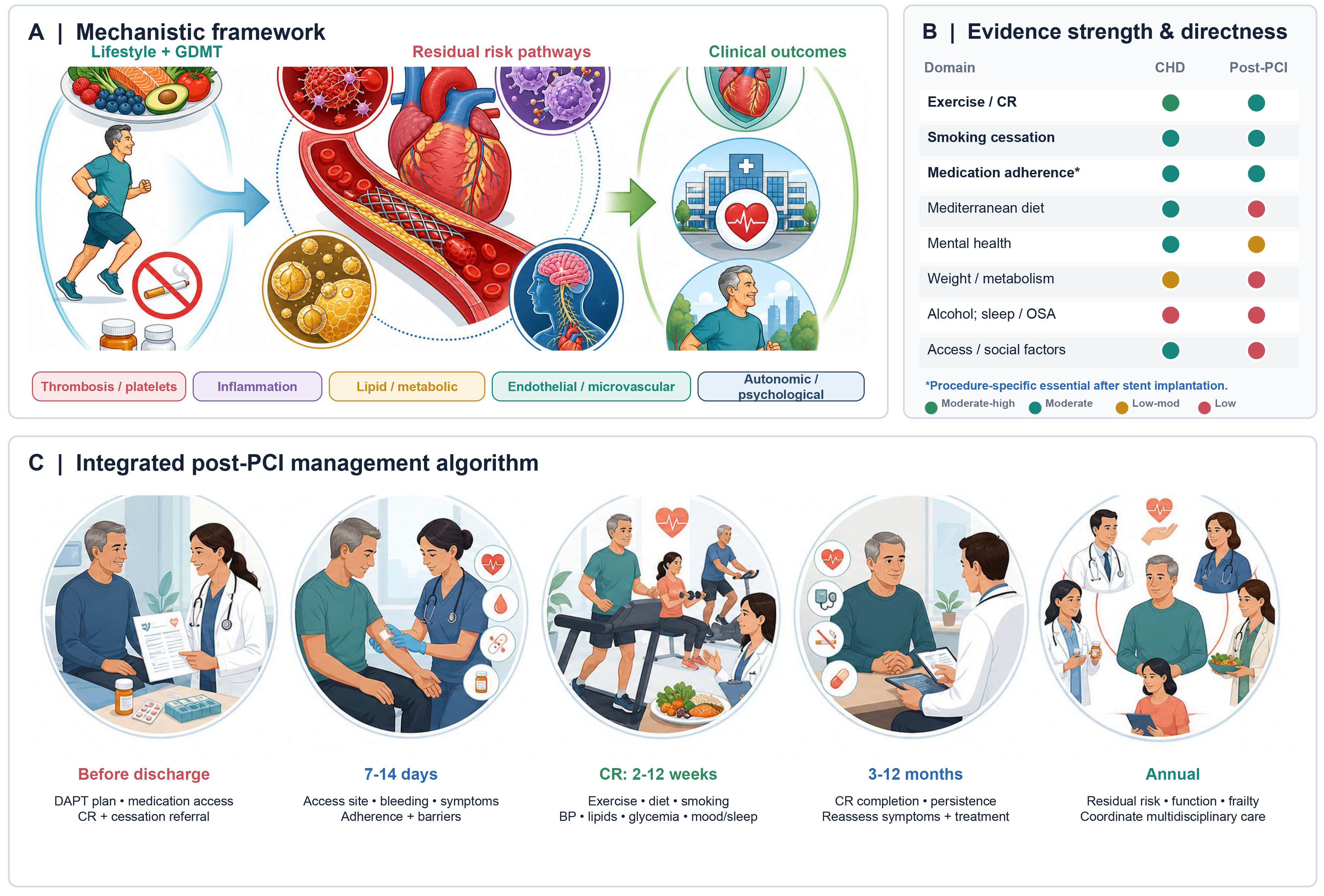
Figure 1. Lifestyle pathways, evidence strength, and integrated post-PCI care. (A) Mechanistic framework linking lifestyle interventions and guideline-directed medical therapy to thrombotic, inflammatory, lipid/metabolic, endothelial/microvascular, and autonomic/psychological residual-risk pathways and subsequent clinical outcomes; (B) Descriptive comparison of the strength and directness of evidence across lifestyle-related domains in broader coronary heart disease and post-PCI populations. These comparisons reflect study design, consistency, directness, precision, and risk of bias and should not be interpreted as a formal GRADE assessment; (C) Integrated management algorithm outlining key priorities before discharge, at 7-14 days, during cardiac rehabilitation, at 3-12 months, and during annual follow-up. Illustrative elements in Figure 1 were initially generated using ChatGPT Images 2.0, powered by GPT Image 2 (OpenAI, San Francisco, CA, USA), and were subsequently reviewed, edited, and assembled by the authors using Microsoft PowerPoint 2024 and Adobe Illustrator 2026. BP: Blood pressure; CHD: coronary heart disease; CR: cardiac rehabilitation; DAPT: dual antiplatelet therapy; GDMT: guideline-directed medical therapy; OSA: obstructive sleep apnea; PCI: percutaneous coronary intervention; GRADE: grading of recommendations assessment, development and evaluation.
Proposed guideline-informed lifestyle and secondary-prevention framework after PCI
| Follow-up stage | What to assess | Main actions |
| Before discharge | ACS or elective PCI; access site; ventricular function; residual or staged disease; bleeding risk; medication access; smoking, mood, sleep, and social barriers | Explain that PCI treats a lesion but does not cure atherosclerosis. Reconcile medicines; provide written DAPT, missed-dose, and bleeding instructions; refer to CR and smoking-cessation support[20-22,59,79,87] |
| Early (7-14 days) | DAPT access and adherence; bleeding; access-site recovery; angina or dyspnea; smoking relapse; transport, cost, and digital barriers | Address cost and adverse effects; start activity that is safe for the access site and clinical status; assess recurrent symptoms; confirm a feasible CR plan[20,22,59,79,87] |
| CR phase (2-12 weeks) | CR participation and exercise capacity; diet; smoking; blood pressure, lipids, glycemia, weight and waist; mood and sleep symptoms | Individualize aerobic and resistance exercise; agree on realistic dietary goals; reinforce cessation; treat cardiometabolic and psychological problems when indicated[20-23,33,34,64-68,75] |
| 3-12 months | CR completion; return to smoking or harmful drinking; medication persistence; persistent symptoms; ischemic and bleeding risk; social needs | Review goals and medicine indications; reassess the cause of angina or dyspnea and the antithrombotic plan; add multidisciplinary, home-based, or hybrid support when needed[20,22,59,72-74,79,85,87] |
| Long term (annual) | All lifestyle domains; medication persistence; lipids and other residual risks; physical function and frailty; progression of untreated disease; structural barriers | Coordinate cardiology, primary care, CR, pharmacy, nutrition, and mental-health care. Use digital monitoring only when an abnormal result leads to a defined clinical response[20-22,59,72-74,76,78-80,82-84,86,87] |
PERSPECTIVES
Future studies should test a clear post-PCI care pathway rather than another general education program. One practical design would start before discharge with confirmation of DAPT access and smoking treatment, provide follow-up at 7-14 days, begin CR and dietary support within 2-4 weeks, review cardiometabolic targets at 3 months, and reassess symptoms, bleeding, relapse, and social barriers through 12 months. Studies should distinguish ACS from elective PCI, radial from femoral access, complete from incomplete revascularization, and center-based from home-based care. Outcomes should include MACE, bleeding, angina, physical function, medication adherence, CR completion, cost, and equity.
Artificial intelligence (AI)-supported coaching, wearable-guided rehabilitation, digital monitoring, and remote follow-up should be tested prospectively before routine use. Studies should define how data will change care and should address privacy, safety, and unequal digital access. Economic analyses should include staff time, devices, travel, patient time, readmissions, and quality-adjusted life-years. In low- and middle-income settings, research should prioritize feasible approaches such as automatic referral, task sharing, culturally appropriate diets, telephone support, and non-digital options[72-74,76,86,88].
CONCLUSION
PCI restores coronary blood flow but does not cure systemic atherosclerosis or remove the risks from untreated lesions, residual ischemia, medication non-adherence, and adverse health behaviors. A PCI-focused approach is useful because early recovery involves access-site healing, time-sensitive DAPT adherence, possible staged or incomplete revascularization, and a risk that symptom relief will be mistaken for cure.
The strength of evidence varies across lifestyle domains. Exercise-based CR and smoking cessation have the most consistent support. A Mediterranean diet has randomized secondary-prevention evidence, but direct post-PCI outcome data are limited. Evidence for other dietary patterns, alcohol, sleep, psychological interventions, weight loss, and digital care is less certain. The best post-PCI care combines realistic lifestyle support with individualized management of lipid, inflammatory, thrombotic, ischemic, and cardiometabolic risk.
DECLARATIONS
Authors’ contributions
Conceived the study: Chen Z, Wang Y, Ma J, Desjardins C
Wrote the first draft of the review: Wang Y, Ma J
Prepared the figures for the manuscript: Hu Y
All authors critically revised the manuscript and approved the final manuscript.
Availability of data and materials
Not applicable.
AI and AI-assisted tools statement
During the preparation of this manuscript, the AI tool ChatGPT (version GPT-5.6 Thinking, released 2026-07-09) was used solely for language editing. ChatGPT Images (version 2.0, powered by GPT Image 2, released 2026-04-21) was used to generate the figure based on author-defined scientific content and instructions. The authors subsequently reviewed, verified, and edited all AI-assisted text and visual content to ensure scientific accuracy, appropriate representation, and consistency with the manuscript. These tools did not influence the study design, data collection, analysis, interpretation, or the scientific content of the work. All authors take full responsibility for the accuracy, integrity, and final content of the manuscript.
Financial support and sponsorship
None.
Conflicts of interest
All authors declared that there are no conflicts of interest.
Ethical approval and consent to participate
Not applicable.
Consent for publication
Not applicable.
Copyright
© The Author(s) 2026.
REFERENCES
1. Mensah GA, Fuster V, Murray CJL, Roth GA. Global burden of cardiovascular diseases and risks, 1990-2022. J Am Coll Cardiol. 2023;82:2350-473.
2. Yang L, Zheng B, Gong Y. Global, regional and national burden of ischemic heart disease and its attributable risk factors from 1990 to 2021: a systematic analysis of the global burden of disease study 2021. BMC Cardiovasc Disord. 2025;25:625.
3. Palaniappan LP, Allen NB, Almarzooq ZI, et al. 2026 heart disease and stroke statistics: a report of US and global data from the American Heart Association. Circulation. 2026;153:e275-906.
4. Serruys PW, Ono M, Garg S, et al. Percutaneous coronary revascularization: JACC historical breakthroughs in perspective. J Am Coll Cardiol. 2021;78:384-407.
5. Mehta SR, Wood DA, Storey RF, et al. Complete revascularization with multivessel PCI for myocardial infarction. N Engl J Med. 2019;381:1411-21.
7. Kim Y, Kim JH, Hong SJ, et al. Widespread use of imaging-guided PCI in Asia: time for extended application. JACC Asia. 2024;4:639-56.
8. Inohara T, Kohsaka S, Spertus JA, et al. Comparative trends in percutaneous coronary intervention in Japan and the United States, 2013 to 2017. J Am Coll Cardiol. 2020;76:1328-40.
9. Timmis A, Aboyans V, Vardas P, et al. European Society of Cardiology: the 2023 atlas of cardiovascular disease statistics. Eur Heart J. 2024;45:4019-62.
10. Shah B, Smilowitz NR, Xia Y, et al. Major Adverse Cardiovascular Events After Colchicine Administration Before Percutaneous Coronary Intervention: Follow-Up of the Colchicine-PCI Trial. Am J Cardiol. 2023;204:26-8.
11. Horne BD, Atreja N, Venditto J, et al. Contemporary predictors of major adverse cardiovascular events following percutaneous coronary intervention: a nationally representative US sample. J Clin Med. 2024;13:2844.
12. Bay B, Tanner R, Gao M, et al. Residual cholesterol and inflammatory risk in statin-treated patients undergoing percutaneous coronary intervention†. Eur Heart J. 2025;46:3167-77.
13. Jeremias A, Davies JE, Maehara A, et al. Blinded physiological assessment of residual ischemia after successful angiographic percutaneous coronary intervention: The DEFINE PCI study. JACC Cardiovasc Interv. 2019;12:1991-2001.
14. Tripathi A, Abbott JD, Fonarow GC, et al. Thirty-day readmission rate and costs after percutaneous coronary intervention in the United States: a national readmission database analysis. Circ Cardiovasc Interv. 2017;10:e005925.
15. Kwok CS, Rao SV, Potts JE, et al. Burden of 30-day readmissions after percutaneous coronary intervention in 833,344 patients in the United States: predictors, causes, and cost: insights from the nationwide readmission database. JACC Cardiovasc Interv. 2018;11:665-74.
16. Magnuson EA, Farkouh ME, Fuster V, et al. Cost-effectiveness of percutaneous coronary intervention with drug eluting stents versus bypass surgery for patients with diabetes mellitus and multivessel coronary artery disease: results from the FREEDOM trial. Circulation. 2013;127:820-31.
17. Arnold SV, de Lemos JA, Liu Y, et al. Adherence to guideline medication recommendations to prevent atherosclerotic cardiovascular disease progression among adults with prior myocardial infarction. JAMA Netw Open. 2020;3:e203032.
18. Harris DE, Lacey A, Akbari A, et al. Achievement of European guideline-recommended lipid levels post-percutaneous coronary intervention: a population-level observational cohort study. Eur J Prev Cardiol. 2021;28:854-61.
19. Di Muro FM, Vogel B, Sartori S, et al. Prognostic impact of residual inflammatory and triglyceride risk in statin-treated patients with well-controlled LDL cholesterol and atherosclerotic cardiovascular disease. Eur J Prev Cardiol. 2026;33:742-51.
20. Virani SS, Newby LK, Arnold SV, et al. 2023 AHA/ACC/ACCP/ASPC/NLA/PCNA Guideline for the Management of Patients With Chronic Coronary Disease: A Report of the American Heart Association/American College of Cardiology Joint Committee on Clinical Practice Guidelines. Circulation. 2023;148:e9-e119.
21. Visseren FLJ, Mach F, Smulders YM, et al. 2021 ESC Guidelines on cardiovascular disease prevention in clinical practice. Eur Heart J. 2021;42:3227-337.
22. Brown TM, Pack QR, Aberegg E, et al. Core components of cardiac rehabilitation programs: 2024 update: a scientific statement from the American Heart Association and the American Association of cardiovascular and pulmonary rehabilitation. Circulation. 2024;150:e328-47.
23. Lichtenstein AH, Appel LJ, Vadiveloo M, et al. 2021 dietary guidance to improve cardiovascular health: a scientific statement from the American Heart Association. Circulation. 2021;144:e472-87.
24. Delgado-Lista J, Alcala-Diaz JF, Torres-Peña JD, et al. Long-term secondary prevention of cardiovascular disease with a Mediterranean diet and a low-fat diet (CORDIOPREV): a randomised controlled trial. Lancet. 2022;399:1876-85.
25. Giroli MG, Werba JP, Risé P, et al. Effects of mediterranean diet or low-fat diet on blood fatty acids in patients with coronary heart disease. A randomized intervention study. Nutrients. 2021;13:2389.
26. Sacks FM, Svetkey LP, Vollmer WM, et al. Effects on blood pressure of reduced dietary sodium and the dietary approaches to stop hypertension (DASH) diet. N Engl J Med. 2001;344:3-10.
27. Satija A, Bhupathiraju SN, Spiegelman D, et al. Healthful and unhealthful plant-based diets and the risk of coronary heart disease in U.S. adults. J Am Coll Cardiol. 2017;70:411-22.
28. Glenn AJ, Guasch-Ferré M, Malik VS, et al. Portfolio diet score and risk of cardiovascular disease: findings from 3 prospective cohort studies. Circulation. 2023;148:1750-63.
29. Seidelmann SB, Claggett B, Cheng S, et al. Dietary carbohydrate intake and mortality: a prospective cohort study and meta-analysis. Lancet Public Health. 2018;3:e419-28.
30. Sacks FM, Lichtenstein AH, Wu JHY, et al. Dietary fats and cardiovascular disease: a presidential advisory from the American Heart Association. Circulation. 2017;136:e1-e23.
31. Lane MM, Gamage E, Du S, et al. Ultra-processed food exposure and adverse health outcomes: umbrella review of epidemiological meta-analyses. BMJ. 2024;384:e077310.
32. Mendoza K, Smith-Warner SA, Rossato SL, et al. Ultra-processed foods and cardiovascular disease: analysis of three large US prospective cohorts and a systematic review and meta-analysis of prospective cohort studies. Lancet Reg Health Am. 2024;37:100859.
33. Dibben GO, Faulkner J, Oldridge N, et al. Exercise-based cardiac rehabilitation for coronary heart disease: a meta-analysis. Eur Heart J. 2023;44:452-69.
34. Tucker WJ, Fegers-Wustrow I, Halle M, Haykowsky MJ, Chung EH, Kovacic JC. Exercise for primary and secondary prevention of cardiovascular disease: JACC focus seminar 1/4. J Am Coll Cardiol. 2022;80:1091-106.
35. Ganesananthan S, Rajkumar CA, Foley M, et al. Cardiopulmonary exercise testing and efficacy of percutaneous coronary intervention: a substudy of the ORBITA trial. Eur Heart J. 2022;43:3132-45.
36. Limonti F, Gigliotti A, Cecere L, et al. Evaluating the efficacy and impact of home-based cardiac telerehabilitation on health-related quality of life (HRQOL) in patients undergoing percutaneous coronary intervention (PCI): a systematic review. J Clin Med. 2025;14:4971.
37. Thomas RJ, Beatty AL, Beckie TM, et al. Home-based cardiac rehabilitation: a scientific statement from the American Association of Cardiovascular and Pulmonary Rehabilitation, the American Heart Association, and the American College of Cardiology. Circulation. 2019;140:e69-89.
38. Gupta R, Kirtane AJ, Liu Y, et al. Impact of smoking on platelet reactivity and clinical outcomes after percutaneous coronary intervention: findings from the ADAPT-DES study. Circ Cardiovasc Interv. 2019;12:e007982.
39. Yadav M, Mintz GS, Généreux P, et al. The smoker’s paradox revisited: a patient-level pooled analysis of 18 randomized controlled trials. JACC Cardiovasc Interv. 2019;12:1941-50.
40. Virani SS, Alonso A, Aparicio HJ, et al. Heart disease and stroke statistics-2021 update: a report from the American Heart Association. Circulation. 2021;143:e254-743.
41. Zhang YJ, Iqbal J, van Klaveren D, et al. Smoking is associated with adverse clinical outcomes in patients undergoing revascularization with PCI or CABG: the SYNTAX trial at 5-year follow-up. J Am Coll Cardiol. 2015;65:1107-15.
42. Ki YJ, Han K, Kim HS, Han JK. Smoking and cardiovascular outcomes after percutaneous coronary intervention: a Korean study. Eur Heart J. 2023;44:4461-72.
43. Kinlay S, Young MM, Gagnon DR. Smoking and 10-year risk of cardiovascular and non-cardiovascular events after contemporary coronary stenting. Am J Prev Cardiol. 2024;19:100718.
44. Eisenberg MJ, Windle SB, Roy N, et al. Varenicline for smoking cessation in hospitalized patients with acute coronary syndrome. Circulation. 2016;133:21-30.
45. Pack QR, Priya A, Lagu TC, et al. Short-term safety of nicotine replacement in smokers hospitalized with coronary heart disease. J Am Heart Assoc. 2018;7:e009424.
46. Bae JW, Woo SI, Lee J, et al. mHealth interventions for lifestyle and risk factor modification in coronary heart disease: randomized controlled trial. JMIR Mhealth Uhealth. 2021;9:e29928.
47. Cruz-Cobo C, Bernal-Jiménez MÁ, Calle G, et al. Efficacy of a mobile health app (eMOTIVA) regarding compliance with cardiac rehabilitation guidelines in patients with coronary artery disease: randomized controlled clinical trial. JMIR Mhealth Uhealth. 2024;12:e55421.
48. Keskin K, Sezai Yildiz S, Çetinkal G, et al. Persistent smoking rate after coronary revascularization and factors related to smoking cessation in Turkey. J Public Health (Oxf). 2018;40:806-12.
49. Hao Y, Zhao D, Liu J, et al. Performance of management strategies with class i recommendations among patients hospitalized with ST-segment elevation myocardial infarction in China. JAMA Cardiol. 2022;7:484-91.
50. Yun J, Han K, Ki YJ, et al. Impact of alcohol consumption on cardiovascular events in patients undergoing percutaneous coronary intervention. J Clin Med. 2024;13:6542.
51. Biddinger KJ, Emdin CA, Haas ME, et al. Association of habitual alcohol intake with risk of cardiovascular disease. JAMA Netw Open. 2022;5:e223849.
52. Millwood IY, Walters RG, Mei XW, et al. Conventional and genetic evidence on alcohol and vascular disease aetiology: a prospective study of 500,000 men and women in China. Lancet. 2019;393:1831-42.
53. Zhao J, Stockwell T, Naimi T, Churchill S, Clay J, Sherk A. Association Between Daily Alcohol Intake and Risk of All-Cause Mortality: A Systematic Review and Meta-analyses. JAMA Netw Open. 2023;6:e236185.
54. Leong DP, Smyth A, Teo KK, et al. Patterns of alcohol consumption and myocardial infarction risk: observations from 52 countries in the INTERHEART case-control study. Circulation. 2014;130:390-8.
55. Joglar JA, Chung MK, Armbruster AL, et al. 2023 ACC/AHA/ACCP/HRS guideline for the diagnosis and management of atrial fibrillation: a report of the American College of Cardiology/American Heart Association Joint Committee on clinical practice guidelines. Circulation. 2024;149:e1-e156.
56. Wood AM, Kaptoge S, Butterworth AS, et al. Risk thresholds for alcohol consumption: combined analysis of individual-participant data for 599 912 current drinkers in 83 prospective studies. Lancet. 2018;391:1513-23.
57. Voskoboinik A, Kalman JM, De Silva A, et al. Alcohol abstinence in drinkers with atrial fibrillation. N Engl J Med. 2020;382:20-8.
58. Marcus GM, Modrow MF, Schmid CH, et al. Individualized studies of triggers of paroxysmal atrial fibrillation: the I-STOP-AFib randomized clinical trial. JAMA Cardiol. 2022;7:167-74.
59. Vrints C, Andreotti F, Koskinas KC, et al. 2024 ESC guidelines for the management of chronic coronary syndromes. Eur Heart J. 2024;45:3415-537.
60. Pinho-Gomes AC, Azevedo L, Ahn JM, et al. Compliance with guideline-directed medical therapy in contemporary coronary revascularization trials. J Am Coll Cardiol. 2018;71:591-602.
61. Geng Y, Guan C, Jiang Y, et al. Prognostic impact of guideline-directed medical therapy after functionally complete revascularisation in patients with obstructive coronary artery diseases. Heart. 2026;112:270-7.
62. Castiello DS, Calvelli P, Anniballo A, Romano LR, Polimeni A, Curcio A. The prognostic impact of beta blockers in ischemic heart failure: time for a paradigm shift? Heart Fail Rev. 2026:31.
63. Corones-Watkins K, Cooke M, Theobald K, et al. Effectiveness of nurse-led clinics in the early discharge period after percutaneous coronary intervention: a systematic review. Aust Crit Care. 2021;34:510-7.
64. St-Onge MP, Aggarwal B, Fernandez-Mendoza J, et al. Multidimensional sleep health: definitions and implications for cardiometabolic health: a scientific statement from the American Heart Association. Circ Cardiovasc Qual Outcomes. 2025;18:e000139.
66. Wang X, Fan JY, Zhang Y, Nie SP, Wei YX. Association of obstructive sleep apnea with cardiovascular outcomes after percutaneous coronary intervention: a systematic review and meta-analysis. Medicine. 2018;97:e0621.
67. Song X, Song J, Shao M, et al. Depression predicts the risk of adverse events after percutaneous coronary intervention: a meta-analysis. J Affect Disord. 2020;266:158-64.
68. Kim JM, Stewart R, Lee YS, et al. Effect of escitalopram vs placebo treatment for depression on long-term cardiac outcomes in patients with acute coronary syndrome: a randomized clinical trial. JAMA. 2018;320:350-8.
69. Hosseini K, Khalaji A, Behnoush AH, et al. The association between metabolic syndrome and major adverse cardiac and cerebrovascular events in patients with acute coronary syndrome undergoing percutaneous coronary intervention. Sci Rep. 2024;14:697.
70. Ndrepepa G, Kastrati A. Obesity paradox after percutaneous coronary intervention- closing in on the truth behind the phenomenon. EuroIntervention. 2020;15:1120-2.
71. Lincoff AM, Brown-Frandsen K, Colhoun HM, et al. Semaglutide and cardiovascular outcomes in obesity without diabetes. N Engl J Med. 2023;389:2221-32.
72. McAllister J, Harrison A, Doherty P, Singh SJ, Lawson CA. Health Inequalities in cardiac rehabilitation: a national cohort study in England. Eur J Prev Cardiol. ;2026:zwag092.
73. Taylor RS, Fredericks S, Jones I, et al. Global perspectives on heart disease rehabilitation and secondary prevention: a scientific statement from the Association of Cardiovascular Nursing and Allied Professions, European Association of Preventive Cardiology, and International Council of Cardiovascular Prevention and Rehabilitation. Eur Heart J. 2023;44:2515-25.
74. Bazoukis G, Loscalzo J, Hall JL, Bollepalli SC, Singh JP, Armoundas AA. Impact of social determinants of health on cardiovascular disease. J Am Heart Assoc. 2025;14:e039031.
75. Zhang Y, Zhai Y, Niu B, et al. Association between depression and clinical outcomes following percutaneous coronary intervention: a meta-analysis. Psychopathology. 2022;55:251-7.
76. Turk-Adawi K, Supervia M, Lopez-Jimenez F, et al. Cardiac rehabilitation availability and density around the globe. EClinicalMedicine. 2019;13:31-45.
77. Tang N, Li KM, Li HR, Zhang QD, Hao J, Qi CM. Advances in the diagnosis and management of post-percutaneous coronary intervention coronary microvascular dysfunction: insights into pathophysiology and metabolic risk interactions. World J Cardiol. 2025;17:103950.
78. Forzano I, Florimonte D, Narciso V, et al. Optimal medical therapy targeting lipids and inflammation for secondary prevention in patients undergoing percutaneous coronary intervention. J Clin Med. 2025;14:8334.
79. Rao SV, O’Donoghue ML, Ruel M, et al. 2025 ACC/AHA/ACEP/NAEMSP/SCAI guideline for the management of patients with acute coronary syndromes: a report of the American College of Cardiology/American Heart Association Joint Committee on clinical practice guidelines. Circulation. 2025;151:e771-862.
80. Kronenberg F, Mora S, Stroes ESG, et al. Lipoprotein(a) in atherosclerotic cardiovascular disease and aortic stenosis: a European Atherosclerosis Society consensus statement. Eur Heart J. 2022;43:3925-46.
81. Frangogiannis NG. The inflammatory response in myocardial injury, repair, and remodelling. Nat Rev Cardiol. 2014;11:255-65.
82. Sabatine MS, Giugliano RP, Keech AC, et al. Evolocumab and clinical outcomes in patients with cardiovascular disease. N Engl J Med. 2017;376:1713-22.
83. Tardif JC, Kouz S, Waters DD, et al. Efficacy and safety of low-dose colchicine after myocardial infarction. N Engl J Med. 2019;381:2497-505.
84. Nidorf SM, Fiolet ATL, Mosterd A, et al. Colchicine in patients with chronic coronary disease. N Engl J Med. 2020;383:1838-47.
85. Castiello DS, Oliva A, Andò G, et al. Antithrombotic therapy in complex percutaneous coronary intervention. EuroIntervention. 2025;21:e1051-68.
86. Katz ME, Mszar R, Grimshaw AA, et al. Digital health interventions for hypertension management in US populations experiencing health disparities: a systematic review and meta-analysis. JAMA Netw Open. 2024;7:e2356070.
87. Wennberg E, Abualsaud AO, Eisenberg MJ. Patient management following percutaneous coronary intervention. JACC Adv. 2025;4:101453.
Cite This Article
 Open Access
How to Cite
Download Citation
Export Citation File:
Type of Import
Tips on Downloading Citation
Citation Manager File Format
Type of Import
Direct Import: When the Direct Import option is selected (the default state), a dialogue box will give you the option to Save or Open the downloaded citation data. Choosing Open will either launch your citation manager or give you a choice of applications with which to use the metadata. The Save option saves the file locally for later use.
Indirect Import: When the Indirect Import option is selected, the metadata is displayed and may be copied and pasted as needed.
About This Article
Special Topic
Copyright

Data & Comments
Data
0









Comments
Comments must be written in English. Spam, offensive content, impersonation, and private information will not be permitted. If any comment is reported and identified as inappropriate content by OAE staff, the comment will be removed without notice. If you have any queries or need any help, please contact us at [email protected].