

fig1
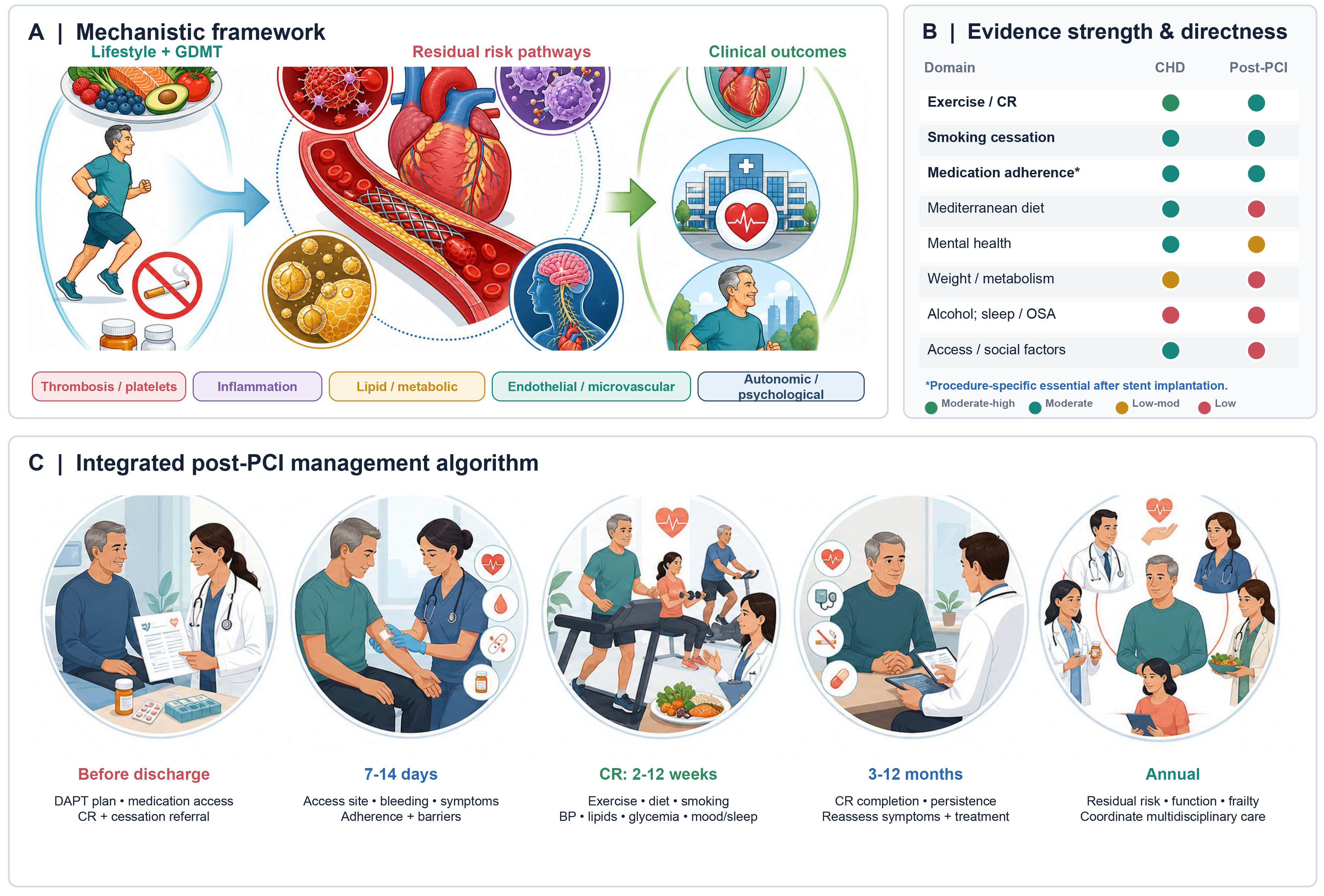
Figure 1. Lifestyle pathways, evidence strength, and integrated post-PCI care. (A) Mechanistic framework linking lifestyle interventions and guideline-directed medical therapy to thrombotic, inflammatory, lipid/metabolic, endothelial/microvascular, and autonomic/psychological residual-risk pathways and subsequent clinical outcomes; (B) Descriptive comparison of the strength and directness of evidence across lifestyle-related domains in broader coronary heart disease and post-PCI populations. These comparisons reflect study design, consistency, directness, precision, and risk of bias and should not be interpreted as a formal GRADE assessment; (C) Integrated management algorithm outlining key priorities before discharge, at 7-14 days, during cardiac rehabilitation, at 3-12 months, and during annual follow-up. Illustrative elements in Figure 1 were initially generated using ChatGPT Images 2.0, powered by GPT Image 2 (OpenAI, San Francisco, CA, USA), and were subsequently reviewed, edited, and assembled by the authors using Microsoft PowerPoint 2024 and Adobe Illustrator 2026. BP: Blood pressure; CHD: coronary heart disease; CR: cardiac rehabilitation; DAPT: dual antiplatelet therapy; GDMT: guideline-directed medical therapy; OSA: obstructive sleep apnea; PCI: percutaneous coronary intervention; GRADE: grading of recommendations assessment, development and evaluation.