

fig2
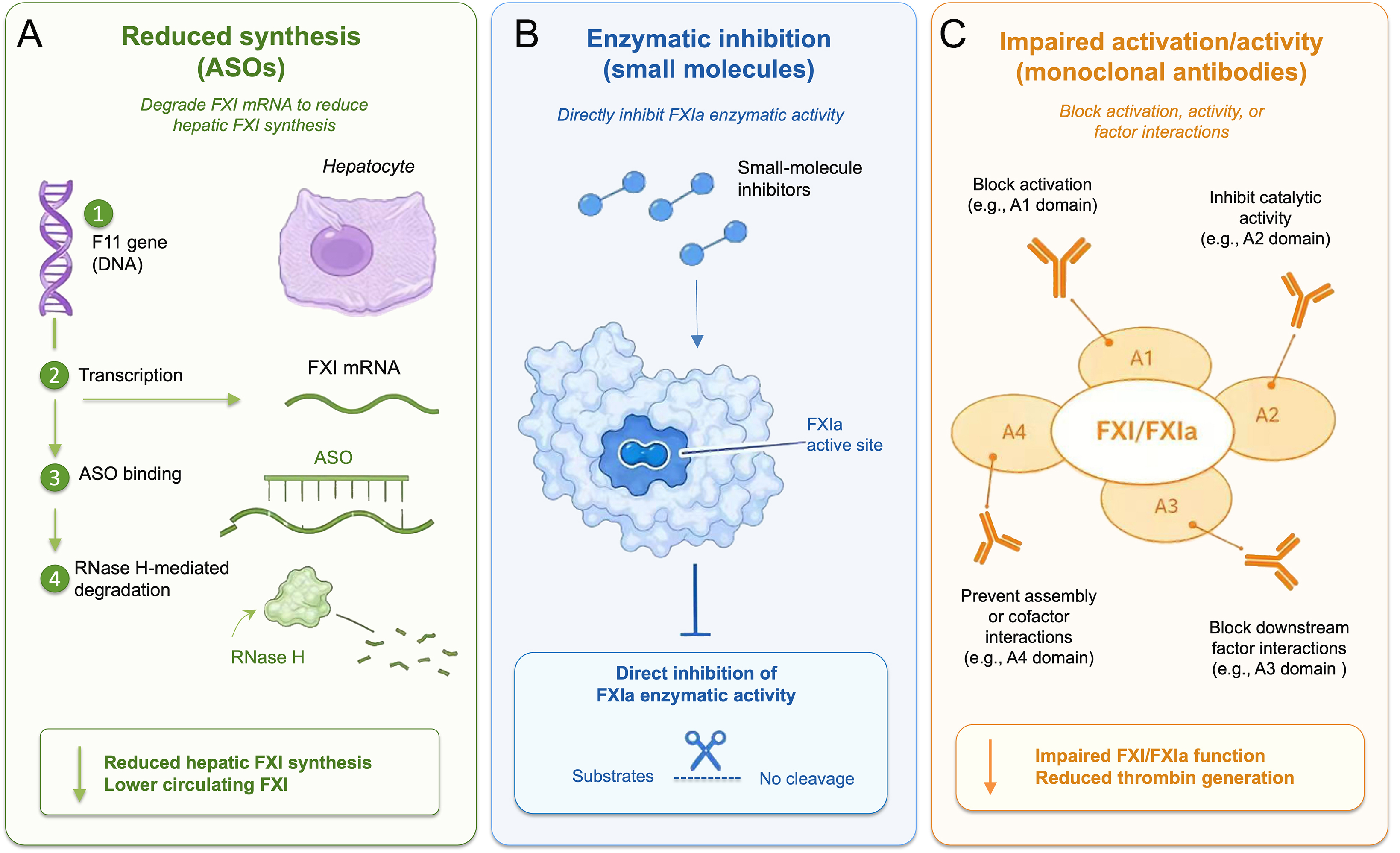
Figure 2. Pharmacological strategies targeting FXI/FXIa. This schematic summarizes the three major pharmacological approaches for targeting the FXI pathway. (A) Reduced synthesis by ASOs decreases hepatic FXI production by binding FXI mRNA and promoting RNase H-mediated degradation, thereby lowering circulating FXI levels. (B) Enzymatic inhibition by small molecules directly inhibits FXIa catalytic activity by binding the FXIa active site and preventing substrate cleavage. (C) Impaired activation or activity by monoclonal antibodies targets specific FXI/FXIa domains and may block FXI activation, inhibit catalytic activity, prevent cofactor assembly, or interfere with downstream factor interactions. Although these modalities differ in route of administration, onset and offset, and pharmacokinetic properties, they all aim to attenuate FXI-dependent thrombin amplification. ASO: Antisense oligonucleotide; FXI: factor XI; FXIa: activated factor XI; mRNA: messenger RNA.