
fig2
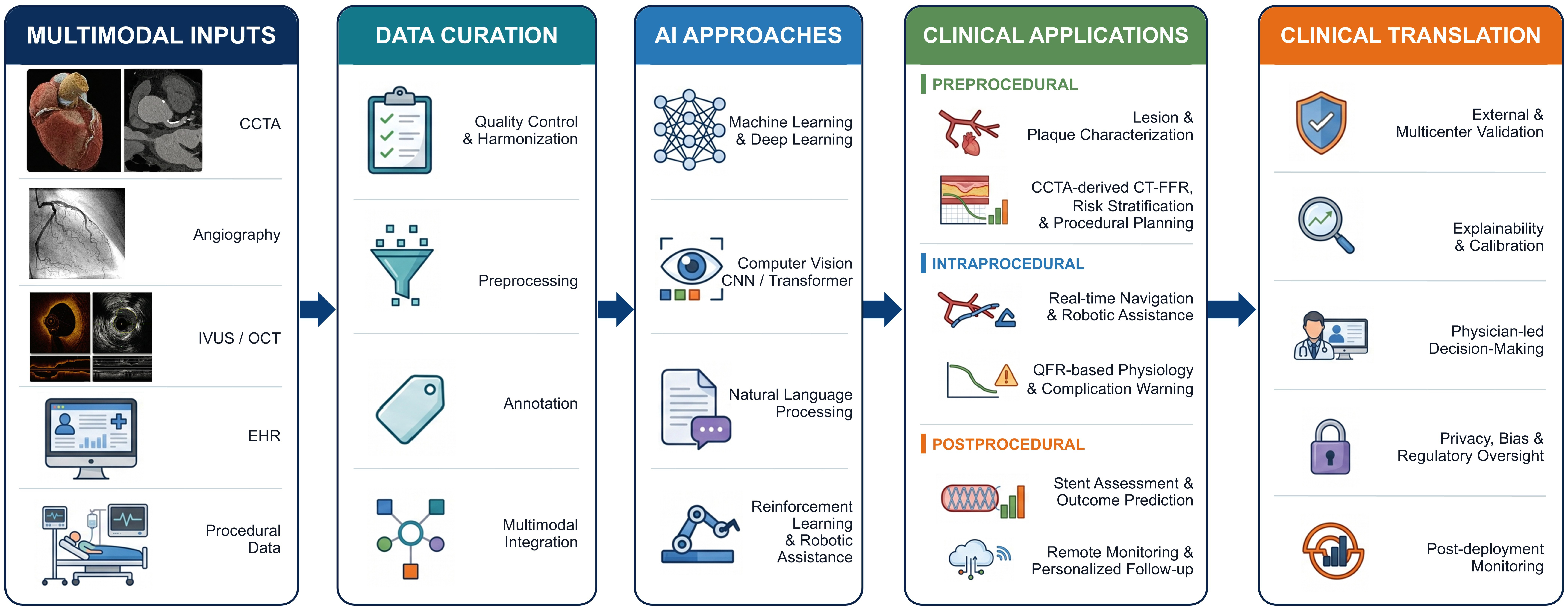
Figure 2. Clinically oriented workflow of artificial intelligence in interventional cardiology. Multimodal imaging, clinical, and procedural data are curated and analyzed using machine learning, deep learning, computer vision, natural language processing, and reinforcement learning. Representative applications include CCTA-derived CT-FFR for preprocedural functional assessment, IVUS/OCT image analysis, lesion and plaque characterization, procedural planning, angiography-derived QFR, intraprocedural navigation and complication warning, and postprocedural stent assessment, outcome prediction, and remote follow-up. Clinical translation requires external validation, calibration, explainability, physician-led decision-making, regulatory oversight, and post-deployment monitoring. AI: Artificial intelligence; CCTA: coronary computed tomography angiography; CNN: convolutional neural network; EHR: electronic health record; IVUS: intravascular ultrasound; OCT: optical coherence tomography; QFR: quantitative flow ratio; CT-FFR: computed tomography-derived fractional flow reserve.