

fig1
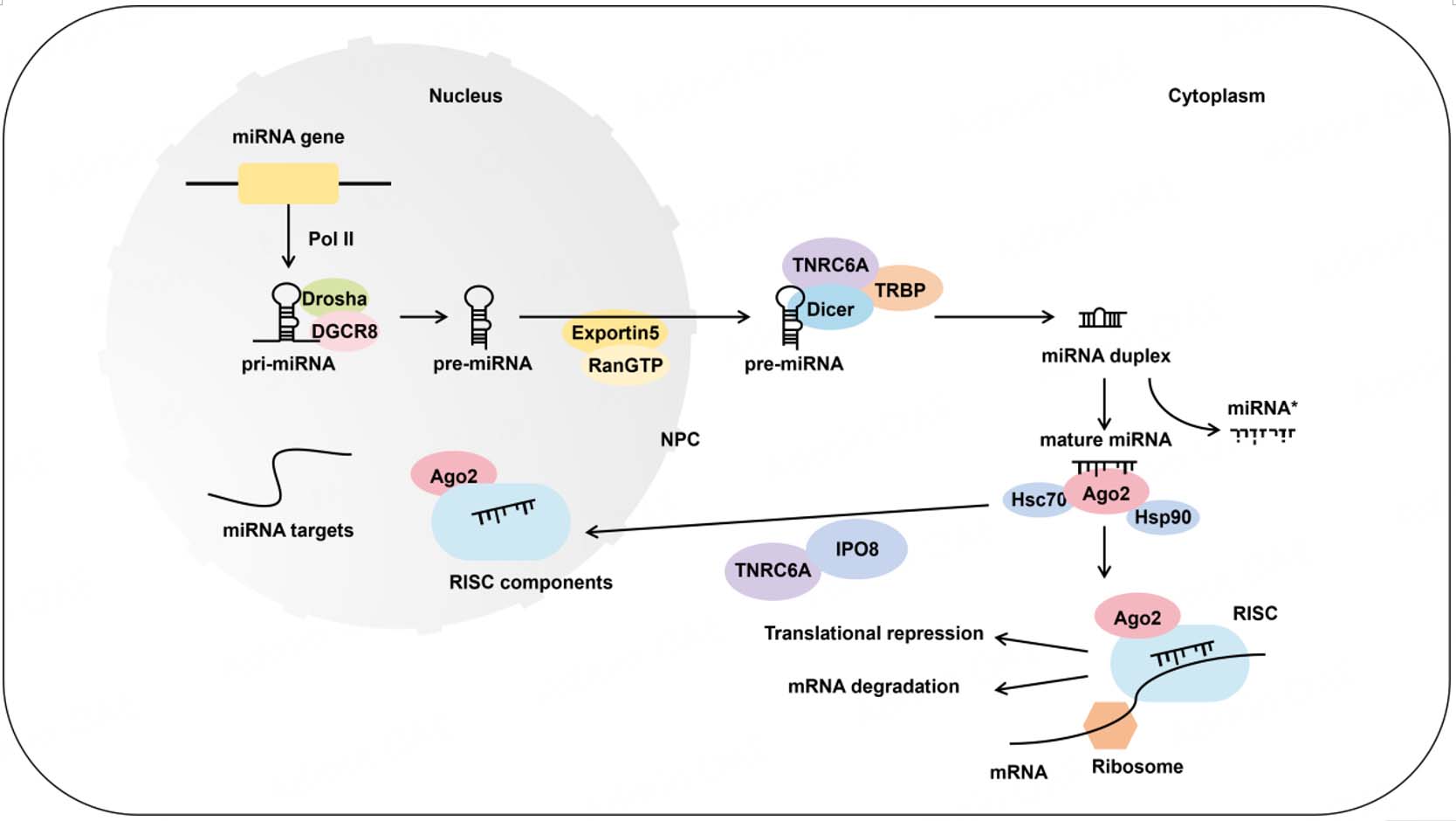
Figure 1. Canonical biogenesis and functional paradigm of miRNAs. Pri-miRNAs are transcribed from miRNA loci via Pol II, followed by cleavage mediated by the Drosha-DGCR8 Microprocessor complex to generate pre-miRNAs[16,17]. These ~70-nt pre-miRNAs are then exported to the cytoplasm via the NPC through association with Exportin-5[23]. In the cytoplasm, pre-miRNAs are processed by Dicer and TRBP to generate ~22 nt miRNA duplexes[19]. The guide strand, characterized by lower thermodynamic stability at its 5’ end, is subsequently loaded into RISC, while the passenger strand is typically degraded[20,21]. In the cytoplasm, miRNAs recognize target mRNAs primarily through sequence complementarity between their seed region and the 3' UTR of target transcripts, thereby mediating translational repression or mRNA degradation[2]. Notably, mature miRNAs can also be translocated into the nucleus via nuclear transport proteins, such as IPO8, where they exert distinct regulatory functions. Pol II: RNA polymerase II; DGCR8: DiGeorge syndrome critical region 8 protein; NPC: nuclear pore complex; TRBP: transactivation response RNA-binding protein; RISC: RNA-induced silencing complex; 3' UTR: 3' untranslated region; IPO8: importin 8; TNRC6A: trinucleotide repeat containing adaptor 6A.