

fig4
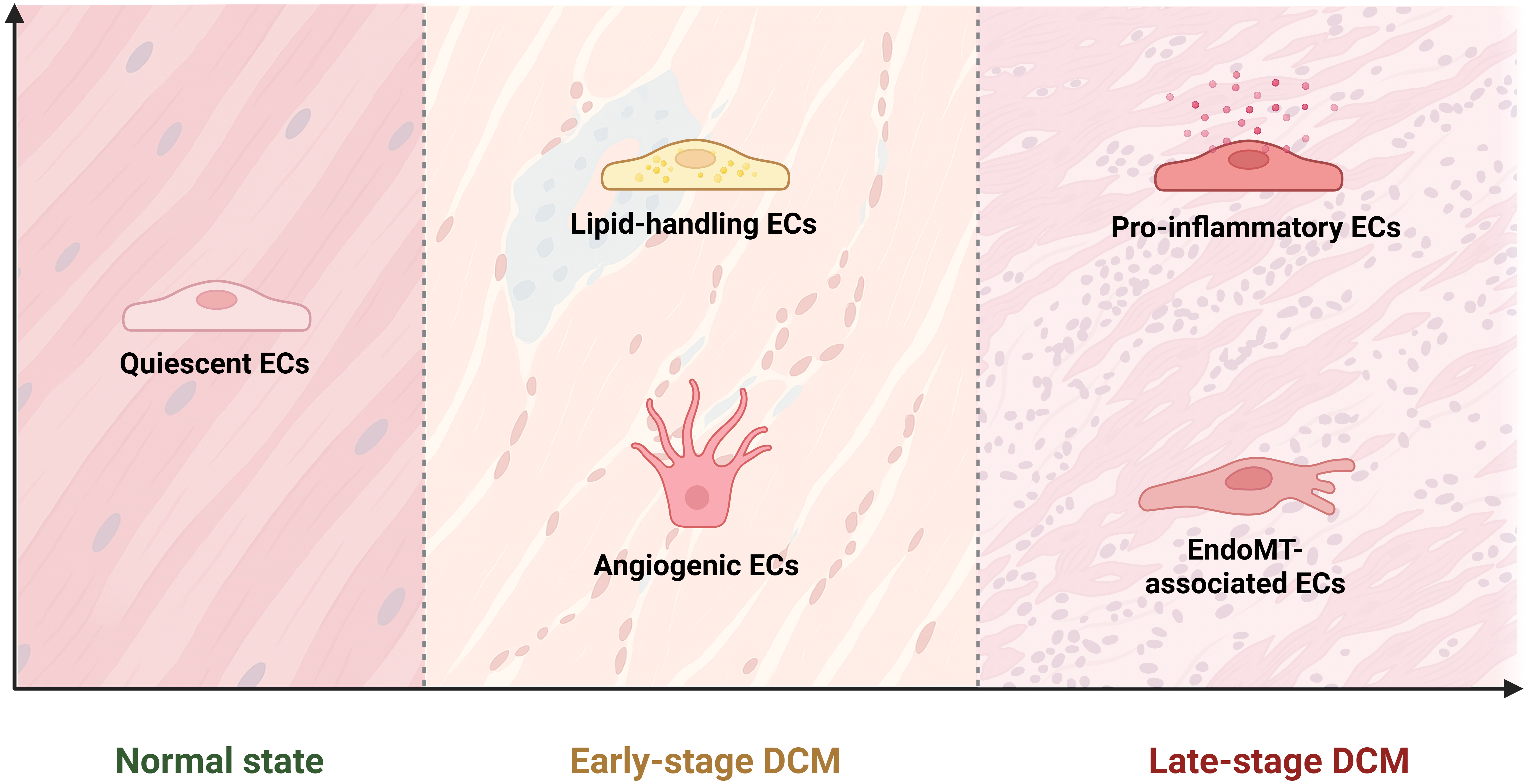
Figure 4. Dynamic changes in EC subpopulations during DCM progression. EC dynamics in DCM progression follow a biphasic pattern: an initial adaptive response is followed by a progressive maladaptive response at later stages. Under normal physiological conditions, quiescent ECs predominate. In the early stage of DCM, lipid-handling and angiogenic ECs emerge in response to hyperglycemia-induced metabolic stress[14,23,61]. During the late stage, there is a shift toward pro-inflammatory and EndoMT-associated ECs, representing a decompensatory response that disrupts vascular homeostasis[14,31,61]. This transition promotes inflammation, myocardial fibrosis, and ultimately HF. EC: Endothelial cell; DCM: diabetic cardiomyopathy; EndoMT: endothelial-to-mesenchymal transition; HF: heart failure. [(Created in https://app.biorender.com/illustrations/68ba997e8bf5fa47c8332d9a?slideId=2c2335be-9582-469f-9761-6380e5cced35f. Justin R (2025)].