

fig2
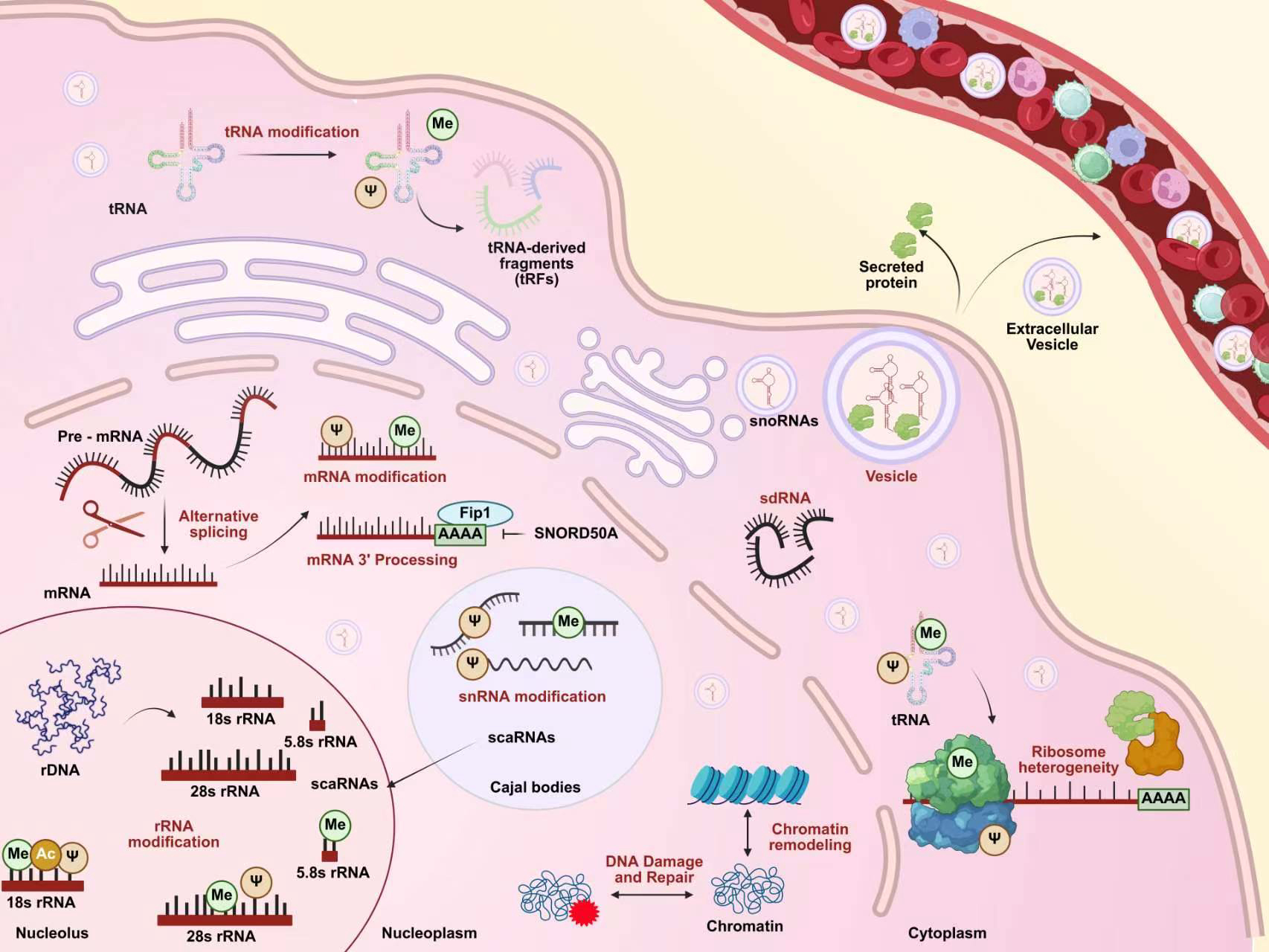
Figure 2. Biological functions of snoRNAs. Within the nucleolus, snoRNAs primarily guide the processing, modification, and maturation of ribosomal RNA (rRNA), including site-specific 2'-O-methylation, pseudouridylation, and acetylation. In the nucleoplasm, beyond their roles in pre-mRNA processing, alternative splicing, 3'-end formation, and chemical modification of transcripts, snoRNAs are involved in key nuclear processes such as chromatin remodeling and DNA damage repair. Small Cajal body-specific RNAs (scaRNAs), which modify small nuclear RNAs (snRNAs), are localized to Cajal bodies and can translocate to the nucleolus under specific conditions. Furthermore, snoRNAs can be processed into smaller snoRNA-derived RNAs (sdRNAs) that enter the cytoplasm, where they regulate transfer RNA (tRNA) modifications, are packaged into extracellular vesicles for secretion into the circulatory system, and contribute to ribosome heterogeneity. This highlights the multifaceted roles of snoRNAs, spanning from nuclear RNA processing to extracellular signaling. (Created in BioRender. Cao, H. (2026) https://BioRender.com/mc5sxut).