

fig2
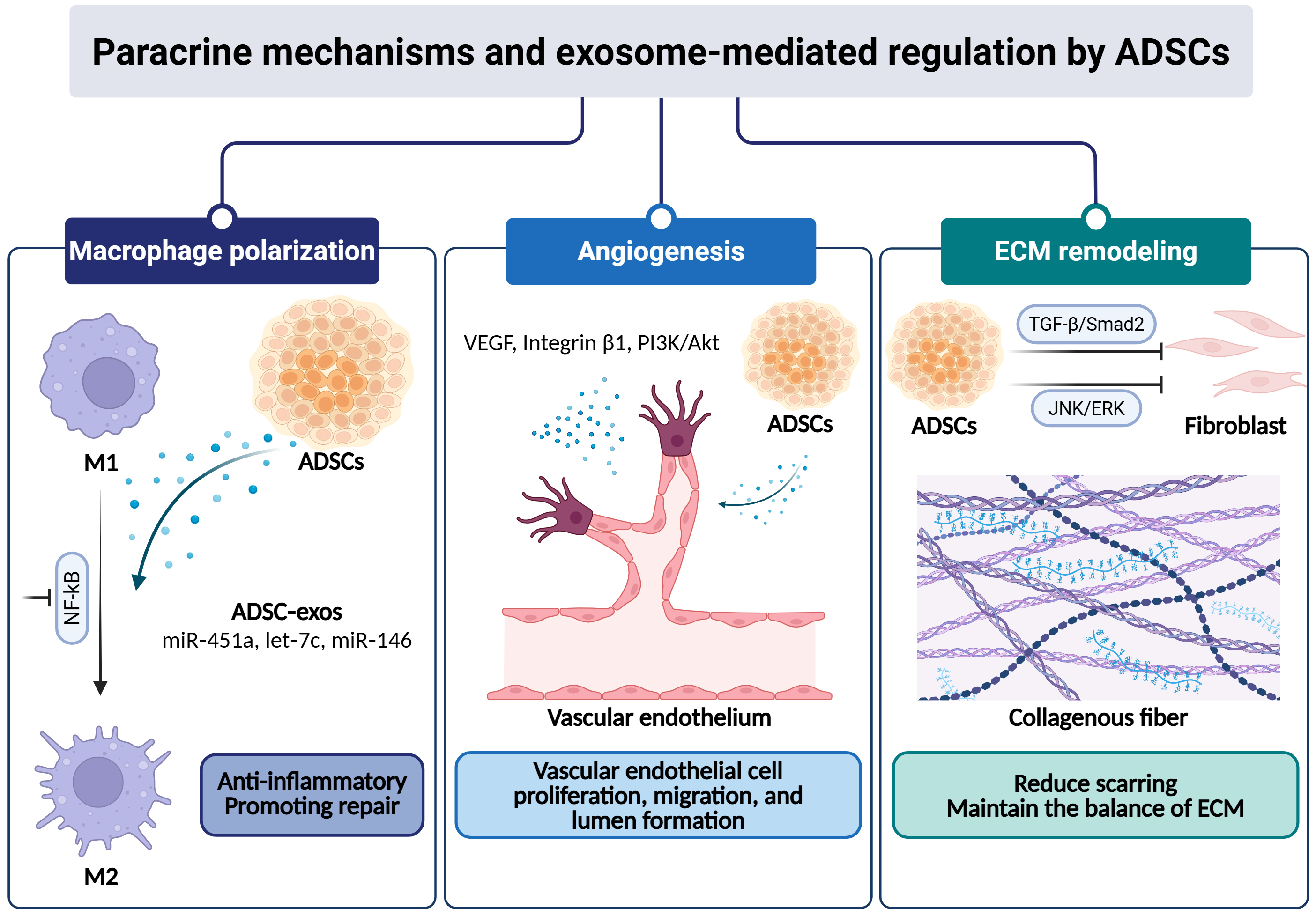
Figure 2. Paracrine mechanisms and exosome-mediated regulation by ADSCs. ADSCs secrete a diverse array of EVs/exosomes, miRNAs, and long non-coding RNAs. These bioactive factors orchestrate three key processes in tissue repair: (1) Macrophage polarization: ADSC-exos deliver miR-451a, let-7c, and miR-146 to suppress NF-κB signaling, driving the transition from pro-inflammatory M1 to reparative M2 macrophages; (2) Angiogenesis: ADSCs promote neovascularization via direct endothelial differentiation and paracrine activation of the integrin β1/PI3K/AKT pathway, supported by VEGF and other growth factors; (3) ECM remodeling and anti-fibrosis: ADSC-derived factors exert anti-fibrotic effects through distinct signaling mechanisms, including inhibition of the JNK/ERK pathway and modulation of TGF-β/Smad2 signaling, thereby suppressing myofibroblast activation and pathological scar formation. Created in BioRender. (2026) https://BioRender.com/1teq1ae. ADSC-exos: Adipose-derived stem cell-derived exosomes; ADSCs: adipose-derived stem cells; AKT: protein kinase B; ECM: extracellular matrix; ERK: extracellular signal-regulated kinase; EVs: extracellular vesicles; JNK: c-Jun N-terminal kinase; miRNAs: microRNAs; NF-κB: nuclear factor kappa-light-chain-enhancer of activated B cells; PI3K: phosphoinositide 3-kinase; TGF-β: transforming growth factor-β; VEGF: vascular endothelial growth factor.