
fig1
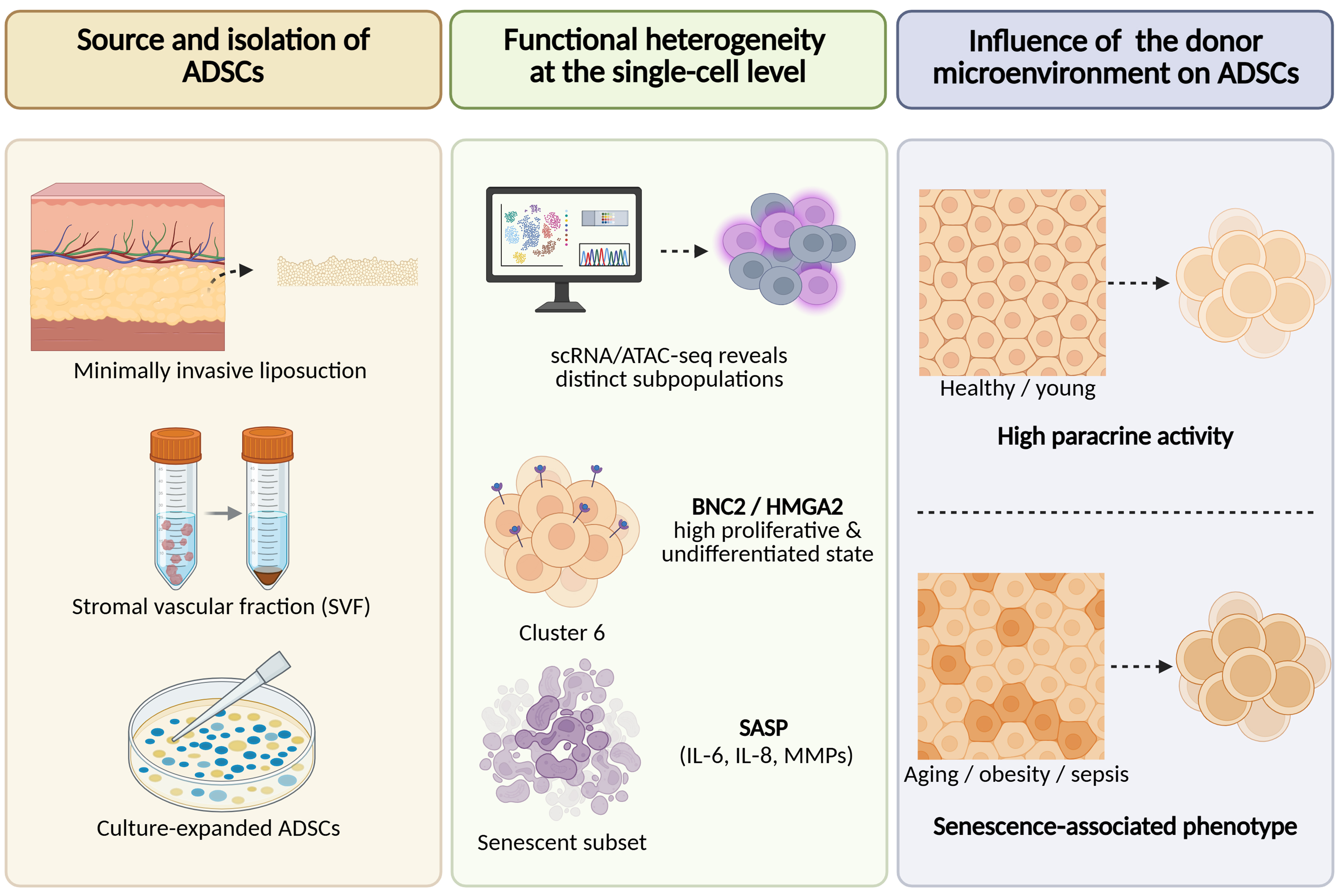
Figure 1. Biological characteristics and functional heterogeneity of ADSCs. ADSCs are isolated from adipose tissue via minimally invasive liposuction, followed by enzymatic digestion and culture expansion (Left). scRNA/ATAC-seq reveals functional subpopulations within cultured ADSCs, including a highly proliferative cluster (Cluster 6) marked by BNC2 and HMGA2, and a senescent subset exhibiting SASP (Middle). The regenerative capacity of ADSCs is heavily influenced by donor-specific factors; young/healthy donors yield cells with potent paracrine activity, whereas aging, obesity, or sepsis drive ADSCs toward a pro-inflammatory SASP, compromising their therapeutic potential (Right). Created in BioRender. (2026) https://BioRender.com/ru1r8t8. ADSCs: Adipose-derived stem cells; BNC2: basonuclin 2; HMGA2: high mobility group AT-hook 2; IL-6: interleukin-6; IL-8: interleukin-8; MMPs: matrix metalloproteinases; SASP: senescence-associated secretory phenotype; scRNA-seq/ATAC-seq: single-cell RNA and assay for transposase-accessible chromatin sequencing; SVF: stromal vascular fraction.