

fig4
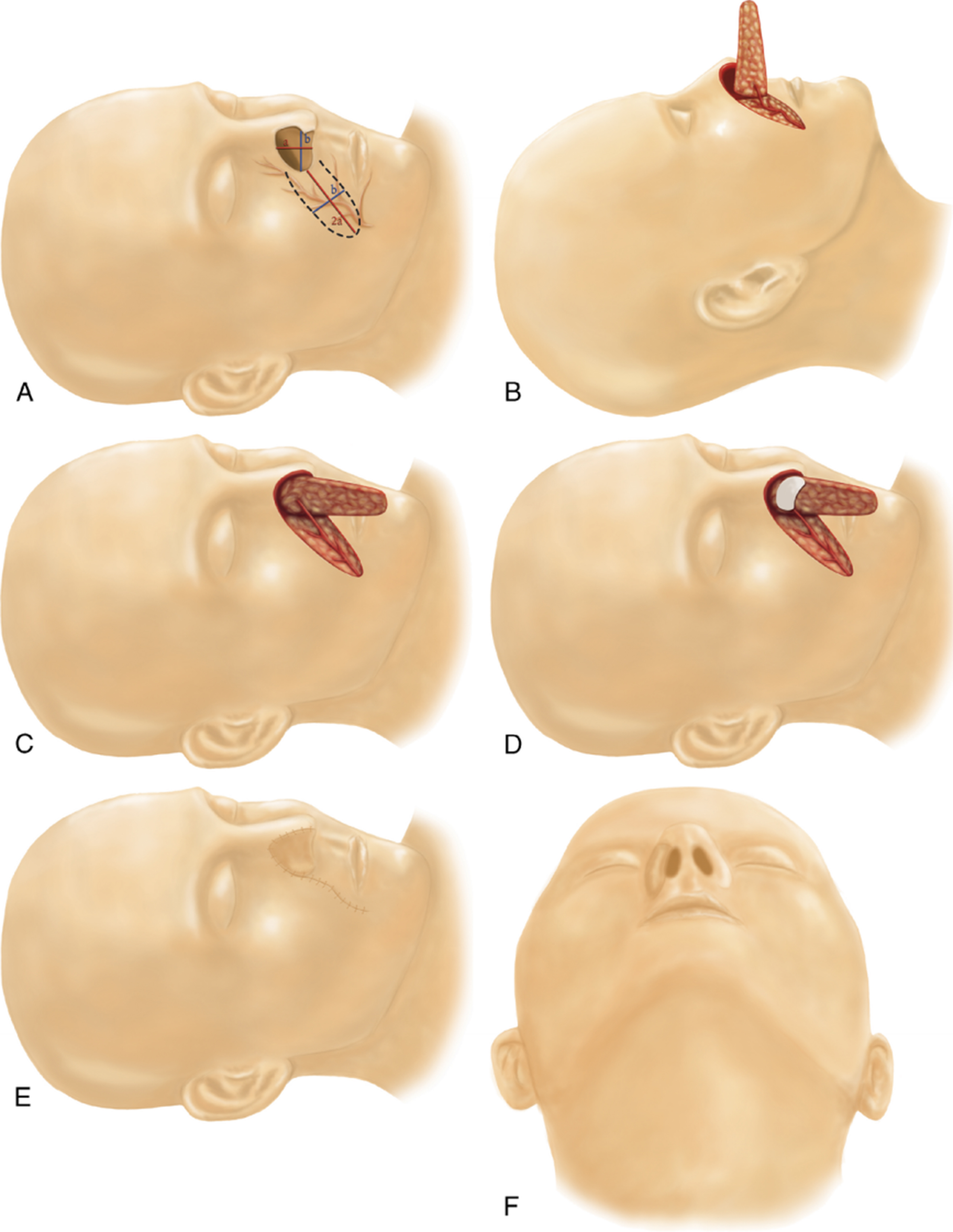
Figure 4. (A) Design of the nasolabial flap. Flap width is matched to the vertical height of the defect, and flap length is planned to be at least twice the defect width; (B) Elevation and mobilization of the flap on its perforator; (C) After the medial aspect of the flap is inset internally to create the nasal lining, the flap is rotated approximately 90 degrees for closure of the external defect; (D) Placement of septal cartilage support onto the flap in cases requiring structural reinforcement; (E) Inset view demonstrating the medial edge of the flap folded over the cartilage graft, with primary closure of the donor site visible; (F) Inferior view of the reconstructed alar subunit following completion of reconstruction. Reprinted with permission from[31]. Copyright © 2025 Wolters Kluwer Health, Inc.