Time
3:00 PM, 12 November 2026 (Beijing Time)
4:00 PM, 12 November 2026 (Korea Time)
4:00 PM, 12 November 2026 (Korea Time)
Join the Webinar
Zoom ID: 838 5815 6587
Zoom Registration Link: https://us06web.zoom.us/meeting/register/xXd1r_YYTPK4ItdhJUqL3Q
Zoom Registration Link: https://us06web.zoom.us/meeting/register/xXd1r_YYTPK4ItdhJUqL3Q
Host
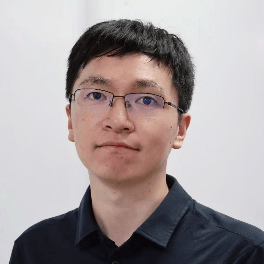
Dr. Weiran Zhang
School of Electrical and Electronic Engineering, Nanyang Technological University, Singapore.
Dr. Weiran Zhang is currently a Nanyang Assistant Professor at Nanyang Technological University, and PI of the Electrochemical Interfaces & Ionics (EI2) Lab (website: www.wrzhanglab.com). He received B.S. in Applied Chemistry from Huazhong University of Science and Technology, and Ph.D. in Materials Science and Engineering from the University of Maryland, College Park in 2024. His research interests focus on the electrochemistry and materials science for advanced energy technologies, including high-energy metal batteries, solid-state batteries, and electro-chemo-mechanical processes in batteries. His major research has appeared in Nature Materials, Nature Energy (3), and Nature Nanotechnology, and he has been recognized by the 2026 ISE–Elsevier Prize in Applied Electrochemistry for contributions to low-pressure solid-state batteries, dendrite formation, and calendar aging.
Speaker

Prof. Yury Gogotsi
A.J. Drexel Nanomaterials Institute, and Department of Materials Science and Engineering, Drexel University, Philadelphia, USA
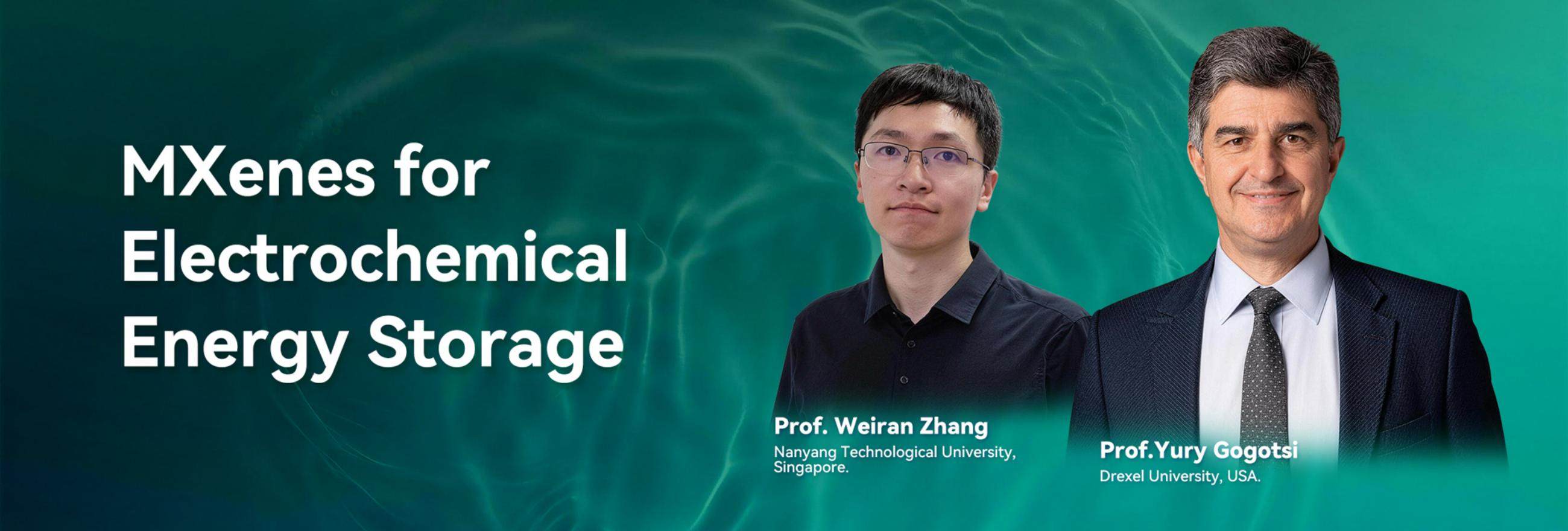
Topic: MXenes for Electrochemical Energy Storage
Topic: MXenes for Electrochemical Energy Storage
Yury Gogotsi is a Distinguished University Professor and Bach Endowed Chair in the Department of Materials Science and Engineering at Drexel University (Philadelphia, USA). He is the founding Director of the A.J. Drexel Nanomaterials Institute. He is credited with principal contributions to developing materials for electrochemical capacitors, the discovery of a large family of 2D carbides and nitrides known as MXenes, and tuning the porosity of carbide-derived carbons with sub-nanometer accuracy. He published the first microscopic observation of water inside carbon nanotubes, discovered polygonal nanotubes (graphite polyhedral crystals), and invented the field of high-pressure surface science. His work has been cited over 350,000 times. The 2026 Stanford List ranked Gogotsi 25th among scientists across all disciplines and 2nd in Nanoscience and Nanotechnology worldwide.
Abstract
Carbides and nitrides of transition metals known as MXenes are the fastest-growing family of 2D materials and probably the largest family of inorganic materials discovered in the 21st century. M stands for a transition metal (Ti, Nb, V, Mo, etc.), and X stands for carbon or nitrogen (oxygen substitution is possible) in the MnXn-1 formula. Following our discovery of 2D Ti3C2Tx (T= O, OH, F, etc.) in 2011 [M. Naguib, et al., Advanced Materials, 2011], 2D carbides, oxycarbides, carbonitrides, and nitrides of transition metals have greatly expanded the nanomaterials family [A. VahidMohammadi, et al., Science, 2021]. More than 50 stoichiometric carbide and nitride M-X MXenes, and dozens of solid solutions and high-entropy MXenes have been reported. The versatile chemistry of the MXene family renders their properties tunable for a large variety of applications [Y. Gogotsi, Chemistry of Materials, 2023]. O/OH-terminated MXenes combine high electronic conductivity with hydrophilicity and fast ionic transport, while Cl-terminated MXenes are hydrophobic. Ti3C2Tx MXene offers much higher conductivity (over 20,000 S/cm) than reduced graphene oxide (rGO), reducing resistive losses in electrochemical applications and enabling its use as ultrathin, printable current collectors or conductive additives. Oxygen-terminated V, Nb, Mo, or Ti MXenes are capable of fast surface redox reactions of transition metals in their surface layers. The electronic conductivity of carbides and nitrides, combined with the intrinsically large electrochemically active surface of 2D materials, makes MXenes very attractive for redox energy storage, especially when high charging rates and power are needed. This and other advantageous properties make the MXene family promising for energy storage. Numerous articles are dedicated to the use of MXenes in Li, K, Na, Zn-ion, Na-S and Li-S and other batteries, as well as supercapacitors [X. Li, et al., Nature Reviews Chemistry, 2022]. Intercalation and pillaring of MXenes open space for large multivalent ions. Using Ti3C2 in passive elements (micrometer-thin current collectors and conductive additives) is equally attractive.