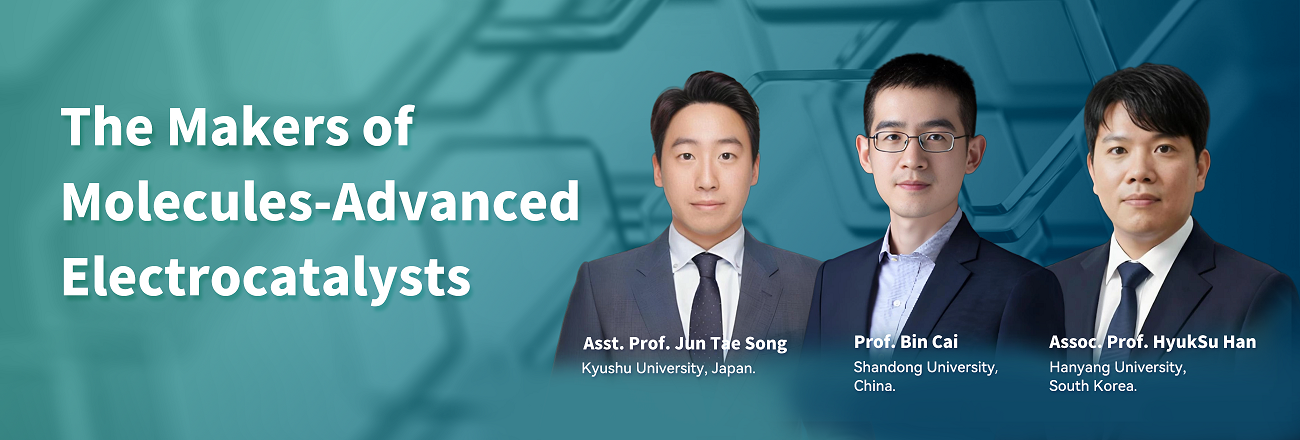
The Makers of Molecules-Advanced Electrocatalysts
Contents
Chair
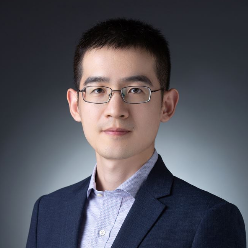
Prof. Bin Cai
School of Chemistry and Chemical Engineering, Shandong University, China.
Bin Cai is a Professor at the School of Chemistry and Chemical Engineering, Shandong University. He received his Ph.D. from Technische Universität Dresden in 2017 with the distinction of summa cum laude. He then conducted postdoctoral research at the Massachusetts Institute of Technology from 2017 to 2019 and at Pacific Northwest National Laboratory from 2019 to 2020. His research focuses on electroanalytical chemistry, electrochemistry–mass spectrometry coupling, and related areas. As first or corresponding author, he has published more than 40 papers in leading journals, including Nature Materials (1), Science Advances (1), Journal of the American Chemical Society (1), Angewandte Chemie International Edition (6), Advanced Materials (5), Chemical Science (2), and Analytical Chemistry (8). His publications have received nearly 4,200 citations, with an h-index of 33. He has received several honors, including the National Young Talent Program award, the Donald Ulrich Award, and the Dr.-Walter-Seipp-Prize. He serves as an editorial board member or young editorial board member for journals including eChem, Science Bulletin, and Chemical Synthesis. He also serves as a committee or council member of the Nanomaterial Analysis Committee and the Biosensing Committee of the China Association for Instrumental Analysis, the Shandong Gene Testing Committee, and the Shandong Society of Biomedical Engineering.
Speaker(s)
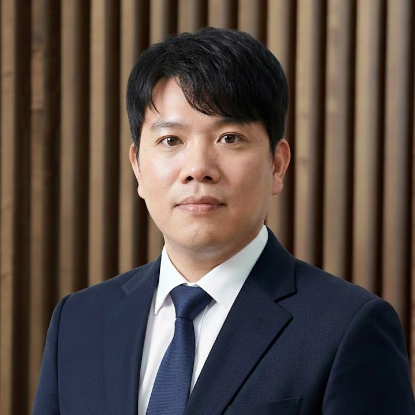
Assoc. Prof. HyukSu Han
Division of Materials Science and Engineering, Hanyang University, Seoul, Republic of Korea.
HyukSu Han currently serves as an Associate Professor in the Division of Materials Science and Engineering at Hanyang University, Republic of Korea. He completed his undergraduate studies at Hanyang University, graduating Summa Cum Laude in Materials Science and Engineering in 2010, and obtained his Ph.D. in Materials Science & Engineering from the University of Florida in 2014 under the guidance of Prof. Juan C. Nino. Following his doctoral graduation, he undertook postdoctoral research at the French National Centre for Scientific Research (CNRS), then worked as a Senior Researcher at the Korea Institute of Industrial Technology. He later joined Hongik University and Konkuk University as an Assistant Professor, and took up an Associate Professor position at Sungkyunkwan University before moving to his current post at Hanyang University. His research revolves around functional electrocatalytic materials for energy conversion technologies, including water electrolysis, seawater splitting, fuel cells and CO2 conversion. His work spans rational material design, morphological control, novel synthetic strategies and systematic electrochemical characterization to uncover catalytic reaction mechanisms. He has delivered several groundbreaking contributions, including crystalline–amorphous phase boundary catalysts, high-entropy iridium-based bifunctional electrocatalysts for acidic water splitting, negatively charged platinum electride composites toward stable oxygen reduction, and reconstructed Ni–Fe layered double hydroxides that resist chloride interference for seawater electrolysis. He has published numerous high-impact research articles in leading journals such as Energy & Environmental Science, Advanced Materials, Advanced Energy Materials and Advanced Functional Materials, with many representative papers accumulating high citation counts. He holds committee and board positions on several major Korean academic societies covering energy, ceramics and industrial chemistry, and acts as an official organizer for the International Conference and Exposition on Advanced Ceramics and Composites hosted by the American Ceramic Society.
Asst. Prof. Jun Tae Song
Department of Applied Chemistry, Faculty of Engineering, Kyushu University, Japan.
Jun Tae Song is an Assistant Professor in the Department of Applied Chemistry, Faculty of Engineering at Kyushu University, Japan, where he has been serving since 2019. He recently conducted research as a visiting researcher at Imperial College London (Oct 2024 – Jul 2025). Prior to joining Kyushu University, he worked as a Research Assistant Professor and Postdoctoral Fellow at KAIST. He received his Ph.D. in Physical Electronics from Tokyo Institute of Technology in 2015 under the MEXT scholarship, following his M.S. and B.S. degrees in Electronic Engineering from Kyungpook National University. Dr. Song’s research focuses on the development of advanced (photo)electrocatalyst materials for energy and environmental applications. His work spans CO2 electroreduction, water splitting, solid oxide electrochemical cells (SOEC), and zinc–air batteries, with particular emphasis on inorganic catalyst materials, gas diffusion electrode systems, and surface/interface analysis techniques such as LEIS and TOF-SIMS. He has authored over 70 peer-reviewed publications in leading journals such as Advanced Energy Materials, ACS Catalysis, and Applied Catalysis B: Environment and Energy. He has received several awards, including the KINC Fusion Research Award (2021) and the Best Oral Presentation Award at the Global Photovoltaic Conference (2018), and has presented his work at major international conferences including ECS, ICC, and MRS, as well as invited talks.
Programme
Programme
| Time (Beijing, China) | Chair / Speakers | Topics |
|---|---|---|
| 14:00-14:05 | Prof. Bin Cai | Welcome Speech、Chemical Synthesis Introduction & Speaker Introduction |
| 14:05-14:35 | Assoc. Prof. HyukSu Han | Low Iridium based Electrocatalyst for Proton Exchange Membrane Water Electrolysis |
| 14:35-15:05 | Asst. Prof. Jun Tae Song | Electrocatalyst Materials for CO2 Conversion in Low- and High-Temperature Electrochemical |
| 15:05-15:25 | All | Discussion and Q&A |
| 15:25-15:30 | Prof. Bin Cai | Conclusions and Perspectives |