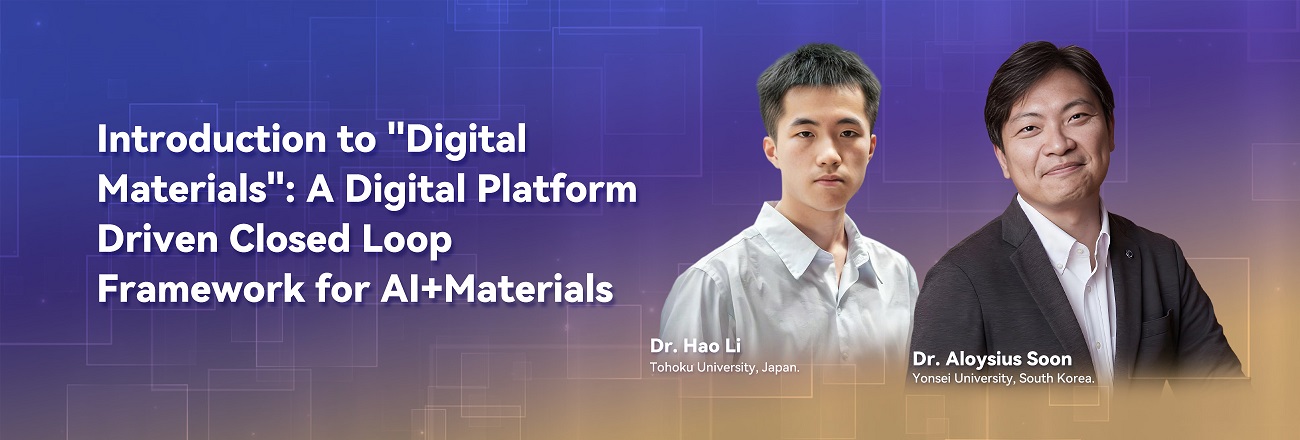
Introduction to "Digital Materials": A Digital Platform Driven Closed Loop Framework for AI+Materials
Contents
Chair
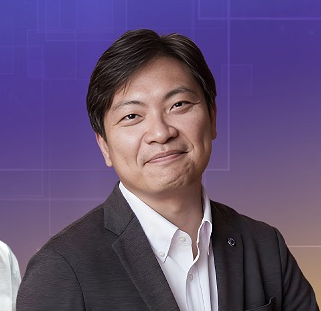
Aloysius Soon
Professor, Yonsei University
Professor Aloysius Soon obtained his BSc in Chemistry from the National University of Singapore, his MSc in Chemistry from the University of Auckland, and his PhD in Physics from the University of Sydney. Since 2010, Professor Soon has been a faculty member in the Department of Materials Science and Engineering at Yonsei University in Seoul, Republic of Korea, and he was awarded a tenured full professorship in 2020. Prior to joining Yonsei, he was an Alexander von Humboldt fellow at the former Theory Department (now the NOMAD Laboratory) of the Fritz-Haber-Institut der Max-Planck-Gesellschaft in Germany. Professor Soon's research focuses on acquiring a fundamental understanding of the chemistry and physics of complex materials and their surfaces/interfaces using first- principles electronic structure theory coupled with modern machine-learning methods. Notably, Professor Soon has been elected as a Fellow of both the Institute of Physics (FlnstP, UK) and the Royal Society of Chemistry (FRSC, UK), and is registered as a Chartered Scientist (CSci, UK).
Speaker
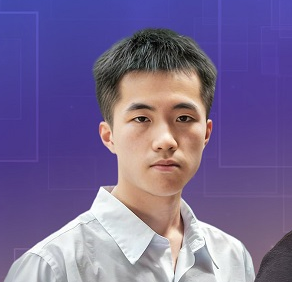
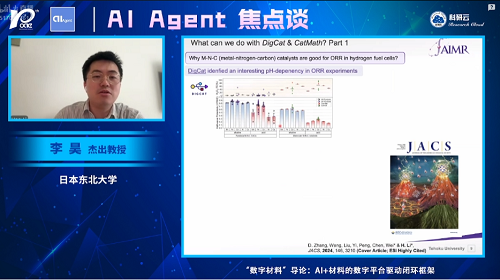
Hao Li
Distinguished Professor, Tohoku University
Hao Li, Distinguished Professor at the WPI-AIMR (Advanced Institute for Materials Research), Tohoku University. He is also the head of the Digital Materials Laboratory (DigMat). Professor Li has long focused on the intersection of artificial intelligence and materials design, achieving multiple breakthroughs in catalysis, materials theory, machine learning algorithm development, and the design of novel catalysts. He has led the development of several globally influential digital materials technology platforms. To date, Professor Li has published over 300 papers in top-tier journals, including Nature Catalysis, Nature Communications, Journal of the American Chemical Society, Angewandte Chemie, and Advanced Materials, with more than 15,000 citations. His work has laid a solid foundation for the industrial application of AI in materials science. He has received numerous international honors, including the Young Surface Scientist Award (2022, American Chemical Society Annual Meeting) and the AIChE Annual Best Fundamental Research Award, and has been repeatedly recognized as a Highly Cited Researcher worldwide.
Moments