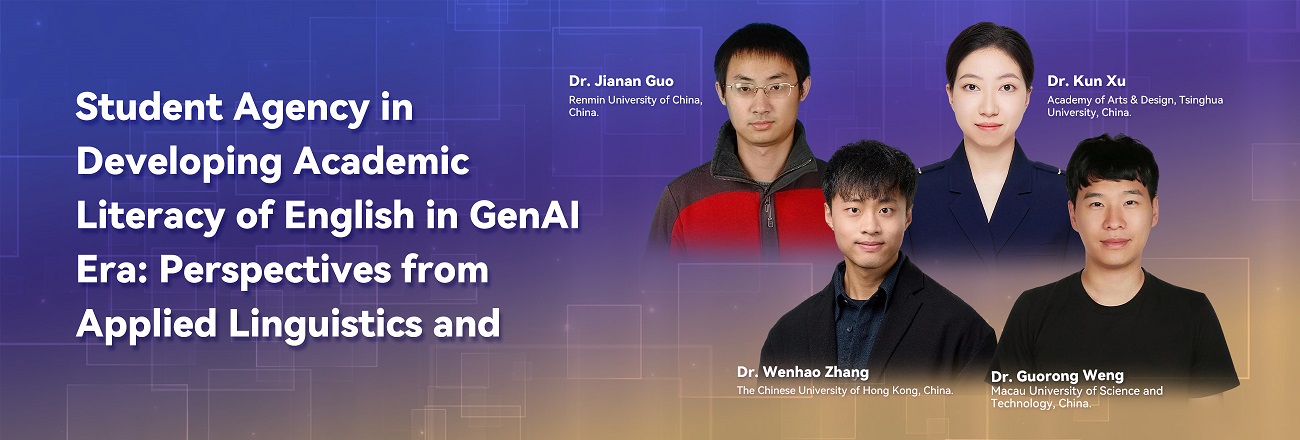
Student Agency in Developing Academic Literacy of English in GenAI Era: Perspectives from Applied Linguistics and Science Education
Contents
Chair
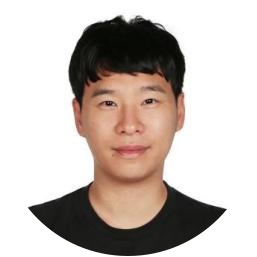
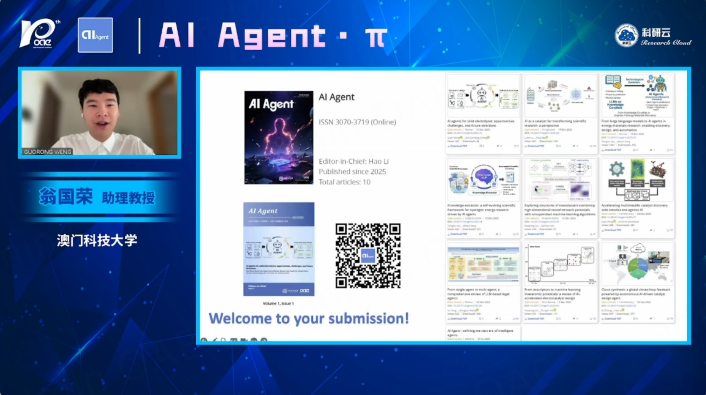
Guorong Weng
Assistant Professor, Macau University of Science and Technology
Dr. Guorong Weng received his Ph.D. in Chemistry in 2023 from the University of California, Santa Barbara, where he conducted research on stochastic electronic-structure theory under the supervision of Vojtech Vlcek. From 2023 to 2025, he carried out postdoctoral research in the Alexandrova group at the University of California, Los Angeles, focusing on theoretical simulations of topological materials for catalytic applications. In January 2026, Dr. Weng joined Macau University of Science and Technology as an Assistant Professor. His research group develops advanced computational methods that integrate artificial intelligence, data-driven techniques, and electronic-structure theory to address challenging problems in chemistry and materials science. Dr. Weng currently serves as a junior editor for AI Agent and is an active peer reviewer for this and other leading journals in the field.
Guest(s)
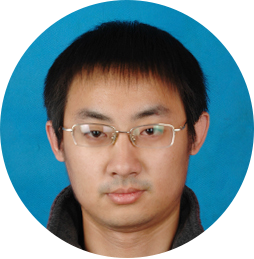
Jianan Guo
Researcher, Renmin University of China
Jianan Guo is a PhD candidate in Development and Sustainability at the Asian Institute of Technology, a visiting scholar at the Center for Interdisciplinary Studies at the University of North Texas, and a student researcher at the Center for Digital Humanities Studies, Renmin University of China. Her research focuses on philosophy of science and technology, Science, Technology and Society (STS), ethics and governance of artificial intelligence, science communication, and science and technology policy, with an emphasis on the normative dimensions and institutional responses to the embedding of digital technology in public governance and social development. She has led and participated in two major and key projects funded by the National Social Science Fund of China, and eight provincial and ministerial-level social science fund projects. She serves as a reviewer, editorial board member, and academic correspondent for 17 academic journals, including the *Journal of Chongqing University of Posts and Telecommunications* (Social Sciences Edition), the *Journal of Hebei Agricultural University* (Social Sciences Edition), and journals such as *Law and Social Sciences*. She has published over 70 academic papers and reviews in journals such as *Science & Technology Review*, *Medicine and Philosophy*, and *Digital Humanities*, as well as in mainstream media. Some of her work has been indexed or reprinted in domestic and international academic databases. Her research focuses on ethical risks of generative artificial intelligence, open science, and the science-society-policy relationship in a post-truth context. She has presented and received awards at numerous domestic and international academic conferences, and is committed to promoting theoretical dialogue and practical connections between technological development, public value, and sustainable transformation.
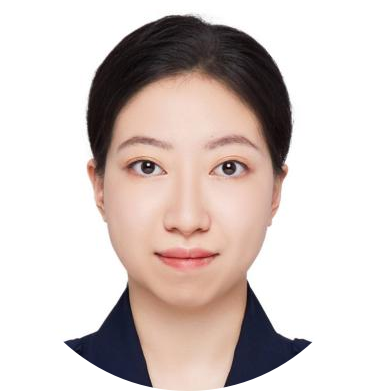
Kun Xu
Postdoctoral Fellow & Assistant Research Fellow, Academy of Arts & Design, Tsinghua University.
She holds a B.A. in Art History from the Central Academy of Fine Arts (CAFA), an M.A. in Cultural Heritage from the University of Bologna, and a Ph.D. in History from Peking University. She was also a visiting scholar at the University of Florence, Italy. Dedicated to interdisciplinary art research, her core fields include musical iconography, art archaeology, and medieval urban space analysis. Building on her previous application of digital humanities, her recent work focuses on AI design ethics, AI applications in foundational education, and the intersection of mathematical logic and art research.
Speaker
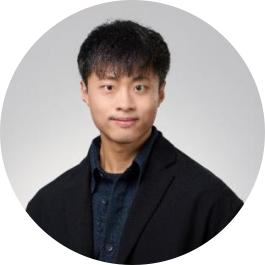
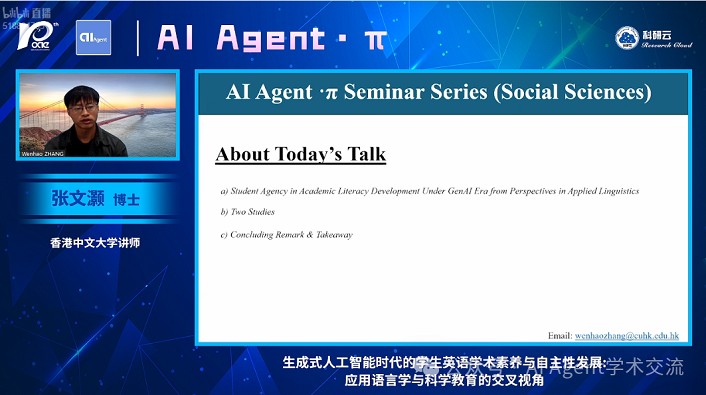
Wenhao Zhang
Lecturer, The Chinese University of Hong Kong
Dr. Wenhao Zhang is a lecturer in English language teaching unit (ELTU) at the Chinese University of Hong Kong. He received his PhD degree in English at the City University of Hong Kong and serves AI Agent as a youth editor, while he is a reviewer of European Journal of Education (SSCI). He has experience collaborating with researchers and practitioners across STEM and science education. His recent publication about science students’ epistemic understanding with GenAI can be found in Journal of Science Education and Technology (SCIE & SSCI).
Moments