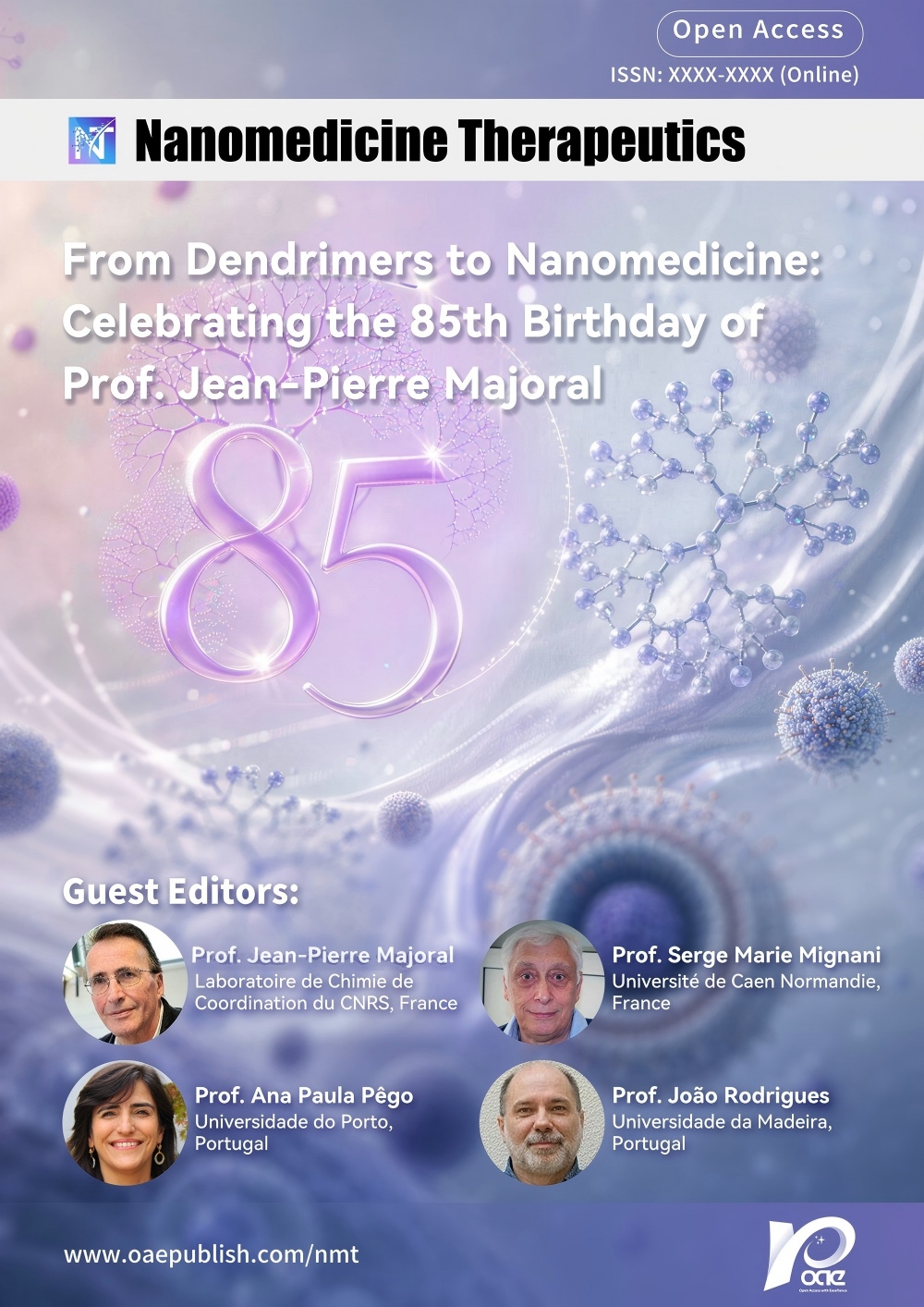
Topic: From Dendrimers to Nanomedicine: Celebrating the 85th Birthday of Prof. Jean-Pierre Majoral
A Special Topic of Nanomedicine Therapeutics
ISSN : XXXX-XXXX (Coming soon)
Submission deadline: 15 Jan 2027
Guest Editors
Special Topic Introduction
Nanomedicine therapeutic represents a very important domain in medicine and refers in the use of druggable nanoscale materials (typically 1–100 nm) to diagnose, monitor, prevent, and treat diseases. By engineering particles at the molecular scale, therapies can be designed to deliver drugs more precisely, improve bioavailability, reduce toxicity, and sometimes combine diagnosis and treatment in a single platform. Nanoparticles can transport active substances directly to diseased cells or tissues, particularly cancerous tumors. This approach increases the concentration of the drug at the target site while limiting its impact on healthy tissues. The most commonly used systems include liposomes, polymeric nanoparticles, dendrimers, and lipid nanoparticles. Nanomedicine also plays a significant role in gene therapies and messenger RNA (mRNA) vaccines, where nanoparticles protect and deliver genetic material to cells. It also offers promising prospects for the treatment of neurological diseases, regenerative medicine, and tissue engineering. Among its advantages are improved drug bioavailability, controlled release of active ingredients, and reduced toxicity. However, challenges remain, particularly regarding long-term safety, large-scale production, and regulatory requirements. Despite these obstacles, nanomedicine represents an innovative path toward more precise and personalized treatments.
In the future, therapeutic nanomedicine could profoundly transform disease management through more precise, personalized, and effective treatments. Researchers are currently developing smart nanoparticles capable of recognizing diseased cells, releasing a drug only at the right place and time, and then monitoring the progress of treatment in real time.
Advances in artificial intelligence (AI) are expected to accelerate the development of nanomedicines tailored to each patient’s biological characteristics, paving the way for truly personalized medicine. In neurology, new nanovectors could more effectively cross the blood-brain barrier to treat diseases such as Alzheimer’s or Parkinson’s.
Keywords
Drug delivery, drug development, nanomedicine, druggability of nanoparticules, medicinal chemistry
Submission Deadline
Submission Information
For Author Instructions, please refer to https://www.oaepublish.com/nmt/author_instructions
For Online Submission, please login at https://www.oaecenter.com/login?JournalId=nmt&IssueId=nmt26063010525
Submission Deadline: 15 Jan 2027
Contacts: Contacts: Tina Li, Editor, [email protected]

