
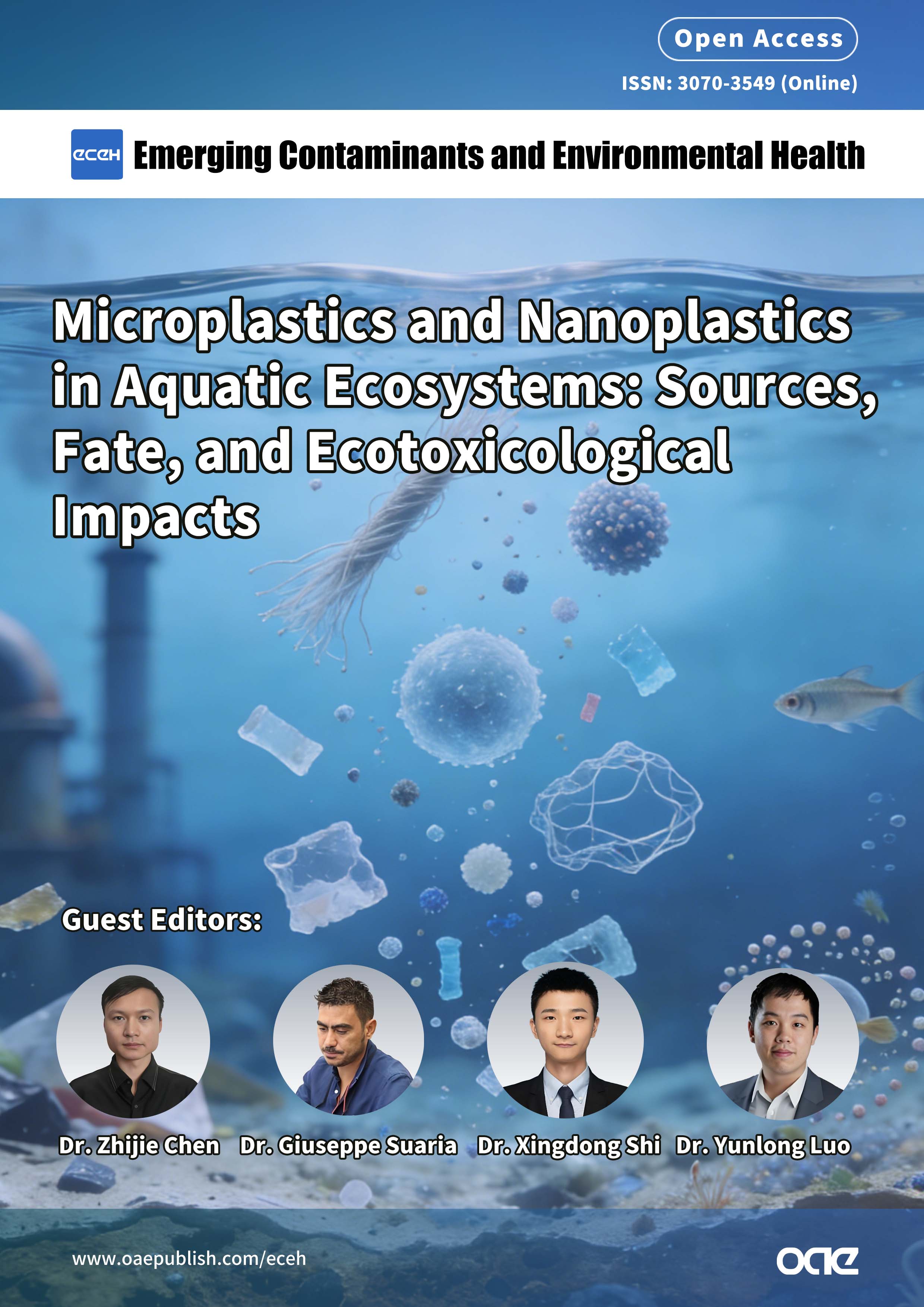
Topic: Microplastics and Nanoplastics in Aquatic Ecosystems: Sources, Fate, and Ecotoxicological Impacts
A Special Topic of Emerging Contaminants and Environmental Health
ISSN 3070-3549 (Online)
Submission deadline: 15 Dec 2026
Guest Editors
Special Topic Introduction
Plastic pollution has become one of the most pervasive and complex environmental challenges of the 21st century. Among its various forms, microplastics and nanoplastics (MNPs) have gained increasing scientific and regulatory attention due to their ubiquity, persistence, and potential risks to aquatic ecosystems and environmental health. These particles originate from diverse primary and secondary sources, are transported across freshwater and marine systems, and undergo dynamic physical, chemical, and biological transformations that influence their environmental fate and interactions with living organisms.
Aquatic ecosystems act as major sinks and conduits for MNPs, facilitating their accumulation in water columns, sediments, and biota. Growing evidence demonstrates that MNPs can interact with co-existing contaminants, microorganisms, and organic matter, thereby altering contaminant bioavailability and ecotoxicological behavior. At the organismal level, exposure to MNPs has been linked to oxidative stress, inflammation, impaired growth and reproduction, and disturbances at cellular and molecular scales. These effects raise concerns about broader implications for ecosystem functioning and food-web integrity.
This Special Issue, “Microplastics and Nanoplastics in Aquatic Ecosystems: Sources, Fate, and Ecotoxicological Impacts,” brings together interdisciplinary research that advances understanding of the occurrence, transport pathways, transformation processes, and biological effects of MNPs in aquatic environments. Contributions span field-based observations, laboratory investigations, analytical and modeling approaches, and emerging risk assessment frameworks, highlighting both current knowledge and critical research gaps.
By integrating insights from environmental chemistry, ecotoxicology, and aquatic sciences, this Special Issue aims to support evidence-based management strategies and inform future regulatory and mitigation efforts. We hope this collection will serve as a valuable resource for researchers, practitioners, and policymakers working at the interface of emerging contaminants and environmental health.
Keywords
Microplastics, nanoplastics, aquatic ecosystems, environmental fate, ecotoxicological effects, emerging contaminants, bioaccumulation, trophic transfer, aquatic organisms, environmental health
Submission Deadline
Submission Information
For Author Instructions, please refer to https://www.oaepublish.com/eceh/author_instructions
For Online Submission, please login at https://www.oaecenter.com/login?JournalId=eceh&IssueId=eceh26020510376
Submission Deadline: 15 Dec 2026
Contacts: Tina Li, Assistant Editor, [email protected]