
2026 Nobel Prize in Chemistry Recognizes Discoveries in Asymmetric Organic Synthesis
The 2026 Nobel Prize in Chemistry has been awarded to Henri B. Kagan of Université Paris-Sud, France, and Kenso Soai of Tokyo University of Science, Japan, for the discovery of non-linear effects and autocatalysis in asymmetric organic synthesis.
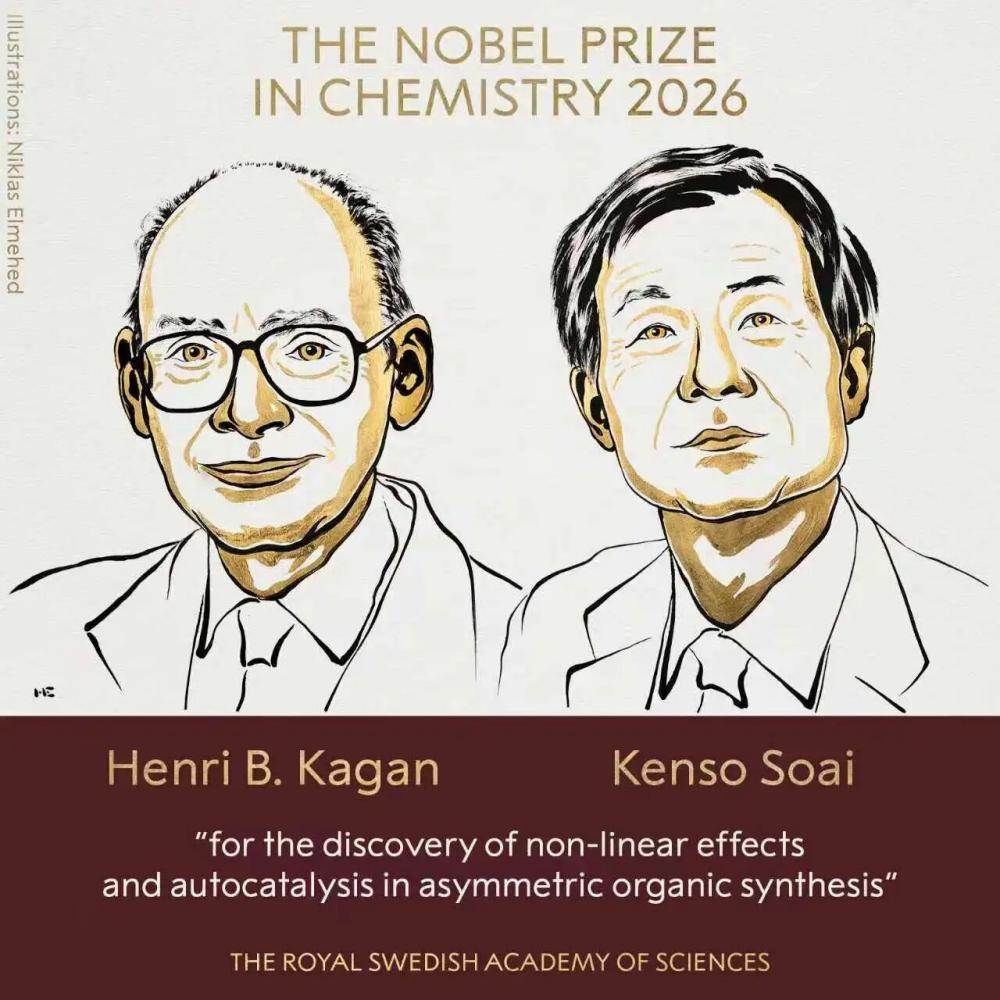
Figure 1. Portraits of the 2026 Nobel Prize in Chemistry laureates Henri B. Kagan and Kenso Soai. Illustration: Niklas Elmehed © Nobel Prize Outreach.
Their pioneering research has advanced our understanding of molecular chirality by showing how small initial imbalances between enantiomers can be amplified through chemical reactions.
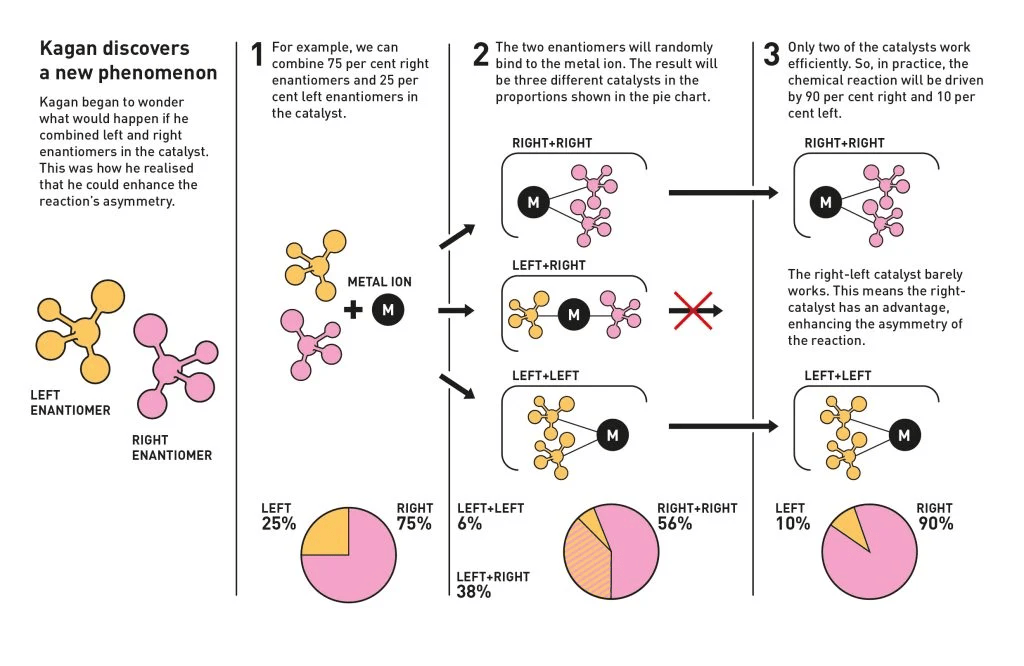
Figure 2. Schematic illustration of nonlinear effects in asymmetric catalysis. © Johan Jarnestad/The Royal Swedish Academy of Sciences
Henri B. Kagan made fundamental contributions to asymmetric catalysis by identifying nonlinear effects, in which the enantiomeric composition of a catalyst does not necessarily correspond linearly to that of the product. Under certain conditions, such effects can enhance the enantiomeric excess of the product, offering new insights into stereoselective catalysis.
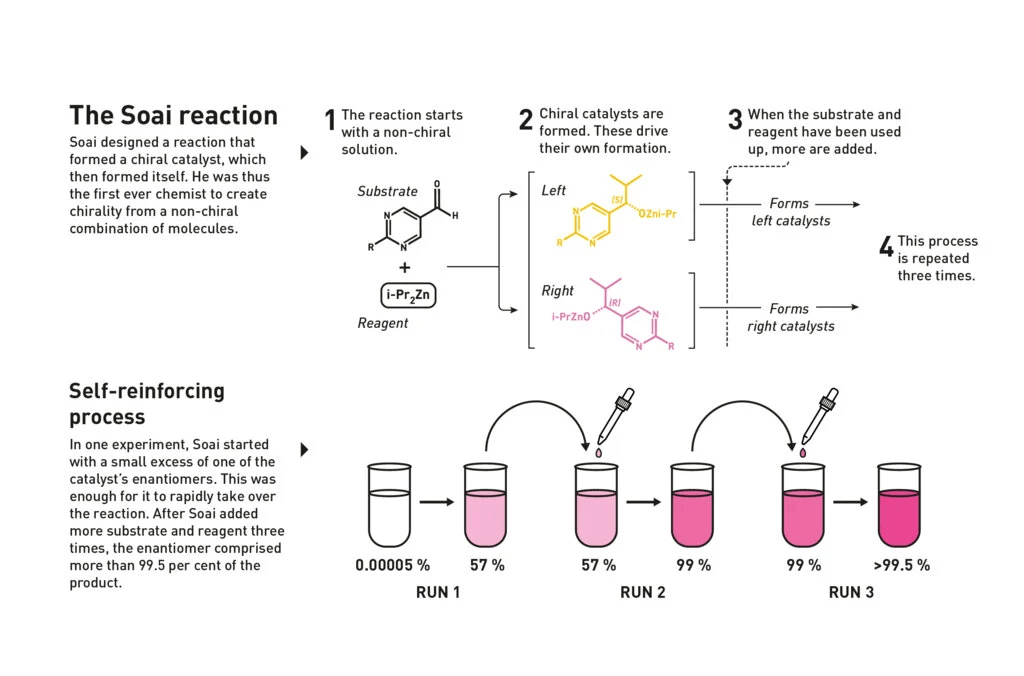
Figure 3. Schematic illustration of asymmetric autocatalysis. © Johan Jarnestad/The Royal Swedish Academy of Sciences.
Kenso Soai developed the landmark Soai reaction, demonstrating asymmetric autocatalysis in which a chiral product catalyzes its own formation. This reaction showed how a small initial chiral imbalance can be amplified under suitable conditions, providing an important experimental model for studying chirality amplification.
These discoveries have deepened our understanding of asymmetric synthesis and provided valuable insights into possible origins of molecular homochirality. They also demonstrate the value of fundamental mechanistic research in advancing selective chemical transformations.
As a journal dedicated to chemical synthesis and related interdisciplinary fields, Chemical Synthesis covers advances in synthetic methodology, catalysis, sustainable chemistry, energy conversion and storage, and functional materials. The laureates' work illustrates how fundamental chemical discoveries can inform the development of innovative synthetic strategies.
Chemical Synthesis will continue to disseminate research findings in chemical synthesis and related fields, fostering innovation across the global research community.
Source: Nobel Prize Outreach, The Nobel Prize in Chemistry 2026 – Popular Information.
https://www.nobelprize.org/prizes/chemistry/2026/popular-information/.
Editor: Qianni Bian
Language Editor: Amir Khan
Production Editor: Xingyue Luo
Respectfully submitted by the Editorial Office of Chemical Synthesis