


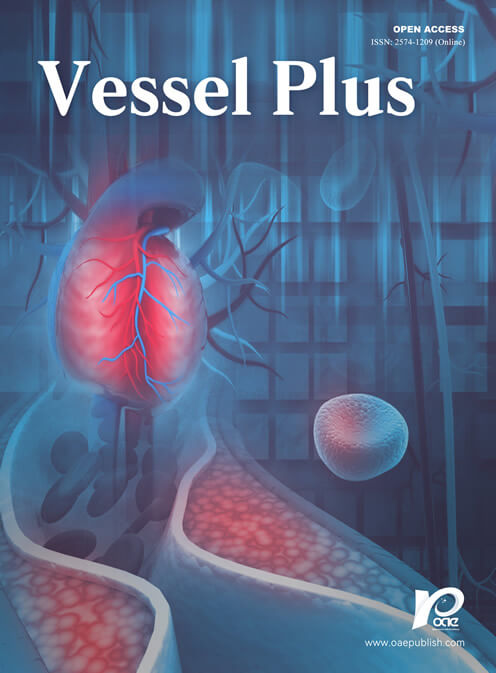
Exclusive Interview with Prof. Martin Schwartz: How Blood Flow Shapes Vascular Biology: From Mechanotransduction to Disease
On June 23, the Editorial Office of Vessel Plus is delighted to present an exclusive interview with Prof. Martin Schwartz from Yale University. Prof. Schwartz, a world-leading pioneer in vascular mechanobiology, shared his profound insights on various aspects of vascular research, emerging technologies, and the academic environment. The interview was conducted by Prof. Xiaoyu Tian, an Editorial Board Member of Vessel Plus and Associate Professor from the Chinese University of Hong Kong.
Interview Questions & Key Highlights:
Q1: Your pioneering work helped establish mechanotransduction - the process by which cells convert mechanical stimuli into biochemical signals - as a core principle in vascular biology. Looking back at different stages of your research career, what do you think are the milestones and most important discoveries in your mechanobiology research? How are these discoveries in basic cellular mechanisms translatable to treat human disease?
Answer: Prof. Schwartz highlighted his early work with Eleni Tzima on the endothelial junctional complex with PECAM-1 as a central player leading to integrin activation. He also mentioned that his collaboration with Prof. Shu Chien was the beginning of their work on the signaling pathways associated with integrins. His collaboration with Prof. Sanford Shattil, his neighbor at Scripps Research Institute, who developed WOW-1, the activation state-sensitive antibody used to monitor active αvβ3, was central to this project.
Using these tools, Eleni showed that shear stress activates integrins, and the discovered a number of molecules that mediated the effect of shear stress on integrins. This led them to discover of the PECAM1 junctional complex as a seminal finding in the field at the time, and a very special thing to him. He described it as a defining moment in his career, where the right hunch led to the breakthrough. He also felt that his lab was equipped with the right ideas and tools and expertise to make a real discovery. After then, his lab developed the molecular tension sensors that they used measure the biomechanical force on PECAM1, followed by a number of mapping and mechanistic studies. He also hoped that these discoveries, although not immediately translational, could lead to clinical advances in the future. This PECAM1 paper was slow to be recognized but its recognition grew over time.
Prof. Schwartz also mentioned that his lab has recently embarked on new mechanistic studies of PECAM1, attempting to understand at the structural level how forces affect the conformation of PECAM1. This includes a collaboration with computational biologist Prof. Tamara Bidone who is using steered molecular dynamics simulations to understand its conformational transitions under force. They are also collaborating with Prof. Chenxiang Lin at Yale, developing DNA origami techniques to precisely apply tension to proteins like PECAM1, and collaborating with Prof. Gregory Alushin at Rockefeller University to use cryo-EM to visualize PECAM1 with and without tension. The ultimate goal of these studies is to understand the system well enough to develop small molecules that can modulate force-induced conformational transitions. He considers this work among the most pioneering in his career.
Q2: You've extensively studied integrins and focal adhesion molecules in mechanotransduction. How has your thinking evolved over time, particularly regarding these molecules and other signaling networks in endothelial cell sensing of shear stress?
Answer: Prof. Schwartz mentioned the early discovery of integrins established in the 1990s and early 2000s, which developed the basic principles for how integrin signaling works. He also mentioned the work on integrin structure from Prof. Timothy Springer's lab which pioneered the working model of integrin conformational change under activation by tension. He considered this deep investigation into the structural biology of mechanosensors as critically important, and likely to pave the way to translation, although that goal is still distant.
Q3: Nowadays, the field is shifting from studying individual signaling pathways to a more system-level approach. What is your view on recent technological developments such as omics (the study of biological molecules in a comprehensive manner), single-cell analysis, spatial methods, and computational modeling, in advancing our understanding of how cytoskeletal remodeling links mechanical cues to gene expression and vascular inflammation?
Answer: Prof. Schwartz believed that mechanistic cell biology needs to incorporate genetics and big-picture biology from techniques like single-cell sequencing and spatial transcriptomics to identify the right target in vascular disease. Computational modeling methods, such as cSTAR, developed by Boris Kholodenko now at the University College Dublin, will enable characterizing signaling network on a broad scale. These methods, including AI, can accelerate, for example, research on mechanobiology to understand how tension manipulate protein structure, etc. At the moment, a lot of the published high throughput data are still not fully utilized. In the future more in-depth analytic techniques including computational modeling could better use these datasets to extract more insights.
Q4: Despite major advances in vascular mechanobiology, translating these insights into clinical therapies remains challenging. In your view, what could be the most promising translational directions? Are there any potential drug targets, or technical advances like organoids or drug delivery systems?
Answer: Prof. Schwartz thought that organoids—three-dimensional cell cultures may have limitations when applied to vascular biology due to the lack of flow. However, some labs such as Prof. Christopher Chen at Boston University have developed multicellular flow systems for studying vascular biology in more complex systems.
Regarding the drug delivery system, and biomaterials, he saw potential as endothelial cells are easy to target. For example, targeting inflamed endothelial cells in atherosclerotic plaques could be a viable approach. He particularly mentioned Prof. Yun Fang's work on VCAM-1-targeting polyelectrolyte complex micelles to deliver miR-92a inhibitors for treating pathological vascular remodeling.
He also mentioned the potential of anti-inflammatory molecules as therapeutic targets, rather than inhibiting pro-inflammatory molecules which may compromise the host defense. These include Krüppel-like factor KLF2 and KLF4, which are the central regulator of a set of anti-inflammatory and vaso-protective genes.
Q5: Looking ahead in the next 10 years, where do you personally see the most exciting future directions and research topics in mechanobiology and vascular biology?
Answer: Prof. Schwartz was cautious about making predictions, as past pronouncements about future research directions often proved inaccurate. However, he did mention that drug delivery systems could be useful in vascular biology, given the ease of targeting endothelial cells. Also, targeting the anti-inflammatory arm in endothelial cells was an area of potential research.
Q6: Do you have any advice and suggestions on career development for trainees?
Answer: Prof. Schwartz expressed concern over young scientists being saturated with career advice and overly focused on careerism, getting career advice on how to succeed at every juncture in their lives. He advocates shifting the focus toward doing what you love, discovering your identity, and pursuing what brings genuine happiness. He notes that simply optimizing for a high-paying job with the least amount of work does not guarantee a satisfying life. Science is intrinsically difficult, requiring tremendous energy, insight, and creativity. Therefore, he believes the people who pursue science should be the ones who truly love doing it.
In the end, Prof. Schwartz also clarifies his humorous comment about his "the most effective screening method is guessing". Though he admits he is partly joking with his phrasing, his ultimate point is that scientific intuition is a powerful and valuable asset that should not be underestimated. Intuition is the result of accumulated experience and insight, which has in fact led to many great advances in science.
About Prof. Martin Schwartz:
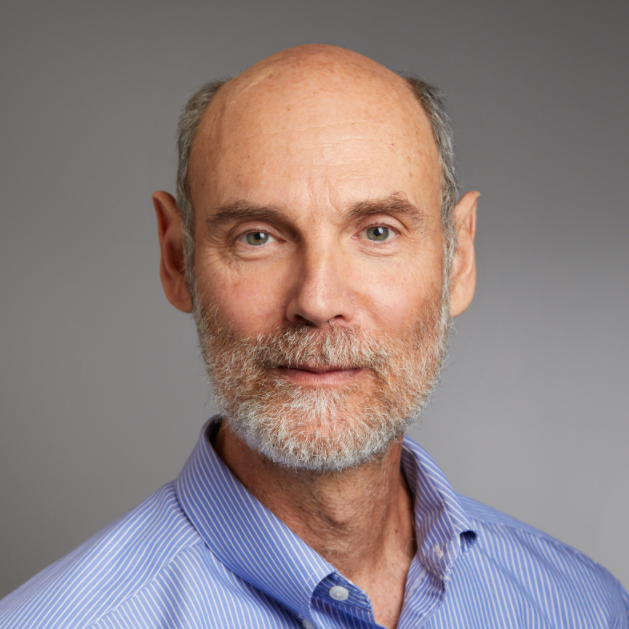
Prof. Martin Schwartz is the Robert W. Berliner Professor of Medicine in the Yale Cardiovascular Research Center and the Section of Cardiovascular Medicine, Department of Internal Medicine, Yale School of Medicine, USA. He is internationally recognized as a pioneer in the field of vascular mechanobiology, with seminal contributions to understanding how mechanical forces such as blood flow and matrix stiffness regulate endothelial cell behavior, vascular remodeling, and cardiovascular disease. His research has shaped current concepts of mechanotransduction and its role in atherosclerosis, inflammation, angiogenesis, and tissue repair. Through decades of influential work, Prof. Schwartz has helped establish the molecular framework linking biomechanical cues to vascular health and disease.
About Prof. Xiaoyu Tian:
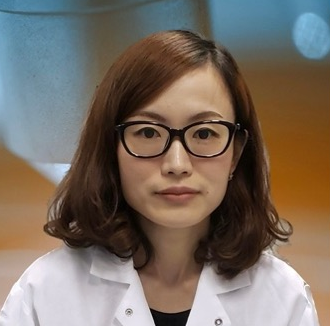
Prof. Xiaoyu Tian is an Associate Professor at the School of Biomedical Sciences, The Chinese University of Hong Kong, China. Her research focuses on vascular biology, endothelial dysfunction, atherosclerosis, and stress signaling pathways. Using both cellular and animal models, her laboratory investigates how endothelial signaling pathways contribute to vascular homeostasis and disease progression. Prof. Tian has made contributions to understanding the molecular basis of vascular injury and has published extensively in the fields of cardiovascular science. Her work aims to facilitate the development of novel therapeutic strategies for vascular diseases.
Editor: Meng Chen
Production Editor: Ting Xu
Respectfully Submitted by the Editorial Office of Vessel Plus