
Special Interview with Prof. Rei Ogawa
On November 18, 2026, the Editorial Office of Plastic and Aesthetic Research (PAR) had the pleasure of interviewing Prof. Rei Ogawa of Nippon Medical School, Tokyo, Japan, who also serves on the PAR Editorial Board. The interview focused on mechanobiology, wound healing, and scar management, exploring current challenges in the treatment of keloids and pathological scars, the clinical implications of mechanobiological research, and the role of international and interdisciplinary collaboration in advancing plastic and reconstructive surgery.
The recording of this interview can be found below:
Interview Questions:
Q1: As the Dean of the School of Medicine, Chairman of Plastic and Reconstructive Surgery, and head of the Mechanobiology and Mechanotherapy Laboratory at Nippon Medical School, you have led groundbreaking work in wound healing and scar management. Could you share what initially inspired your deep fascination with mechanobiology and the clinical complexities of scarring?
Q2: Your extensive leadership across major societies,such as serving as president of the Global Scar Society (G-ScarS) and the Asia Pacific Scar Society (APSSM) gives you a unique global perspective. From your viewpoint, what are the most critical current bottlenecks in keloid and scar treatment, and how are modern mechanobiological insights helping clinicians overcome them?
Q3: How is mechanobiology changing the way we understand these conditions, and how might that understanding lead to more effective treatments for patients?
Q4: OAE Future Science aims to break traditional academic boundaries and foster global collaboration to shape the future of science. Given your active international roles,including being a Fellow of the American College of Surgeons and an Honorary Fellow of the Royal College of Surgeons of Thailand,how do you see cross-cultural and interdisciplinary collaboration accelerating innovations in plastic surgery and regenerative medicine?
Q5: Looking toward the future, what advice would you give to young clinician-scientists and early-career researchers entering the fields of wound healing and mechanobiology who aspire to bridge fundamental laboratory science with impactful clinical practice?
About Prof. Rei Ogawa:
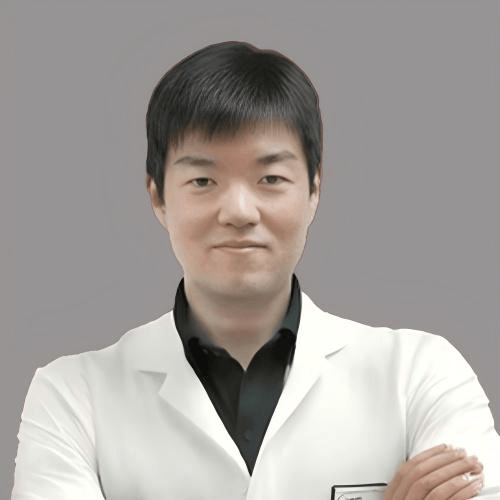
Rei Ogawa, M.D., Ph.D., F.A.C.S., is a Professor and Chair of the Department of Plastic, Reconstructive, and Aesthetic Surgery at Nippon Medical School, Tokyo, Japan, where he also serves as Dean of the Faculty of Medicine and directs the Mechanobiology and Mechanotherapy Laboratory.
Prof. Ogawa graduated from Nippon Medical School in 1999 and received his Ph.D. from the same institution in 2005. From 2007 to 2009, he undertook research training in wound healing and tissue engineering at Brigham and Women's Hospital, Harvard Medical School, Boston, USA. He was appointed Associate Professor at Nippon Medical School in 2009 and has served as Professor and Chair of the Department of Plastic, Reconstructive, and Aesthetic Surgery since 2015.
His research focuses on mechanobiology and mechanotherapy, particularly their applications in wound healing, tissue regeneration, scar formation, and the prevention and treatment of keloids and hypertrophic scars. His work integrates fundamental investigations into the effects of mechanical forces on cells and tissues with clinical approaches to reconstructive surgery and scar management.
Prof. Ogawa has held leadership positions in several professional organizations, including serving as President of the Global Scar Society (G-ScarS), the Asia-Pacific Society for Scar Medicine (APSSM), and the Japan Scar Workshop (JSW). He is a Fellow of the American College of Surgeons (FACS), a member of the American Association of Plastic Surgeons (AAPS) and the American Society of Plastic Surgeons (ASPS), and an Honorary Fellow of the Royal College of Surgeons of Thailand (FRCST).
Through his clinical practice, research, and international academic engagement, Prof. Ogawa continues to contribute to the development of wound healing research, mechanobiology, and scar management.
To learn more about Prof. Rei Ogawa, please visit: https://plasticfellow.com/people/rei-ogawa/
Editor: Frida Yuan
Production Editor: Xingyue Luo
Respectfully Submitted by the Editorial Office of Plastic and Aesthetic Research