


Special Interview with Prof. Yuval Rinkevich
On May 11, 2026, the Editorial Office of Plastic and Aesthetic Research (PAR) had the honor of interviewing Prof. Yuval Rinkevich - a world-known regenerative biologist, the Director of the Institute for Regenerative Biology and Medicine, at the Chinese Institutes for Medical Research (CIMR) and a Chair Professor at Capital Medical University. The PAR Editorial Board member Prof. Dongsheng Jiang serves as the interviewer.
The recording of this interview can be found below:
Q1: As the understanding of fibroblast heterogeneity and regenerative wound healing continues to evolve, how do you envision these discoveries translating into the future of plastic and reconstructive surgery, particularly in improving scar quality, tissue regeneration, and long-term functional outcomes?
Q2: In your recent work on "Distinct fibroblast assemblies establishing scarless regeneration", you proposed that supracellular fibroblast organization may predict healing outcomes more accurately than classical ECM deposition markers. Could this represent a conceptual shift in how we clinically evaluate fibrosis and regenerative healing in the future?
Q3: In your recent lecture delivered in Shanghai this January, titled "Matrix Translocations in Injury, Disease, and Development", you highlighted the dynamic repositioning of extracellular matrix environments. Your work has also revealed that specific fibroblast populations actively drive scar formation following injury through coordinated behaviors such as swarming, cell-cell adhesion, and the mobilization of prefabricated extracellular matrix into wound sites. From the perspective of plastic and reconstructive surgery, how do you see these collective fibroblast behaviors and matrix translocation processes influencing scar quality and tissue regeneration outcomes, and do you envision future strategies to modulate these processes to promote more regenerative, scar-minimizing healing?
Q4: Across your work - from skin fibrosis and fascia biology to whole-body regeneration models - you seem to repeatedly challenge the boundary between repair and regeneration. Do you think humans still retain latent regenerative programs that are biologically suppressed, rather than evolutionarily lost?
Q5: Your career has continuously bridged developmental biology, stem cell science, fibrosis research, and regenerative medicine. For young investigators entering this rapidly evolving field, what advice would you give on identifying meaningful scientific questions and maintaining originality in an increasingly competitive research environment?
About Prof. Yuval Rinkevich:
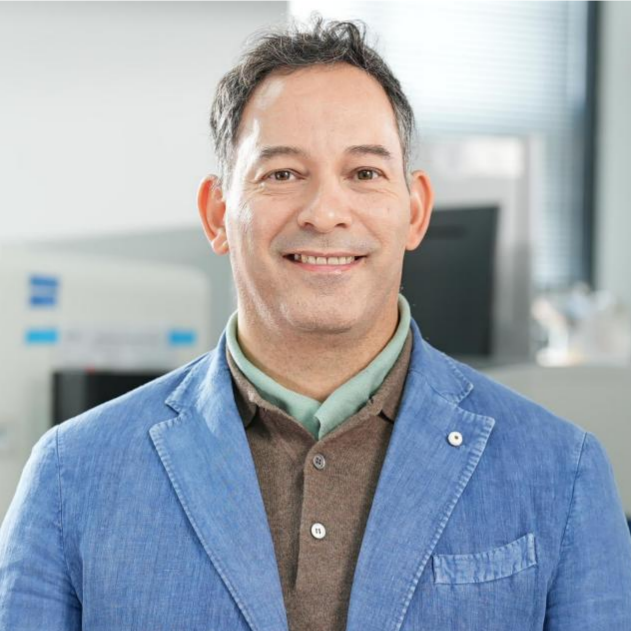
Yuval Rinkevich is the Director of the Institute for Regenerative Biology and Medicine, at the Chinese Institutes for Medical Research (CIMR) and a Chair Professor at Capital Medical University. Before joining CIMR, Prof. Rinkevich directed the Institute for Regenerative Biology and Medicine at Helmholtz Center Munich, Germany. From 2008-2014, Professor Rinkevich worked at Stanford University, Institute for Stem Cell Biology and Regenerative Medicine, with Prof. Irving L. Weissman.
The Rinkevich lab explores the basis of tissue repair and regeneration as foundation for therapy development in clinical use. The Rinkevich lab made foundational discoveries on diverse fibroblasts and their origins in healing responses in skin, and internal organ cavities. Drawing on the lab's breakthrough methodologies to view connective tissue dynamics, the Rinkevich lab explores incurable healing and fibroproliferative conditions, determining stem cell and tissue origins that form scars across diseased and injured organs. The work discloses new foundations of organ repair, with significant translational potential to heal a plethora of diseases associated with scarring, fibrosis and chronic healing, in the clinic. The Rinkevich group's findings initially established that the subcutaneous fascia and visceral serosa function as crucial, actively regulatory units in tissue repair and regeneration. They further identified a CD201-marked multipotent fibroblast progenitor, offering a completely new perspective on the mechanisms of scarring and organ fibrosis. Concurrently, the lab systematically clarified the division of labor and lineage transformation dynamics among distinct fibroblast populations during tissue repair, thereby laying a vital theoretical framework for understanding the molecular and cellular basis of wound regeneration.
Over the past five years, the Rinkevich Laboratory has published more than 70 papers in leading international journals - including Science, Nature, and Cell - with over 6600 citations, underscoring its global impact in the field of regenerative biology and tissue repair.
To learn more about Prof. Yuval Rinkevich, please visit: https://www.cimrbj.ac.cn/en/channel/1809184782135988224.html
Editor: Thea Meng
Production Editor: Ting Xu
Respectfully Submitted by the Editorial Office of Plastic and Aesthetic Research