


Expert Interview Series-Prof. Guangping Gao
On June 27, 2026, the Editorial Office of Journal of Translational Genetics and Genomics interviewed Prof. Guangping Gao, the Director, Li Weibo Institute for Rare Diseases Research, Director, Horae Gene Therapy Center and Viral Vector Core, Professor of Microbiology and Physiological Systems, Penelope Booth Rockwell Professor in Biomedical Research, UMass Chan Medical School, Massachusetts, USA.
Prof. Gao has long been dedicated to gene therapy research for rare genetic diseases, making internationally recognized contributions to the development of AAV-based vectors and their clinical translation. In this interview, he reflected on the rapid progress of gene therapy over the past three decades, highlighting key drivers such as advances in viral vector engineering, progress in molecular genetics, and the growing maturity of translational pathways supported by orphan drug policies. He also shared his perspectives on the remaining scientific challenges, including long-term safety, immune responses, limited re-dosing capacity, and insufficient tissue-specific targeting. Looking ahead, he emphasized that major challenges in the field include immunological barriers, delivery efficiency, manufacturing scalability, and the difficulty of extending therapies from monogenic rare diseases to more complex disorders. Drawing on his extensive experience, he further discussed emerging directions with strong potential, such as next-generation engineered AAVs through directed evolution, non-viral delivery systems like lipid nanoparticles (LNPs), high-precision genome editing tools including CRISPR base and prime editing, as well as RNA-based therapeutics and AI-assisted design platforms, all of which are expected to drive the next wave of safer, more precise, and more accessible gene therapies.
Watch the full interview with Prof. Guangping Gao:
Interview Questions:
Q1 Over the past three decades, you have dedicated your career to gene therapy for rare genetic diseases and made pioneering contributions to the discovery and development of AAV vectors. Looking back at the evolution of the gene therapy field, what do you think have been the key drivers behind the rapid progress in gene therapies for rare diseases? What important scientific questions still deserve greater attention in the future?
Q2. What are the most significant challenges currently facing the field of human gene therapy? At the same time, which emerging technologies or research directions do you believe hold the greatest promise for creating new opportunities in this field?
About the Interviewee:
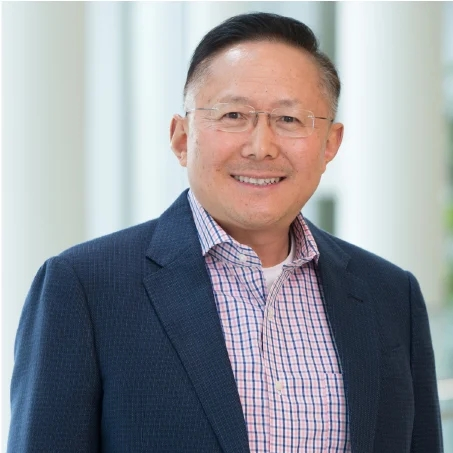
Prof. Guangping Gao, the Director, Li Weibo Institute for Rare Diseases Research, Director, Horae Gene Therapy Center and Viral Vector Core, Professor of Microbiology and Physiological Systems, Penelope Booth Rockwell Professor in Biomedical Research, UMass Chan Medical School, Massachusetts, USA.
Prof. Gao is an internationally recognized gene therapy researcher who has played a key role in the discovery and characterization of new family of adeno-associated virus (AAV) serotypes, which was instrumental in reviving the gene therapy field, hugely impacting many currently untreatable human diseases. For nearly 30 years of his scientific research career, Prof. Gao has primarily focused on molecular genetics and viral vector gene therapy of rare genetic diseases, encompassing disease gene cloning, causative mutation identification, pathomechanism investigation, animal modeling, novel viral vector discovery and engineering for in vivo gene delivery, vector biology, preclinical and clinical gene therapy product development, viral vector manufacturing for preclinical and clinical gene therapy applications as well as technology platforms development as novel approaches for human gene therapy.
Representative Research Achievements
- Elected President of the American Society of Gene & Cell Therapy (2017), becoming the first Chinese-origin scientist based in the United States to hold this position
- Served as Tenured Chair Professor at University of Massachusetts Medical School and Director of the HORAE Gene Therapy Center
- Served as Editor-in-Chief of Human Gene Therapy, a leading journal in the field of gene and cell therapy
- Made pioneering contributions to adeno-associated virus (AAV) biology and gene therapy, including discovery and characterization of ~1000 novel AAV variants for gene delivery applications
- Advanced translational gene therapy research in collaboration with leading global investigators, including Prof. James Wilson and other key figures in AAV-based therapy development
- Contributed to development and translational research of gene therapy approaches for inherited diseases, particularly AAV-mediated therapeutic strategies
- Investigated AAV vector biology and host - immune interactions, supporting improved safety and durability of systemic gene delivery
- Established multiple China - US academic collaboration programs, supporting training of ~80 clinical trainees and >20 translational researchers in leading US institutions
- Facilitated international academic exchange through organization of Sino - US gene and cell therapy conferences and training programs
Prof. Gao has published 250+ research papers, 6 book chapters, and 4 edited books and serves as Editor of Human Gene Therapy, Senior Editor of the Gene and Cell Therapy book series, Associate Editor of Signal Transduction and Targeted Therapy, and on Editorial Boards of several other gene therapy and virology journals. Dr. Gao was recently elected for a three-year term as the Vice President (2017-2018), President elect (2018-2019) and President (2019-2020) for the American Society of Gene and Cell Therapy.
Editor: Ting Yang
Language Editor: Catherine Yang
Production Editor: Xingyue Luo
Respectfully Submitted by the Editorial Office of Journal of Translational Genetics and Genomics