

Expert Interview Series-Prof. Katherine High
On June 27, 2026, the Editorial Office of Journal of Translational Genetics and Genomics interviewed Prof. Katherine High, the Founding Director of the Raymond G. Perelman Center for Cellular and Molecular Therapeutics at Children’s Hospital of Philadelphia and Emeritus Professor of Pediatrics, Perelman School of Medicine, University of Pennsylvania, Pennsylvania, USA.
Prof. High is a leading female scientist who has long been dedicated to research in gene therapy for rare genetic diseases, making pioneering contributions to the development and clinical translation of adeno-associated virus (AAV) vector systems. Over the course of her career, she has witnessed the transformation of gene therapy from a field without any approved products to one in which multiple therapies have now reached regulatory approval and are benefiting patients. In this interview, she reflected on the key drivers behind the rapid progress of gene therapy for rare diseases, highlighting advances in vector engineering - particularly AAV-based platforms - and the accumulation of clinical experience that has enabled more precise and effective disease targeting. She also noted that despite these advances, only a limited number of diseases have been successfully treated to date, underscoring the large number of unmet medical needs that remain.
She further discussed the major challenges currently facing the field, including the high rate of clinical trial failures and the ongoing difficulty of accurately matching gene delivery systems with the requirements of different diseases. She emphasized the importance of systematically learning from failed trials, not only from successful ones, as this may provide critical insights for improving future therapeutic strategies. Looking ahead, she highlighted the continued evolution of gene delivery technologies, particularly the development of biosynthetic AAV capsids with improved tissue tropism, which may enable targeting of previously inaccessible organs such as the kidney. She also underscored the growing potential of artificial intelligence in gene therapy, including optimizing vector–disease matching, guiding more efficient allocation of research resources, and extracting meaningful insights from past clinical trial data to improve the likelihood of future success.
Watch the full interview with Prof. Katherine High:
Interview Questions:
Q1. You have dedicated your career to advancing gene therapy from basic research to clinical application and have witnessed the evolution of this field over several decades. Looking back, what do you consider to be the most significant changes in gene therapy, and what major challenges still need to be addressed in the future?
Q2. Looking ahead to the next decade, what technological innovations or breakthroughs do you believe will most significantly accelerate the journey from gene discovery to gene-based medicines and create new therapeutic opportunities for patients with rare diseases?
About the Interviewee:
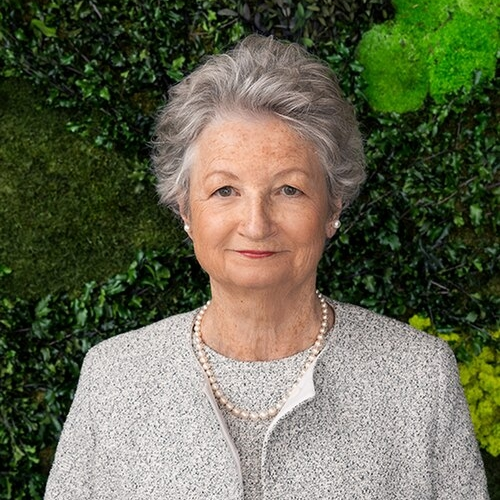
Prof. Katherine High, the Founding Director of the Raymond G. Perelman Center for Cellular and Molecular Therapeutics at Children’s Hospital of Philadelphia and Emeritus Professor of Pediatrics, Perelman School of Medicine, University of Pennsylvania, Pennsylvania, USA.
Prof. High's research has been instrumental in advancing understanding of the human immune response to AAV gene delivery, and she developed strategies now widely adopted across the field to improve safety and efficacy. In addition to her research contributions, Dr. High served a five-year term on the U.S. FDA Advisory Committee on Cell, Tissue, and Gene Therapies and is a past president of the American Society of Gene & Cell Therapy.
Representative Research Achievements
- Conducted early AAV gene therapy clinical studies in humans, including intramuscular administration (1999) and liver-directed administration (2001)
- Contributed to clinical application of AAV gene therapy for inherited retinal disease, including work related to voretigene neparvovec for inherited blindness
- Studied human immune responses to systemically administered AAV vectors and their impact on gene expression
- Participated in development of gene therapy approaches for hemophilia B and hemophilia A
- Involved in translational development and clinical advancement of AAV-based gene therapy programs at Spark Therapeutics
- Contributed to gene therapy research and development activities at AskBio and RhyGaze
Prof. High has published in peer-reviewed journals including Nature Genetics, Nature Medicine, and New England Journal of Medicine. She is an elected member of the National Academy of Medicine, the National Academy of Sciences, and the American Academy of Arts and Sciences. She has received multiple awards in the field of gene and cell therapy, including the American Society of Gene and Cell Therapy Outstanding Achievement Award and the Breakthrough Prize in Life Sciences (2026).
Editor: Ting Yang
Language Editor: Catherine Yang
Production Editor: Xingyue Luo
Respectfully Submitted by the Editorial Office of Journal of Translational Genetics and Genomics