
Interview with Prof. Christian Masquelier: From LiFePO4 to the Future of Energy Storage
Energy Z recently sat down with Prof. Christian Masquelier, a member of the International Advisory Editorial Board of Energy Z and a leading authority on the crystal chemistry of electrochemical energy storage devices. His pioneering research has significantly advanced the development of both lithium-ion and sodium-ion batteries, with a particular focus on polyanionic electrode materials such as LiFePO4 and sodium transition-metal phosphates, including Na3V2(PO4)3 and Na3V2(PO4)2F3.
During the interview, Prof. Masquelier reflected on his early research on LiFePO4 alongside the late Professor John B. Goodenough, emphasizing the importance of intellectual curiosity and the freedom to explore unconventional materials in driving scientific discovery. He also discussed the immense potential of polyanionic materials for sodium-ion batteries, highlighting their exceptional safety, high-power capabilities, and long cycle life, while underscoring the need to develop cost-effective solutions derived from earth-abundant elements.
Looking ahead, Prof. Masquelier shared his perspectives on the advanced characterization techniques for all-solid-state batteries, alongside emerging research frontiers, including polymer-based systems, photo-rechargeable batteries, and battery recycling. In concluding the interview, he highlighted the vital role of open-ended fundamental research and the cultivation of international scientific talent, noting that visionary ideas and well-trained researchers will help shape the next generation of energy storage technologies.
Interview Questions:
Q1.You worked alongside Professor John B. Goodenough and were among the early researchers to investigate LiFePO4. Despite the early electronic conductivity challenge, what chemical intuition led your team to explore this material? And how do you view the role of LiFePO4 in powering today’s global electric vehicle and energy storage revolution?
Q2. As a pioneer in sodium-ion energy storage, your team has extensively investigated polyanionic materials such as sodium transition-metal phosphates and phosphate fluorides. What key structural or chemical bottlenecks still need to be overcome in sodium-ion cathode materials? And how can polyanionic frameworks help sodium-ion batteries compete in large-scale energy storage?
Q3. Your group leverages advanced X-ray and neutron diffraction techniques, together with electron microscopy, to study battery materials. How can these advanced characterization techniques help resolve interfacial kinetics and structural instabilities in all-solid-state batteries?
Q4. Beyond lithium- and sodium-ion battery chemistries, which emerging energy material systems or interdisciplinary research directions do you see as most critical over the next decade?
Q5. Coordinating international talent programs like MESC+ and DESTINY, what emerging materials or research paradigms do you consider most promising for the coming decade? In addition, what is your vision for Energy Z in your new role as International Advisory Editorial Board Member?
About the Interviewee:
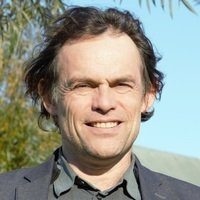
Prof. Christian Masquelier is a Professor of chemistry at the University of Picardie Jules Verne and Director of the Laboratory of Reactivity and Chemistry of Solids (LRCS, UMR CNRS-UPJV) in Amiens, France. He is internationally recognized for his pioneering contributions to solid-state chemistry and electrochemical energy storage, particularly for his early research on LiFePO4 conducted alongside Prof. John B. Goodenough. His research focuses on crystal chemistry, advanced characterization techniques, and the development of polyanionic electrode materials for lithium-ion and sodium-ion batteries. Prof. Masquelier also plays an active role in fostering international research collaboration and talent development as a coordinator of major European academic initiatives, including the ALISTORE-ERI network and joint educational programs such as the MESC+ ERASMUS MUNDUS Master Course and the MSCA Cofund doctoral programs DESTINY and DESTINY2.
Editor: Xin Chen
Language Editor: Amir Khan
Production Editor: Xingyue Luo
Respectfully Submitted by the Editorial Office of Energy Z

