
Reframing Metabolic Disease: Insights from Prof. José Manuel Fernández-Real on Iron, Microbiome, and Multi-Omics
On April 12-13, 2026, during the Element Science Global Summit 2026 held at the First Hospital of Jilin University, Changchun, China, the Editorial office of Element conducted a special interview with Prof. José Manuel Fernández-Real from the University of Girona, Spain, a member of Academia Europaea and an Associate Editor of Element - for an in-depth conversation on the evolving landscape of metabolic disease research.
This interview explored emerging directions in the field, including multi-organ metabolic regulation, microbiome–host interactions, iron metabolism, multi-omics-based disease stratification, and the translation of precision medicine into clinical practice. Prof. Fernández-Real discussed several key topics, including the shift from a glucose-centric view of metabolic disease toward a multi-organ and microbiome-integrated framework, the mechanistic links between gut microbiota-derived metabolites, insulin signalling, inflammation, and host metabolism, and the evolving role of iron-related markers such as ferritin and urinary ferritin in metabolic disorders. He also emphasized the challenge of translating multi-omics data into clinically actionable strategies and highlighted the need to redefine metabolic phenotypes beyond traditional risk markers to support more precise disease classification and personalized intervention.
Interview Questions:
Q1: Your recent publications span iron metabolism, gut microbiota, inflammation, and even neurocognitive outcomes - do you see metabolic disease evolving into a "multi-organ, microbiome-integrated" framework rather than a classical glucose-centric model?
Q2: Several of your latest studies link gut microbiota–derived metabolites to insulin signalling and metabolic inflammation - do you think microbiome modulation is approaching a level of mechanistic precision comparable to classical endocrine regulation?
Q3: Your work on ferritin, including emerging markers like urinary ferritin, continues to refine the role of iron in metabolism - do you believe iron is now better understood as a causal driver, a modifier, or a context-dependent biomarker in metabolic disease?
Q4: With increasing use of multi-omics approaches (metabolomics, transcriptomics, microbiome profiling) in your recent studies, what do you see as the biggest challenge in translating these complex datasets into clinically actionable insights?
Q5: Some of your studies suggest paradoxical roles of metabolic factors (e.g., elevated ferritin with differential cardiovascular risk) - do you think redefining metabolic phenotypes beyond traditional risk markers is the next major shift in the field?
About Prof. José Manuel Fernández-Real:
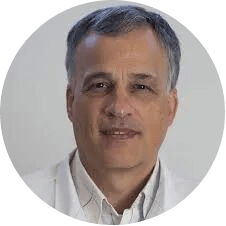
Prof. José Manuel Fernández-Real (H-index 113), with over 38,600 citations (Google Scholar), is Full Professor at the University of Girona (UdG), Spain, and Head of the Endocrinology and Nutrition Section at Dr. Josep Trueta Hospital, Girona, Spain. He is an outstanding research scientist at the Girona Biomedical Research Institute (IDIBGI) and leads the renowned Nutrition, Eumetabolism, and Health (NEH) group. He also serves as Scientific Director of "FatBank," a national biobank in Spain specializing in adipose tissue. In addition, he is Principal Investigator and member of the Steering Committee of the Spanish Biomedical Research Centre in Physiopathology of Obesity and Nutrition (Centro de Investigación Biomédica en Red de Fisiopatología de la Obesidad y Nutrición: CIBERobn), Spain. He previously served as Director of the Department of Medical Sciences at the University of Girona School of Medicine (2018–2023). He is currently Dean of the School of Medicine at the University of Girona and President of the Catalan Diabetes Association. Prof. Fernández-Real obtained his MD and PhD from the University of Barcelona, Spain. He began his scientific career at the University Hospital of Girona, where he played a crucial role in establishing the first research institute in 2006 and in supporting the creation of the Faculty of Medicine at the University of Girona in 2008. Over the past three decades, his research has focused on obesity, insulin resistance, and associated metabolic disorders. He has authored 538 PubMed-indexed articles, including over 270 as corresponding author and 108 as first author. He is ranked among the top 1% of most-cited scientists globally across all fields (Stanford University analysis) and is listed among the 40 most-cited authors worldwide in Endocrinology (Google Scholar).Member of Academia Europaea.
Managing Editor: Victoria Lee
Production Editor: Ting Xu
Respectfully Submitted by the Editorial Office of Element

