
AI Agent Expert Interview Series - Distinguished Professor Hao Li
On January 10, 2026, the Editorial Office of AI Agent had the pleasure of interviewing Distinguished Professor Hao Li, Editor-in-Chief of the journal and a leading scholar at Tohoku University, Sendai, Japan. In this in-depth conversation, Prof. Li shared his insights into the evolving landscape of intelligent agents, artificial intelligence (AI) methodologies, and their expanding interdisciplinary applications.
Prof. Li has long been committed to integrating AI theory with complex systems modeling, engineering practice, and scientific discovery, advancing intelligent agent technologies from algorithmic innovation toward real-world deployment. During the interview, he highlighted the critical roles of AI agents in complex perception, autonomous decision making, and collaborative evolution. He emphasized that the deep integration of high-quality data, interpretable models, and physical constraints is fundamental to building reliable and scalable intelligent systems.
The discussion also covered his latest research progress in multi-agent collaboration, reinforcement learning, and complex system control, as well as their potential applications in scientific research, engineering systems, and societal governance. Reflecting on his dual roles as a researcher and educator, Prof. Li offered thoughtful advice to young scholars, encouraging them to build strong theoretical foundations while actively engaging in interdisciplinary, problem-driven research.
Watch the full interview with Distinguished Professor Hao Li:
Interview Questions:
Q1. How do you assess the current state of AI applications, the progress researchers have made so far, and the key challenges and limitations the field faces today?
Q2. Looking back on your research journey, was there a pivotal stage or specific problem that led you to pursue the interdisciplinary direction of AI and materials science?
Q3. Your team developed the world's first digital materials platform, DigMat, which includes sub-platforms such as DigCat 4.0, DigBat, and DigHyd. What do you consider the most groundbreaking innovations of this platform, and how has it influenced materials discovery and performance optimization?
Q4. Based on your experience with DigMat, what key challenges remain before autonomous materials discovery becomes a reality? Which breakthroughs are most needed in algorithms, data, experimental automation, or research organization?
Q5. As the founding Editor-in-Chief of AI Agent, what motivated you to establish this journal, and what challenges in current academic publishing or research practice does it aim to address?
Q6. Compared with existing AI-focused or materials-focused journals, how would you define the academic positioning of AI Agent and its long-term development direction?
Q7. What advice would you offer to young researchers entering the interdisciplinary field of AI and materials science, particularly regarding research methodology, disciplinary training, and academic mindset?
About the Interviewee:
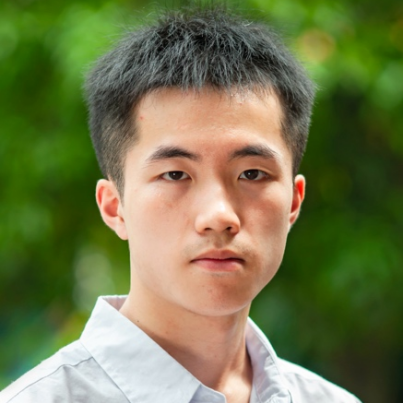
Distinguished Professor Hao Li
Advanced Institute for Materials Research (WPI-AIMR), Tohoku University, Japan
Prof. Hao Li heads the Digital Materials Lab (DigMat) at Tohoku University. His research focuses on the intersection of AI and materials design, where he has achieved multiple breakthroughs in catalysis and materials theory, machine learning algorithm development, and the design of novel materials. He has led the development of some globally influential digital materials platforms and databases (including DigCat 4.0, DigBat, and DigHyd), and proposed the concept of a "Digital Materials Ecosystem". As of January 2026, Prof. Li has published over 300 papers in top journals, including Nature Catalysis, Nature Communications, Journal of the American Chemical Society, Angewandte Chemie International Edition, and Advanced Materials, with more than 16,000 citations. His work has laid important foundations for the industrial application of AI in materials science. He has received numerous international honors and has been repeatedly recognized as a Highly Cited Researcher.
Editor: Wen Xue
Language Editor: Catherine Yang
Production Editor: Ting Xu
Respectfully Submitted by the Editorial Office of AI Agent

