

Multidisciplinary management of concurrent hypogonadism, diabetes, and hypothyroidism in Woodhouse-Sakati syndrome: a case report and preliminary clinical management experience
 0
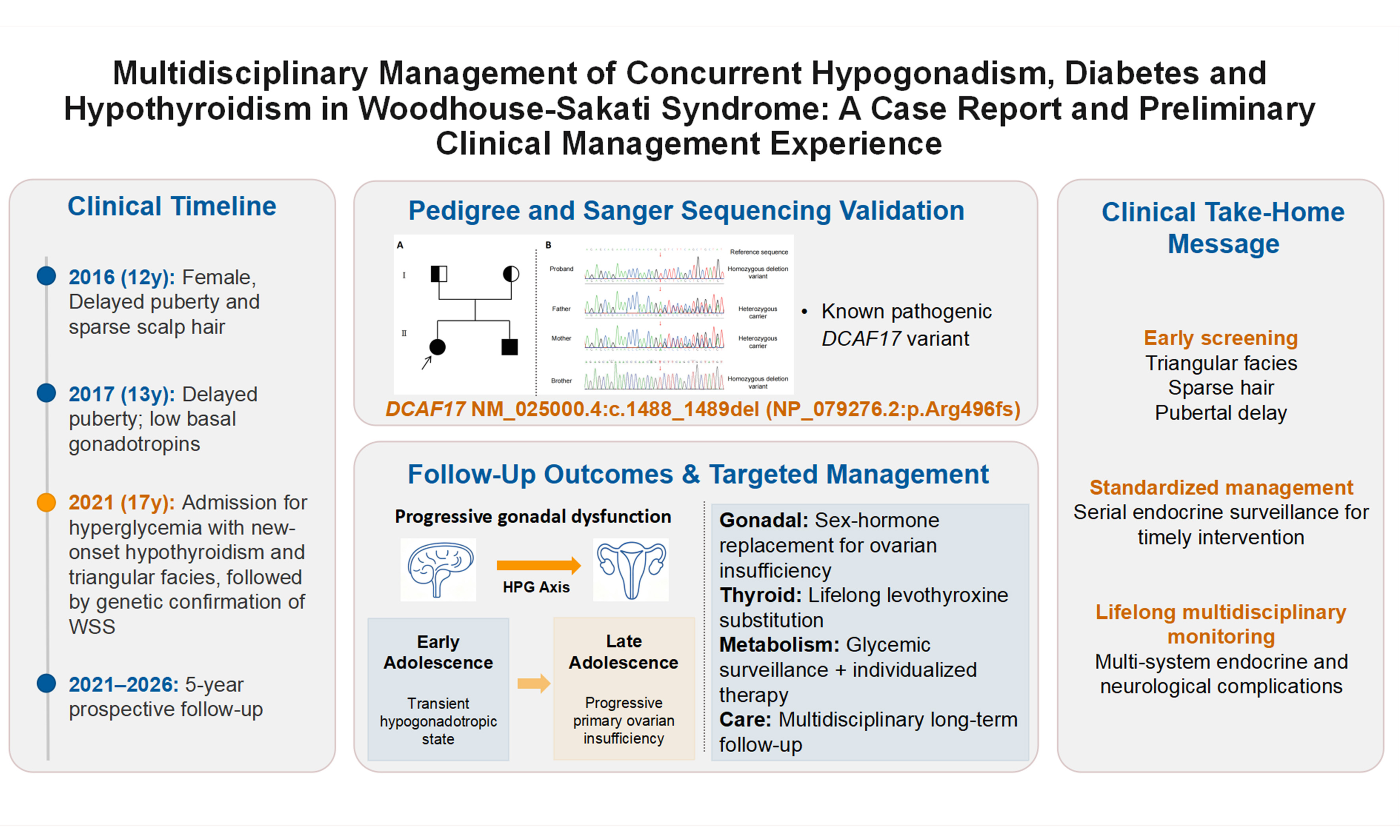
0 Graphical Abstract
Abstract
Woodhouse-Sakati syndrome (WSS) is a rare autosomal recessive neuroendocrine disorder caused by mutations in DCAF17. We report the case of a non-consanguineous Chinese family with two affected siblings who presented with triangular facies, sparse hair, progressive gonadal dysfunction, hypothyroidism, and diabetes mellitus. Genetic testing identified a previously reported homozygous frameshift variant in DCAF17, NM_025000.4:c.1488_1489del (NP_079276.2:p.Arg496fs) (rs778488574), which was verified by Sanger sequencing. The patients received stratified, individualized, multidisciplinary interventions, including hormone replacement and metabolic therapy as part of a 5-year standardized post-diagnosis surveillance program initiated in 2021. This report expands the phenotypic spectrum of this DCAF17 variant, highlights the necessity of early DCAF17 genetic sequencing in patients with unexplained multiple endocrine dysfunctions and characteristic ectodermal/facial features, and provides practical stratified long-term monitoring strategies that combine endocrinological and neurological surveillance for clinical reference.
Keywords


 Download PDF
INTRODUCTION
Woodhouse-Sakati syndrome (WSS) is an uncommon autosomal recessive neurodegenerative condition characterized by a combination of endocrine dysfunction, hair loss, sensorineural hearing impairment, progressive extrapyramidal manifestations, and cognitive impairment[1]. The worldwide prevalence of WSS is exceptionally low, and the current body of knowledge consists predominantly of individual case descriptions and family-based investigations[2,3]. The predominant endocrine feature is hypogonadism, which may present as either primary or secondary, resulting in pubertal delay or failure, as well as diabetes mellitus and hypothyroidism[4]. The diagnostic complexity of WSS is heightened by its considerable clinical variability and the progressive evolution of symptoms, often leading to erroneous classification as other syndromes with similar presentations, such as Hutchinson-Gilford progeria syndrome[5]. A conclusive diagnosis depends on molecular genetic analysis to identify mutations in DCAF17; however, a lack of clinical suspicion commonly delays this procedure. Although WSS is known to present with a variety of endocrine and neurological manifestations, cases dominated by severe endocrine dysfunction and no neurological, intellectual, or hearing impairment have rarely been reported. Early diagnosis and effective multidisciplinary management may lead to favorable clinical outcomes.
This case illustrates a practical therapeutic strategy for the comprehensive management of multiple concurrent endocrine disorders in WSS. Although isolated endocrine disturbances have been reported in previous studies[4,6], integrated and effective care for patients with combined hypogonadism, diabetes mellitus, and hypothyroidism remains poorly described. This report addresses an important gap in the literature, which has largely focused on diagnosis rather than on endocrine management. Here, we highlight the value of early, thorough endocrine evaluation and a multidisciplinary approach that involves both endocrinology and genetic counseling. These favorable clinical outcomes support the use of coordinated, proactive care to improve the long-term prognosis and quality of life of patients with WSS.
CASE PRESENTATION
Patient information
The proband was a female born at full term via spontaneous vaginal delivery in August 2004. She was 7 years old when sparse, yellowish hair was first noted in 2011, although this clinical feature did not prompt medical evaluation at that time. Her physical growth and intellectual development were consistent with those of her peers. At age 12 (2016), she visited a local hospital for evaluation of delayed puberty. Initial sex hormone tests showed mildly elevated follicle-stimulating hormone (FSH) (14.11 mIU/mL), low luteinizing hormone (LH) (2.57 mIU/mL), and undetectable estradiol (E2) (< 10 pg/mL), with all other endocrine parameters within normal limits; no intervention was administered at that time. One year later, at age 13 (2017), she was seen for follow-up at our center. Examination results indicated normal triiodothyronine (FT3) and free thyroxine (FT4), thyroid-stimulating hormone (TSH) at 6.956 µIU/mL, FSH at 0.98 mIU/mL, LH at 0.27 mIU/mL, E2 at < 10 pg/mL, and peak growth hormone (GHmax) at 3.36 ng/mL. A gonadotropin-releasing hormone (GnRH) stimulation test showed a peak LH of 11.65 mIU/mL and peak FSH of 5.32 mIU/mL, indicating intact pituitary gonadotroph responsiveness. Color Doppler ultrasonography revealed an infantile uterus, and chromosomal karyotype analysis revealed 46, XX. She was treated with conjugated estrogen tablets at a dose of 0.625 mg per day for a six‑month therapeutic trial. Nevertheless, she voluntarily discontinued the medication because of a perceived lack of therapeutic effect, and no further hormone therapy was administered between 2017 and August 2021.
At the age of 17 years (August 2021), a fasting blood glucose level of 8.6 mmol/L was detected during routine physical examination, despite the absence of typical diabetic symptoms. The patient was hospitalized for further diagnosis and treatment. Her parents were healthy and were not consanguineously related. She had a younger brother who was born full-term via a cesarean section in June 2008. He had sparse hair since infancy and shared a similar facial contour. His physical growth and intellectual development were comparable with those of his peers.
Clinical findings of the proband at age 17 (August 2021)
Physical examination upon admission showed a blood pressure (BP) of 109/64 mmHg, height (H) of 163 cm, and weight (W) of 56 kg. The patient exhibited a triangular facial contour, sparse pale-yellow hair with obvious thinning at the bilateral temples and sparse eyebrows; no tooth loss was noted [Figure 1A]. The gross assessment of hearing and olfaction was normal. No deformities were observed on the trunk or limbs. Breast and pubic hair development occurred at Tanner stage 1 with a juvenile-type vulva. Neurological examination revealed no obvious abnormalities, and there were no extrapyramidal symptoms such as dystonia or bradykinesia. A brief bedside assessment indicated that her cognitive function was within the normal range.
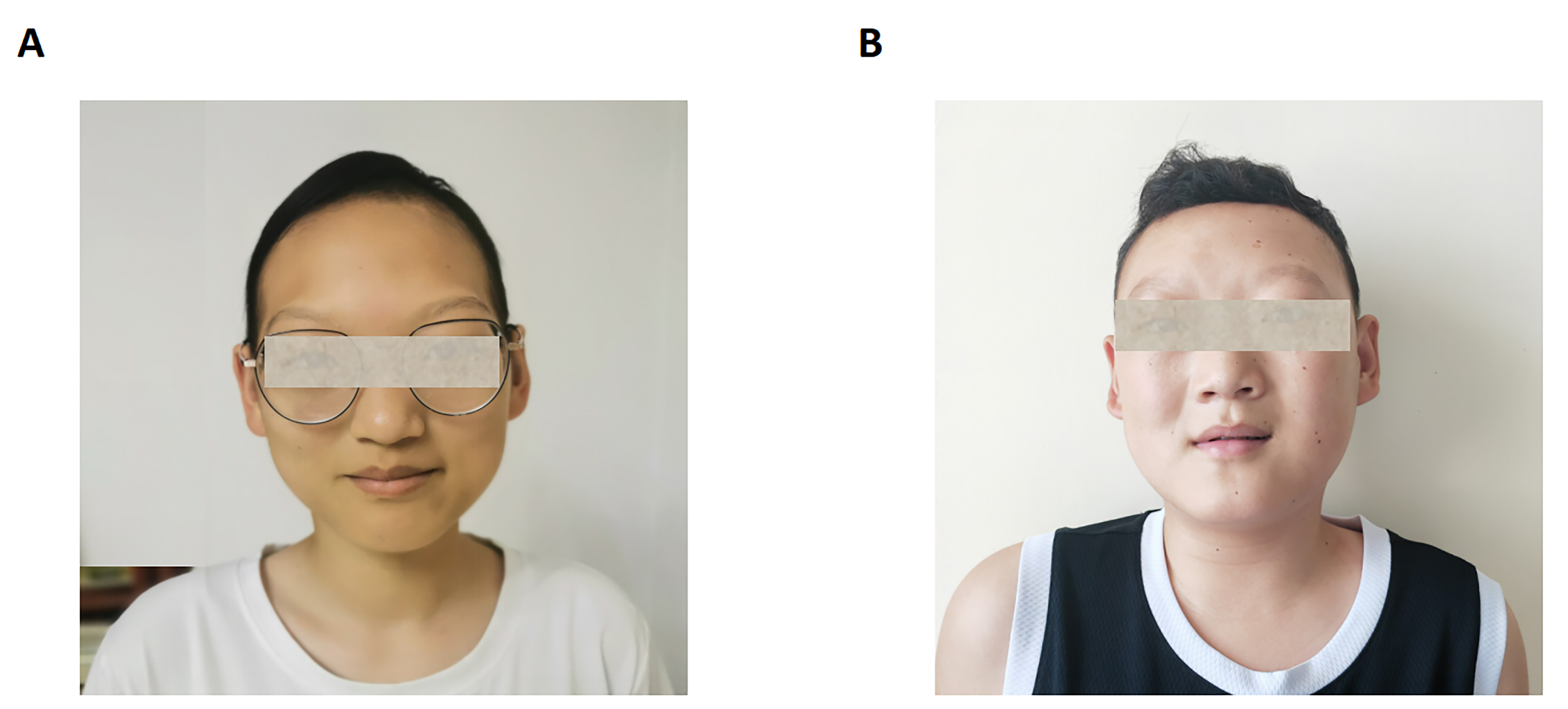
Figure 1. Facial features of the proband (A) and her younger brother (B), showing consistent triangular facial contour. Sparse hair at the bilateral temporal regions can be observed in both individuals, consistent with their clinical manifestations of sparse pale yellow hair and sparse eyebrows; the pale yellow tone of hair is subtle and hard to distinguish in the photographs. Consent for publication was obtained from the patient’s parents.
Laboratory examinations: Glycated hemoglobin (HbA1c) 8.2%; oral glucose tolerance test (OGTT) showed fasting blood glucose (FBG) 8.60 mmol/L and 2-h postprandial blood glucose (2hBG) 12.10 mmol/L. Islet cell antibody (ICA), insulin autoantibody (IAA), and glutamic acid decarboxylase antibody (GADA) levels were negative. FSH 63.45 IU/L, LH 27.59 IU/L, E2 < 15.0 pg/mL, anti-Müllerian hormone (AMH) 0.07 μg/L, insulin-like growth factor-1 (IGF-1) 114 ng/mL, FT3 5.81 pmol/L, FT4 7.09 pmol/L, TSH 16.87 µIU/mL, thyroglobulin antibody (TGAb) 332.1 IU/mL.
Gynecological ultrasound: The uterine body was approximately 24 mm × 13 mm × 28 mm in size, with a clear contour, regular shape, homogeneous myometrial echo, and a linear endometrium.
Cranial magnetic resonance imaging (MRI): The pituitary gland was approximately 7 mm in height with homogeneous signal intensity.
Clinical findings of the proband’s younger brother
At age 15 (July 2023), he underwent a clinical evaluation at our hospital. Physical examination revealed the following: H 173 cm; W 75 kg; triangular facial appearance; and sparse hair [Figure 1B]. Similar mild sparse hair changes were present but were not readily apparent on the facial photograph. Genital examination revealed pubic hair at Tanner stage 1 and bilateral testes measuring 2 mL in volume with a soft texture. Laboratory examinations: HbA1c 5.8%; OGTT showed FBG 6.4 mmol/L, 2hBG 9.1 mmol/L; FSH 1.75 IU/L, LH 2.06 IU/L, testosterone 1.82 ng/mL; FT3 6.08 pmol/L, FT4 10.01 pmol/L, TSH 4.24 µIU/mL. A GnRH stimulation test showed a peak LH of 12.67 mIU/mL and a peak FSH of 2.66 mIU/mL.
Diagnostic assessment and genetic findings
Written informed consent was obtained from the proband and her parents for the use of the genetic testing results, clinical information, and clinical photographs for publication. All personal privacy information was anonymized to avoid identity disclosure. Initial chromosomal karyotyping of the proband revealed a normal 46, XX female profile. The clinical presentation, including sparse hair, triangular facies, primary hypogonadism, diabetes mellitus, and hypothyroidism, was highly suggestive of WSS. Trio whole-exome sequencing (WES) was performed to confirm the diagnosis and identify the underlying genetic cause.
Whole blood samples (2 mL each) were collected from the proband and both parents. Trio WES was performed using next-generation sequencing (NGS) with the Integrated DNA Technologies (IDT) xGen® Exome Research Panel v2.0, targeting all coding exons of approximately 20,000 human genes. Sequencing quality control metrics were as follows: mean target coverage was > 100 × for the proband and > 90 × for the parents, with > 98% of the target region covered at ≥ 20 × depth and a quality score (Q30) > 0.93, indicating high-quality sequencing data.
WES identified a homozygous frameshift deletion in DCAF17, NM_025000.4:c.1488_1489del (NP_079276.2:p.Arg496fs) (rs778488574), a previously reported pathogenic variant associated with WSS.
According to the 2019 American College of Medical Genetics and Genomics (ACMG) guidelines, this variant was classified as likely pathogenic (LP) based on the following evidence: (1) PVS1 (strong evidence): The variant is a frameshift deletion leading to a premature stop codon, which is predicted to result in a truncated protein with > 10% sequence alteration, consistent with loss-of-function (LOF), a known disease mechanism for WSS; (2) PM2 (moderate evidence): The variant was absent from major population databases, including the 1000 Genomes Project, Exome Aggregation Consortium (ExAC)/Genome Aggregation Database (gnomAD), and Human Gene Mutation Database (HGMD), indicating an extremely low allele frequency (< 0.001) in the general population. However, Zhou et al. reported that the same mutation was listed on the ClinVar website[7]; (3) PM3 (supporting evidence): The variant showed perfect co-segregation with the disease phenotype in the family. The proband was homozygous for the variant, whereas both unaffected parents were heterozygous carriers.
Sanger sequencing was performed to confirm the variant in the proband and her family members. The younger brother who presented with similar clinical features was also homozygous for the same DCAF17 c.1488_1489del (p.Arg496fs) variant. Genetic testing was conducted using Polymerase Chain Reaction (PCR) amplification followed by Sanger sequencing targeting the DCAF17 gene (NM_025000.4) at the c.1488_1489del variant region. The genotypes of the siblings and their parents were consistent with an autosomal recessive inheritance pattern, confirming the diagnosis of WSS in both affected individuals [Figure 2].
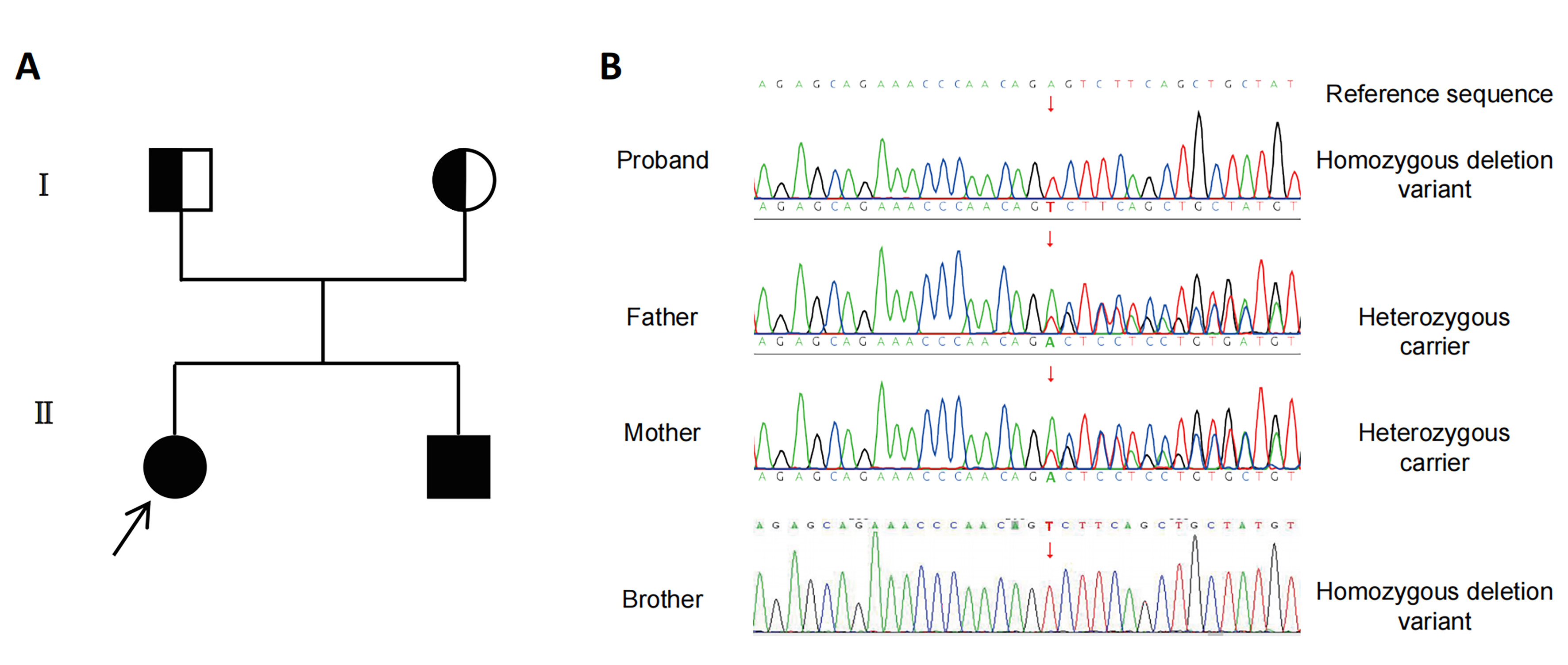
Figure 2. Pedigree (A) and Sanger sequencing validation (B) of the DCAF17 NM_025000.4:c.1488_1489del (NP_079276.2:p.Arg496fs) variant in this family with WSS. WSS: Woodhouse-Sakati syndrome.
Therapeutic intervention
After a multidisciplinary consultation with the Departments of Gynecology, Medical Genetics, and Neurology, a tailored symptomatic treatment regimen was initiated. The initial medications included:
Close monitoring of the neurological status, including regular assessments of the development of extrapyramidal symptoms, was performed throughout treatment. After three months of monotherapy (November 2021), the regimen was switched to combined estradiol and dydrogesterone (Femoston), 1 tablet once daily, to support cyclic endometrial development and induce withdrawal bleeding.
For the younger brother, complete baseline endocrine assessment and GnRH stimulation test results were obtained during hospitalization in July 2023. The OGTT revealed impaired glucose tolerance, and lifestyle interventions were adopted instead of hypoglycemic medication. Levothyroxine replacement was initiated for abnormal thyroid function and was continued for a long time. To date, no targeted pharmacological intervention for the gonadal axis has been developed, owing to the lack of on-site laboratory re-evaluation.
Follow-up and outcome
The proband underwent close follow-up following the definitive diagnosis of WSS. Prior to hormone therapy, the patient showed no signs of puberty. One year after the standardized combined estrogen‑based replacement therapy initiated in August 2021, obvious secondary sexual characteristics emerged, with breast and pubic hair development progressing to Tanner stages 3-4. After her clinical indices stabilized, routine examinations were performed every 6 months[8]. Regular laboratory surveillance was maintained throughout follow-up, as serial testing is required to monitor glycemic and thyroid function and to enable timely adjustment of hypoglycemic and thyroid replacement regimens. Both diabetes and hypothyroidism remained well controlled with continued medication. During the five-year follow-up period, repeat cranial MRI revealed no significant abnormalities. No new clinical manifestations, including sensorineural hearing loss or extrapyramidal syndrome, were observed. At present, the patient is engaged in regular work and is satisfied with the therapeutic outcomes.
Detailed serial laboratory data of the proband during the long-term follow-up from 2017 to 2026 are summarized in Supplementary Table 1. The younger brother underwent irregular follow-up due to off-site schooling. Available follow-up information was collected by telephone, and the patient maintained normal, self-monitored blood glucose levels. His laboratory tests performed at an outside hospital at age 17 (August 2025) showed HbA1c of 6.37%, and OGTT results: FBG 6.25 mmol/L, 1hBG 9.06 mmol/L, 2hBG
DISCUSSION
WSS is a rare autosomal recessive neuroendocrine disorder caused by pathogenic DCAF17 variants and is characterized by multisystem endocrine, neurological, ectodermal, and facial abnormalities[1,3]. This study reports a non-consanguineous family with two affected siblings carrying the previously reported homozygous pathogenic DCAF17 c.1488_1489del (p.Arg496fs) variant. The serial endocrine test data collected during our 5-year standardized post-diagnosis surveillance (started in 2021) are summarized in Supplementary Table 1. Our clinical observations extend the phenotypic spectrum of this variant and provide practical long-term monitoring guidance for WSS management.
Clinical manifestations, diagnostic clues, and pitfalls
The proband presented typical WSS phenotypes, including sparse yellowish hair, triangular facies, hypogonadism, hypothyroidism, and diabetes mellitus. Her younger brother shared identical ectodermal features with milder endocrine impairment. Genetic testing confirmed homozygous DCAF17 c.1488_1489del (p.Arg496fs) in both patients and in heterozygous carrier parents, consistent with autosomal recessive inheritance.
This frameshift variant has been verified as pathogenic in Chinese cohorts and meets the ACMG 2019 likely pathogenic criteria based on full familial co-segregation[7]. Fragmented pre-2021 outpatient records without unified testing protocols were excluded from the standardized monitoring.
Endocrine injury in WSS progresses gradually, and the proband initially developed hypogonadotropic delayed puberty, which later shifted to hypergonadotropic hypogonadism, demonstrating progressive gonadal axis impairment[6,9]. The proband exhibited a blunted growth hormone peak on stimulation testing; however, her linear growth remained unimpaired, and hypoparathyroidism was absent in both siblings. This variability in endocrine involvement reflects the prominent phenotypic heterogeneity among patients[7,10]. Clinicians should suspect WSS in adolescents or young adults presenting with multiple unexplained endocrine dysfunctions combined with sparse yellow hair and triangular facies, even in the absence of early neurological lesions. Neurological complications typically develop in the mid-to-late disease stages, and a normal initial neurological examination cannot exclude WSS[11,12].
Phenotypic heterogeneity can easily lead to missed diagnoses because isolated endocrine symptoms are often misdiagnosed as primary gynecological or metabolic disorders. When patients complain of primary amenorrhea and delayed puberty, ectodermal and facial features must be screened to rule out syndromic diseases such as WSS. Normal brain MRI findings without iron deposition or extrapyramidal signs do not exclude WSS[13].
Unlike typical type 1 or type 2 diabetes, hyperglycemia in WSS arises from intrinsic pancreatic β-cell dysfunction caused by DCAF17 LOF variants. Timely DCAF17 genetic sequencing facilitates early diagnosis and standardized post-diagnosis surveillance[7].
Multidisciplinary long-term monitoring and individualized management
DCAF17 maintains tissue protein homeostasis, and LOF variants trigger progressive multiorgan endocrine damage[14,15]. Tissue-specific vulnerability to impaired protein turnover, combined with variable involvement of the hypothalamic-pituitary-gonadal axis and unconfirmed modifying factors, contributes to heterogeneous clinical manifestations that require lifelong monitoring[2,9,16].
Multidisciplinary collaboration across endocrinology, neurology, and medical genetics is essential for comprehensive disease control; however, relevant standardized monitoring strategies have rarely been elaborated in previous WSS reports[2,6].
Hormone replacement and hypoglycemic therapies should be individualized according to endocrine impairment severity to avoid unnecessary overtreatment. We adopted intensive combined therapy for the severely affected proband and simple lifestyle intervention for her mildly affected brother[6,17].
Once endocrine parameters stabilize, a joint semiannual follow-up with endocrinology and neurology specialists is recommended. Even if neurological examinations remain normal in the early stages, regular surveillance facilitates timely treatment adjustments and screening for late-onset extrapyramidal manifestations and sensorineural hearing loss, in accordance with the monitoring standards for progressive hereditary endocrinopathies[3]. All longitudinal laboratory data supporting personalized treatment adjustments are summarized in Supplementary Table 1.
Our stratified monitoring and intervention scheme fills the gap in systematic cross-disciplinary management in previous WSS reports and requires multi-cohort validation[13,17]. Genetic counseling and carrier screening should be provided to patients' families to inform them of the 25% autosomal recessive recurrence risk; prenatal genetic diagnosis should be available for high-risk pregnancies to lower the risk of affected offspring.
Limitations of this study and future research directions
This study has several limitations. Single-family recruitment limits generalizability, younger siblings have shorter surveillance periods, and fragmented pre-2021 retrospective data were excluded from unified monitoring. The long-term safety outcomes of lifelong hormone replacement remain unclear and require extended follow-up.
Cellular functional experiments are required to clarify how this variant disrupts DCAF17 protein function. Future studies should expand WSS cohorts, establish international disease registries, and develop variant-targeted therapies based on functional mechanistic data.
CONCLUSION
This study describes a non-consanguineous family with WSS carrying a homozygous DCAF17 c.1488_1489del (p.Arg496fs) and summarizes the stratified multidisciplinary management for concurrent hypogonadism, diabetes, and hypothyroidism.
Clinicians should prioritize WSS screening in adolescents with unexplained multiple endocrine dysfunctions and typical ectodermal and facial features, with timely DCAF17 genetic sequencing to enable early standardized surveillance. All patients require semiannual joint surveillance by endocrinologists and neurologists to slow progressive endocrine decline and screen for delayed neurological lesions. Further multicenter cohort studies and functional studies are required to refine the standardized therapeutic guidelines for WSS.
DECLARATIONS
Authors’ contributions
Conceived and designed the study: Yuan H
Collected clinical data and performed the clinical evaluations: Shi X
Drafted the manuscript: Shi X
Revised the manuscript for important intellectual content: Zhang K, Yang J, Zheng R
All authors read and approved the final manuscript.
Availability of data and materials
The datasets used and/or analyzed during the current study are available from the corresponding author upon reasonable request.
AI and AI-assisted tools statement
During the preparation of this manuscript, the AI tool HOME for Researchers (https://www.home-for-researchers.com/) was used solely for language editing and polishing. The tool did not influence the study design, data collection, analysis, interpretation, or the scientific content of the work. All authors take full responsibility for the accuracy, integrity, and final content of the manuscript.
Financial support and sponsorship
This work was supported by a grant from the Henan Provincial Medical Education Research Project (No. WJLX2025016).
Conflicts of interest
All authors declared that there are no conflicts of interest.
Ethical approval and consent to participate
This study was approved by the Ethics Committee of the National Key Laboratory of Medical Genetics (Approval Number: 2017030801). All procedures were performed in accordance with the Declaration of Helsinki and relevant guidelines and regulations. Informed consent was obtained from the patient’s parents.
Consent for publication
Written informed consent was obtained from the patient’s parents for the publication of identifiable information and images of the patients included in this study.
Copyright
© The Author(s) 2026.
Supplementary Materials
REFERENCES
2. Ali R, Al-Dewik N, Mohammed S, et al. Expanding on the phenotypic spectrum ofWoodhouse-Sakatisyndrome due to founder pathogenic variant in DCAF17: report of 58 additional patients from Qatar and literature review. Am J Med Genet A. 2022;188:116-29.
3. Kohil A, Abdallah AM, Hussain K, Al-Shafai M. Genetic epidemiology of Woodhouse-Sakati Syndrome in the Greater Middle East region and beyond: a systematic review. Orphanet J Rare Dis. 2023;18:22.
4. Agopiantz M, Corbonnois P, Sorlin A, et al. Endocrine disorders in Woodhouse-Sakati syndrome: a systematic review of the literature. J Endocrinol Invest. 2014;37:1-7.
5. Jagota P, Ugawa Y, Aldaajani Z, et al. Nine hereditary movement disorders first described in asia: their history and evolution. J Mov Disord. 2023;16:231-47.
6. Bakhsh H, Alqntash N, Almajed E. The successful management of primary amenorrhea in Woodhouse-Sakati syndrome: a case report and a literature review. Life. 2023;13:2022.
7. Zhou M, Shi N, Zheng J, et al. Case report: a Chinese family of Woodhouse-Sakati syndrome with diabetes mellitus, with a novel biallelic deletion mutation of the DCAF17 gene. Front Endocrinol. 2021;12:770871.
8. Fleseriu M, Hashim IA, Karavitaki N, et al. Hormonal replacement in hypopituitarism in adults: an endocrine society clinical practice guideline. J Clin Endocrinol Metab. 2016;101:3888-921.
9. Aljaffer MA, Almadani AH, Almutlaq M, Alhammad A, Alyahya AS. Woodhouse-Sakati syndrome presenting with psychotic features after starting trihexyphenidyl: a case report. Cureus. 2022;14;e27576.
10. Amosova M, Poluboyarinova I, Fadeev V, Asanov A. Woodhouse-Sakati syndrome: the new genetic variant of DCAF17 in 2 adult sisters. JCEM Case Rep. 2024;2:luae130.
11. Bohlega S, Abusrair AH, Al-Ajlan FS, et al. Patterns of neurological manifestations in Woodhouse-Sakati syndrome. Parkinsonism Relat Disord. 2019;69:99-103.
12. Schneider SA, Bhatia KP. Dystonia in the Woodhouse Sakati syndrome: a new family and literature review. Mov Disord. 2008;23:592-6.
13. Khalili Dehkordi A, Vakili R. DCAF17 mutation in Woodhouse-Sakati syndrome: a case report on a novel homozygous variant. Case Rep Pediatr. 2025;2025:9913412.
14. Alhuzaim ON, Ahmad MM, Sherbeeni SM, Almotawa F, Ali AS, Alhejaily AG. Three siblings with Woodhouse-Sakati syndrome: a case report of a new Saudi family. Cureus. 2022;14:e32225.
15. Khosravi S, Moosavian T, Salehpour S, Habibi SAH, Alavi A, Rohani M. Clinical and genetic characterization of Woodhouse-Sakati syndrome in Iranian patients: a case series. J Mov Disord. 2025;18:257-61.
16. Noble M, Cahill D. Hypogonadism: cardiometabolism and gonadal function in men. Metab Target Organ Damage. 2024;4:14.
Cite This Article
 Open Access
How to Cite
Download Citation
If you have the appropriate software installed, you can download article citation data to the citation manager of your choice. Simply select your manager software from the list below and click on download.
Export Citation File
Type of Import
Tips on Downloading Citation
Citation Manager File Format
Type of Import
Direct Import: When the Direct Import option is selected (the default state), a dialogue box will give you the option to Save or Open the downloaded citation data. Choosing Open will either launch your citation manager or give you a choice of applications with which to use the metadata. The Save option saves the file locally for later use.
Indirect Import: When the Indirect Import option is selected, the metadata is displayed and may be copied and pasted as needed.
About This Article
Copyright

Data & Comments
Data
0









Comments
Comments must be written in English. Spam, offensive content, impersonation, and private information will not be permitted. If any comment is reported and identified as inappropriate content by OAE staff, the comment will be removed without notice. If you have any queries or need any help, please contact us at [email protected].