
Interdisciplinary trends in forensic medicine: a multi-database analysis of highly cited research
 0
0 Abstract
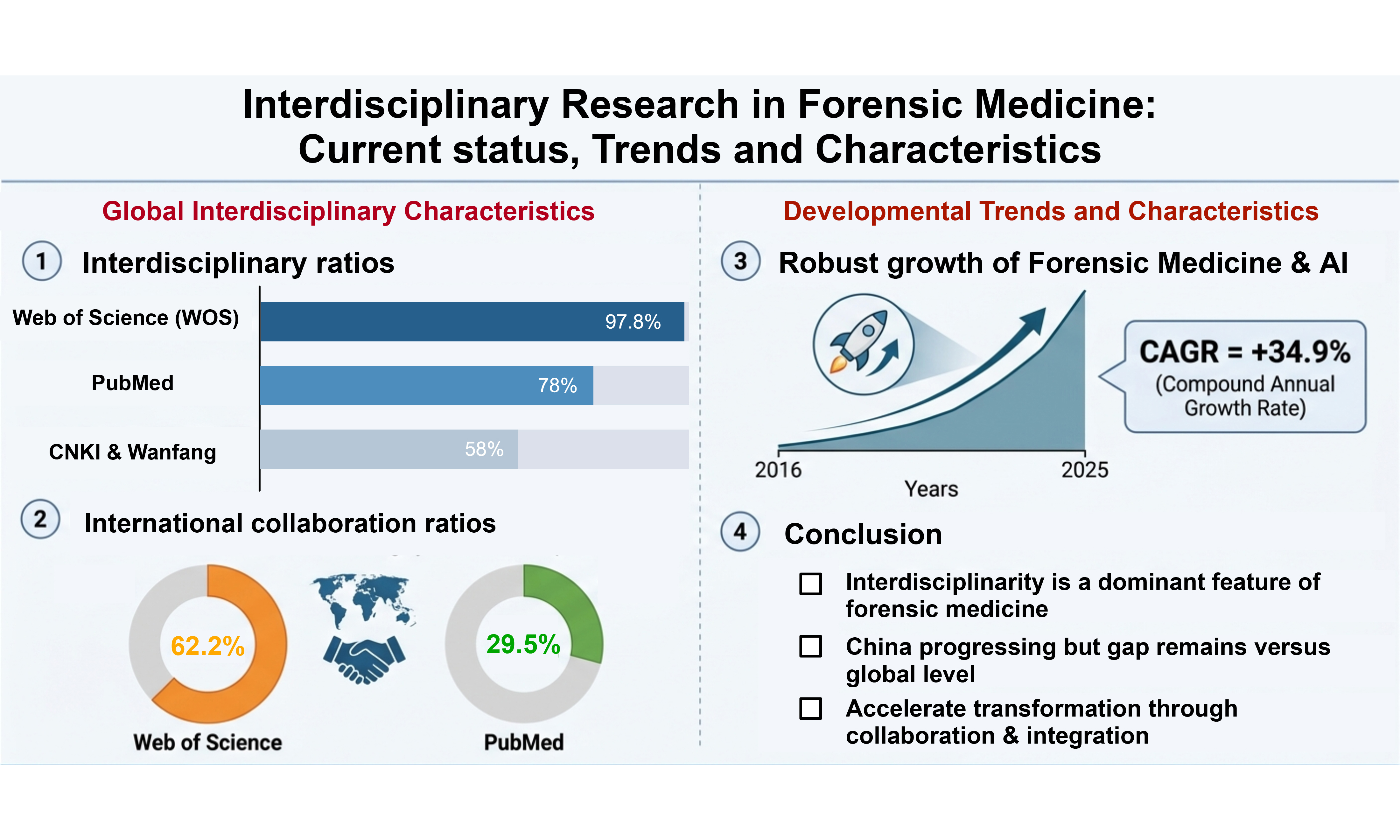
Aim: To define the current status, trends and key features of interdisciplinary research in forensic medicine, and to inform its future development.
Methods: A bibliometric analysis of highly cited forensic medicine papers from January 2016 to December 2025 was conducted across international (Web of Science, PubMed) and Chinese academic databases, and interdisciplinary research was identified via the authors’ institutional affiliations.
Results: Interdisciplinary studies constituted 97.8% (Web of Science), 78% (PubMed), and 58% (Chinese databases) of highly cited papers, with international collaboration accounting for 62.2% and 29.5% in Web of Science and PubMed, respectively. Publications exhibited a robust growth with a 34.9% compound annual growth rate (CAGR) in forensic medicine. Much higher citation counts and journal impact factors were observed in Web of Science papers than in PubMed papers. Publications from China were seen in high-impact journals in Web of Science, but mainly in lower-impact forensic journals in PubMed.
Conclusion: Interdisciplinarity is a defining feature of impactful forensic medicine research. While China has made significant strides, it still lags behind global leaders, highlighting the need for enhanced multidisciplinary collaboration and technological integration to advance the field.
Keywords
INTRODUCTION
Forensic medicine bridges medicine with judicial practice[1] and supplies scientific evidence for legal proceedings and public safety[2]. It thus plays an essential role in safeguarding judicial fairness and settling academic controversies in the field[3]. Historically grounded in pathology and toxicology, the discipline has developed a well-established technical framework. However, the growing complexity and concealment of modern crimes, together with rising judicial expectations for accuracy and efficiency, have increasingly exposed the limitations of a single-discipline approach[4]. Consequently, interdisciplinary integration has become not only beneficial but essential for the continued advancement of forensic medicine.
Highly cited papers were selected as the analytical focus due to their academic influence, disciplinary representativeness, and methodological advantages in bibliometric analysis. As ESI top 1% papers, they reflect the most impactful and widely recognized achievements in the field, facilitating a systematic review of interdisciplinary developments[5]. Moreover, highly cited papers are generally associated with innovations that have gained academic recognition[6], a correlation particularly relevant to forensic medicine - a practice-oriented discipline where cutting-edge topics such as molecular biology[7,8] and artificial intelligence[9,10] have direct applications in judicial practice.
In this article, we conducted a statistical analysis of highly cited forensic medicine literature published in Chinese and international journals from January 2016 to December 2025. The aim was to clarify the current state of interdisciplinary research in forensic medicine, summarize research trends and characteristics across various fields, and provide a preliminary prospective discussion to offer a reliable reference for the further development of forensic medicine.
METHOD
Scope of the literature search
A comprehensive literature search was performed in four electronic databases: PubMed, Web of Science, China National Knowledge Infrastructure (CNKI), and Wanfang Data. The search was restricted to forensic medicine-related publications with a publication date between January 2016 and December 2025. All retrieved records were pooled for subsequent statistical analysis [Supplementary Tables 1-3].
Method of the literature search
Using “forensic medicine” as the search term, literature searches were conducted in the aforementioned databases, with publication date restricted from January 2016 to December 2025. All retrieved records were sorted by citation frequency, and highly cited literature was screened.
Among these, the WOS database enables direct identification of highly cited papers, defined as those published within the past ten years whose citation counts rank in the top 1% globally within the same discipline and publication year. However, neither PubMed nor Chinese academic databases provide a predefined classification for highly cited papers. Therefore, among the 57,024 records retrieved from PubMed, the top 100 articles ranked by citation frequency were selected as the research subjects. Similarly, from the 21,978 records retrieved from Chinese academic databases (including CNKI and Wanfang), the top 100 articles were also selected for analysis. All selected highly cited literature was manually reviewed. Details of the highly cited papers identified from each of the three databases are presented in the Supplementary Materials [Supplementary Tables 1-3].
To identify interdisciplinary research, we adopted the authors’ institutional affiliations (including their affiliated universities, research institutes, and colleges) as the primary criterion. Specifically, a publication was defined as interdisciplinary when the contributing authors originated from more than one type of institution or academic discipline (e.g., collaborations between a medical school and a school of engineering). This criterion allowed us to objectively capture cross-disciplinary collaborative patterns that transcend traditional disciplinary boundaries.
RESULTS
A longitudinal investigation of interdisciplinary phenomena in forensic medicine
Results from Web of Science (WOS)
Among the 46 papers in the field of forensic medicine that ranked in the top 1% of global citations over the past 10 years (as indexed by the WOS database), 45 were interdisciplinary studies, accounting for 97.8%. This finding highlights that forensic medicine has evolved beyond traditional techniques such as bloodstain examination, autopsy, and forensic toxicology. It has now become a comprehensive discipline that relies heavily on clinical medicine, psychiatry, pathology, psychology, and computer science, particularly artificial intelligence and big data [Figure 1 and Table 1].
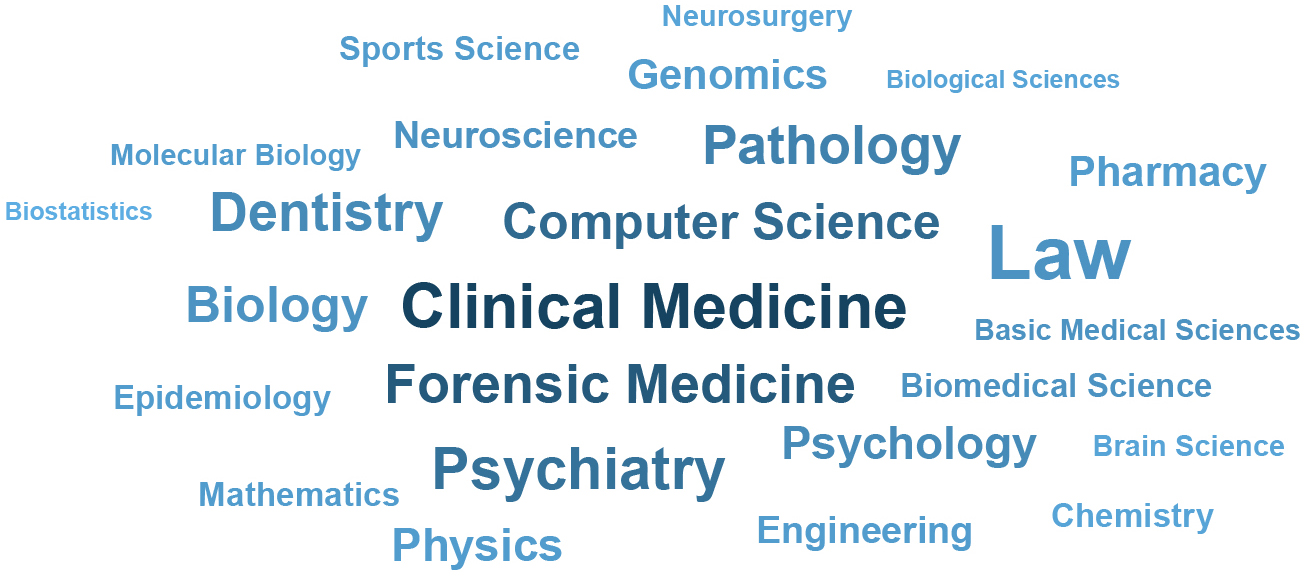
Figure 1. Top 25 cross-disciplinary topics in WOS high-cited forensic medicine papers (January 2016 - December 2025). The font size and color intensity of each term are proportional to its frequency of occurrence, with larger and darker words indicating higher frequencies. WOS: Web of Science.
Top 25 interdisciplinary subjects among the 45 interdisciplinary literatures in WOS (January 2016 - December 2025)
| Interdisciplinary studies | Amount of literature | Percentage (%) |
| Clinical Medicine | 15 | 33.3 |
| Forensic Medicine | 12 | 26.7 |
| Computer Science | 10 | 22.2 |
| Psychiatry | 9 | 20.0 |
| Pathology | 7 | 15.6 |
| Psychology | 6 | 13.3 |
| Dentistry | 6 | 13.3 |
| Biology | 5 | 11.1 |
| Neuroscience | 5 | 11.1 |
| Biomedical Science | 5 | 11.1 |
| Basic Medical Sciences | 5 | 11.1 |
| Law | 5 | 11.1 |
| Epidemiology | 4 | 8.9 |
| Genomics | 4 | 8.9 |
| Engineering | 4 | 8.9 |
| Molecular Biology | 4 | 8.9 |
| Mathematics | 4 | 8.9 |
| Physics | 4 | 8.9 |
| Pharmacy | 4 | 8.9 |
| Sports Science | 4 | 8.9 |
| Biological Sciences | 3 | 6.7 |
| Brain Science | 3 | 6.7 |
| Chemistry | 3 | 6.7 |
| Neurosurgery | 3 | 6.7 |
| Biostatistics | 2 | 4.4 |
Notably, 28 of the 45 interdisciplinary articles (62.2%) involved international cooperation, suggesting that forensic medicine is a highly globalized discipline that relies extensively on transnational collaboration and resource integration. Furthermore, 73.3% of these interdisciplinary publications were contributed by researchers from disciplines other than forensic medicine, indicating that the field has evolved into a highly open, application-oriented hub that attracts expertise and technological innovations from diverse academic areas.
Results from PubMed
Among the 100 most highly cited papers indexed in PubMed over the past decade, 78 employed interdisciplinary research approaches, yielding an interdisciplinary ratio of 78%. Among these, the most extensive intersections were with clinical medicine, the life sciences, and anatomy. Top interdisciplinary subjects among the 78 interdisciplinary literatures in PubMed are presented in Figure 2 and Table 2.
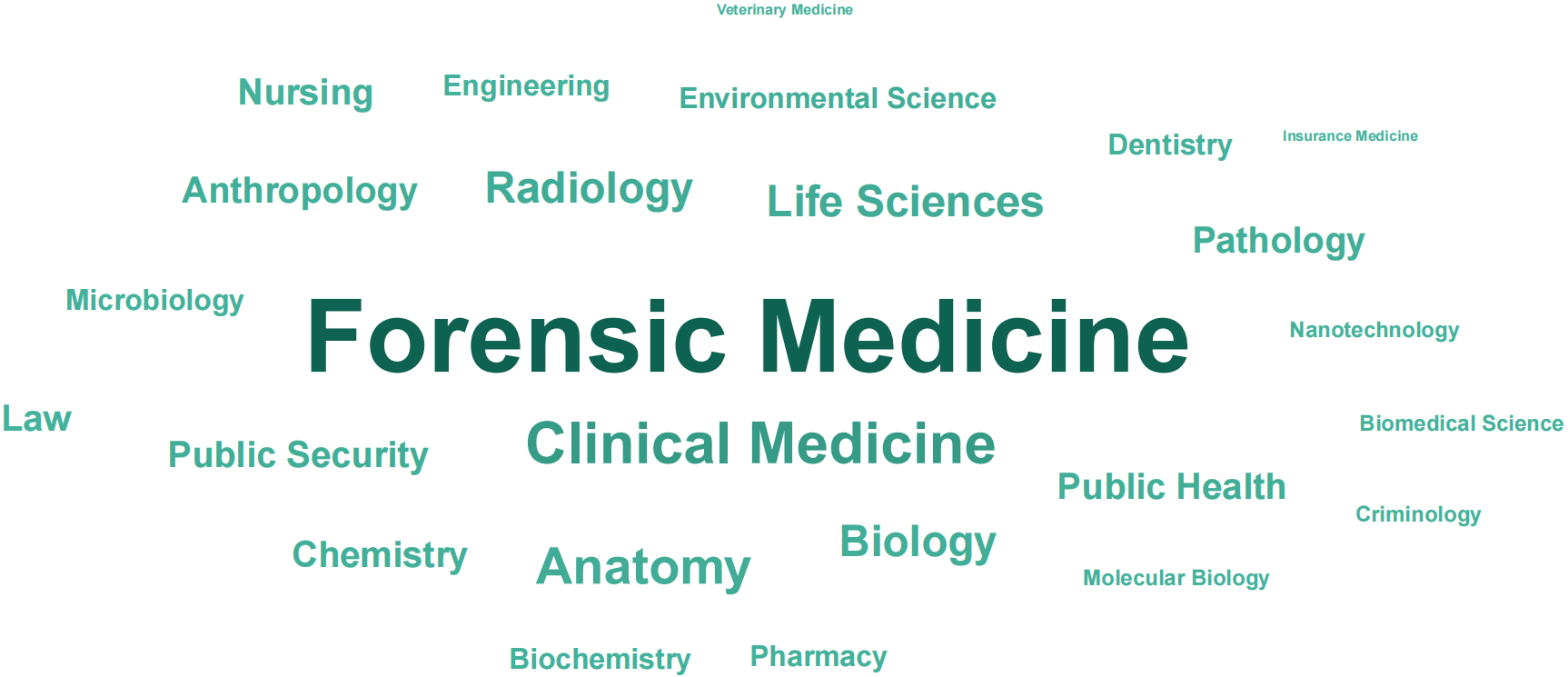
Figure 2. Top 25 cross-disciplinary topics in PubMed high-cited forensic medicine papers (January 2016 - December 2025). The font size and color intensity of each term are proportional to its frequency of occurrence, with larger and darker words indicating higher frequencies.
Top 25 interdisciplinary subjects among the 78 interdisciplinary literatures in PubMed (January 2016 - December 2025)
| Interdisciplinary studies | Amount of literature | Percentage (%) |
| Forensic Medicine | 62 | 79.5 |
| Clinical Medicine | 20 | 25.6 |
| Life Sciences | 7 | 9.0 |
| Radiology | 7 | 9.0 |
| Anatomy | 7 | 9.0 |
| Public Security | 6 | 7.7 |
| Biology | 6 | 7.7 |
| Public Health | 6 | 7.7 |
| Environmental Science | 5 | 6.4 |
| Anthropology | 5 | 6.4 |
| Chemistry | 4 | 5.1 |
| Pathology | 4 | 5.1 |
| Nanotechnology | 3 | 3.8 |
| Engineering | 3 | 3.8 |
| Microbiology | 3 | 3.8 |
| Dentistry | 3 | 3.8 |
| Biochemistry | 3 | 3.8 |
| Molecular Biology | 3 | 3.8 |
| Pharmacy | 3 | 3.8 |
| Biomedical Science | 3 | 3.8 |
| Nursing | 3 | 3.8 |
| Law | 2 | 2.6 |
| Criminology | 2 | 2.6 |
| Insurance Medicine | 2 | 2.6 |
| Veterinary Medicine | 2 | 2.6 |
Among these 78 interdisciplinary papers, 62 are related to forensic medicine, representing 79.5%. This finding clearly demonstrates that interdisciplinary phenomena in the field of forensic medicine have become highly prominent. Notably, 23 of these 78 papers involve international collaboration, accounting for 29.5% of the highly cited papers in interdisciplinary forensic medicine research. This indicates that nearly one-third of the research achievements in this field have transcended national boundaries and entered a more advanced stage of international development.
Results from Chinese academic databases
In parallel with the analysis of the PubMed database, we also searched Chinese academic databases (e.g., Wanfang and CNKI) using the keyword “forensic medicine”. The retrieved literature was sorted by citation count, and the top 100 most cited articles were selected as research objects.
An analysis of these 100 highly cited papers revealed that 58 are interdisciplinary, accounting for 58%. This indicates that interdisciplinary research within forensic medicine in China remains at a high level. Specifically, the cross-application of forensic medicine with basic medicine and clinical medicine is particularly pronounced in Chinese academic databases. A summary of the top 20 disciplines identified among the 58 interdisciplinary papers is presented in Figure 3 and Table 3. Of these, 53 were directly related to forensic medicine, accounting for 91.38% of the total. These findings demonstrate that the interdisciplinary phenomenon has become increasingly prevalent and well-established in the field of forensic medicine in China.
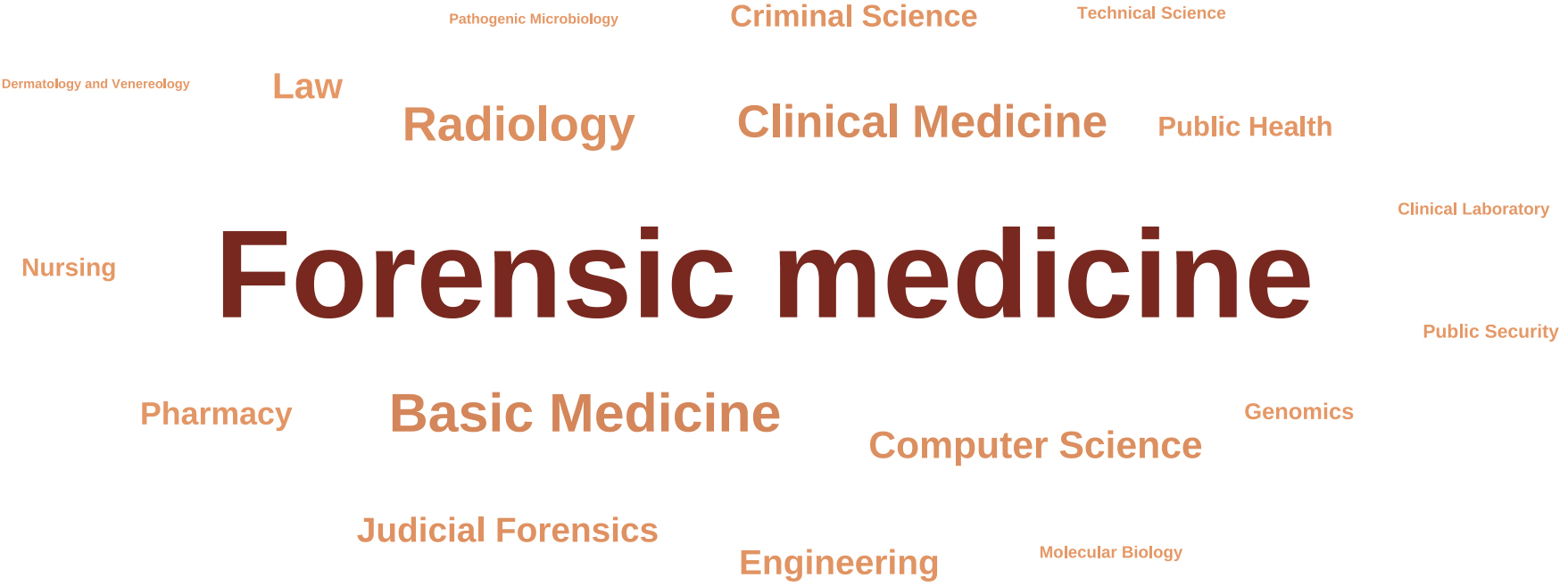
Figure 3. Top 20 cross-disciplinary topics in Chinese academic databases high-cited forensic medicine papers (January 2016 - December 2025). The font size and color intensity of each term are proportional to its frequency of occurrence, with larger and darker words indicating higher frequencies.
Top 20 interdisciplinary subjects among the 58 interdisciplinary literatures in Chinese academic databases (January 2016 - December 2025)
| Interdisciplinary studies | Amount of literature | Percentage (%) |
| Forensic medicine | 53 | 91.4 |
| Basic Medicine | 9 | 15.5 |
| Clinical Medicine | 7 | 12.1 |
| Computer Science | 5 | 8.6 |
| Radiology | 5 | 8.6 |
| Judicial Forensics | 4 | 6.9 |
| Engineering | 3 | 5.2 |
| Criminal Science | 3 | 5.2 |
| Public Health | 2 | 3.4 |
| Pharmacy | 2 | 3.4 |
| Pathogenic Microbiology | 1 | 1.7 |
| Genomics | 1 | 1.7 |
| Law | 1 | 1.7 |
| Molecular Biology | 1 | 1.7 |
| Public Security | 1 | 1.7 |
| Orthopedics | 1 | 1.7 |
| Technical Science | 1 | 1.7 |
| Clinical Laboratory | 1 | 1.7 |
| Dermatology and Venereology | 1 | 1.7 |
| Nursing | 1 | 1.7 |
Horizontal comparison of interdisciplinary features across disciplines
Comparison of WOS and PubMed for the top 30 most cited articles
Additionally, we analyzed the top 30 most cited articles in WOS [Figure 4 and Table 4] and PubMed [Figure 5 and Table 5] databases. The results from WOS showed that the top three journals were not traditional forensic medicine journals, indicating that interdisciplinary research has been a prominent trend in forensic medicine over the past decade and is key to achieving high citation counts. The USA demonstrated comprehensive distribution of highly cited studies across impact-factor tiers. The German journal PHARMACOPSYCHIATRY achieved the highest total citations (nearly 1000) despite a low impact factor. Journals including Nature Genetics, British Journal of Sports Medicine, and Proceedings of the National Academy of Sciences (PNAS) combined high impact factors with strong citation performance. China showed positive trends, with publications spanning multiple tiers, including a study in a journal with an impact factor of 39.3, indicating breakthroughs in high-impact forensic medicine research. Collectively, these findings suggest that research impact in interdisciplinary forensic medicine is not solely determined by journal impact factor, and highlight significant variations in research output across countries.
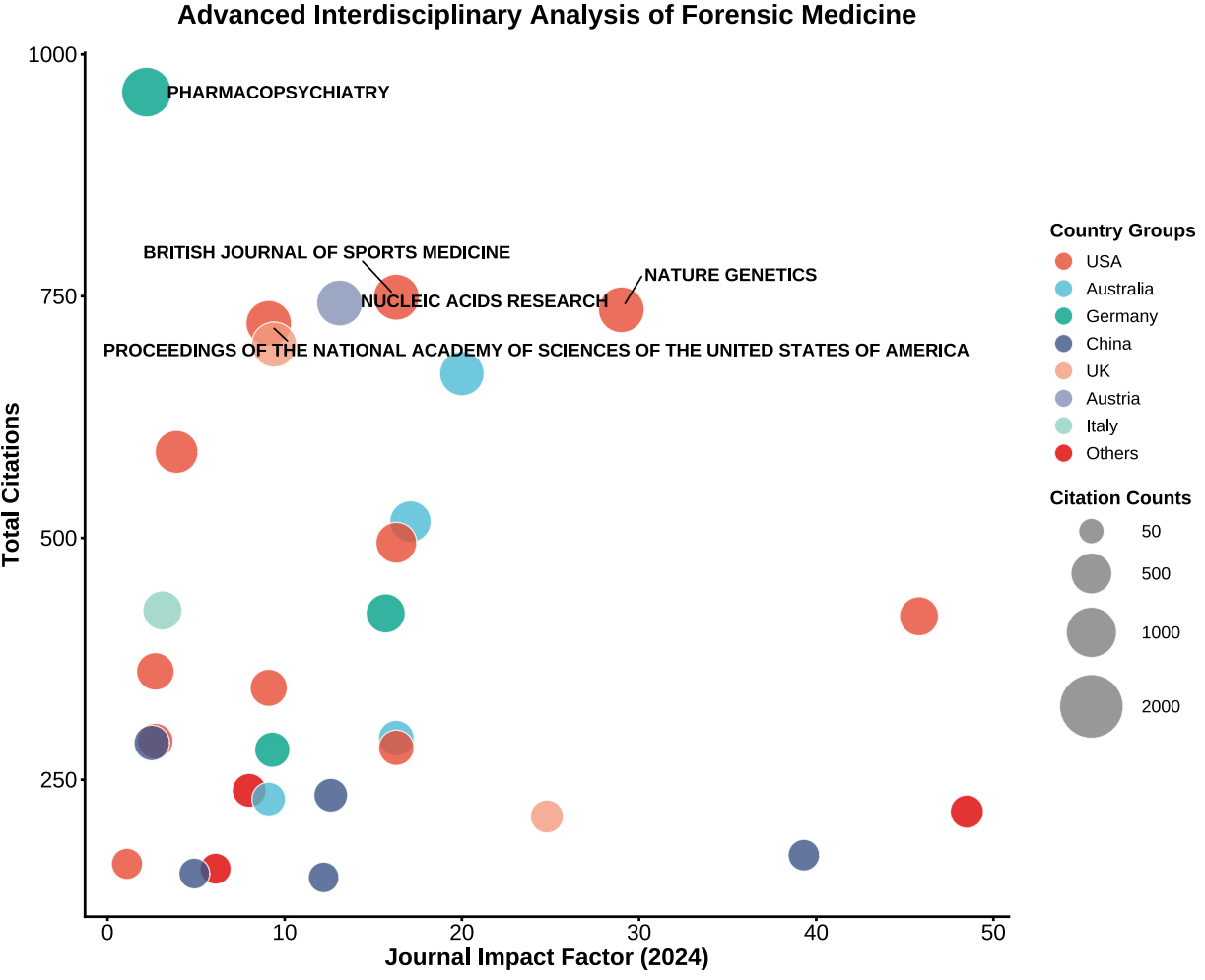
Figure 4. Journal information for the top 30 most cited papers among 45 interdisciplinary publications in the WOS database. WOS: Web of Science.
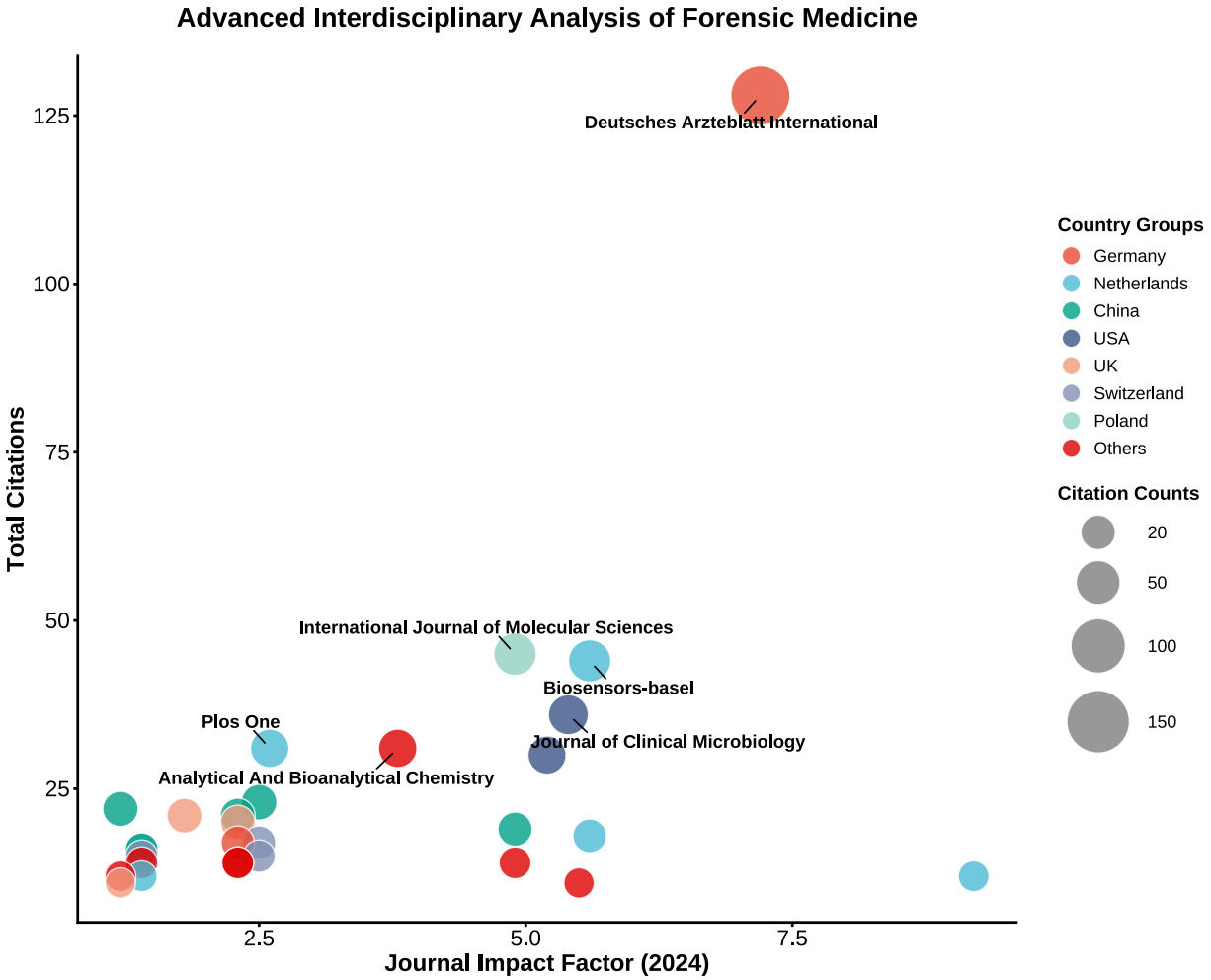
Figure 5. Journal information for the top 30 most cited papers among 78 interdisciplinary publications in the PubMed database.
Top 30 most cited interdisciplinary papers in WOS database: journal sources
| Citations | Journal | Impact factor (2024) | Country |
| 961 | Pharmacopsychiatry | 2.2 | Germany |
| 749 | British Journal of Sports Medicine | 16.3 | USA |
| 743 | Nucleic Acids Research | 13.1 | Austria |
| 736 | Nature Genetics | 29 | USA |
| 722 | Proceedings of the National Academy of Sciences of the United States of America | 9.1 | USA |
| 700 | Genome Biology | 9.4 | England |
| 670 | Nature Neuroscience | 20 | Australia |
| 589 | Aging-US | 3.9 | USA |
| 517 | JAMA Psychiatry | 17.1 | Australia |
| 495 | British Journal of Sports Medicine | 16.3 | USA |
| 425 | Virchows Archiv | 3.1 | Italy |
| 422 | Nature Communications | 15.7 | Germany |
| 419 | Science | 45.8 | USA |
| 362 | Clinical Neuropsychologist | 2.7 | USA |
| 345 | ACS Sensors | 9.1 | USA |
| 293 | British Journal of Sports Medicine | 16.3 | Australia |
| 290 | Clinical Neuropsychologist | 2.7 | USA |
| 288 | Biotechniques | 2.5 | China |
| 283 | British Journal of Sports Medicine | 16.3 | USA |
| 281 | Critical Care | 9.3 | Germany |
| 239 | IEEE Transactions on Information Forensics and Security | 8 | Canada |
| 234 | Journal of Nanobiotechnology | 12.6 | China |
| 230 | ACS Sensors | 9.1 | Australia |
| 217 | Nature | 48.5 | Japan |
| 212 | Lancet Psychiatry | 24.8 | England |
| 172 | Chemical Society Reviews | 39.3 | China |
| 163 | Journal of Veterinary Diagnostic Investigation | 1.1 | USA |
| 158 | JCI Insight | 6.1 | Japan |
| 153 | International Journal of Molecular Sciences | 4.9 | China |
| 149 | International Journal of Oral Science | 12.2 | China |
Top 30 most cited interdisciplinary papers in PubMed database: journal sources
| Citations | Journal | Impact factor (2024) | Country |
| 128 | Deutsches Arzteblatt International | 7.2 | Germany |
| 45 | International Journal of Molecular Sciences | 4.9 | Poland |
| 44 | Biosensors-basel | 5.6 | Netherlands |
| 36 | Journal of Clinical Microbiology | 5.4 | USA |
| 31 | Analytical And Bioanalytical Chemistry | 3.8 | Australia |
| 31 | Plos One | 2.6 | Netherlands |
| 30 | Microbial Biotechnology | 5.2 | USA |
| 23 | Forensic Science International | 2.5 | China |
| 22 | Journal of Forensic and Legal Medicine | 1.2 | China |
| 21 | International Journal of Legal Medicine | 2.3 | China |
| 21 | Journal of Forensic Sciences | 1.8 | UK |
| 20 | The Journal of Forensic Odonto-stomatology | / | Croatia |
| 20 | International Journal of Legal Medicine | 2.3 | UK |
| 19 | International Journal of Molecular Sciences | 4.9 | China |
| 18 | Biosensors-basel | 5.6 | Netherlands |
| 17 | Forensic Science International | 2.5 | Switzerland |
| 17 | International Journal of Legal Medicine | 2.3 | Germany |
| 16 | Legal Medicine | 1.4 | Netherlands |
| 16 | Forensic Science Medicine and Pathology | 1.4 | China |
| 15 | Forensic Science International | 2.5 | Switzerland |
| 15 | Forensic Science Medicine and Pathology | 1.4 | Switzerland |
| 14 | Medicine | 1.4 | Lithuania |
| 14 | International Journal of Legal Medicine | 2.3 | Portugal |
| 14 | International Journal of Legal Medicine | 2.3 | Turkey |
| 14 | International Journal of Molecular Sciences | 4.9 | Italy |
| 12 | Forensic Science Medicine and Pathology | 1.4 | Netherlands |
| 12 | Journal of Forensic and Legal Medicine | 1.2 | Mexico |
| 12 | Chest | 9.2 | Netherlands |
| 11 | Critical Reviews in Clinical Laboratory Sciences | 5.5 | France |
| 11 | Journal of Forensic and Legal Medicine | 1.2 | UK |
Analysis of the PubMed database [Figure 5 and Table 5] reveals a clear dichotomy in the publication patterns of highly cited forensic medicine papers. On one hand, traditional forensic journals such as Forensic Science International (IF 2.5), Journal of Forensic and Legal Medicine (IF 1.2), and International Journal of Legal Medicine (IF 2.3) generally have lower impact factors, and papers published in these journals account for a substantial proportion of the highly cited literature from China (e.g., 23, 22, and 21 citations, respectively). On the other hand, interdisciplinary journals with higher impact factors - such as Deutsches Arzteblatt International (IF 7.2, 128 citations, Germany), International Journal of Molecular Sciences (IF 4.9, 45 citations, Poland; 19 citations, China), Biosensors-Basel (IF 5.6, 44 citations, Netherlands), and Journal of Clinical Microbiology (IF 5.4, 36 citations, USA) - also contribute significantly to the highly cited literature. Geographically, Germany, the USA, the Netherlands, and Poland have achieved high citation counts in high-impact interdisciplinary journals, while China’s highly cited papers are primarily concentrated in traditional forensic journals with lower impact factors (e.g., IF 1.2-2.5) and relatively modest citation counts (≤ 23). These findings indicate that interdisciplinary collaboration and publication in high-impact journals have become key drivers of research impact in forensic medicine, yet a noticeable gap remains between China and leading countries in this regard. Overall, the results underscore that cross-disciplinary integration is increasingly evident in forensic medicine, and that pursuing high-impact interdisciplinary outlets is crucial for achieving global recognition.
WOS-indexed papers are substantially superior in terms of citation counts (highest 961 vs. 128), journal impact factors (including top-tier multidisciplinary journals with IF up to 48.5), and disciplinary scope (covering genetics, neuroscience, sports medicine, nanotechnology, etc.). In contrast, the PubMed-indexed papers are predominantly concentrated in traditional forensic specialty journals (mostly with IF < 5) and exhibit relatively limited citation impact. China has achieved highly cited results in the WOS database, including publications in journals with IFs exceeding 39 (e.g., Chemical Society Reviews), whereas its papers in PubMed remain mainly in traditional forensic journals with lower impact factors (IF 1.2-4.9) and modest citation counts. These findings indicate that the Web of Science database better reflects the high-impact frontiers of interdisciplinary forensic research, while PubMed largely represents the traditional research directions of forensic medicine. Chinese forensic medicine research has achieved breakthroughs in high-impact interdisciplinary journals, yet a gap remains compared with leading Western countries. Future efforts should therefore be directed toward strengthening high-level interdisciplinary collaboration.
Comparison of forensic medicine and public health in PubMed database
A search of the PubMed database using the terms “(forensic medicine) AND (artificial intelligence)” revealed that the annual number of relevant publications grew at a compound annual growth rate (CAGR) of 34.9% from 2016 to 2025 (Figure 6A, red line). Notably, a visual language multimodal artificial intelligence model, named “SongCi,”[11] was developed for forensic histopathological diagnosis through a collaboration between the College of Forensic Medicine, the College of Mathematics and Statistics, and the College of Life Sciences at Xi’an Jiaotong University. This model employs cutting-edge prototype cross-modal self-supervised contrastive learning to deeply integrate image and text data features, significantly enhancing both the accuracy and efficiency of forensic histopathological diagnosis. The findings were published in Nature Communications.
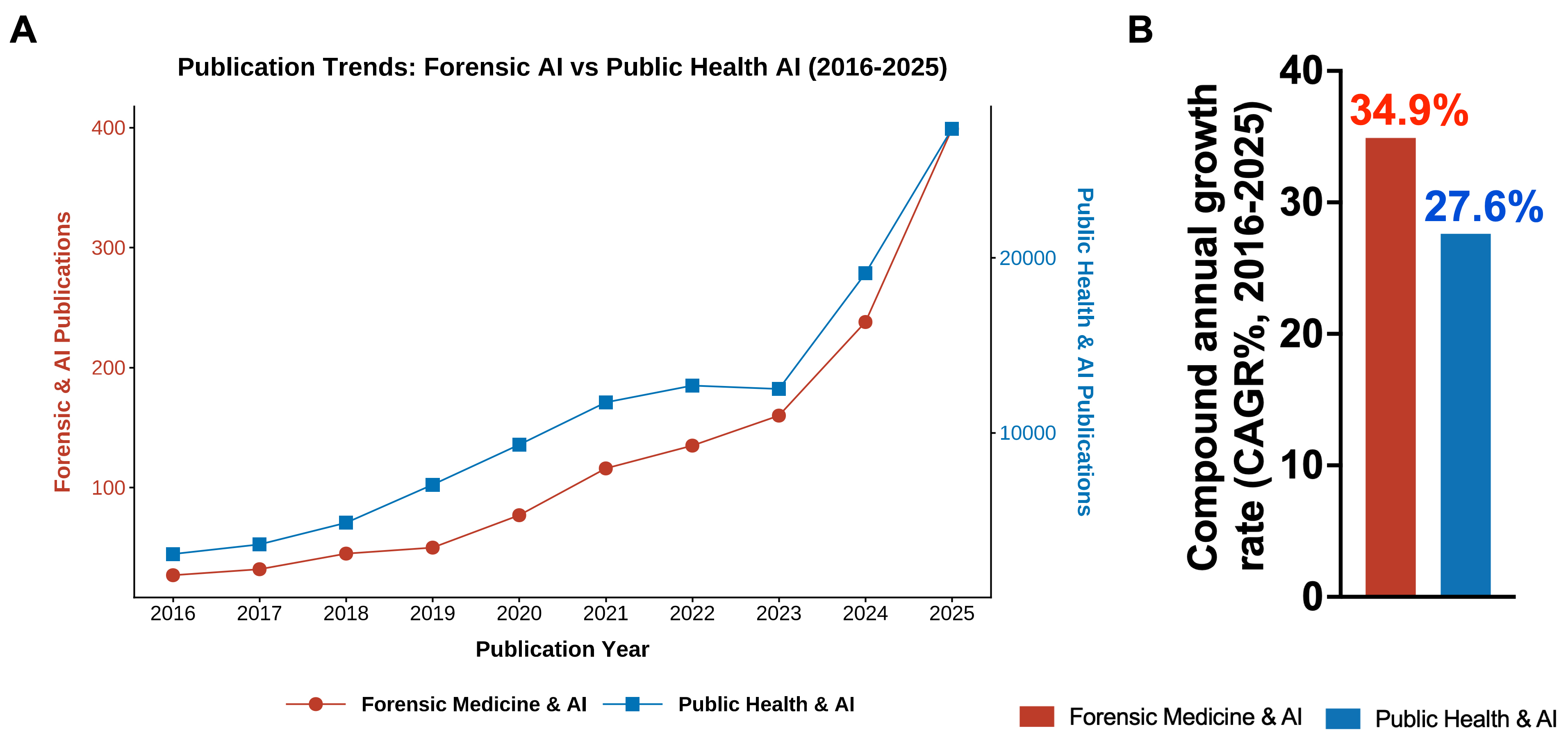
Figure 6. Publication trends in “forensic medicine & artificial intelligence (AI)” vs. “public health & artificial intelligence (AI)” research (2016-2025). (A) The X-axis represents the publication year, and the Y-axis shows the number of papers. The lines indicate the publication trend from 2016 to 2025; (B) Compound annual growth rates (CAGR) of publication trends across two categories. The bar chart displays the CAGR for each category from 2016 to 2025. Red bars denote the publication trends of forensic Medicine & AI, while blue bars denote public health & AI.
As an applied discipline of considerable importance to public security and health protection, public health has exhibited a notable interdisciplinary trend over the past decade (Figure 6A, blue dotted line). In the context of the interdisciplinary application of AI to public health, a keyword search of the PubMed database revealed 27,378 publications in 2025, which is 69 times the output of forensic medicine. Furthermore, the past decade has witnessed a significant surge in the number of interdisciplinary research papers between public health and other disciplines, including environmental science[12,13], climatology, computer science[14], geographic information science, and basic medicine. From 2016 to 2025, publications in forensic medicine grew from 27 to 399 (total growth: 1377.78%; compound annual growth rate [CAGR]: 34.9%), while those in public health increased from 3064 to 27,378 (total growth: 793.60%; CAGR: 27.6%). Notably, forensic medicine exhibited a significantly higher CAGR (34.9% vs. 27.6%, Figure 6B), with a 14.78-fold increase over the decade, compared to 8.94-fold in public health, despite a much lower baseline. This accelerated expansion highlights forensic medicine as a rapidly emerging field, driven by interdisciplinary advances, technological innovation, and growing practical demands.
Unlike public health - which leverages large-scale population data and established regulatory frameworks - forensic medicine operates under high case-specific variability, legal rigor, and strict standardization requirements. While progress has been made in areas such as forensic genetics, virtual autopsy, and advanced toxicology, substantial untapped potential remains for integrating emerging technologies, including AI-driven analytics[15,16] and real-time biosensing[17]. The successful integration of AI into public health suggests that forensic medicine may have the potential to accelerate its interdisciplinary transformation, given targeted funding, cross-disciplinary training, and collaborative platforms. Thus, the current gap in publication volume should be seen not as a deficiency, but as a clear direction for future innovation and capacity building.
Comparison of the three databases
The disciplinary composition of highly cited forensic medicine studies was analyzed across three data sources (WOS, PubMed, and Chinese academic database), as visualized in the UpSet plot in Figure 7. First, the horizontal bar chart on the left shows the total number of disciplines within the top-cited papers of each database. More importantly, the vertical bar chart and the corresponding intersection matrix reveal a distinct pattern of database-specific divergence. The vast majority of interdisciplinary directions were unique to a single source: 13 disciplines were found exclusively in PubMed, 10 exclusively in WOS, and 10 exclusively in the Chinese academic databases.
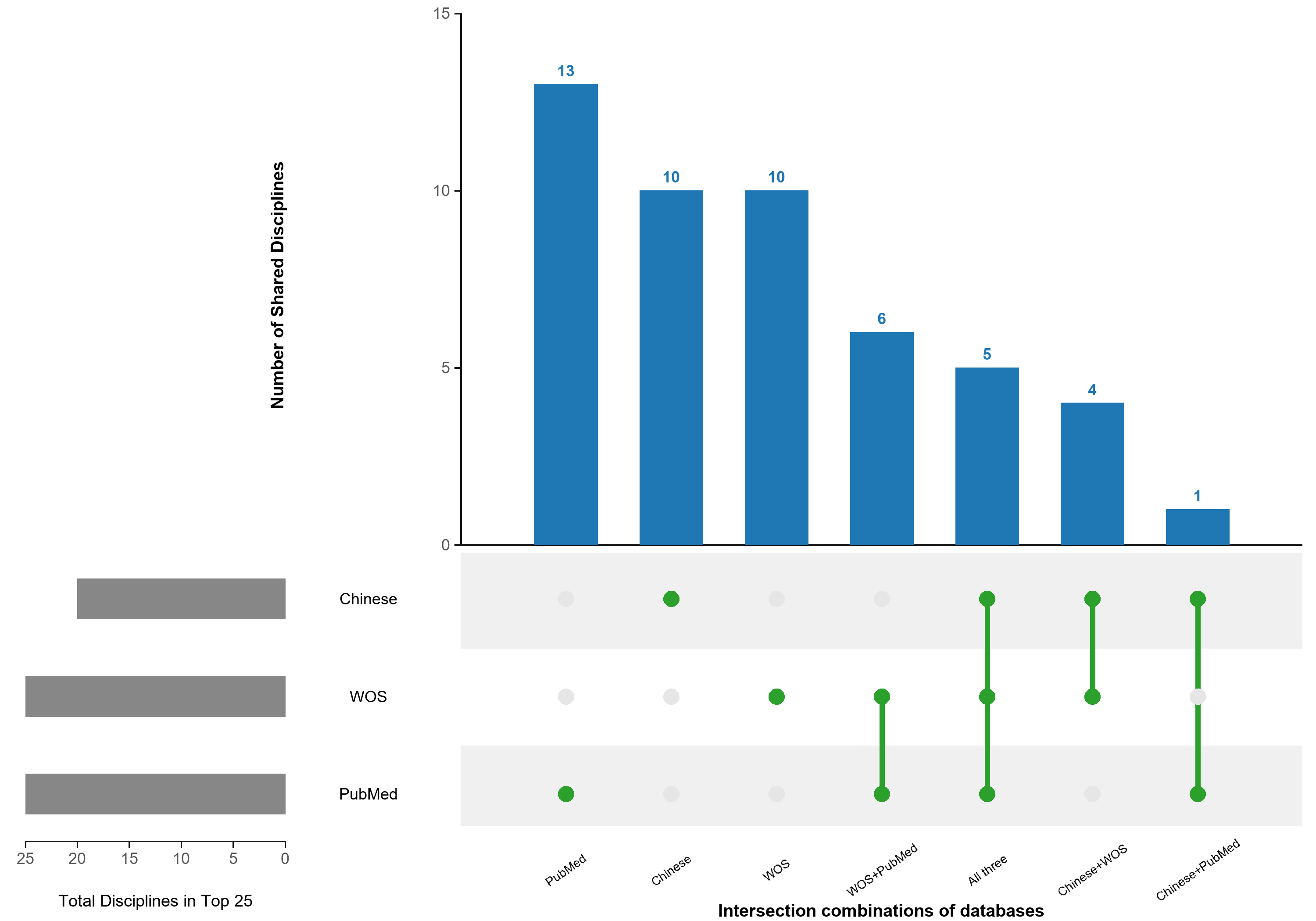
Figure 7. Disciplinary overlap and distribution of highly cited forensic medicine studies across three data sources. WOS: Web of Science.
Despite this high degree of specificity, partial overlaps indicate regional and international alignments. The strongest two-way consensus existed between the international databases, with WOS and PubMed sharing exactly 6 disciplines. The Chinese academic databases exhibited more limited overlap, sharing 4 disciplines with WOS and 1 with PubMed. Notably, 5 disciplines were universally shared across all three databases, forming the only fully connected pathway in the analysis. Taken together, these results suggest that while there is a very narrow set of globally accepted core disciplines, highly cited forensic medicine research is primarily characterized by significant database-specific disparities and distinct regional research emphases.
DISCUSSION
This study performed a comprehensive, multi-database analysis of interdisciplinary research in forensic medicine, comparing data from WOS, PubMed, and major Chinese academic databases (CNKI and Wanfang). Although the scope and strength of interdisciplinary integration varied across databases and regions, consistent findings demonstrated that interdisciplinary research is a prominent feature of high-impact studies in forensic medicine.
Inevitable interdisciplinary transformation of forensic medicine
According to two international databases, interdisciplinary papers accounted for 97.8% and 78% of forensic medicine literature published over the past decade. Despite the numerical discrepancy, both datasets confirm that interdisciplinary research dominates the field, providing strong support for the view that forensic medicine has experienced a profound interdisciplinary transformation[18]. In the context of rapid informatization and intelligentization, although traditional forensic methods remain fundamental, they are no longer sufficient to address the evolving challenges of contemporary criminal justice. From an interdisciplinary perspective, the heavy reliance of forensic medicine on clinical medicine, chemistry[19], computer science[20-22], and artificial intelligence[15] signals a paradigm shift - from passive, observational techniques toward active, data-driven, and technology-integrated approaches [Section Results from Web of Science (WOS) and Section Results from PubMed]. For example, with 743 citations, the research highlights the power of computational technology in forensic medicine: HaploGrep 2 automates mtDNA haplogroup classification and quality control, thereby greatly improving efficiency and accuracy in forensic practice[23]. In addition to computer science, veterinary medicine, immunology[24-26] and microbiology[27-30] also maintain extensive interdisciplinary links with forensic medicine. For instance, a paper published in Science has received 419 citations[30], largely because it successfully applies an interdisciplinary approach to a longstanding problem in forensic medicine: estimating the post-mortem interval (PMI) of decomposed remains. By integrating microbial ecology with forensic medicine, the study reveals that microbial community succession during corpse decomposition follows predictable patterns, which can serve as a “microbial clock” for PMI estimation. This innovative solution addresses a critical limitation of traditional methods, which become unreliable when remains are highly decomposed. As the first study to establish this framework, it not only provides a practical tool for forensic practice but also opens up a new research field - forensic microbiology. Thus, its high impact and extensive citations underscore the power of interdisciplinary research in advancing forensic medicine. Furthermore, the integration of veterinary medicine and forensic pathology enables professional post-mortem examination, technical analysis, and legal interpretation in cases involving animal injury and cruelty, as reflected in targeted research on veterinary forensic practice[31]. Similarly, Chinese academic databases emphasize the intra-disciplinary intersection within forensic medicine and its intersection with basic medicine (Section Results from Chinese academic databases). Collectively, these findings redefine forensic medicine not as an independent technical field, but as an application-centered hub discipline that integrates innovations from multiple domains to solve complex real-world problems.
Globalization and openness of forensic medicine
A particularly notable observation is that the WOS dataset shows a high proportion of international collaboration (accounting for 62.2% of highly cited papers in WOS), together with a dominant contribution from non-forensic researchers in generating influential interdisciplinary work (73.3%) [Section Results from Web of Science (WOS)]. These findings suggest that the most impactful advances in forensic medicine no longer emerge exclusively from within the forensic discipline itself. Instead, such progress is increasingly driven by external experts - including clinical doctors, computer scientists, and psychiatrists - who apply their technical methodologies to address forensic challenges. This open, cross-disciplinary collaborative model has substantially accelerated scientific innovation[32,33]; however, it also presents notable challenges. Forensic researchers must proactively develop the ability to understand, evaluate, and critically appraise external technologies to ensure their valid and reliable integration within rigorous legal and forensic frameworks. Moreover, it would be of interest to systematically examine the research profiles of interdisciplinary forensic medicine at the country level through statistical means. This would provide a clearer picture of regional heterogeneity and serve as a useful reference for promoting global cooperation in interdisciplinary forensic research. We consider this a valuable direction to actively pursue in our subsequent studies.
Interdisciplinarity in the Chinese context: progress and persistent disparities
Analysis of Chinese academic databases (Section Results from Chinese academic databases) reveals that the field of forensic medicine in China is also highly interdisciplinary, with 58% of highly cited papers involving interdisciplinary collaboration. However, this proportion is considerably lower than the 97.8% observed among the top-ranked papers worldwide. This discrepancy may be attributable to several factors, including a potential lag in China’s adoption of the most advanced interdisciplinary methodologies, such as artificial intelligence and big data analytics, or a stronger emphasis on case-based applied research within the Chinese literature. Notably, 91.4% of these interdisciplinary papers are directly related to forensic medicine, suggesting that the Chinese academic research ecosystem is becoming increasingly mature and integrated.
In conclusion, forensic medicine research necessitates the integration of multidisciplinary technologies. Our multi-database analysis demonstrates that interdisciplinarity is a prominent feature of high-impact studies in forensic research, with interdisciplinary papers accounting for 97.8% and 78% in two international databases, and 58% in Chinese databases. China has made remarkable progress in this area, yet it still lags behind the global level, particularly in terms of international collaboration and publication in high-impact interdisciplinary journals. Nevertheless, several limitations should be acknowledged. It should be acknowledged that the findings of this study are contingent upon the scope and classification of “forensic medicine” as defined by the individual databases queried. Different databases may adopt varying criteria for indexing forensic medicine-related literature, which could potentially introduce bias and affect the comparability of our results. Future studies may benefit from cross-validating findings across multiple databases or establishing a standardized search strategy to mitigate this limitation. Moreover, differences in the definition of highly cited papers across databases may affect database comparability. Notably, we acknowledge that citation accumulation is time-dependent, as older publications have had more time to accrue citations. We did not normalize citation data by year, and this temporal skew should be considered when interpreting our citation-related results. Future studies using per-year citation rates would provide a more balanced comparison. Despite these constraints, the overall trends are robust. We therefore call for researchers from diverse disciplines to deepen collaborative innovation and strengthen interdisciplinary cooperation, in order to jointly address challenges in forensic identification practice.
DECLARATIONS
Author’s contributions
Conceptualization: Chen T
Writing-original draft: Wang S
Investigation and data curation: Wang S, Jiang Q
Methodology: Wang S, Jiang Q, Chen T
Visualization: Jiang Q, Su H
Validation: Chen F, Ni T
Writing - review & editing: Ni T, Su H, Chen F, Chen T
All authors have read and approved the final manuscript.
Availability of data and materials:
The raw data supporting the findings of this study are available from the corresponding author upon reasonable request.
AI and AI-assisted tools statement:
Not applicable.
Financial support and sponsorship
Not applicable.
Conflicts of interest
Teng Chen is the Executive Editor-in-Chief of Legal Medicine Research. Feng Chen is an Editorial Board Member of Legal Medicine Research. They were not involved in any stage of the editorial process, including reviewer selection, manuscript handling, or decision-making. The other authors declare no conflicts of interest.
Ethical approval and consent to participate:
Not applicable.
Consent for publication:
Not applicable.
Copyright
© The Author(s) 2026.
Supplementary Materials
REFERENCES
1. Buschmann CT. More interdisciplinary research is needed in forensic medicine. Forensic Sci Med Pathol. 2019;15:131-2.
2. Cunningham N, Parkin JA. forensic medicine in the emergency department: principles, practices and challenges. Emerg Med Australas. 2025;37:e70175.
3. Miziara ID. Legal Medicine and otorhinolaryngology: related sciences. Int Arch Otorhinolaryngol. 2024;28:e177-9.
4. Morrison GS. Advancing a paradigm shift in evaluation of forensic evidence: The rise of forensic data science. Forensic Sci Int. 2022;5:100270.
5. Jones AW. Scientometric evaluation of highly cited scientists in the field of forensic science and legal medicine. Int J Legal Med. 2021;135:701-7.
6. Li M, Livan G, Righi S. Breaking down the relationship between disruption scores and citation counts. PLoS ONE. 2024;19:e0313268.
9. Tournois L, Trousset V, Hatsch D, Delabarde T, Ludes B, Lefèvre T. Artificial intelligence in the practice of forensic medicine: a scoping review. Int J Legal Med. 2024;138:1023-37.
10. Galante N, Cotroneo R, Furci D, Lodetti G, Casali MB. Applications of artificial intelligence in forensic sciences: current potential benefits, limitations and perspectives. Int J Legal Med. 2023;137:445-58.
11. Shen C, Lian C, Zhang W, et al. Large-vocabulary forensic pathological analyses via prototypical cross-modal contrastive learning. Nat Commun. 2025;16:6773.
12. Abadi AM, Brumfield KD, Usmani M, et al. Developing scenario-based strategies for health, climate, and environmental preparedness: the one health, one earth approach. GeoHealth. 2026;10:e2025GH001674.
13. Huang X, Zhao A, Cui R, Peng W. Bridging climate and health: a collaborative path to policy-relevant science. iScience. 2025;28:113050.
14. Mukherjee D, Sagar K, Kobialka RM, et al. Filling the gap: artificial intelligence-driven one health integration to strengthen pandemic preparedness in resource-limited settings. Front. Public Health. 2025;13:1707306.
15. Zaheen U, Rakha A, Hassan Q, Khan MF, Akhtar S, Munawar A. A systematic review about the evolving role of artificial intelligence in various fields of forensic medicine. J Forensic Legal Med. 2026;117:103043.
16. Marinelli S, Pelagatti E, Delfino D, Piersanti V. Forensic toxicology and artificial intelligence: broadening horizons and growing potential. Clin Ter. 2026;177:159-63.
17. Colella S, Antonacci A, Arduini F, Fiorentino G, Scognamiglio V. The evolution of the forensic diagnostic landscape: from established toolkit to emerging perspectives in microbiome profiling. Trends Anal Chem. 2026;199:118800.
18. Volonnino G, De Paola L, Spadazzi F, et al. Artificial intelligence and future perspectives in forensic medicine: a systematic review. Clin Ter. 2024;175:193-202.
19. Hu G, He W, Zhu Z, et al. Fourier transform infrared spectroscopy combined with chemometrics: a novel tool for larval species identification of stored-product pests. Spectrochim Acta A. 2026;358:127843.
20. Zhang X, Lv Y, Wang H, et al. Interpretable machine learning identifies hub biomarkers of renal fibrosis and their potential medical applications. Drug Des Devel Ther. 2026;20:1-18.
21. Buyukcakir B, De Tobel J, Thevissen P, Vandermeulen D, Claes P. An autoencoder and vision transformer based interpretability analysis on the performance differences in automated staging of second and third molars. Sci Rep. 2025;15:42076.
22. Al-Juhani AA, Gaber AM, Desoky RM, et al. From microbial data to forensic insights: systematic review of machine learning models for PMI estimation. Forensic Sci Med Pathol. 2025;21:1447-76.
23. Weissensteiner H, Pacher D, Kloss-Brandstätter A, et al. HaploGrep 2: mitochondrial haplogroup classification in the era of high-throughput sequencing. Nucleic Acids Res. 2016;44:W58-63.
24. Salerno M, Cocimano G, Roccuzzo S, et al. New trends in immunohistochemical methods to estimate the time since death: a review. Diagnostics. 2022;12:2114.
25. Tomassini L, Ricchezze G, Gambelunghe C, et al. Immunohistochemical insights into hyperthermia-related deaths: a systematic review. Int J Legal Med. 2025;139:2467-501.
26. D’antonio G, Di Fazio N, Pellegrini L, et al. Immunohistochemical assessment of acute myocardial infarction: a systematic review. Int J Mol Sci. 2025;26:8901.
27. Marshall D, Ueland M, Nadort A, Söderström B. Using the postmortem epinecrotic microbiome as a tool for time since death estimations. J Appl Microbiol. 2025;136:lxaf274.
28. Y K, Isukapatla AR. Postmortem microbiome dynamics: Review of forensic microbial clock. J Forensic Leg Med. 2026;117:103024.
29. Tomassini L, Goracci V, Onofri M, et al. Microbial succession after death: genomic and culture-based insights from external sampling sites in forensic science. Leg Med. 2025;78:102685.
30. Metcalf JL, Xu ZZ, Weiss S, et al. Microbial community assembly and metabolic function during mammalian corpse decomposition. Science. 2016;351:158-62.
31. Gilbert JF, Aysu JE, Tóth I, Szilasi A, Mándoki M. Veterinary forensic pathology in the investigation of animal cruelty: post-mortem insights, forensic tools, case studies, and legal perspectives. Animals. 2026;16:785.
32. Tapps M, Piat O, Matte A, Volery R. Succeeding together: the power of collaboration between forensic and criminal intelligence. Forensics Sci Res. 2024;9:owae054.
Cite This Article
 Open Access
How to Cite
Download Citation
Export Citation File:
Type of Import
Tips on Downloading Citation
Citation Manager File Format
Type of Import
Direct Import: When the Direct Import option is selected (the default state), a dialogue box will give you the option to Save or Open the downloaded citation data. Choosing Open will either launch your citation manager or give you a choice of applications with which to use the metadata. The Save option saves the file locally for later use.
Indirect Import: When the Indirect Import option is selected, the metadata is displayed and may be copied and pasted as needed.
About This Article
Copyright

Data & Comments
Data
0





Comments
Comments must be written in English. Spam, offensive content, impersonation, and private information will not be permitted. If any comment is reported and identified as inappropriate content by OAE staff, the comment will be removed without notice. If you have any queries or need any help, please contact us at [email protected].