
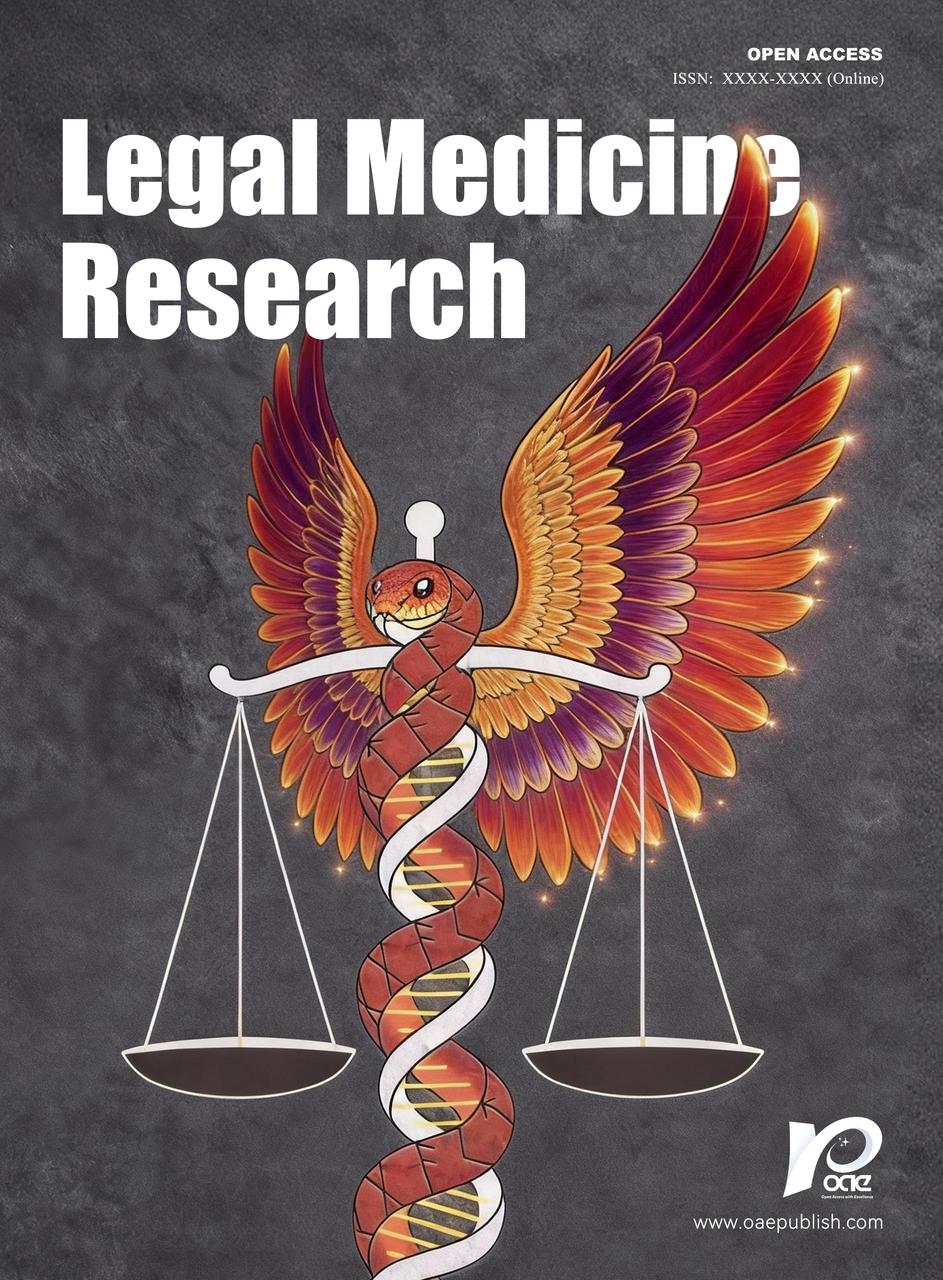
Building high-level academic journals to boost innovation and development in legal medicine - foreword to Legal Medicine Research
 0
0 Legal Medicine is a medical discipline that investigates and resolves issues pertaining to personal injury, death, and identification within legal contexts. It provides crucial clues for criminal investigations and evidence for judicial proceedings. From the seemingly fantastical practice of “blood recognition” in ancient China to the precise identification of modern DNA analysis; from the rigor of Song Ci’s principle in Washing Away of Wrongs that “no legal matter is graver than capital punishment, and no capital punishment is graver than the initial investigation”, to the rule of law in modern society - legal medicine has consistently served as a state medical discipline in support of administrative and judicial authorities. It stands as an indispensable tool for safeguarding citizens' rights to life, health, and bodily integrity. Furthermore, it plays a vital role in expanding the boundaries of medical scientific knowledge, uncovering the nature of life and the mechanisms of death, ensuring biological security, addressing transnational crimes and public emergencies.
However, it must be recognized that scientific research and investigative practices in legal medicine still face certain shortcomings. These include, for example, the mechanisms of stress-induced death, the postmortem changes in bodily tissues and their temporal patterns, objective examination techniques for mental disorders and neurofunctional assessment of organ systems, as well as insufficient interdisciplinary integration with artificial intelligence. These challenges also present significant opportunities for the development and practical application of forensic medicine. Therefore, enhancing the level of scientific research in forensic medicine and promoting academic exchange and collaboration are critical issues for the discipline’s advancement.
The essence of legal medicine lies in uncovering the truth behind cases, which means “upholding the rights of the living and seeking justice for the deceased”. At chaotic crime scenes or amidst the aftermath of disasters, forensic experts not only need to identify tell-tale traces but also methodically reconstruct these clues to uncover the hidden truth. In this era of information and technological explosion, legal medicine faces unprecedented opportunities and challenges. How can innovations in research methodologies drive breakthroughs in forensic medicine? How can artificial intelligence assist in the identification of injuries, deaths, and identities? In the context of globalization, how can a transnational forensic collaboration system be established? These are all critical questions that require urgent solutions.
The progress of forensic science relies not only on meticulous research conducted with precision instruments but also on holistic considerations from legal, ethical, and social perspectives. Guided by a profound respect for life and an unwavering dedication to science and truth, we hereby launch the journal Legal Medicine Research, embarking on this new academic journey.
Legal Medicine Research is committed to:
(1) Building an interdisciplinary academic platform - focusing on innovative theoretical research in forensic identification and promoting deep integration between forensic medicine and fields such as medicine, life sciences, and ethics.
(2) Driving technological innovation and application - emphasizing cutting-edge forensic technologies and methodologies, as well as the development and application of identification standards and guidelines, and advocating rigorous methodological validation.
(3) Cultivating professional ethics and humanistic spirit - exploring the ethical boundaries of forensic work and documenting the humanistic narratives of the discipline’s development.
(4) Promoting international exchange and cooperation - advocating a global perspective, promoting international cooperation and exchange, and jointly addressing challenges posed by transnational crimes and disaster responses.
With the advancement of information technology and science, legal medicine will increasingly focus on integrating knowledge from diverse fields and continuously updating technological approaches to address emerging forms of crime. We value both the rigorous data generated in laboratories and the practical insights accumulated by investigators in the field. We track every breakthrough in cutting-edge technology, while also considering how these advancements can truly contribute to upholding social fairness and justice. All in all, Legal Medicine Research aspires to be a companion on this quest for truth - documenting every technological breakthrough, reflecting on every practical challenge, and witnessing how this ancient yet youthful discipline achieves social justice through scientific precision.
Here, we sincerely invite forensic colleagues worldwide, scholars in related fields, and judicial practitioners to cultivate this academic field together. Let us uphold scientific rigor to uncover hidden evidence, apply professional expertise to reconstruct facts and truth, and adhere to ethical principles to protect the dignity of the living and the deceased. Together, through more scientific and precise technological innovations, we will continue advancing society toward greater fairness and justice.
DECLARATIONS
Authors’ contributions
The author contributed solely to the article.
Availability of data and materials
Not applicable.
Financial support and sponsorship
None.
Conflicts of interest
The author is the Editor-in-Chief of Legal Medicine Research. This Editorial was not externally peer reviewed and was accepted directly by the publisher. The Editor-in-Chief was not involved in the handling or decision-making for this manuscript.
Ethical approval and consent to participate
Not applicable.
Consent for publication
Not applicable.
Copyright
© The Author(s) 2026.
Cite This Article
 Open Access
How to Cite
Download Citation
Export Citation File:
Type of Import
Tips on Downloading Citation
Citation Manager File Format
Type of Import
Direct Import: When the Direct Import option is selected (the default state), a dialogue box will give you the option to Save or Open the downloaded citation data. Choosing Open will either launch your citation manager or give you a choice of applications with which to use the metadata. The Save option saves the file locally for later use.
Indirect Import: When the Indirect Import option is selected, the metadata is displayed and may be copied and pasted as needed.
About This Article
Copyright

Data & Comments
Data
0





Comments
Comments must be written in English. Spam, offensive content, impersonation, and private information will not be permitted. If any comment is reported and identified as inappropriate content by OAE staff, the comment will be removed without notice. If you have any queries or need any help, please contact us at [email protected].