



From immune heterogeneity to precision medicine in sepsis
 0
0 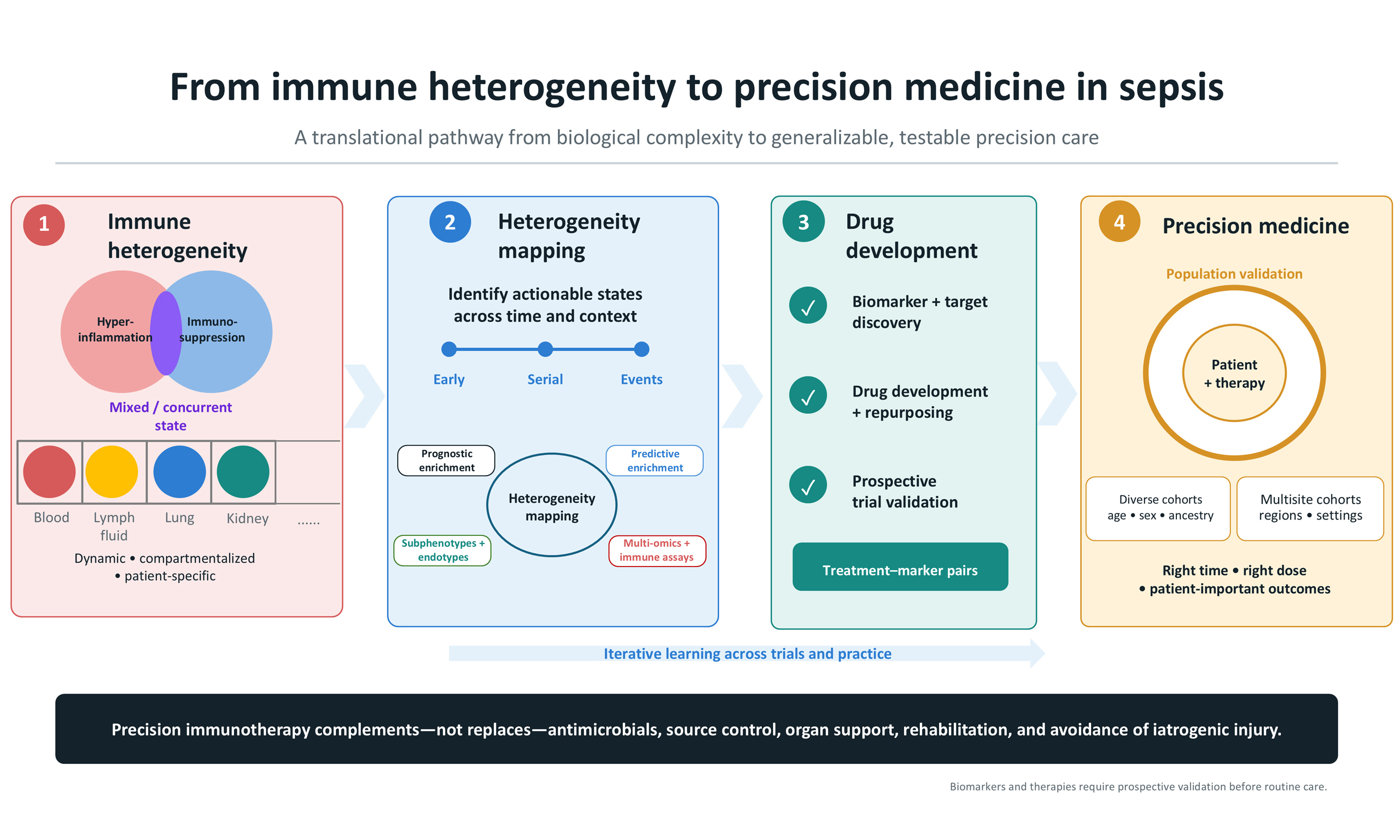
INTRODUCTION
Kox et al. recently published a comprehensive review in Nature Reviews Nephrology, providing a timely and thorough summary of sepsis immunobiology[1]. While Kox et al.[1] provide an elegant synthesis of current concepts in sepsis immunobiology, the review also inadvertently underscores a persistent translational gap: despite substantial conceptual progress, the field still lacks robust evidence that these frameworks meaningfully improve patient outcomes in real-world clinical settings. Our specific perspective is that the next step is not another sepsis taxonomy, but an actionability test: a proposed endotype should demonstrate biological validity across time and compartments, prospectively identify differential response to a specified therapy, and return an interpretable result within the clinical decision window. This decision-focused standard frames the discussion that follows.
RESHAPING CONCEPTUAL FRAMEWORKS: MOVING BEYOND SIMPLE INFLAMMATION AND SUPPRESSION
Sepsis is currently defined as life-threatening organ dysfunction caused by a dysregulated host response to infection. As the authors insightfully highlight, pro-inflammatory and anti-inflammatory pathways are often activated simultaneously rather than sequentially. Hyperinflammation and immunosuppression frequently coexist. The compartmentalization phenomenon further complicates the picture: sepsis involves multi-organ injury, and detection based solely on blood samples may fail to reflect tissue-specific responses. Metabolic reprogramming and long-term sequelae further exacerbate the complexity of the sepsis disease course.
The article emphasizes moving away from the traditional binary paradigm of “hyperinflammation versus immunosuppression” toward a more nuanced understanding of the dynamic, compartmentalized, and highly heterogeneous host response[1]. This perspective is highly consistent with evidence accumulated from multiple independent cohort studies[2-5] and explains why “one-size-fits-all” immunomodulatory trials have largely failed, while paving the way for predictive enrichment and personalized interventions[6,7]. Nevertheless, these conceptual frameworks remain difficult to operationalize in clinical practice, and robust bedside tools to translate these theoretical constructs into real-time decision support are still lacking. Accordingly, reproducible prognostic separation should not be equated with treatment-predictive utility.
PROSPECTS AND CHALLENGES OF ENRICHMENT STRATEGIES
Kox et al. emphasize the balanced application of prognostic and predictive enrichment. Prognostic tools can identify high-risk patients but cannot guarantee response to specific therapies[1]. Predictive enrichment has shown promising signals in secondary analyses: hyperinflammatory Acute Respiratory Distress Syndrome (ARDS) subphenotypes benefit from simvastatin or fluid management, while the efficacy of glucocorticoids depends on sepsis response signatures (SRS) subtype or inflammatory status. These observations are hypothesis-generating and should not be presented as equivalent to prospectively validated precision therapy in sepsis. Several biomarker-guided therapeutic strategies have been proposed, aiming to translate immune heterogeneity into actionable interventions [Table 1]. These approaches span diverse biological states, including hyperinflammation, immunoparalysis, complement activation, and metabolic dysfunction. However, most remain supported by subgroup analyses, mechanistic studies, or early-phase trials, highlighting the substantial gap between biological plausibility and clinical implementation. Among these strategies, biomarkers such as mHLA-DR, suPAR, and ferritin have provided proof-of-concept for theragnostic approaches. Nevertheless, their clinical utility remains uncertain because most findings derive from post hoc analyses, and prospective randomized validation is still limited.
Candidate therapies organized by immune state and biological process in sepsis
| ID | Immune state/biological process | Putative beneficiary or risk subgroup | Biomarker/selection rule | Candidate intervention | Biological rationale | Evidence level/key finding | Translational barrier/safety | References |
| H1 | Hyperinflammation (predictive-enrichment example) | SRS2/immune-adaptive state may identify harm from corticosteroids; in COVID-19 benefit varies with oxygen requirement and inflammatory subgroup | SRS2 transcriptomics; immune-adaptive gene-expression score; oxygen/mechanical ventilation; hyper-/hypoinflammatory class | Corticosteroids/dexamethasone | Broad anti-inflammatory action; the review emphasizes directionally different effects across subgroups | Human RCTs plus post hoc subgroup analyses: higher mortality with corticosteroids in VANISH SRS2/immune-adaptive groups; benefit in oxygen-requiring, especially ventilated, COVID-19 | Mostly post hoc subgroup effects; infection and compartment dependence; prognostic enrichment alone is insufficient | [1,8-11] |
| H2 | Hyperinflammation (cytokine-driven) | Patients with COVID-19 and higher IL-6; no non-COVID-19 sepsis threshold is provided | Circulating IL-6 (no threshold stated) | Tocilizumab | IL-6 inhibition; also discussed in a C5a-IL-6 combination rationale | The review states that higher-IL-6 COVID-19 patients may be more likely to respond; combination signal with vilobelimab is from post hoc phase III analysis | Limited generalization to non-COVID-19 sepsis; unvalidated threshold; combination requires prospective testing | [1,12-15] |
| H3 | Hyperinflammation (ARDS-like subgroup) | Retrospectively identified hyperinflammatory ARDS subgroup | Latent-class model using clinical variables plus plasma proteins; no bedside cut-off listed here | Simvastatin | Potential modulation of hyperinflammation | Secondary analysis of HARP-2 RCT: improved 28- and 90-day survival in hyperinflammatory subgroup; no difference in hypoinflammatory subgroup | Post hoc subgroup in ARDS; real-time classifier and prospective validation lacking | [1,16,17] |
| H4 | Hyperinflammation/coagulopathy (historical enrichment example) | Hyperinflammatory septic-shock subgroup; possible harm in hypoinflammatory subgroup | Hyper-/hypoinflammatory classification; no single cut-off | Activated protein C (APC) | Anticoagulant and inflammation-modulating example of treatment-effect heterogeneity | Secondary PROWESS-SHOCK analysis: mortality 32% vs. 39% in hyperinflammatory subgroup; 23% vs. 17% in hypoinflammatory subgroup, suggesting harm | Secondary analysis with opposite subgroup effects; presented as enrichment evidence, not a current recommendation | [1,5,18,19] |
| H5 | Hyperinflammation/MALS | MALS; hepatobiliary dysfunction plus DIC; high IL-1RA; or high suPAR in COVID-19 | Ferritin > 4,420 ng/mL (PROVIDE/ImmunoSep); IL-1RA > 2,071 pg/mL; suPAR ≥ 6 ng/mL (COVID-19) | Anakinra | IL-1 receptor blockade to suppress hyperinflammation | Unselected sepsis phase III RCT stopped for futility; mortality signals in post hoc MALS/high-IL-1RA subgroups; SAVE-MORE was a biomarker-enriched COVID-19 RCT | Core sepsis signals are post hoc; thresholds/phenotypes need prospective validation; COVID-19 generalizability is limited | [1,20-23] |
| H6 | Hyperinflammation/JAK-STAT activation | Hyper-/hypoinflammatory ARDS classes planned for PANTHER; no sepsis-specific companion diagnostic is provided | Inflammatory class; IL-6 is pathway-related but not specified as a treatment cut-off | JAK-STAT inhibitors, especially baricitinib | Blocks cytokine-receptor downstream signaling; may protect against kidney injury | COVID-19 meta-analysis: mortality about 14% to 12%; PANTHER planned to stratify by inflammatory class | Infection, venous thrombosis, skin malignancy and gastrointestinal perforation risks; discontinuations in severe pediatric COVID-19; limited general-sepsis evidence | [1,24-27] |
| C1 | Complement activation/thromboinflammation | High C5a with hyperinflammation and thrombosis; invasively ventilated COVID-19 is the studied outcome population | Activated complement C5a; no treatment threshold stated | Direct C5a inhibitor vilobelimab; eculizumab is discussed as an upstream-inhibitor limitation | Blocks C5a while preserving C5b and membrane-attack-complex formation, aiming to reduce inflammation/thrombosis while retaining host defence | Phase III COVID-19 trial: lower all-cause mortality and kidney replacement therapy; severe sepsis/shock study suggested preserved membrane-attack-complex lysis | Possible impaired microbial clearance and bleeding; COVID-19 generalizability; upstream blockade may miss thrombin-generated C5a | [1,13,28-30] |
| M1 | Metabolic dysfunction/pro-inflammatory metabolic reprogramming | Monocyte/lymphocyte shift from FAO to aerobic glycolysis; no validated selection subgroup | No bedside metabolic biomarker is proposed for metformin selection | Metformin | Modulates mitochondrial complex I, AMPK and redox state; may shift toward FAO and reduce TLR4-NF-κB, inflammasome activation and inflammatory mediators | Animal models plus retrospective clinical studies; four randomized sepsis trials underway | Accumulation, hyperlactatemia and metabolic acidosis in severe renal impairment; early glycolysis suppression may weaken antimicrobial responses | [1,31-34] |
| I1 | Immunoparalysis/monocyte deactivation | Sepsis-associated immunosuppression with persistently low mHLA-DR | mHLA-DR < 8,000 monoclonal antibodies/cell for 2 days | GM-CSF | Stimulates myeloid/monocyte function and restores HLA-DR and TLR2/4-induced cytokine production | Small biomarker-selected randomized trial, n = 38: mHLA-DR normalized in 19/19 vs. 3/19; shorter ventilation, ICU and hospital time | Small sample; broad activity; may drive pathological myelopoiesis and MDSCs, worsening adaptive suppression | [1,35,36] |
| I2 | Immunoparalysis/endotoxin tolerance | Low mHLA-DR with ferritin below the MALS threshold | mHLA-DR < 5,000 mABs/cell plus ferritin < 4,420 ng/mL (PROVIDE/ImmunoSep) | IFNγ | Activates macrophages, counters endotoxin tolerance and restores mHLA-DR and monocyte TNF production | Mechanistic signals in repeated human endotoxemia and open-label sepsis studies; PROVIDE n = 36 with only 1 IFNγ recipient; ImmunoSep n = 280 unpublished at review publication | Clinical outcome effects cannot be assessed robustly; thresholds need validation; broad pro-inflammatory action may be unsuitable when hyperinflammation coexists | [1,23,37-39] |
| I3 | Immunosuppression/profound lymphopenia | Apoptosis-dependent lymphocyte loss and profound lymphopenia | Reduced lymphocyte count; low IL-7 receptor mRNA is prognostic but not a validated selection cut-off | IL-7/CYT107; IL-7-Fc virotherapy | Anti-apoptotic; improves CD4+ and CD8+ T-cell survival, expansion and proliferation | Experimental bacterial/fungal sepsis; proof-of-principle septic-shock and COVID-19 studies reversed CD4/CD8 loss; ex vivo T-cell restoration | Mostly mechanistic/proof-of-principle evidence; no outcome evidence or validated cut-off | [1,40-43] |
| I4 | Immunosuppression/T-cell exhaustion | PD1/PDL1/CTLA4-associated exhausted T-cell phenotype | Elevated soluble PDL1 is associated with mortality; no treatment-selection cut-off is provided | Anti-PD1 or anti-PDL1 | Releases checkpoint inhibition and enhances T-cell function | Benefits in sepsis models; phase I anti-PDL1 sepsis trial was well tolerated and achieved full receptor occupancy at day 28 with a single 900-mg dose | Early safety/pharmacodynamic evidence only; rash, autoimmune thyroiditis/colitis and systemic hyperinflammatory syndrome | [1,44-47] |
| I5 | Immunosuppression/secondary-infection susceptibility (trained immunity) | Potentially patients at risk of secondary bacterial or fungal infection; no clinical endotype defined | No validated selection biomarker proposed | β-glucan | Acts through dectin-1/complement receptor 3 and can induce trained immunity | Potential-benefit evidence is limited to animal studies | No human safety, dose, timing or outcome evidence; possible risk when hyperinflammation coexists | [1,48-51] |
| D1 | Dual/time-dependent immune dysregulation and platelet activation | Short-term exposure may enhance innate immunity; chronic exposure may reduce inflammation and promote lipid-mediator resolution | No selection biomarker proposed | Low-dose aspirin | Chronic: suppresses TNF, enhances lipid-mediator resolution and inhibits platelets; acute: pro-inflammatory effect in LPS challenge | Short-term human LPS challenge; observational meta-analysis signal; large RCT in adults > 70 showed no reduction in sepsis-related death | Direction depends on timing; large RCT does not support primary prevention; deterioration prevention/secondary prevention remain research questions | [1,52-55] |
| R1 | Microbiome disruption/barrier and inflammatory dysregulation | Gut dysbiosis and lost colonization resistance; post-ICU secondary-infection/long-term-complication risk is a research target | No validated bedside microbiome/metabolite threshold proposed | Next-generation probiotics, fecal microbiota transplantation, short-chain fatty acids/indoles | Restore microbiota/barrier; metabolites can inhibit cytokine production | Untargeted Lactobacillus/Bifidobacterium RCTs negative; FMT supported by case reports/animals; metabolites by inflammation/sepsis animal models | Safety/controllability of live organisms; no human validation, selection rule, dose or timing standard | [1,56-59] |
| X1 | Multiaxis hyperinflammation (C5a-IL-6-JAK/STAT loop) | Concurrent complement and IL-6/JAK-STAT activation; no validated endotype | C5a, IL-6 and related pathway measures; no combined cut-offs specified | Vilobelimab + tocilizumab; or vilobelimab + baricitinib | Interrupts the C5a-IL-6-STAT3 feedback loop | Vilobelimab-tocilizumab survival synergy is from post hoc phase III analysis; baricitinib combination is mainly mechanistic/preclinical | Post hoc/mechanistic evidence; combined infection/immunosuppression risk; needs prospective combination trials and companion diagnostics | [1,13-15] |
| G1 | Endothelial injury/immunothrombosis (evidence gap) | Endothelial activation, leukocyte adhesion/transmigration, thrombin formation and platelet activation | No validated endothelial-treatment selection biomarker is proposed | No dedicated endothelial-repair drug appears in the future-candidate list; aspirin/complement inhibition are adjacent platelet/thromboinflammatory strategies only | Endothelial activation connects inflammation and coagulation, but no direct treatment-biomarker pair is provided | Mechanistic discussion; no dedicated candidate clinical evidence in this review | No companion diagnostic or direct intervention; adjacent-mechanism drugs should not be presented as validated endothelial therapy | [1] |
| G2 | Failed inflammation resolution/tissue repair (evidence gap) | Post-sepsis low-grade chronic inflammation, impaired resolution and insufficient regeneration/repair | The review explicitly states that validated biomarkers for this inflammatory state are lacking | No dedicated pro-resolving/tissue-repair candidate is listed; chronic low-dose aspirin is only described as enhancing lipid-mediator resolution | Pro-resolving mediators, macrophage polarization, efferocytosis, angiogenesis and cellular regeneration are candidate processes | Conceptual/mechanistic framework; no targeted clinical trial described in this review | No validated biomarker; tolerance, repair and resolution biology remains early; long-term outcomes and treatment window are unclear | [1,60-63] |
A systematic review of predictive enrichment using biomarkers in sepsis also supports this view[64]. It identified 12 eligible randomized studies, all using single circulating protein or endotoxin biomarkers for predictive enrichment. Although five studies reported statistically significant primary outcomes, only two showed patient-important benefits. Only five used point-of-care assays, and none incorporated genetic, transcriptomic, or metabolomic markers, underscoring the narrow scope and limited clinical translation of current biomarker-guided strategies in sepsis trials. Beyond these limitations, challenges remain prominent: sepsis phenotypes exhibit significant dynamism, with one study showing that up to 46% of baseline phenotypes undergo substantial changes by days 3 and 5[65], posing a major challenge for enrichment strategies reliant on single time-point assessments. Subphenotype studies also face a lack of standard assays with harmonized reliability and reproducibility; insufficient simultaneous assessment of multi-omics and non-omics responses across compartments[66]; and, as noted in the review, marked compartmentalization of the host response, where blood-based biomarkers often fail to reflect the local immune status in target organs such as the lungs and kidneys, potentially leading to mis-stratification when relying solely on peripheral blood detection.
Most subphenotype and endotype studies still rely on retrospective cohorts, with insufficient prospective validation. Currently, there is also a lack of rapid, reliable point-of-care testing technologies in clinical practice, making it difficult to meet the urgent time-sensitive demands of sepsis diagnosis and treatment[64]. As a pragmatic research framework, an initial state estimate could be obtained within 6 h, repeated at approximately 24-48 h, and reassessed at days 3-5 in patients with persistent or worsening organ dysfunction, with event-triggered testing for recurrent shock, secondary infection, or new organ injury. These intervals are proposed for prospective testing, not as a validated clinical standard. Any dynamic algorithm should prespecify how indeterminate results, blood-organ discordance, biomarker normalization, and safety-based stop or switch decisions will be handled.
Host transcriptomic endotypes have revealed differences in adaptive immunity, innate inflammation, endothelial activation, coagulation, and metabolism[3-5]. A recent consensus analysis reconciled major blood transcriptomic systems into three subtypes using the Molecular Diagnosis and Risk Stratification of Sepsis (MARS) and the Genomic Advances in Sepsis (GAinS) cohorts, including longitudinal samples[67]. Host genetic variation can also shape the sepsis transcriptomic response: an analysis of 638 adults identified 16,049 independent expression quantitative trait loci and genotype-by-endotype interactions[68]. Beyond transcriptomic regulation, genetic causal-inference approaches may help prioritize candidate biomarkers. For example, an observational and two-sample Mendelian randomization study reported an association between higher serum alkaline phosphatase levels and sepsis susceptibility, although its utility for immune endotyping or treatment prediction remains unestablished[69]. Together, these findings support mechanism discovery and biomarker prioritization, but neither molecular association nor Mendelian randomization evidence alone establishes an actionable endotype or predicts treatment response.
Longitudinal integration of transcriptomics, proteomics, metabolomics, and functional immune assays may better capture transitions than a single baseline measurement[70]. However, additional molecular layers are useful only if they improve a prespecified decision beyond routine clinical data, can be measured within the treatment window, and retain calibration across populations.
EMERGING THERAPIES AND TRIAL INNOVATION
The review highlights several repurposed and novel agents: Janus Kinase-Signal Transducer and Activator of Transcription (JAK-STAT) inhibitors, metformin, selective Complement Component 5a (C5a) inhibitors, Interleukin-7 (IL-7), anti- Programmed Death (Ligand)-1 [PD(L)1] monoclonal antibodies, and β-glucan-induced trained immunity. These agents target specific nodes in the inflammatory process and align with conceptual frameworks such as resistance, tolerance, resolution, and repair. Combinations (e.g., C5a + IL-6 blockade) merit exploration given pathway crosstalk.
Sepsis drug development has faced long-standing difficulties, with most randomized controlled trials ending in failure. The primary reasons include extreme patient heterogeneity, limitations of single-target interventions, lack of reliable predictive biomarkers, and the inability of traditional fixed-design trials to address the dynamic disease course[71,72]. On ClinicalTrials.gov, three randomized controlled trials on precision immunotherapy for sepsis are currently registered: ImmunoSep, titrated administration of IgM-enriched preparation, and Adaptive Platform Trial for Personnalisation of Sepsis Treatment in Children and Adults (PALETTE). The results of the ImmunoSep trial were published in JAMA this year, demonstrating the importance of precision immunotherapy: researchers personalized treatment with anakinra or recombinant interferon-γ according to patients’ immune status, and the precision immunotherapy group showed significantly better improvement in organ function and infection clearance compared with the placebo group. Its prespecified primary endpoint-a decrease of at least 1.4 points in mean Sequential Organ Failure Assessment (SOFA) score from baseline through day 9-was achieved in 35.1% of patients assigned to immune-status-guided therapy and 17.9% assigned to placebo {difference, 17.2% [95%CI, 6.8% to 27.2%]; P = 0.002}. Mortality at 28 days was not statistically significantly different between groups[73]. Results from the other two trials have not yet been published. Independent replication, assay standardization, and external validation are required before routine implementation.
Most current evidence supporting sepsis phenotyping and precision immunotherapy is derived from European and North American cohorts. However, substantial inter-population variability in genetic background, comorbidity patterns, pathogen distribution, and healthcare systems may limit the direct generalizability of these findings to Asian populations. In addition, differences in baseline immune status and treatment accessibility may further influence biomarker performance and enrichment strategy effectiveness. Therefore, region-specific validation in Asian critically ill populations is urgently required to ensure the global applicability of precision medicine approaches. We briefly note the CMAISE (Chinese Multi-omics Advances in Sepsis) database as an emerging longitudinal multi-omics resource that may support future mechanistic and translational studies in Asian critically ill populations[74]. Across 43 Chinese centers, multi-omics profiling has been completed for 1,284 patients meeting Sepsis-3 criteria, generating more than 4,500 samples at principal time points on days 1, 3, and 5 and integrating transcriptomic, proteomic, metabolomic, single-cell, and dense clinical data. Multi-omics initiatives such as CMAISE may help address this gap by enabling population-specific model development and validation.
The core future directions for sepsis treatment include: establishing dynamic, multidimensional stratification systems that integrate clinical phenotypes, molecular endotypes, and treatable traits to achieve real-time precision intervention; developing point-of-care rapid multi-omics detection combined with artificial intelligence-assisted decision-making systems to overcome the limitations of traditional single-time-point detection and static stratification; and promoting adaptive platform trials and embedded study designs to accelerate clinical validation of multi-target combined immune modulation strategies.
SUMMARY AND OUTLOOK
Kox et al.’s[1] article clearly declares that sepsis immunology has moved beyond the era of simple binary classification. The realization of precision medicine depends on three pillars: first, deepening the understanding of core mechanisms such as immune resistance, disease tolerance, resilience, resolution and repair; second, using multi-omics technologies and artificial intelligence to identify reliable, dynamic, and point-of-care detectable “treatable traits”; and third, adopting flexible and efficient clinical trial designs, such as adaptive platform trials and Bayesian methods, to simultaneously evaluate multiple therapies targeting specific endotypes.
The main future challenge lies in how to systematically integrate these insights into clinical practice and develop “combination” precision treatment regimens that can act at different time points, target different individuals, and affect different tissues and organs. For critical care physicians and researchers, this is a pivotal moment to abandon “one-size-fits-all” thinking and embrace the complexity and precision of the disease. Correction of immune dysregulation alone is unlikely to restore established multiorgan dysfunction; antimicrobial therapy, source control, lung-protective ventilation, hemodynamic optimization, renal support, nutrition, rehabilitation, and avoidance of iatrogenic injury must proceed in parallel. Precision immunotherapy should therefore be judged by reproducible patient-important outcomes, not biomarker normalization alone.
DECLARATIONS
Authors’ contributions
Conceptualization: Jin X, Zhang Z
Writing-original draft: Jin X
Writing-review and editing: Yang J, Yang S, Zhang Z
Supervision: Zhang Z
All authors read and approved the final manuscript.
Availability of data and materials
Not applicable.
AI and AI-assisted tools statement
During the preparation of this manuscript, the AI tool ChatGPT (version GPT-5.6, released 2026-07-09) was only employed to enhance the readability and language quality of the manuscript and provided assistance during the preparation of Graphical Abstracts. The tool did not influence the study design, data collection, analysis, interpretation, or the scientific content of the work. All authors take full responsibility for the accuracy, integrity, and final content of the manuscript.
Financial support and sponsorship
Not applicable.
Conflicts of interest
Zhang Z is an Editorial Board Member of Journal of Translational Genetics and Genomics. Zhang Z was not involved in any steps of editorial processing, notably including reviewers’ selection, manuscript handling, and decision-making. The other authors declare that there are no conflicts of interest.
Ethical approval and consent to participate
Not applicable.
Consent for publication
Not applicable.
Copyright
© The Author(s) 2026.
REFERENCES
1. Kox M, Bauer M, Bos LDJ, et al. The immunology of sepsis: translating new insights into clinical practice. Nat Rev Nephrol. 2026;22:30-49.
2. Seymour CW, Kennedy JN, Wang S, et al. Derivation, validation, and potential treatment implications of novel clinical phenotypes for sepsis. JAMA. 2019;321:2003-17.
3. Davenport EE, Burnham KL, Radhakrishnan J, et al. Genomic landscape of the individual host response and outcomes in sepsis: a prospective cohort study. Lancet Respir Med. 2016;4:259-71.
4. Scicluna BP, van Vught LA, Zwinderman AH, et al. Classification of patients with sepsis according to blood genomic endotype: a prospective cohort study. Lancet Respir Med. 2017;5:816-26.
5. Sinha P, Kerchberger VE, Willmore A, et al. Identifying molecular phenotypes in sepsis: an analysis of two prospective observational cohorts and secondary analysis of two randomised controlled trials. Lancet Respir Med. 2023;11:965-74.
6. Shankar-Hari M, Calandra T, Soares MP, et al. Reframing sepsis immunobiology for translation: towards informative subtyping and targeted immunomodulatory therapies. Lancet Respir Med. 2024;12:323-36.
7. Giamarellos-Bourboulis EJ, Aschenbrenner AC, Bauer M, et al. The pathophysiology of sepsis and precision-medicine-based immunotherapy. Nat Immunol. 2024;25:19-28.
8. Antcliffe DB, Burnham KL, Al-Beidh F, et al. Transcriptomic signatures in sepsis and a differential response to steroids. from the VANISH randomized trial. Am J Respir Crit Care Med. 2019;199:980-6.
9. Yao L, Rey DA, Bulgarelli L, et al. Gene expression scoring of immune activity levels for precision use of hydrocortisone in vasodilatory shock. Shock. 2022;57:384-91.
10. Horby P, Lim WS, Emberson JR, et al.; RECOVERY Collaborative Group. Dexamethasone in hospitalized patients with covid-19. N Engl J Med. 2021;384:693-704.
11. Sinha P, Furfaro D, Cummings MJ, et al. Latent class analysis reveals COVID-19-related acute respiratory distress syndrome subgroups with differential responses to corticosteroids. Am J Respir Crit Care Med. 2021;204:1274-85.
12. Galván-Román JM, Rodríguez-García SC, Roy-Vallejo E, et al. IL-6 serum levels predict severity and response to tocilizumab in COVID-19: An observational study. J Allergy Clin Immunol. 2021;147:72-80.e8.
13. Vlaar APJ, Witzenrath M, van Paassen P, et al. Anti-C5a antibody (vilobelimab) therapy for critically ill, invasively mechanically ventilated patients with COVID-19 (PANAMO): a multicentre, double-blind, randomised, placebo-controlled, phase 3 trial. Lancet Respir Med. 2022;10:1137-46.
14. Riedemann NC, Guo RF, Hollmann TJ, et al. Regulatory role of C5a in LPS-induced IL-6 production by neutrophils during sepsis. FASEB J. 2004;18:370-2.
15. Lindenkamp C, Plümers R, Osterhage MR, et al. The activation of JAK/STAT3 signaling and the complement system modulate inflammation in the primary human dermal fibroblasts of PXE patients. Biomedicines. 2023;11:2673.
16. Calfee CS, Delucchi K, Parsons PE, Thompson BT, Ware LB, Matthay MA; NHLBI ARDS Network. Subphenotypes in acute respiratory distress syndrome: latent class analysis of data from two randomised controlled trials. Lancet Respir Med. 2014;2:611-20.
17. Calfee CS, Delucchi KL, Sinha P, et al. Acute respiratory distress syndrome subphenotypes and differential response to simvastatin: secondary analysis of a randomised controlled trial. Lancet Respir Med. 2018;6:691-8.
18. Maddali MV, Churpek M, Pham T, et al. Validation and utility of ARDS subphenotypes identified by machine-learning models using clinical data: an observational, multicohort, retrospective analysis. Lancet Respir Med. 2022;10:367-77.
19. Famous KR, Delucchi K, Ware LB, et al. Acute respiratory distress syndrome subphenotypes respond differently to randomized fluid management strategy. Am J Respir Crit Care Med. 2017;195:331-8.
20. Shakoory B, Carcillo JA, Chatham WW, et al. Interleukin-1 receptor blockade is associated with reduced mortality in sepsis patients with features of macrophage activation syndrome: reanalysis of a prior phase III trial. Crit Care Med. 2016;44:275-81.
21. Meyer NJ, Reilly JP, Anderson BJ, et al. Mortality benefit of recombinant human interleukin-1 receptor antagonist for sepsis varies by initial interleukin-1 receptor antagonist plasma concentration. Crit Care Med. 2018;46:21-8.
22. Kyriazopoulou E, Poulakou G, Milionis H, et al. Early treatment of COVID-19 with anakinra guided by soluble urokinase plasminogen receptor plasma levels: a double-blind, randomized controlled phase 3 trial. Nat Med. 2021;27:1752-60.
23. Leventogiannis K, Kyriazopoulou E, Antonakos N, et al. Toward personalized immunotherapy in sepsis: the PROVIDE randomized clinical trial. Cell Rep Med. 2022;3:100817.
24. PRACTICAL, PANTHER, TRAITS, INCEPT, and REMAP-CAP investigators. The rise of adaptive platform trials in critical care. Am J Respir Crit Care Med. 2024;209:491-6.
25. RECOVERY Collaborative Group. Baricitinib in patients admitted to hospital with COVID-19 (RECOVERY): a randomised, controlled, open-label, platform trial and updated meta-analysis. Lancet. 2022;400:359-68.
26. Hoisnard L, Lebrun-Vignes B, Maury S, et al. Adverse events associated with JAK inhibitors in 126,815 reports from the WHO pharmacovigilance database. Sci Rep. 2022;12:7140.
27. Bittle E, Arnold S, Hijano DR, Landman BM, Morton T, Hines M. Safety data for baricitinib use in children with severe SARS-CoV-2 infection. Hosp Pediatr. 2025;15:e203-8.
28. Albrecht EA, Ward PA. Complement-induced impairment of the innate immune system during sepsis. Curr Infect Dis Rep. 2005;7:349-54.
29. Riedemann NC, Guo RF, Neff TA, et al. Increased C5a receptor expression in sepsis. J Clin Invest. 2002;110:101-8.
30. Bauer M, Weyland A, Marx G, et al. Efficacy and safety of vilobelimab (IFX-1), a novel monoclonal anti-C5a antibody, in patients with early severe sepsis or septic shock-a randomized, placebo-controlled, double-blind, multicenter, phase IIa trial (SCIENS Study). Crit Care Explor. 2021;3:e0577.
31. Jin K, Ma Y, Manrique-Caballero CL, et al. Activation of AMP-activated protein kinase during sepsis/inflammation improves survival by preserving cellular metabolic fitness. FASEB J. 2020;34:7036-57.
32. Gómez H, Del Rio-Pertuz G, Priyanka P, et al. Association of metformin use during hospitalization and mortality in critically Ill adults with type 2 diabetes mellitus and sepsis. Crit Care Med. 2022;50:935-44.
33. Tan K, Simpson A, Huang S, Tang B, Mclean A, Nalos M. The association of premorbid metformin exposure with mortality and organ dysfunction in sepsis: a systematic review and meta-analysis. Crit Care Explor. 2019;1:e0009.
34. Saraiva IE, Hamahata N, Huang DT, et al. Metformin for sepsis-associated AKI: a protocol for the randomized clinical trial of the safety and feasibility of metformin as a treatment for sepsis-associated AKI (LiMiT AKI). BMJ Open. 2024;14:e081120.
35. Meisel C, Schefold JC, Pschowski R, et al. Granulocyte-macrophage colony-stimulating factor to reverse sepsis-associated immunosuppression: a double-blind, randomized, placebo-controlled multicenter trial. Am J Respir Crit Care Med. 2009;180:640-8.
36. Shibata M, Nanno K, Yoshimori D, et al. Myeloid-derived suppressor cells: cancer, autoimmune diseases, and more. Oncotarget. 2022;13:1273-85.
37. Kotsaki A, Pickkers P, Bauer M, et al. ImmunoSep (personalised immunotherapy in sepsis) international double-blind, double-dummy, placebo-controlled randomised clinical trial: study protocol. BMJ Open. 2022;12:e067251.
38. Döcke WD, Randow F, Syrbe U, et al. Monocyte deactivation in septic patients: restoration by IFN-gamma treatment. Nat Med. 1997;3:678-81.
39. Leentjens J, Kox M, Koch RM, et al. Reversal of immunoparalysis in humans in vivo: a double-blind, placebo-controlled, randomized pilot study. Am J Respir Crit Care Med. 2012;186:838-45.
40. Hotchkiss RS, Swanson PE, Freeman BD, et al. Apoptotic cell death in patients with sepsis, shock, and multiple organ dysfunction. Crit Care Med. 1999;27:1230-51.
41. Delwarde B, Peronnet E, Venet F, et al. Low interleukin-7 receptor messenger RNA expression is independently associated with day 28 mortality in septic shock patients. Crit Care Med. 2018;46:1739-46.
42. Francois B, Jeannet R, Daix T, et al. Interleukin-7 restores lymphocytes in septic shock: the IRIS-7 randomized clinical trial. JCI Insight. 2018;3:98960.
43. Crausaz M, Monneret G, Conti F, et al. A novel virotherapy encoding human interleukin-7 improves ex vivo T lymphocyte functions in immunosuppressed patients with septic shock and critically ill COVID-19. Front Immunol. 2022;13:939899.
44. Liu M, Zhang X, Chen H, et al. Serum sPD-L1, upregulated in sepsis, may reflect disease severity and clinical outcomes in septic patients. Scand J Immunol. 2017;85:66-72.
45. Brahmamdam P, Inoue S, Unsinger J, Chang KC, McDunn JE, Hotchkiss RS. Delayed administration of anti-PD-1 antibody reverses immune dysfunction and improves survival during sepsis. J Leukoc Biol. 2010;88:233-40.
46. Hotchkiss RS, Colston E, Yende S, et al. Immune checkpoint inhibition in sepsis: a Phase 1b randomized study to evaluate the safety, tolerability, pharmacokinetics, and pharmacodynamics of nivolumab. Intensive Care Med. 2019;45:1360-71.
47. Liu LL, Skribek M, Harmenberg U, Gerling M. Systemic inflammatory syndromes as life-threatening side effects of immune checkpoint inhibitors: case report and systematic review of the literature. J Immunother Cancer. 2023;11:e005841.
48. Leibundgut-Landmann S, Osorio F, Brown GD, Reis e Sousa C. Stimulation of dendritic cells via the dectin-1/Syk pathway allows priming of cytotoxic T-cell responses. Blood. 2008;112:4971-80.
49. Willment JA, Marshall AS, Reid DM, et al. The human beta-glucan receptor is widely expressed and functionally equivalent to murine dectin-1 on primary cells. Eur J Immunol. 2005;35:1539-47.
50. der Meer JW, Joosten LA, Riksen N, Netea MG. Trained immunity: a smart way to enhance innate immune defence. Mol Immunol. 2015;68:40-4.
51. Viana JPM, Costa FF, Dias TG, et al. Glucans: a therapeutic alternative for sepsis treatment. J Immunol Res. 2024;2024:6876247.
52. Morris T, Stables M, Hobbs A, et al. Effects of low-dose aspirin on acute inflammatory responses in humans. J Immunol. 2009;183:2089-96.
53. Leijte GP, Kiers D, van der Heijden W, et al. Treatment with acetylsalicylic acid reverses endotoxin tolerance in humans in vivo: a randomized placebo-controlled study. Crit Care Med. 2019;47:508-16.
54. Trauer J, Muhi S, McBryde ES, et al. Quantifying the effects of prior acetyl-salicylic acid on sepsis-related deaths: an individual patient data meta-analysis using propensity matching. Crit Care Med. 2017;45:1871-9.
55. Eisen DP, Leder K, Woods RL, et al. Effect of aspirin on deaths associated with sepsis in healthy older people (ANTISEPSIS): a randomised, double-blind, placebo-controlled primary prevention trial. Lancet Respir Med. 2021;9:186-95.
56. Johnstone J, Meade M, Lauzier F, et al. Effect of probiotics on incident ventilator-associated pneumonia in critically ill patients: a randomized clinical trial. JAMA. 2021;326:1024-33.
57. Kim SG, Becattini S, Moody TU, et al. Microbiota-derived lantibiotic restores resistance against vancomycin-resistant enterococcus. Nature. 2019;572:665-9.
58. Kim SM, DeFazio JR, Hyoju SK, et al. Fecal microbiota transplant rescues mice from human pathogen mediated sepsis by restoring systemic immunity. Nat Commun. 2020;11:2354.
59. Zhang L, Shi X, Qiu H, et al. Protein modification by short-chain fatty acid metabolites in sepsis: a comprehensive review. Front Immunol. 2023;14:1171834.
60. Jundi B, Lee DH, Jeon H, et al. Inflammation resolution circuits are uncoupled in acute sepsis and correlate with clinical severity. JCI Insight. 2021:6.
61. Basil MC, Levy BD. Specialized pro-resolving mediators: endogenous regulators of infection and inflammation. Nat Rev Immunol. 2016;16:51-67.
62. Rocheteau P, Chatre L, Briand D, et al. Sepsis induces long-term metabolic and mitochondrial muscle stem cell dysfunction amenable by mesenchymal stem cell therapy. Nat Commun. 2015;6:10145.
63. Eming SA, Wynn TA, Martin P. Inflammation and metabolism in tissue repair and regeneration. Science. 2017;356:1026-30.
64. Van Nynatten LR, Bokhary D, Wong MYS, et al. Predictive enrichment using biomarkers in studies of critically-ill patients with sepsis: a systematic review. Crit Care. 2025;29:504.
65. Burnham KL, Davenport EE, Radhakrishnan J, et al. Shared and distinct aspects of the sepsis transcriptomic response to fecal peritonitis and pneumonia. Am J Respir Crit Care Med. 2017;196:328-39.
66. Kalil AC, Povoa P, Leone M. Subphenotypes and phenotypes to resolve sepsis heterogeneity: hype or hope? Intensive Care Med. 2025;51:582-4.
67. Scicluna BP, Cano-Gamez K, Burnham KL, et al. A consensus blood transcriptomic framework for sepsis. Nat Med. 2025;31:4119-30.
68. Burnham KL, Milind N, Lee W, et al. eQTLs identify regulatory networks and drivers of variation in the individual response to sepsis. Cell Genom. 2024;4:100587.
69. Liu X, Li J, Li R, et al. The relationship between serum alkaline phosphatase levels and sepsis: observational and Mendelian randomization studies. J Transl Genet Genom. 2025;9:182-93.
70. Alipanah-Lechner N, Neyton L, Sinha P, et al. Longitudinal multiomic signatures of ARDS and sepsis inflammatory phenotypes identify pathways associated with mortality. J Clin Invest. 2026:136.
72. Santacroce E, D’Angerio M, Ciobanu AL, et al. Advances and challenges in sepsis management: modern tools and future directions. Cells. 2024;13:439.
73. Giamarellos-Bourboulis EJ, Kotsaki A, Kotsamidi I, et al. Precision immunotherapy to improve sepsis outcomes: the ImmunoSep randomized clinical trial. JAMA. 2026;335:775-86.
Cite This Article
 Open Access
How to Cite
Download Citation
Export Citation File:
Type of Import
Tips on Downloading Citation
Citation Manager File Format
Type of Import
Direct Import: When the Direct Import option is selected (the default state), a dialogue box will give you the option to Save or Open the downloaded citation data. Choosing Open will either launch your citation manager or give you a choice of applications with which to use the metadata. The Save option saves the file locally for later use.
Indirect Import: When the Indirect Import option is selected, the metadata is displayed and may be copied and pasted as needed.
About This Article
Copyright

Data & Comments
Data
0









Comments
Comments must be written in English. Spam, offensive content, impersonation, and private information will not be permitted. If any comment is reported and identified as inappropriate content by OAE staff, the comment will be removed without notice. If you have any queries or need any help, please contact us at [email protected].