

Phthalate impurities in UV filters as an underrecognized source of exposure: evidence from European sunscreens and other personal care products
 0

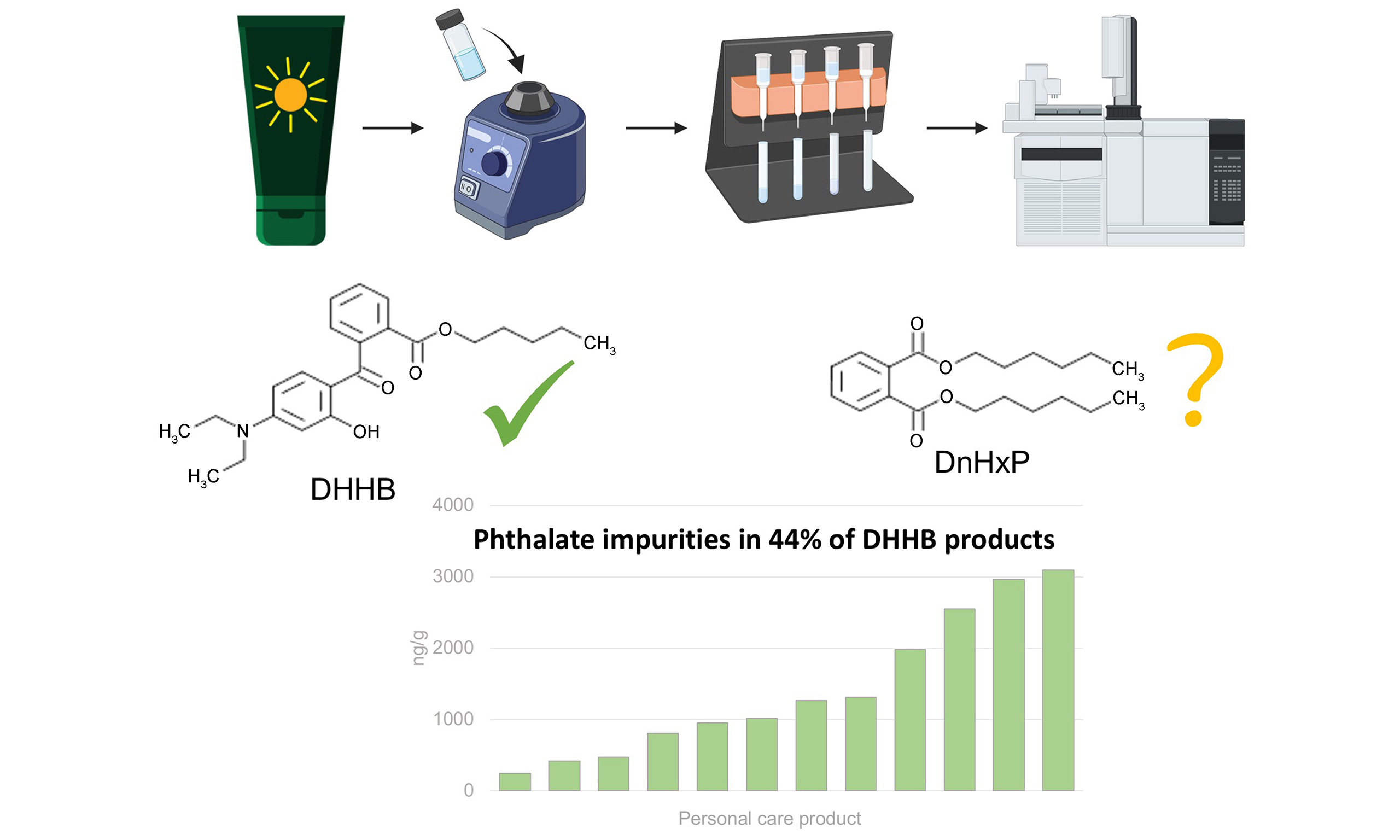
Graphical Abstract
Abstract
Ingredient disclosure frameworks for personal care products (PCPs) do not capture impurities. We tested the purported link between diethylamino hydroxybenzoyl hexyl benzoate (DHHB), a common ultraviolet (UV) filter, and the presence of di-n-hexyl phthalate (DnHxP) as an impurity. Twenty-seven PCPs containing DHHB and controls (PCPs without DHHB) were analyzed using gas chromatography-mass spectrometry (GC-MS), targeting 15 phthalates. DnHxP was detected in 44% of products containing DHHB and was below detection in controls. Levels suggest that a subset of DHHB-containing PCPs on the European market would face compliance problems once 10 ppm limits on the presence of DnHxP as an impurity in DHHB come into force. These findings highlight impurities as a plausible and underrecognized source of exposure to restricted phthalates from PCPs, and indicate that improved transparency and impurity control are needed to ensure compliance with the Cosmetics Regulation (EC No. 1223/2009) and safe PCPs.
Keywords


 Download PDF
INTRODUCTION
Regulatory bodies such as the European Commission typically require full ingredient lists on cosmetic products following International Nomenclature of Cosmetic Ingredients (INCI) names; however, ingredient lists are explicitly not required to capture impurities in raw materials. Recent biomonitoring in Europe[1,2] suggests new sources of exposure to di-n-hexyl phthalate (DnHxP; CAS RN 84–75-3[1]), despite its restriction in cosmetics, food contact materials and listing in REACH Annex XIV[3]. These exposures are purported to be linked to the presence of DnHxP as an impurity formed during synthesis of diethylamino hydroxybenzoyl hexyl benzoate (DHHB; CAS RN 302776-68-7[4], Figure 1), an ingredient in personal care products (PCPs) and other chemical products. This study evaluates the occurrence of DnHxP in PCPs containing DHHB and considers regulatory implications.
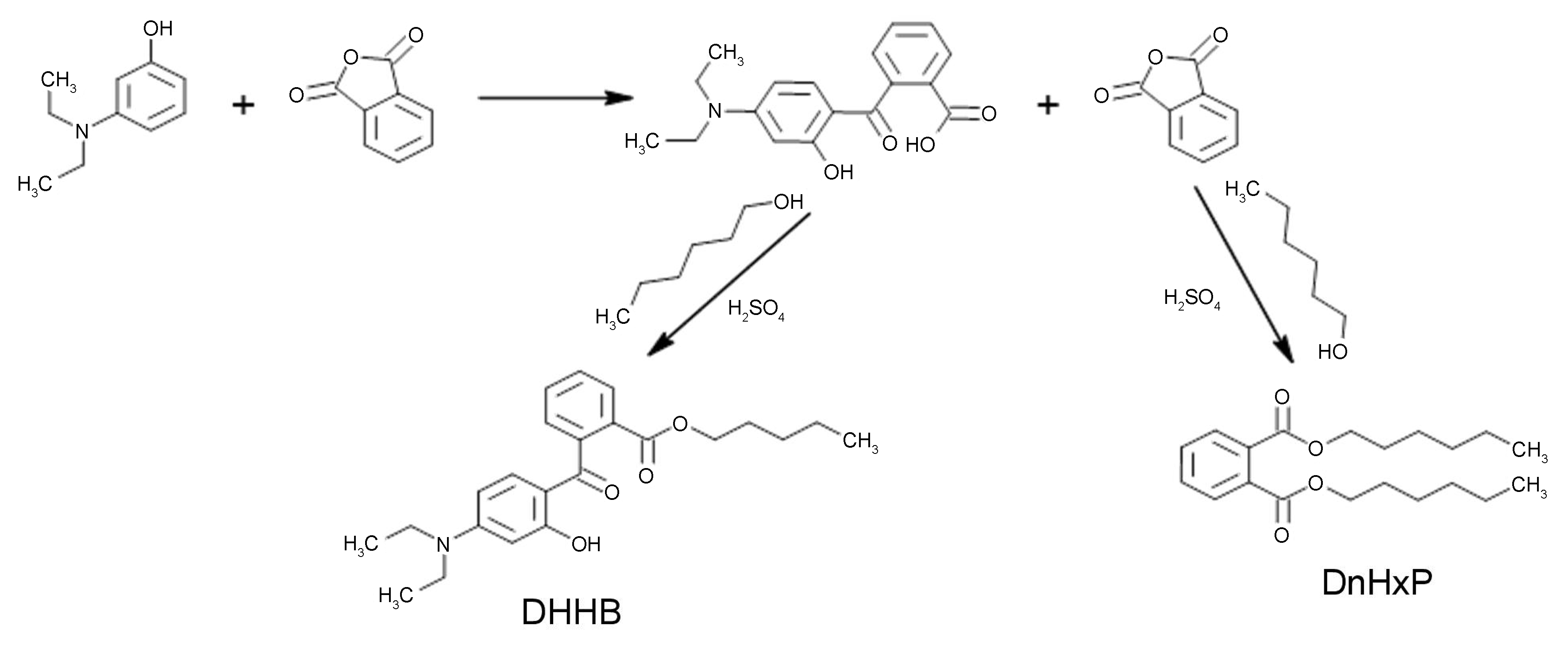
Figure 1. Synthesis of DHHB and formation of DnHxP. Based on information in[5]. DHHB: Diethylamino hydroxybenzoyl hexyl benzoate; DnHxP: di-n-hexyl phthalate.
METHODS
Online cosmetics databases were screened for products containing DHHB in June 2026 [Figure 2]. Records of products listing DHHB as ingredients were extracted from six online databases, and product categories were aligned (e.g., “sunscreen” and “sun block” harmonized to “sun protection products”) to compare types of products containing DHHB across databases. DHHB is used as a functional ingredient in fragrances, a ultraviolet (UV) filter, and a light stabilizer[6], however, clear regional differences exist in DHHB product types, with a dominance of use in sun protection products in markets outside of the USA, whereas in the USA the dominant use of DHHB is in fragrance products [Figure 2], as it has not received US Food and Drug Administration (FDA) regulatory approval as a UV filter. DHHB is approved as a UV filter in the European Union, at concentrations up to 10%[7]. Given our study’s focus on PCPs on the European market, testing focused on products used as sun protection, and moisturizers or make-up with sun protection factor (SPF).
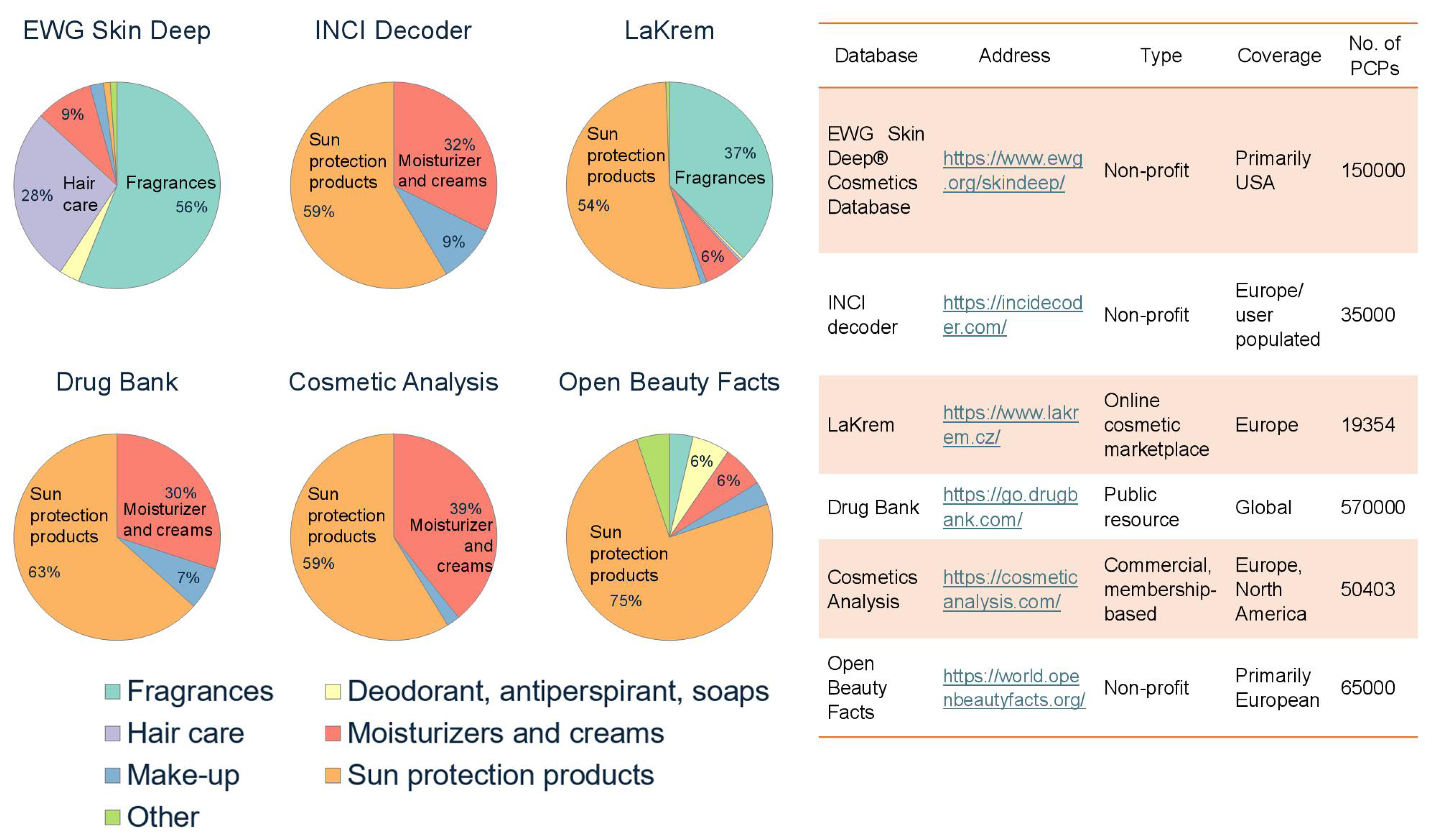
Figure 2. Distribution of PCPs containing DHHB according to online databases and their coverage. PCPs: Personal care products; DHHB: diethylamino hydroxybenzoyl hexyl benzoate; EWG: Environmental Working Group; INCI: International Nomenclature of Cosmetic Ingredients.
During 2025, thirty-one PCPs were collected and categorized generically (e.g., “Children’s SPF 50 spray sunscreen”). The products covered general sunscreen (n = 10), baby and children’s sunscreens (n = 9), tanning oil (n = 2), facial moisturizers (n = 8), and lip balms (n = 2). All products were purchased within Czechia from multinational drug stores/supermarkets, and the selection of products aimed to be comprehensive: three major retailers were selected and all products listing DHHB as an ingredient were purchased. This resulted in 27 PCPs with DHHB listed on the ingredient list; four additional products in the same PCP categories were selected as controls with no documented DHHB content [Supplementary Table 1]. While efforts were made to select all available DHHB-containing products within the sunscreen/skin care categories, it is possible that products from smaller shops may have been missed, and sampling cannot be assumed to be comprehensively representative of all EU markets.
Sample unit prices, ingredient lists, and packaging were recorded. All samples were extracted using methyl tert-butyl ether (MTBE) and analyzed by gas chromatography-mass spectrometry (GC-MS) targeting 15 phthalates [Supplementary Table 2]. Briefly, 100 mg of each PCP was homogenized with Milli-Q water and extracted by liquid-liquid extraction with MTBE. The organic layer was collected after centrifugation, and the extraction was repeated three times. Extracts were purified with activated silica, reduced in volume, and transferred to nonane before instrumental analysis following established GC-MS methods[8]. Method detection limits were established based on the average concentration of the process blanks plus 3× standard deviations, and measured values were corrected based on the average of the blanks. Individual sample recoveries were tracked using deuterated phthalates, and if recoveries of deuterated di(2-ethylhexyl) phthalate (D4-DEHP) were under 50%, the sample was excluded from the interpretation. For confirmatory analysis, a subset of samples with positive detection of DnHxP were selected for reanalysis, and analysis was repeated in triplicate.
Full method and QA/QC details are given in Supplementary Text 1.
RESULTS
Of the 15 target phthalates, eight were quantified above background levels in at least one product across two rounds of testing [dimethyl phthalate (DMP), diethyl phthalate (DEP), dibutyl phthalate (DBP), di-isobutyl phthalate (DIBP), DnHxP, di(2-ethylhexyl) phthalate (DEHP), di-n-octyl phthalate (DNOP), and di-nonyl phthalate (DNP)] [Supplementary Tables 5-7]. Of the 31 products tested, 16 contained at least one phthalate, with a lip balm (Coconut lip balm A) containing the highest number of phthalates (DEP, DIBP, DBP, DnHxP, and DEHP) and the highest total concentration (8,780 ng/g) [Figure 3 and Supplementary Table 7].
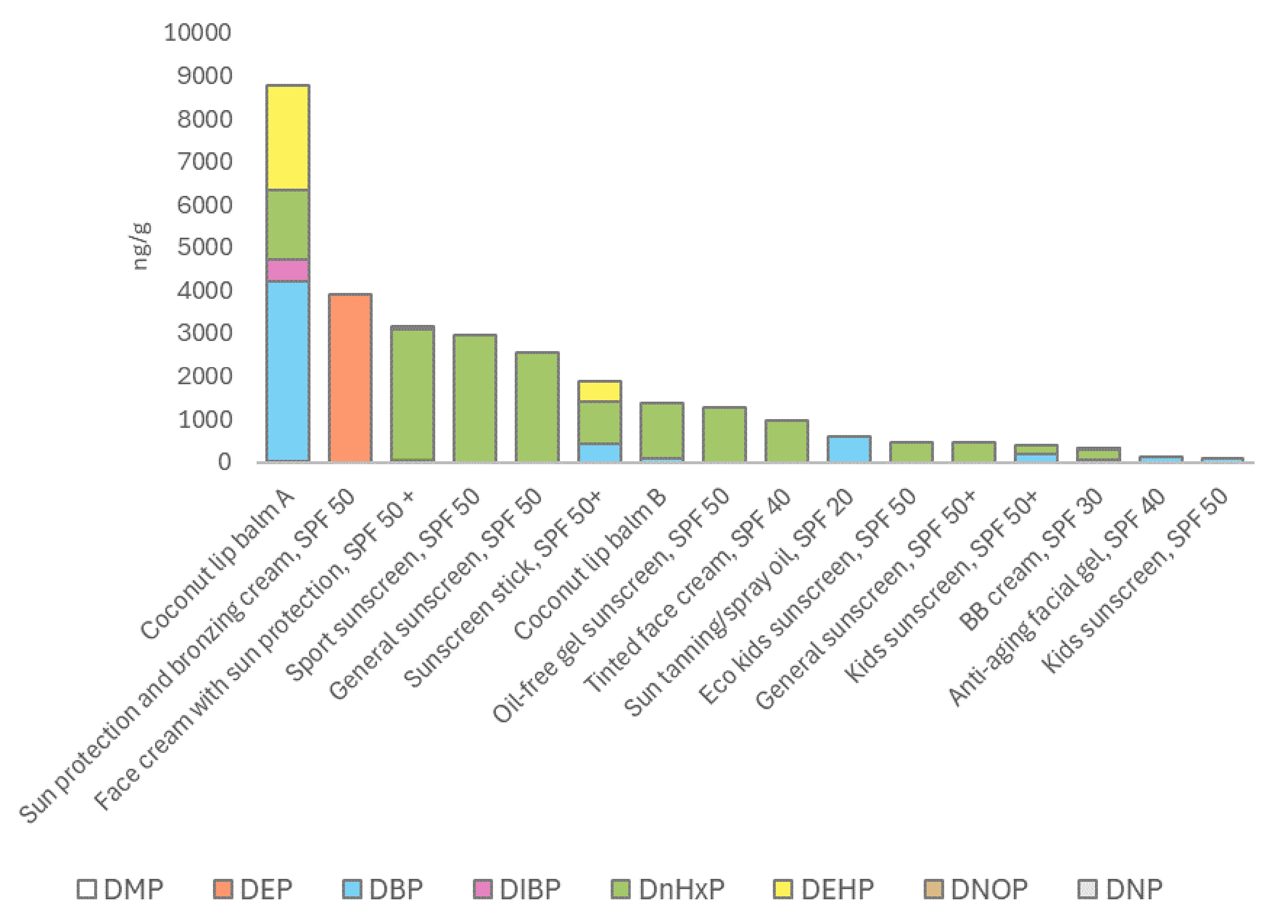
Figure 3. Concentrations of phthalates quantified in PCPs, synthesis of Round 1 and 2 results. PCPs: Personal care products; SPF: sun protection factor; DMP: dimethyl phthalate; DEP: diethyl phthalate; DBP: dibutyl phthalate; DIBP: di-isobutyl phthalate; DnHxP: di-n-hexyl phthalate; DEHP: di(2-ethylhexyl) phthalate; DNOP: di-n-octyl phthalate; DNP: di-nonyl phthalate.
DnHxP was detected in 44% of the 27 PCPs containing DHHB and not detected in any controls. Concentrations varied, with the highest levels observed in a face cream with SPF, and two sunscreens with concentrations exceeding 2 µg/g [Figure 4 and Supplementary Table 8].
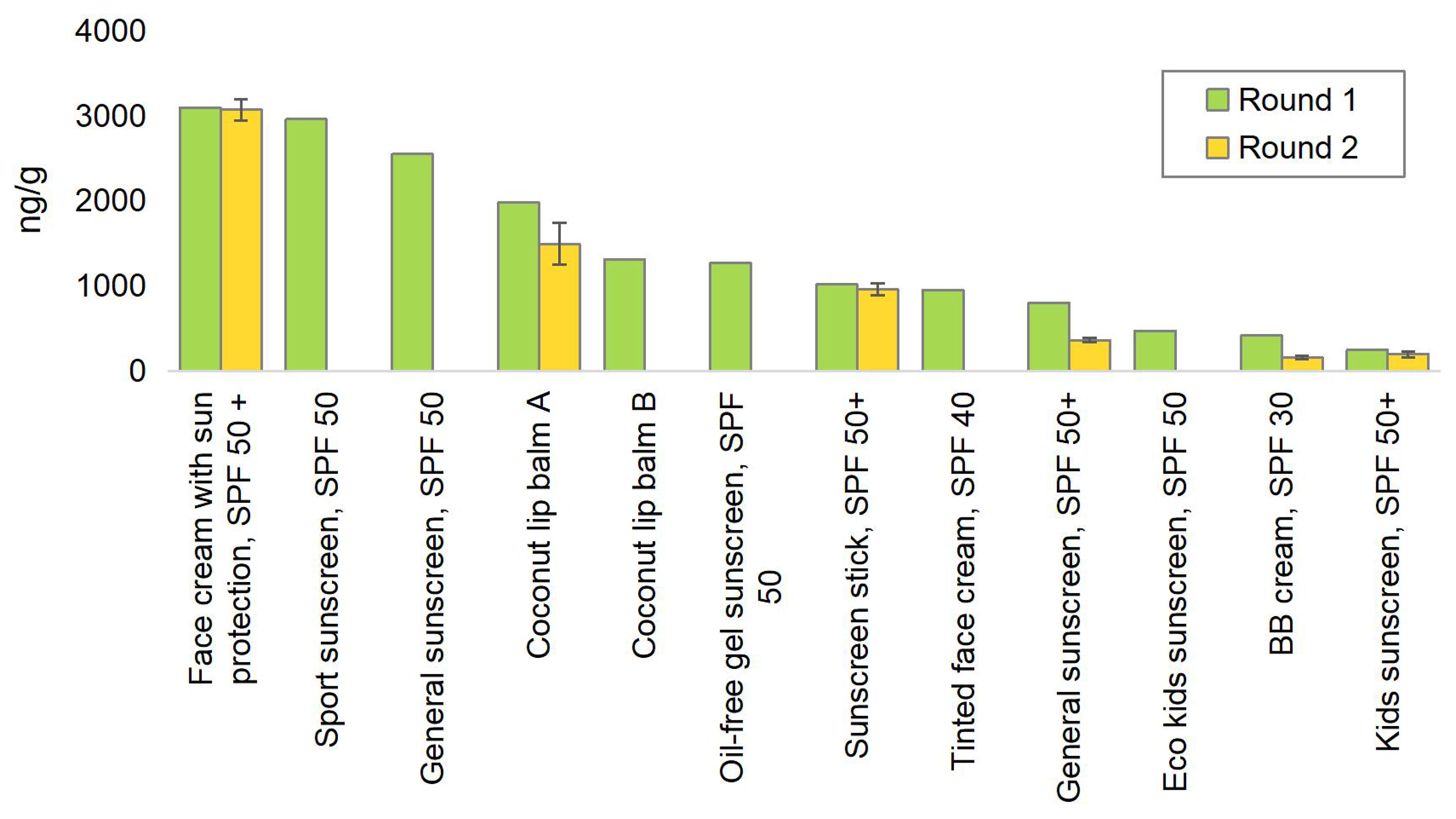
Figure 4. Concentrations of DnHxP in PCPs with detection, and triplicate re-analysis for a subset of samples. Round 1 shows the initial analysis, and Round 2 shows averages and standard deviations (error bars) from the confirmatory triplicate analysis of a subset of samples. DnHxP: Di-n-hexyl phthalate; PCPs: personal care products; SPF: sun protection factor.
Confirmatory triplicate analyses on a subset of samples showed good consistency, with relative standard deviations of < 20% [Supplementary Table 8], and repeatability compared with Round 1. Two samples had concentrations ~50% lower in Round 2 compared with Round 1 [Figure 4], which may be due to a combination of analytical variability, product heterogeneity, and/or potential degradation between repeated analyses [Supplementary Text 2], and suggests more work is needed to understand impurity homogeneity and stability within products.
While a range of phthalates are typically reported in PCPs, most frequently the concentrations are dominated by lower molecular weight phthalates such as DEP and DMP, which are intentionally used as solvents and fixatives, while higher molecular weight phthalates, most often DEHP and DIBP, are reported as impurities from packaging or other aspects of PCP processing[9,10]. In our samples, we similarly attribute the detection of the majority of phthalates to intentional use (DEP), and contamination from processing and packaging (e.g., DEHP, DBP, DIBP), with the exception of DnHxP. Given the limited use of DnHxP in packaging and, to date, no consistent reporting of DnHxP in non-sunscreen PCPs, the source of DnHxP is most plausibly the impurities generated during DHHB synthesis.
The evidence of the presence of DnHxP, a restricted substance in PCPs, brings up the question of whether such products comply with cosmetic safety regulations. In the EU, Article 17 of the Cosmetics Regulation (EC No 1223/2009) permits the unintended presence of a small amount of a prohibited substance if technically unavoidable in good manufacturing practice, as long as the finished product is still safe for consumers.
The EU Scientific Committee on Consumer Safety (SCCS) concluded a maximum safe limit of 260 ppm DnHxP in DHHB, assuming concentrations of DHHB of up to 10% in cosmetics[7]. The SCCS opinion also identifies that impurities at such levels are avoidable, and consequently recommended a target maximum level of DnHxP in DHHB of 1 ppm[7]. However, given the increased cost of producing DHHB with a trace level of 1 ppm of DnHxP, and the consequently higher cost of sunscreen products containing DHHB for consumers, the 1 ppm was not adopted directly; instead, the European Commission adopted 10 ppm as the acceptable safe level of DnHxP in DHHB, effective from 1 January 2027[11].
As we did not have direct measurements of DHHB, to extrapolate from the thresholds given by the European Commission and SCCS for DnHxP in DHHB to our data, where the total PCP was measured, we assumed a concentration of 10% DHHB in the product, aligning with the permissible maximum[7], and assuming that DHHB was the only source of DnHxP in the product. With these assumptions, Round 1 testing suggests that DHHB in all 12 products with detected DnHxP exceeded the SCCS-recommended level of 1 ppm, and seven products exceeded 10 ppm. Moreover, if concentrations of DHHB in the products are lower than 10%, which is common considering many of the products contain a mixture of different UV filters, then there is a more substantial chance that the regulatory limits are exceeded.
Given the presence of DnHxP in DHHB-containing products, it is plausible that exposure to DnHxP via cosmetics containing DHHB may partially contribute to the recent increased DnHxP exposure apparent from urine biomonitoring[2] in Europe. A quantitative comparison of potential PCP exposure with other known phthalate exposure sources, such as diet and other consumer products, is necessary to determine the significance of such a unique pathway to overall population phthalate exposure.
Levels further suggest that a subset of DHHB-containing PCPs on the European market would face compliance problems once cosmetics must comply with limits on DnHxP as an impurity in DHHB, and a much larger fraction of products exceed scientifically-based recommended limits. Improved transparency and impurity control are needed to ensure compliance with the Cosmetics Regulation (EC No 1223/2009) and safe PCPs, particularly considering DnHxP is an avoidable impurity.
DECLARATIONS
Acknowledgments
The elements of the graphical abstract were created in BioRender. Melymuk, L. (2026) https://BioRender.com/gvzxdny.
Authors’ contributions
Conceptualization, methodology, investigation, visualization, writing - review and editing: Hudecová, A.
Conceptualization, methodology, supervision, writing - review and editing: Jílková, S. R.
Methodology, investigation, writing - review and editing: Martiník, J.
Conceptualization, visualization, supervision, funding acquisition, writing - original draft: Melymuk, L.
Availability of data and materials
The original contributions presented in this study are included in the Supplementary Materials. Further inquiries can be directed to the corresponding author.
AI and AI-assisted tools statement
During the preparation of this manuscript, the AI tool Microsoft 365 Copilot (Microsoft Corporation, June 2026) was used for initial alignment of categories of personal care products in product lists extracted from cosmetics databases. All AI-generated outputs were independently verified by the authors prior to aggregation. The tool did not influence the study design, data collection, analysis, interpretation, or the scientific content of the work. All authors take full responsibility for the accuracy, integrity, and final content of the manuscript.
Financial support and sponsorship
The authors acknowledge funding from the Czech Science Foundation (GAČR, grant No. GA25-18352S). The background for this work was additionally supported by the Horizon Europe program [Grant Agreement No. 101057014 (PARC)] and the European Union’s Horizon 2020 research and innovation program [Grant Agreement 857560 (CETOCOEN Excellence)]. This publication reflects only the authors’ view, and the European Union and the European Health and Digital Executive Agency (HADEA) are not responsible for any use that may be made of the information it contains. The authors thank the RECETOX Research Infrastructure (LM2023069) financed by the Czech Ministry of Education, Youth and Sports for supportive background.
Conflicts of interest
Melymuk, L. is an Editorial Board Member of the journal Journal of Environmental Exposure Assessment. Melymuk, L. was not involved in any steps of editorial processing, notably including reviewers’ selection, manuscript handling, and decision-making. The other authors declare that there are no conflicts of interest.
Ethical approval and consent to participate
Not applicable.
Consent for publication
Not applicable.
Copyright
© The Author(s) 2026.
Supplementary Materials
REFERENCES
1. Kasper-Sonnenberg, M.; Pälmke, C.; Wrobel, S.; et al. Plasticizer exposure in Germany from 1988 to 2022: human biomonitoring data of 20 plasticizers from the German Environmental Specimen Bank. Environ. Int. 2025, 195, 109190.
2. Frederiksen, H.; Koch, H. M.; Müller, S.; et al. Extensive exposure to di-n-hexyl phthalate with significant seasonal variation across infants, children and adults including pregnant women in Denmark. Int. J. Hyg. Environ. Health. 2025, 268, 114614.
3. ECHA - European Chemicals Agency. Substance Information - Dihexyl phthalate. https://echa.europa.eu/substance-information/-/substanceinfo/100.001.417. (accessed 2026-11-19).
4. Scherer, M.; Scherer, G.; Riedel, K.; et al. Assessing the exposure to the UV filter DHHB in urine samples from the German Environmental Specimen Bank (2000-2021): evaluating the impact of a potential impurity of di-n-hexyl phthalate in DHHB. Int. J. Hyg. Environ. Health. 2025, 266, 114565.
5. Yoon, J.; Baek, H.; Choi, E. A preparing method of diethylamino hydroxybenzoyl hexylbenzoate. TW202122369A, 2021. https://patents.google.com/patent/TW202122369A/en?oq=TW202122369A. (accessed 2026-11-19).
6. Cosmetics Europe. Ingredient - Diethylamino hydroxybenzoyl hexyl benzoate. https://cosmileeurope.eu/inci/detail/4397/diethylamino-hydroxybenzoyl-hexyl-benzoate/. (accessed 2026-11-19).
7. European Commission. Scientific advice on the safety of diethylamino hydroxybenzoyl hexyl benzoate - DHHB - S83 (CAS/EC No. 302776-68-7/443-860-6). https://health.ec.europa.eu/latest-updates/sccs-scientific-advice-safety-diethylamino-hydroxybenzoyl-hexyl-benzoate-dhhb-s83-2025-06-30_en. (accessed 2026-11-19).
8. Marcinekova, P.; Melymuk, L.; Bohlin-Nizzetto, P.; et al. Development of a supramolecular solvent-based extraction method for application to quantitative analyses of a wide range of organic contaminants in indoor dust. Anal. Bioanal. Chem. 2024, 416, 4973-85.
9. Koniecki, D.; Wang, R.; Moody, R. P.; Zhu, J. Phthalates in cosmetic and personal care products: concentrations and possible dermal exposure. Environ. Res. 2011, 111, 329-36.
10. Guo, Y.; Kannan, K. A survey of phthalates and parabens in personal care products from the United States and its implications for human exposure. Environ. Sci. Technol. 2013, 47, 14442-9.
11. Commission Regulation (EU) 2026/909 of 27 April 2026 Amending Regulation (EC) No 1223/2009 of the European Parliament and of the Council as regards the use of benzyl salicylate, triphenyl phosphate, ammonium silver zinc aluminium silicate, aluminium, water-soluble zinc salts, acetylated vetiver oil, citral, HC Blue No 18, HC Red No 18, HC Yellow No 16, hydroxypropyl-p-phenylenediamine and its dihydrochloride salt, and DHHB in cosmetic products. 2026. https://eur-lex.europa.eu/eli/reg/2026/909/oj/eng. (accessed 2026-11-19).
Cite This Article
 Open Access
How to Cite
Hudecová, A. ?.; Jílková, S. R.; Martiník, J.; Melymuk, L. Phthalate impurities in UV filters as an underrecognized source of exposure: evidence from European sunscreens and other personal care products. J. Environ. Expo. Assess. 2026, 5, 38. https://dx.doi.org/10.20517/jeea.2026.53
Download Citation
If you have the appropriate software installed, you can download article citation data to the citation manager of your choice. Simply select your manager software from the list below and click on download.
Export Citation File
Type of Import
Tips on Downloading Citation
Citation Manager File Format
Type of Import
Direct Import: When the Direct Import option is selected (the default state), a dialogue box will give you the option to Save or Open the downloaded citation data. Choosing Open will either launch your citation manager or give you a choice of applications with which to use the metadata. The Save option saves the file locally for later use.
Indirect Import: When the Indirect Import option is selected, the metadata is displayed and may be copied and pasted as needed.
About This Article
Copyright

Data & Comments
Data
0










Comments
Comments must be written in English. Spam, offensive content, impersonation, and private information will not be permitted. If any comment is reported and identified as inappropriate content by OAE staff, the comment will be removed without notice. If you have any queries or need any help, please contact us at [email protected].