

Testing a lead take-home intervention in the homes of lead-exposed construction workers
 0

Graphical Abstract
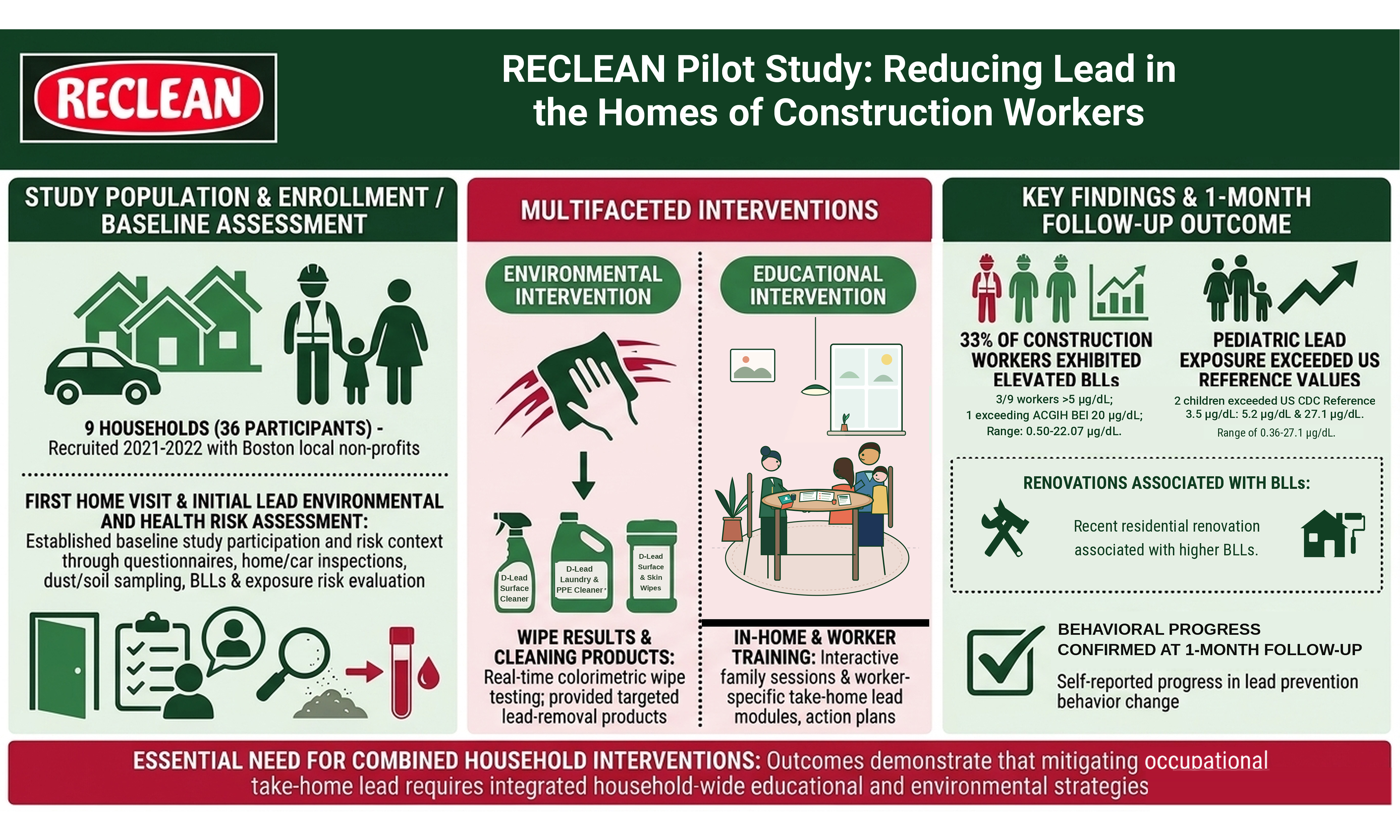
Abstract
Lead in-home interventions often ignore potential contributions from the residents’ workplaces. Lead-exposed workers can bring lead dust from work to home inadvertently, commonly known as “take-home”. The Greater Boston area RECLEAN pilot study aimed to characterize the potential for take-home in lead-exposed construction workers’ homes, assess factors associated with household lead exposure and blood lead levels (BLLs), and evaluate the feasibility of in-home lead intervention. Nine lead-exposed construction worker households with 36 participants were recruited (2021-2022), leveraging engagement with nonprofit organizations, using a single-group design without a separate control group. Educational intervention entailed household and worker lead prevention training sessions, both generating action plans. Environmental intervention entailed discussion of contaminated areas identified by home/automobile inspections, participant survey, and lead assessment (i.e., home dust, soil, and BLL), emphasizing ways to use lead-cleaning products provided. Among nine construction workers, three had BLLs above
Keywords


 Download PDF
INTRODUCTION
Lead has been recognized as a significant public health hazard in today’s world[1,2]. Even at low to moderate levels, lead affects multiple systems of the body, including the cardiovascular, neurological, reproductive, and developmental systems[3-5]. According to the US Centers for Disease Control and Prevention (CDC), there is no safe blood lead level (BLL) in children, with key health effects including decreased intelligence, attention deficit disorder, impaired neurobehavioral development, and hyperactivity disorder[3,6,7]. In adults, lead has been associated with hypertension, cardiovascular disease, nephrotoxicity, cognitive and neurological dysfunction, and decreased fertility[8-11].
The progress made in reducing lead exposure is considered one of the 10 outstanding public health achievements in recent history[12]. The United States (US) Environmental Protection Agency (EPA) and other federal agencies have established regulations concerning lead use, which have resulted in a decline in lead exposure through reductions in the use of lead in paints, pipes, gasoline, and industrial waste. However, many sources of lead remain[13-15] and more attention to the prevention of non-traditional sources of lead in the home, such as lead take-home - the unintentional transport of lead from work to home - is still needed.
Research on the emergence of lead take-home within specific occupations, including construction, started during the 1990s and 2000s. The CDC performed an investigation assessing lead take-home exposures in construction workers[16], finding that children of lead-exposed workers were six times more likely to have elevated BLL [above CDC’s pre-2012 levels of 10 micrograms per deciliter (µg/dL)] than were the children of a control group. Lead levels in the automobiles and homes of lead-exposed workers were higher than surface lead reference values[17,18]. To this day, there are still communities at high risk of lead contamination from occupational sources[19]. Thus, lead take-home has been suggested as a growing public health hazard affecting health equity[19]. Specifically, in the Boston area, the Harvard Take-home Study determined that homes of construction workers exposed to lead at work were likely to have high levels of lead in the dust in their homes [up to 8,000 parts per million (ppm)] as well as other metals, which were related to occupational, home, and sociodemographic factors, suggesting overlapping vulnerabilities[20,21].
Lead intervention programs have primarily focused on the traditional sources of exposure to lead, such as paint, water, and soil, using different strategies for determining the effectiveness of the interventions[22-25]. For example, von Lindern et al. used an in-home questionnaire, along with home dust sampling, to identify factors contributing to house lead dust concentrations before (avg 1,435 ppm) and after (avg 538 ppm) soil remediation in a residential community near a Superfund Site in northern Idaho, USA[24]. Several key variables related to lead dust concentrations in the home included house age, number of adults, hours spent outside by children, number of recreational activities, occupation, doormats, use of shoes in the home, and paint conditions. von Lindern et al. also pointed out that socioeconomic status and daily habits were important but complex factors to consider when looking at exposures in the home[24].
In general, interventions to reduce lead in homes have used two different strategies[25]: (1) addressing lead sources in the home with a variety of traditional lead hazard control interventions or (2) educating families about cleanliness and how to avoid ingesting lead dust. Some abatement strategies used included cleaning, repairs, maintenance, painting, and temporary containment[25]. However, to our knowledge, these lead interventions do not address occupational sources beyond asking for occupation of the inhabitants. Previous authors[26,27] have summarized lead prevention efforts, specifically related to interventions to reduce lead in homes. Campbell and Osterhoudt[25] concluded that educational (e.g., awareness, hygiene, and housekeeping) and environmental (e.g., risk assessment and lead remediation, including lowering lead in dust indoors or in soil) interventions should be implemented together along with clinical interventions (e.g., lead screening, nutrition, and chelation). Nussbaumer-Streit et al. found inconclusive evidence that educational and environmental interventions reduced BLLs, even in long-term studies[27]. However, this review did not address lead take-home, which could have potentially compromised the interventions’ efficacy.
The present “RECLEAN pilot study: Reducing Lead in the Homes of Construction Workers” tested an innovative intervention in the homes of construction workers to empower workers and families on actionable tasks to reduce and prevent childhood lead poisoning from take-home. Most intervention studies have either addressed occupational sources at the workplace[28-30] or reduced exposures in the home focused on traditional home lead sources[31], but none, to our knowledge, were designed to address take-home occupational sources for a specific worker population.
The objectives of this manuscript are to (1) characterize the need for an intervention in the homes of lead-exposed construction workers by measuring home dust/soil levels and BLL in their families compared against available comparison groups and health guidelines; (2) explore factors that may predict a higher risk of lead exposure among construction worker families; and (3) pilot test an educational and environmental intervention with the workers and their families. The education portion included two educational interventions focused on ways to reduce lead home exposures: one with household members and another with the worker. The environmental intervention included inspections for lead hazards in both homes and worker automobiles, as well as the provision of lead-cleaning products. Although in the present study a clinical intervention was not formally included, all participants were either already receiving clinical assistance by the referring local lead clinic or were referred to its services and several other no-cost services for follow-up. A lead clinic is a healthcare service specializing in the evaluation, diagnosis, and management of lead exposure, including BLL testing, medical follow-up, and guidance on reducing exposure.
EXPERIMENTAL
Participant recruitment
The RECLEAN pilot study recruited construction workers and their families, leveraging collaborations with nonprofit worker centers, union training centers, and a hospital-based lead clinic. Interested workers were referred to the RECLEAN team, who administered a screening survey to select interested participants who met the self-reported inclusion criteria: a worker in a lead-exposed construction job living in the Greater Boston area with at least one child less than 18 years of age (Screening survey in person and by phone in Supplementary Materials I and II).
At least one worker and one child living in the same household for 50% of the time were enrolled. Any other household members were also encouraged to participate. The children enrolled did not have to be the children of the workers, but the parent or guardian of each child needed to be present to sign a parental permission form. Study materials were in English and Spanish, and participants were also provided interpretation in Portuguese (as requested by one of the workers). A total of 36 participants from nine households were enrolled and actively participated in the study, including 9 construction workers, 15 children, and 12 other adults. Participants provided written informed consent in their native language prior to enrollment in the study. The Boston University Medical Campus Institutional Review Board approved the study protocols (H-40676) before implementation.
Study design
The RECLEAN Pilot Study was a prospective pilot intervention feasibility study with baseline exposure assessment and post-intervention behavioral assessment. The general objective was to pilot strategies to reduce and prevent exposure to lead and other metals in the homes of construction workers and determine the feasibility and acceptability of the educational and environmental intervention. All households were visited for the lead assessment and intervention during a baseline visit. Sampling followed a strict quality assurance plan following U.S. Department of Housing and Urban Development (HUD) requirements. Eight households were followed up with a behavioral assessment after a month with a phone call, while one household was followed up in person.
After written consent, households were visited for approximately two to three hours to perform a lead assessment and administer interventions as depicted in the study design diagram in Figure 1. The research team (often 3 to 5 investigators) administered surveys in the participants’ preferred language, performed a lead assessment, and coordinated the collection of blood samples by a professional phlebotomist. Once sampling activities were completed, the research team and the household members engaged in the training “In-Home Family Lead Take-Home Prevention Educational Session”, followed by a training with the worker, titled “Construction Worker Lead Take-Home Prevention Educational Session” (Educational materials as described by Tore et al.[32]). Household members received commercially available lead supplies, including skin/surface wipes, laundry/respirator detergent, and all-purpose cleaners, as well as instructions on their suggested use to support the adoption of recommended practices.

Figure 1. RECLEAN Pilot Study design. Note: urine and toenail samples were collected as part of the lead assessment but not included in this manuscript.
After the baseline visit, results from the blood lead analysis were shared with each participant via mail in plain language and graphically in the participant’s preferred language. Any children with BLL above the CDC guidelines (> 3.5 μg/dL[4]) who were not already enrolled in a lead clinic received resources, including referrals, no-cost health insurance resources, and follow-up from the pediatrician for clinical intervention.
Lead assessment and exposure characterization
The research team completed a home observation checklist and collected dust samples using both colorimetric surface wipes (details of methodology and results in Ceballos et al.[33]) and vacuum (methodology as described by Ceballos et al.[20]) methods to understand environmental conditions in the home. In addition, an outdoor dust or soil sample was collected from the exterior of the home to better characterize external sources of potential lead exposure in the home. Environmental samples were shipped at room temperature for lead analysis to the Ohio State University (OSU) Laboratory, Columbus, Ohio, as described by Ceballos et al.[33]. Details of the lead assessment are included in Supplementary Material III.
Lead take-home intervention feasibility
Lead take-home educational intervention
The lead take-home prevention educational intervention entailed two trainings geared toward different audiences: households (or caregivers) and workers, as described in Supplementary Material III and Tore et al.[32]. In brief, the worker-specific training focused on prevention from work to home, while the home-specific training focused on aspects of lead prevention related to the worker’s travel to and from work and interaction with the family at home. Trainings focused on specific barriers and goals for encouraging behavior change. Trainings specifically targeted the lead take-home pathway[19,34] and factors affecting exposure at work and at home, specific to lead-exposed construction workers and their families (as shown in Figure 2), with the end goal of having families and workers generate action plans. Knowledge was assessed before and after the sessions to evaluate learning using 10 simple yes/no questions to gauge knowledge gain. The main difference from the educational sessions described by Tore et al.[32] is that the trainings in the present study were condensed from one hour to 20-30 min to accommodate the other study components while maintaining the core educational content.
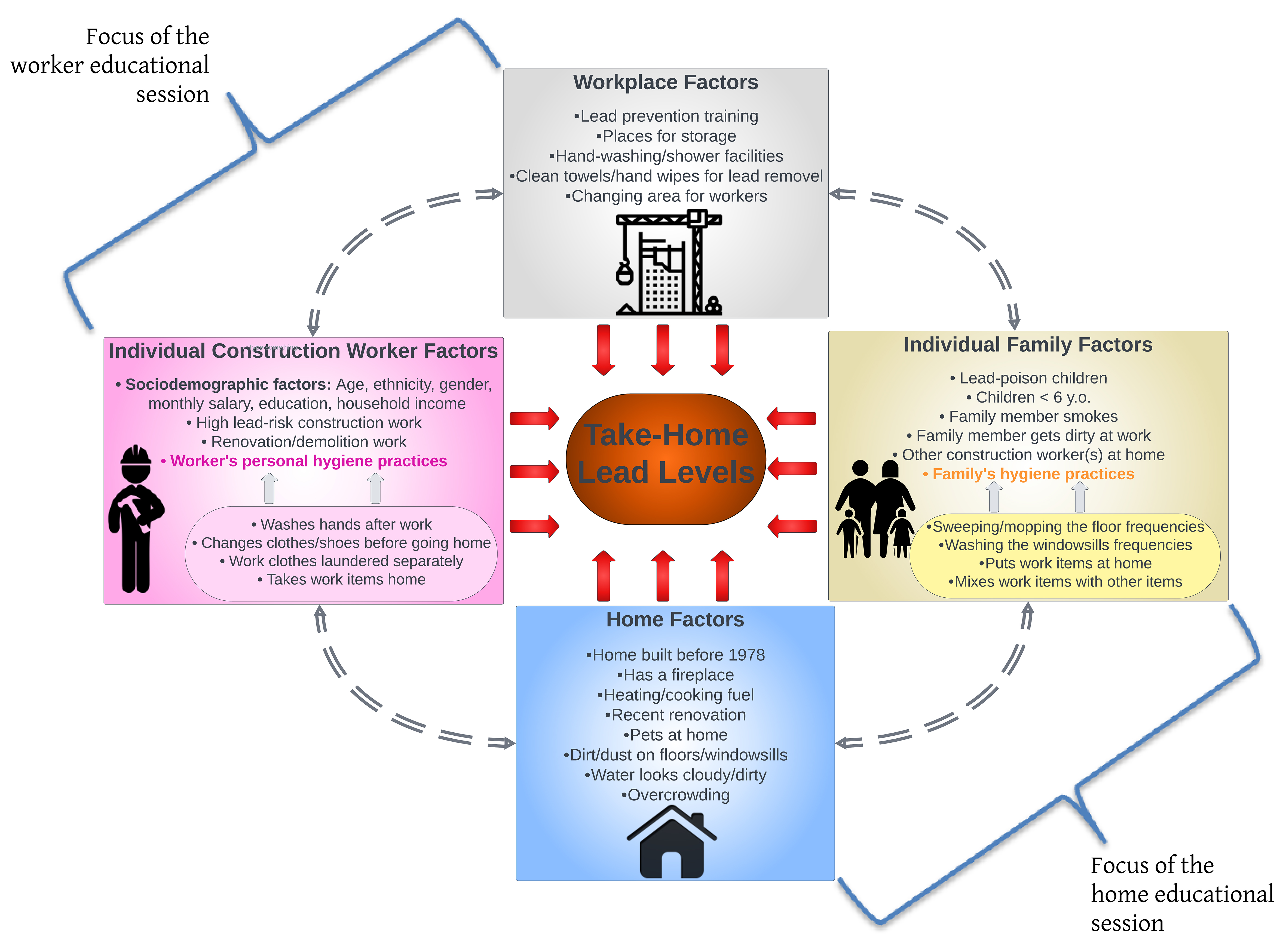
Figure 2. Conceptual model for take-home lead pathway tailored to lead-exposed construction workers.
Lead take-home environmental intervention
Environmental interventions aimed to mitigate specific lead risks identified in the lead assessment and during the educational sessions and provide tools to reduce and prevent exposure in the home. Investigators discussed with the family the specific areas of concern identified by the participant survey, home and automobile inspections, and confirmed by the colorimetric wipe in-situ results (details of the results from automobile inspection and wipe results in Ceballos et al.[33]). As described in Ceballos et al.[33], the colorimetric wipes identified areas of concern (high likelihood of lead) throughout the take-home pathway in the home, as wipes exhibited a color change in the presence of lead, from the entrance to the bedroom, including laundry and automobiles. In the automobiles, the highest percent of contaminated areas occurred in the trunk, followed by back and front seat areas.
Mitigation strategies were discussed with families, emphasizing ways to clean using lead-cleaning products provided. The all-purpose cleaner was to be used in areas of the home that were likely to be contaminated by the worker or that likely exposed other family members, such as the laundry area, entry walkway, and living room area, as well as areas with a risk for lead, such as windowsills or where work items were stored. The laundry detergent was to be used for the worker’s clothes, washed separately from those of the rest of the family. Finally, the skin wipes were to be used by workers to clean their skin, particularly areas not covered by clothing, and before leaving work. The skin wipes were to be especially useful for workers who do not have regular access to facilities to wash their hands or shower after work. When providing the cleaning products, the research team also provided instructions and resources for their safe and proper use from the manufacturer. Specifically, a dilution guide and spray bottle were provided to support accurate preparation of the all-purpose cleaner, which required dilution prior to use.
An intervention in worker homes using lead-cleaning products was derived from best practices for lead-exposed workplaces. A long-standing recommendation by the National Institute for Occupational Safety and Health (NIOSH)[35] dictates the use of lead removal soap in non-production areas in the workplace to reduce lead on surfaces and skin before going home. These recommendations were highlighted recently in a document tailored to construction workers removing and replacing water service lines known to contain lead[36]. However, to our knowledge, these products had not yet been recommended or tested in the home environment. Recommending tools known to work to reduce lead in workplaces, considering the occupational origin sources of participating homes, was a critical component of the intervention.
One-month follow-up behavioral assessment
We followed up with participants approximately one month later by telephone or in person for feedback regarding the intervention visit and to assess behavior changes (A script that guided the follow-up assessment is found in Supplementary Material IV). As part of the follow-up, we asked participants to rate from 1 to 5 how advantageous (1 = very helpful; 5 = not helpful at all) the tools (family behavior wheel, family action plan, family calendar, and cleaning products) were and the frequencies of their use. We also asked about any challenges that made the tools less beneficial.
Statistical analysis
Exploratory and descriptive analysis was performed to compare summary statistics for survey data and lead levels in dust and blood. To understand potential lead risks in our study population, we computed the BLL median and 95% confidence intervals (CIs) and stratified by age group and gender to descriptively compare with corresponding US general population reference estimates (CDC, 2026c) and relevant health guidelines[4,37,38]. These comparisons with US population estimates were intended to provide descriptive context and were not used for hypothesis testing.
Of the 36 enrolled participants, baseline BLL measurements were available for 30 participants. One household had a second visit during which repeat blood samples were collected from one worker, one child, and one other adult. For all cross-sectional analyses, only baseline measurement was included. Missing questionnaire responses were excluded; therefore, denominators varied across analyses. Differences in BLLs among all participants, workers, and children, as well as differences in indoor dust and outdoor soil lead levels, were explored across work-related, home-related, and workers’ sociodemographic factors (such as those explored by Ceballos et al.[20], graphically represented in Figure 2, and listed in Supplementary Tables 1-6). Factors that contained over 20% missing data were excluded from data analysis, and only valid group comparisons (i.e., including 5 or more responses in each category) were mentioned in the results section. Because this was a pilot study with only 9 households, these analyses were considered exploratory rather than confirmatory.
Participant-level analyses. For bivariate BLL analyses, each participant contributed one measurement. The Mann-Whitney U test was used when two groups were being compared, while the Kruskal-Wallis test was used when more than two groups were being compared. Exploratory multivariate linear regression models with natural-log-transformed BLLs as the outcome were also used to examine selected exposure factors jointly. Factors were selected based on the available lead exposure measures (i.e., lead dust, lead soil) and significant patterns observed in the exploratory analyses (i.e., recent renovation). Because these analyses treated participants as independent observations, they were considered unadjusted exploratory analyses.
Household cluster-adjusted analyses. To account for correlation among participants from the same household, additional cluster-adjusted analyses were conducted, which retained participants as the unit of observation but treated the household as the clustering unit. For bivariate analyses, separate linear regression models with natural-log-transformed BLL as the outcome were fit for each exposure factor. Cluster-robust variance estimates with a small-sample correction were used to account for within-household correlation and the limited number of household clusters. The multivariable models were similarly re-evaluated using household cluster-adjusted variance estimates. Because only 9 households were included, these analyses were interpreted cautiously as exploratory.
Among work-related factors, we created a compound variable (good/poor) that reflects workers’ personal hygiene practices. The categories were developed using the information obtained from the survey. For example, a worker is considered to have good hygiene practices if they took a shower immediately after work, changed into clean clothes and shoes before going home, washed work clothes separately, and avoided taking work items home. To evaluate workers’ accessibility to storage facilities and cleaning facilities at the workplace, we created two compound variables that were composed of several variables from the worker’s survey and risk assessment page (e.g., “Has a place to keep personal items at work at the beginning of the work shift”, “Has a place to keep work items at work at the end of the work shift”, “Has access to hand-washing facilities”, “Has access to clean towels”, etc.). Similarly, among home-related factors, we also created a compound variable (good/poor) that captures home hygiene practices. The categories were developed using the information obtained from the survey as well as home observations. For example, a home was considered to have good hygiene practices if family members consistently swept or mopped the floor, washed the windowsills, ensured that no dirt or dust was present on the floors or windowsills, and did not have any work-related items visible at home.
Lastly, we evaluated workers’ baseline knowledge of take-home lead prevention behaviors. Descriptive statistics of demographic characteristics were summarized by knowledge gain. To evaluate differences between pre- and post-session test scores, paired t-tests were conducted overall and stratified by session (worker or home). Because baseline knowledge was generally high and the sample sizes were small, these analyses were considered exploratory. We also captured participants’ qualitative feedback after the educational sessions and during the 1-month follow-up calls or in-person visits.
All analyses were performed using R (version 4.2.0). All plotted data were derived from the study dataset; figures were generated and formatted in R using the ggplot2 package for data visualization.
RESULTS AND DISCUSSION
Study population
The participating study population included nine workers and their household members. Construction workers reported having lead-exposed jobs handling multiple duties, such as painting, demolition, remodeling/renovation, masonry, sanding/scraping, drywalling, and installing pipes and cables.
Table 1 summarizes the demographic characteristics of the participants. Among the nine worker participants, eight (89%) were male, Hispanic, and foreign-born. Their ages ranged from 24 to 54, with the mean age of 33.8 years. 56% had a high school degree or less, and 33% reported being married. The size of the households ranged from three to nine, and 33% had household annual income less than $35k, while 22% had household annual income more than $75k. Out of the 14 children enrolled, half were male, and all were of Hispanic descent, with an average age of 6.9 years. Most (79%) of children were born in the US, while most (89%) of workers were born outside the US.
Sociodemographic characteristics of the RECLEAN Pilot Study participants
| All¥ (N = 34)† | Worker (N = 9) | Children (N = 14) | Other adults (N = 11) | |
| Age (years) | ||||
| Mean (SD) | 22.5 (17.3) | 33.8 (9.4) | 6.9 (5.3) | 34.3 (16.2) |
| Median [min, max] | 21.0 [1, 72] | 31.5 [24, 54] | 6.5 [1, 17] | 30.0 [19, 72] |
| Missing | 1 (2.9%) | 1 (11.1%) | 0 (0.0%) | 0 (0%) |
| Age group | ||||
| 1-5 | 6 (18%) | - | 6 (43%) | - |
| 6-12 | 6 (18%) | - | 6 (43%) | - |
| 13-17 | 2 (6%) | - | 2 (14%) | - |
| 18-29 | 8 (24%) | 3 (33%) | - | 5 (45%) |
| 30-39 | 7 (21%) | 4 (44%) | - | 3 (27%) |
| 40+ | 4 (12%) | 1 (11%) | - | 3 (27%) |
| Missing | 1 (3%) | 1 (11%) | 0 (0%) | 0 (0%) |
| Sex | ||||
| Female | 19 (56%) | 1 (11%) | 7 (50%) | 11 (100%) |
| Male | 15 (44%) | 8 (89%) | 7 (50%) | 0 (0%) |
| Ethnicity | ||||
| Hispanic | 33 (97%) | 8 (89%) | 14 (100%) | 11 (100%) |
| Non-hispanic | 1 (3%) | 1 (11%) | 0 (0%) | 0 (0%) |
| Education§ | ||||
| < High school diploma or GED | 6 (18%) | 2 (22%) | - | 4 (36%) |
| High school diploma or GED | 5 (15%) | 3 (33%) | - | 2(18%) |
| Some college but no degree | 8 (24%) | 4 (44%) | - | 4 (36%) |
| Bachelor’s degree | 1 (3%) | 0 (0%) | - | 1 (9%) |
| Marital statusठ| ||||
| Married | 3 (9%) | 3 (33%) | - | - |
| Separated | 1 (3%) | 1 (11%) | - | - |
| Unmarried | 3 (9%) | 3 (33%) | - | - |
| Missing | 2 (6%) | 2 (22%) | - | - |
| Monthly salaryठ| ||||
| Less than $2,100 | 1 (3%) | 1 (11%) | - | - |
| $2,100 to $3,000 | 5 (15%) | 5 (56%) | - | - |
| $3,000 or above | 3 (9%) | 3 (33%) | - | - |
| Born in the US | ||||
| Yes | 14 (41%) | 1 (11%) | 11 (79%) | 2 (18%) |
| No | 20 (59%) | 8 (89%) | 3 (21%) | 9 (82%) |
| Family annual income§ | ||||
| < $35k | 7 (21%) | 3 (33%) | - | 4 (36%) |
| $35k to $75k | 6 (18%) | 3 (33%) | - | 3 (27%) |
| $75k or above | 4 (12%) | 2 (22%) | - | 2 (18%) |
| Missing | 3 (9%) | 1 (11%) | - | 2 (18%) |
Dust and soil lead levels
Figure 3 displays the distribution of lead concentrations in indoor vacuum dust and outdoor soil samples, compared with the old EPA guideline value of 400 ppm[39] and the EPA newly lowered recommended regional screening level and regional removal management level for lead-contaminated residential soil in areas where children live and play of 200 ppm[40]. Figure 3 shows that outdoor soil lead levels were higher than indoor vacuumed dust lead levels. Outdoor soil lead levels were above 200 ppm in 6 of 9 homes, with an overall range of 54.2-7,668 ppm and a median of 1,713 ppm; indoor vacuum dust lead levels were above

Figure 3. Distribution of lead concentrations in indoor vacuum dust (n = 9) and outdoor soil (n = 9) samples with guideline level. The center line represents the median, the box represents the interquartile range (25th-75th percentiles), and whiskers extend to values within 1.5× IQR. Points beyond the whiskers are shown as outliers. The red dashed line indicates the old EPA guideline for residential soil where children live and play of 400 ppm[39] and the new (as of 2024) of 200 ppm[40]. IQR: Interquartile range; EPA: Environmental Protection Agency.
Dust and soil lead levels compared to other studies
Indoor vacuum dust lead concentrations in the nine homes of construction workers ranged from 91.8 to 1,336 ppm [geometric mean (GM): 346.6 ppm]. There is limited literature for us to compare these results, but studies from the 80s and 90s show comparable results in dust lead levels. However, it is clear from the literature that both indoor dust and outdoor soil are important determinants of BLLs of residents[41]. Within the context of lead take-home research, Kaye et al. measured 41 homes of workers from an electrical components plant in Colorado, and the dust lead concentrations ranged from less than the lower limit of detection to 3,400 ppm[42]. In homes of construction workers, Piacitelli et al. reported similar lead dust concentrations in different areas of 37 homes (e.g., exterior entrance floor: GM: 640 ppm, interior entrance: GM: 350 ppm, laundry room: GM: 530 ppm, etc.)[16]. The median indoor vacuum dust lead concentration in RECLEAN was 340 ppm, which was similar to a previous study, Ceballos et al., which found a median lead dust concentration of 264 ppm in the 23 homes of lead-exposed construction workers in Boston[20].
The lead concentrations in outdoor soil in the present study ranged from 54.2 to 7,668 ppm, with a mean of 2,184 ppm (GM: 798 ppm). Comparable evidence is only available from older studies outside of the US, which reported higher levels. Matte et al. investigated 24 homes of lead-acid battery repair shop workers in Kingston, Jamaica, and found the GM lead concentration in soil was 3,388 ppm (range: 51-33,000 ppm)[43]. In a cross-sectional study conducted in Vietnam, Daniell et al. reported that the mean of soil lead for areas where battery recycling was previously conducted was 2,500 ppm, vs. 1,000 ppm for areas where battery recycling was never conducted[44].
BLLs
Figure 4 depicts the distribution of BLL of different populations in this study (all participants, children, other adults, and workers) compared with the CDC public health action lead reference value for children of

Figure 4. Distribution of baseline BLLs of all participants (n = 30), children (n = 11), other adults (n = 10), and workers (n = 9), compared with the CDC public health action lead reference value for children of 3.5 µg/dL and the occupational health guideline for workers of
Among the four families referred by a lead clinic for clinically confirmed concerns of childhood lead exposure, BLL data collected prior to our study were available for seven children, with one child having a second clinic-visit measurement, also prior to our study. From our own measurements, two children, both between 1 and 2 years old, had BLLs still exceeding the blood lead reference value of 3.5 µg/dL[4], with levels of 5.2 and 27.1 µg/dL. The remaining children had BLLs below 3.5 µg/dL, ranging from 0.36 to 2.6 µg/dL.
We also descriptively compared the BLL median of all participants with the levels reported by the National Health and Nutrition Examination Survey (NHANES) by age categories [Figure 5] and found that participants of any age group had higher BLL than NHANES populations[47]. We found similar results by sex groups [Supplementary Figure 1].

Figure 5. Median baseline BLLs (with 95%CIs) of RECLEAN participants compared with NHANES by age categories (Note: age-specific summaries exclude participants with missing age information). NHANES data shown for descriptive reference only; formal statistical comparison is not appropriate given the fundamentally different sampling designs of the two populations. BLLs: Blood lead levels; CIs: confidence intervals; NHANES: National Health and Nutrition Examination Survey; ACGIH: American Conference of Governmental Industrial Hygienists; CDC: US Centers for Disease Control and Prevention.
BLLs compared to other studies
We found that the BLL of the participants ranged from 0.23 to 27.1 µg/dL, with an average of 3.0 µg/dL. The nine construction workers included in this study had their BLL range from 0.5 to 22.1 µg/dL, with a mean of 5.5 µg/dL, much lower than people working in other industries with cases of lead poisoning in their children, such as battery manufacturing (mean: 49.2 µg/dL)[48] and automobile radiator repair (mean: 30.0 µg/dL)[49]. However, these studies were conducted decades ago when there were different guidelines for BLL (30.0 µg/dL indicated elevated BLL at that time). These studies reported the children of lead-exposed workers with elevated BLL (mean of 31.8 µg/dL by Morton et al.[48]; mean of 10.0 µg/dL by Nunez et al.[49]), indicating risk of take-home lead exposures. In the present study, the BLLs measured in younger children (less than 6 years old) were higher and with higher variability compared with other participants (mean: 6.1 µg/dL, range: 0.36-27.1 µg/dL), with 33.3% exceeding the 3.5 µg/dL blood lead reference value. These findings align with a previous study[50] in that the younger children had the greatest elevation in BLL, and there was a significant decline with age. However, our most important insight is that the literature is sparse in documenting contemporary exposure patterns in the US for lead take-home exposures.
Factors affecting lead levels
Supplementary Tables 1-3 depict exploratory participant-level analyses of BLLs in relation to selected factors in the take-home pathway for all participants, workers only, and children only. Factors include work-related, home-related, and worker sociodemographic variables. Several factors showed notable differences in median BLL, although results should be interpreted cautiously and the findings viewed as exploratory because of the small sample size and sparse data in some categories. For example, the BLLs of participants who had recently undergone home renovations prior to the study (n = 6, median: 3.21 µg/dL, range: 0.96-22.1 µg/dL) were higher (unadjusted P-value: 0.018) than those who did not (n = 24, median: 0.74 µg/dL, range: 0.23-
Supplementary Tables 4-6 describe the relation to selected factors regarding indoor dust and outdoor soil lead levels, with some unintuitive trends and no significant associations within any of the factor categories given small sample sizes. Outdoor soil can become indoor dust; thus, findings of high outdoor soil are still important[51-56]. In New Orleans, Mielke et al. determined lead in topsoil was an important contributing factor in children’s BLLs[56].
Secondary exploratory multivariable analyses of selected environmental and residential factors are presented in the Supplementary Table 7A and B. Indoor vacuum dust and outdoor soil lead concentrations represented measured environmental lead contamination, while recent home renovation represented residential conditions that showed a significant association with lead exposure in our exploratory analyses. In the participant-level models [Supplementary Table 7A], higher indoor vacuum dust lead was associated with higher BLLs in Model 1 (+19% per 100 ppm; P = 0.016), while outdoor soil lead showed an inverse association (-2% per 100 ppm; P = 0.037). In model 2, recent home renovation was associated with higher BLLs (+239%; P = 0.032). However, when the same models were evaluated using household cluster-adjusted inference [Supplementary Table 7B], none of the predictors remained statistically significant. Given the small number of households, these models are not interpreted as evidence of independent or causal effects.
Lead exposure burden in lead-exposed construction worker families
The present study demonstrated elevated lead levels in dust, soil, and blood of inhabitants in the homes of lead-exposed construction workers. Although lead concentrations in the indoor dust were lower than the lead found in the outdoor soil of the homes studied, suggesting potential neighborhood environmental justice issues contributing to home lead contamination, our analysis suggested a positive association between indoor dust lead concentrations and household GM BLLs, although the association was not statistically significant [Figure 6]. This is not surprising, considering that lead indoor dust ingestion has been a salient factor to predict BLLs[52-56]. Furthermore, although not all participants had elevated BLLs requiring public health action, they were overall higher than similar age groups in the US general population. Although workers had higher lead levels in the blood than children, several workers and children had concerning levels in their blood. To better understand our findings of the lead assessment compared to previous research, Supplementary Table 8 presents a summary of the findings from key publications related to lead in homes related to the occupation of inhabitants in various industries, including results of exposure assessments in homes and families for environmental and biological sampling.
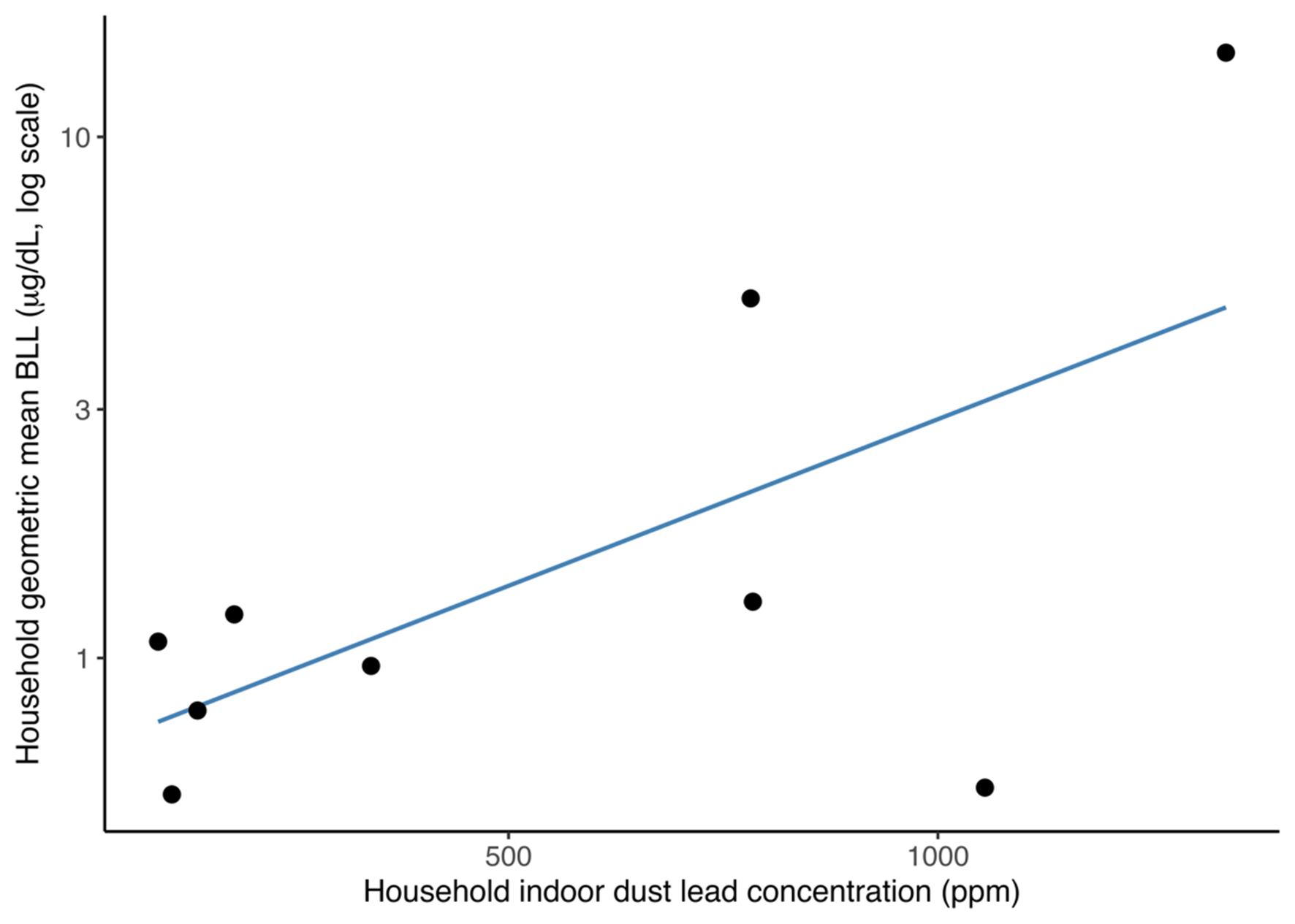
Figure 6. Scatterplot of household GM BLLs vs. household indoor dust lead concentrations in the corresponding homes. Each point represents one household (n = 9). The blue line represents the fitted household-level linear regression of log-transformed GM BLLs against indoor dust lead concentrations. Spearman correlation analysis showed a moderate positive, but statistically non-significant, association (ρ = 0.483, P = 0.187). GM: Geometric mean; BLLs: blood lead levels.
Feasibility of the educational intervention
Action plan documentation during the educational sessions is summarized in Table 2. Family- and worker-developed action plans often overlapped, highlighting shared awareness of lead prevention needs. These priorities also frequently aligned with risks identified during the lead assessment. In one instance, work items stored in the worker’s bedroom tested positive for lead using colorimetric wipes; thus, the family and worker, without prompting, prioritized safer storage and improved cleanliness in their action plans.
Family action plans developed by different households to prevent bringing lead home
| Household | Family action plans | Worker action plans |
| 1 | - | - |
| 2 | - | - |
| 3 | • Store work-related tools in separate areas • Clean the automobile | • Store work-related items in plastic bags • Change clothes before going home • Use wet wipes to clean work-related tools |
| 4 | • Change clothes before going home • Don’t enter home with work boots | • Buy a protector weekly • Remember to leave work items outside every day |
| 5 | • Use wet wipes • Use soap | • Clean construction materials frequently (2 times a month) • Clean the personal automobile if it’s taken to work |
| 6 | - | • Store work boots in the basement • Change clothes before entering the automobile • Separate personal items and work-related items in the automobile |
| 7 | • Separate personal clothes from the worker’s clothes • Put away work items out of the reach of children | • Remove boots before entering the automobile • Clean skin surfaces with soap |
| 8 | - | - |
| 9 | - | - |
Facilitators noted that there were always points for the families to work on, and changes were often ones suggested without prompting. Also, some of the action items were clearly targeting the same domains (e.g., storage, cleaning, laundry) in the home and the worker sessions alike, which facilitated guidance to the families on where to focus efforts for the household. For example, for one home, both home and worker sessions identified storage of work items as a risk factor; thus, action items targeted the handling of work items going from work to the home, including when they were stored in the automobile or the home, and specifics for each situation.
Feedback gathered after the educational session is included in Supplementary Tables 9 and 10. Overall, feedback revealed participant satisfaction with the sessions. Among those in the worker session, 62.5% felt their session facilitator was highly effective, 75.0% felt the instructions were very clear, 87.5% felt the training was relevant to them, and 50.0% felt that the length of the training was excellent. Participating family members also provided positive feedback, with 66.7% reporting that educational materials and the trainer’s answers to their questions were excellent, 77.8% that the session overall was excellent, and 88.9% that their family’s participation was excellent. Open-ended feedback also revealed that the sessions were very useful.
Pre- and post-assessment scores per educational session and different analyses are included in Supplementary Tables 9-12. Among all participants, knowledge of take-home prevention behaviors reflected a high baseline with a minimal increase after educational sessions (3% and 4% gain per educational session). The few wrong answers were reviewed during the educational session discussion. Some of the most common questions with incorrect responses were: “Is my family safe from take-home lead as long as I tell them not to touch my work clothes, boots, and personal items?” followed by the question “Is a very low lead level in a child’s body still a concern?” then, “Can I be sure that I’m not bringing lead into the home if I leave my shoes outside?”
Feasibility of the educational and environmental interventions
During the one-month follow-up, six households reported that they considered the family action plan most useful (summary one-month follow-up shown in Table 3). Action plans helped families make smaller, concrete, achievable goals. During the visit, those actions were discussed with the family to make sure that everyone in the family had a clear role to help towards behavior change. One difficulty they mentioned was, “Being busy at work can make them forget to implement the steps for the goals”. We also asked for their feedback about the cleaning products we provided [Table 3], and three households considered skin wipes most useful. One challenge mentioned was that “All-purpose cleaner irritates eyes”. One-month follow-up confirmed that family action plans were considered valuable to achieve small, concrete goals, and lead-cleaning wipes were the product of choice by workers. In addition to the qualitative feedback, the reported frequency of use and perceived usefulness of the intervention tools and cleaning products are summarized in Supplementary Tables 13 and 14, respectively. Reported frequency of use varied across households, with the family behavior wheel and family action plan each used at least once per week by 5 of 7 households with available frequency data [Supplementary Table 13]. Among households with available usefulness ratings, the family behavior wheel and family action plan each had a median rating of 1 (range: 1-2; n = 8) while the family calendar had a median rating of 1.5 (range: 1-2; n = 4), on a scale from 1 (very helpful) to 5 (not helpful at all) [Supplementary Table 14].
Qualitative outcomes from the pilot testing of educational and environmental intervention for preventing lead take-home
| Household | Educational intervention | Environmental intervention | ||
| Most useful tool(s)* | Comments | Most useful product(s)** | Comments | |
| 1 | - | - | Laundry Detergent | “Useful for her husband’s clothes” |
| 2 | Family action plan | “It has clear actions to take, and having it as a reminder was useful” “Had the opportunity to focus on smaller achievable goals vs. big, broad goals” | - | - |
| 3 | Family calendar | “Helpful to have the goals written down” “Helped her remember what she needed to do” | - | - |
| 4 | Family action plan | “Helped them have a concrete goal” “Revisit the action plan to remind himself” | All of them | - |
| 5 | All of them | - | Skin wipes | - |
| 6 | - | - | - | - |
| 7 | Family action plan | - | All-purpose cleaner | “Multi-functional” |
| 8 | Family action plan | - | Skin wipes | - |
| 9 | Family action plan and family behavior wheel | - | - | - |
From our conversations with the families, we found that a combination of environmental and educational interventions in the home environment that involved all household members was important to raising awareness and comprehension about lead prevention practices. Participants in the home educational sessions performed better than those in the worker educational sessions for both pre- and post-tests, but generally both workers and families already had some knowledge about the prevention of lead in the home. Regardless, both training sessions allowed caregivers and workers to have a space where they could talk about how to best protect their children and coordinate efforts in the home. Some concepts on lead exposure in the workplace were clearer to workers, while strategies on how to reduce lead in the home were often clearer to caregivers. In particular, the family training provided the opportunity for discussing best practices while making workers not only accountable but also supported in behavior change. For instance, if the worker needed to shower as soon as they got home, caregivers could provide support with children until the worker had taken a shower.
Relevance of the RECLEAN educational and environmental intervention to public health frameworks
The intervention described in the present study was designed to address gaps in home studies related to non-traditional occupational sources of lead. Sources related to occupation of the inhabitants were important for our participants, as those are likely continuous sources of exposure that also affect many similarly disadvantaged families, contributing to health inequities. Most health departments follow up with questionnaires from HUD[57], usually asking if there is someone in the household working in an occupation exposed to lead but may not have tools specifically on how to address these occupational sources. Even in some states with the intent to address sources of lead holistically, the lack of collaboration among the children and occupational lead surveillance teams[58] makes coordination of lead take-home interventions more challenging.
Preventing children from experiencing take-home lead exposure in the home is a primary prevention strategy focused on eliminating risk before harm occurs. Using the Social Ecological Model[59], interventions that span multiple levels are more effective. In our case, this entails including worker education on hygiene practices and workplace controls to reduce contamination from going home, as well as education on lead prevention at the level of the family. Within the prevention framework, the present study represents an upstream approach that targets exposure pathways before they reach the child. Additionally, the Health Impact Pyramid highlights that structural and environmental interventions have the greatest population impact[60], reinforcing that policy changes or the tandem coordination of workplace and home interventions are likely to have the biggest impact long term. Overall, these public health frameworks support interventions that interrupt take-home exposure at its source, particularly from occupational settings, thereby preventing children from ever being exposed.
In contrast, when children are already lead poisoned, the proposed intervention shifts to tertiary prevention, where the goal is to mitigate harm, prevent further exposure, and address ongoing sources including secondary occupational take-home pathways. This requires coordinated interventions including clinical care, environmental remediation, and long-term follow-up along a continuum relative to the “cliff of good health”[61]. While the focus is downstream, multilevel interventions remain essential for long-term success, including treatment of the child, household-level interventions, and workplace controls to prevent continued contamination. The Ladder of Interventions[62] further suggests that more directive actions (i.e., upstream in the ladder) may be justified given the presence of harm and ongoing risk. This approach reflects a shift from preventing exposure to policy actions such as the new blood action level set by the CDC, which has prompted the management of both health consequences and persistent pathways sustaining exposure at lower levels - which is what existing lead clinics aim to achieve currently.
Future studies
The findings from this project will guide future home intervention programs for families with lead-exposed workers in construction or other lead-exposed sectors, offering essential information to health professionals managing cases of lead-poisoned children residing with a lead-exposed worker, as well as home-based strategies to minimize exposures effectively. Recent lead take-home investigations in other US states, including Michigan[63] and Minnesota[64], highlight the relevance of the proposed lead take-home interventions. We aim for our results to set the stage for potential follow-up studies, including expansion of the present study to further evaluate within a larger participant pool with a control group and following participants for longer to understand the effectiveness of these interventions. Future studies could allow for the evaluation of other take-home contaminants (e.g., asbestos) as well as follow-ups (i.e., beyond a month) to measure lead levels over time. Subsequent research could also adapt this intervention along other well-known interventions [e.g., high-efficiency particulate air (HEPA) vacuums, sticky mats], as well as accompanying workplace initiatives for enhanced efficacy. Lead clinics nationwide could use the strategies outlined in this study to enhance their capacity to mitigate lead exposure in homes with an occupational source. Future research should focus on expanding the reach of these integrated interventions through broader, community-based programs to better assess their potential impact on communities affected by take-home lead exposure, while exploring the contribution from other sources and the different factors suggested in our proposed framework [Figure 2]. Further research is needed to assess the costs, staffing requirements, and feasibility of scaling the intervention across households affected by lead exposure from different workplace settings.
Strengths
A strength of our study includes the characterization of external and internal measures of exposure as well as factors predicting higher risk in this population, as this has been sparse in the literature. Our previous work with lead-exposed construction workers in the Greater Boston area, Harvard Take-home Study, had only measured lead in the home dust, so adding wipes, soil, and blood samples in the lead risk assessment added value in the present study. Another strength of this study is the use of both educational and environmental interventions in workers’ homes, as take-home prevention studies have often been conducted in agricultural settings to reduce pesticide take-home[65-70], but not lead to our knowledge. Furthermore, empowering families towards behavior changes by providing information (e.g., lead sampling results, education) and tools (e.g., action plans, lead-cleaning products) to prevent lead contamination in their home was worth investigating since it could pave the way for policy changes. For example, as part of lead prevention initiatives, construction businesses aware of lead exposures (e.g., abatement, remodeling, demolishing) could supply workers with education (e.g., worker training), lead detection tools (e.g., colorimetric wipes), as well as cleaning materials (e.g., lead-cleaning skin wipes). Since our team started this intervention, these tools have been shared with several health departments to supplement their long-standing lead prevention programs, as they frequently lack efforts designed specifically for worker families. More specifically, lead-cleaning products have started to be recommended by the lead clinic that recruited for the present study. Further research is needed to rigorously evaluate the efficacy and safety of lead-cleaning products in residential settings. As the lead action level decreases further in time, nontraditional sources of lead poisoning in children, such as lead take-home, will become increasingly relevant, and more of these tools will be required to address these issues.
Limitations
This pilot study has several limitations. First, the sample size was small, with nine households and 36 participants, which limited statistical power and the ability to draw strong conclusions from subgroup comparisons to understand factors and sources affecting lead exposure. This project’s funding occurred during the pandemic, limiting our ability to deploy researchers and effectively recruit families or do further follow up. Therefore, some associations were based on sparse data in specific categories and should therefore be interpreted as exploratory rather than confirmatory. A small sample size was the primary limitation of the regression analysis, restricting statistical power and the number of covariates that could be examined simultaneously. Missing sociodemographic data were minimal (2 of 36 participants, 5.6%) and are consistent with the challenges of data collection in vulnerable and hard-to-reach populations; while unlikely to substantially affect the results, we acknowledge this as a potential limitation in the interpretation of our adjusted models. Second, the study did not include a control group and could not evaluate intervention effectiveness using a randomized or comparison design, as originally intended. The single-group design, adopted to ensure that all identified lead hazards were addressed ethically and comprehensively and that no potentially beneficial interventions were withheld, precluded us from determining the independent contributions of the educational and environmental intervention components. Regardless, the observed correspondence between identified lead hazards and the protective actions proposed by workers and household members provides complementary insight into how quantitative exposure assessment findings and qualitative observations can inform the interpretation of risk awareness and intervention planning. Although exploratory and limited by the small sample size and qualitative follow-up, these observations are consistent with established exposure control principles supporting the integration of educational and environmental interventions, while not establishing intervention effectiveness or causal behavior change. Lastly, the study population was recruited largely through community and clinical partners, including a lead clinic, which may limit generalizability to other worker or residential populations.
CONCLUSIONS
The lead in the dust and soil in the homes of lead-exposed construction workers in the Greater Boston area suggested multiple sources of lead in the home corresponding to inequalities related to working in risky jobs with lead exposures and with low pay while living in old and poorly maintained housing within disadvantaged neighborhoods. Considering that participants living in homes with recent renovations showed higher BLLs in the exploratory analyses, intervention efforts, particularly for young families, are important to address lead burden inequalities.
We found that a combination of environmental and educational interventions in the home involving all household members is feasible and important to create awareness of lead prevention practices. Support for the worker from the different roles in the home optimized teamwork of household members towards a common goal that covers the whole take-home pathway. By tailoring the content of each training session to the distinct needs and interests of these different audiences, we observed that the combination of the educational and environmental take-home intervention helped improve the comprehension of lead prevention needs, although this was not confirmed statistically. Action plans were considered valuable to achieve small, concrete goals - a critical aspect in educating families on behavior change. Family- and worker-developed action plans often overlapped, highlighting shared awareness of lead prevention needs. These action plans were often reinforced by the findings from the environmental assessment, which justify further evaluation using a multilayered intervention approach, including educational and environmental interventions, in a larger controlled study.
DECLARATIONS
Acknowledgments
The authors would like to acknowledge the participating families in the study as well as the institutions that helped us recruit these participants, such as MassCOSH, the New England Region Laborers’ Health & Safety Fund of North America LiUNA TriFunds, and the Boston Medical Center Lead Clinic. The graphic design of the educational materials and study logo, shown in Figure 1 and graphical abstract, was completed by Colin Spencer. Photo of the colorimetric wipe in Figure 1 was taken by Diana Ceballos. Thanks to Professors Robert Herrick and John Spengler from Harvard Chan School of Public Health, Mr. Thomas Plant from the Boston Public Health Commission, and Dr. Marissa Hauptman from Boston Children’s Hospital for their technical guidance during the study. Thanks to Mr. Shane Whitacre for his assistance during the chemical analysis of dust and soil samples. Thanks to the CDC Metals Laboratory for the chemical analysis of blood samples. Lastly, thanks to the RECLEAN study team.
Authors’ contributions
Conceptualization, funding acquisition, project administration: Ceballos, D. M.
Data collection: Ceballos, D. M.; Peters, J. L.; Chatterjee, S.
Methodology: Ceballos, D. M.; Peters, J. L.; Wu, Y.; Levy, J. I.
Data entry, validation, data analysis: Ceballos, D. M.; Wu, Y.; Peters, J. L.
Data visualization: Wu, Y.
Recruitment: Ceballos, D. M.; Buncher, N.
Chemical analysis: Basta, N.
Wrote the original draft: Ceballos, D. M.; Wu, Y.; Chatterjee, S.
All authors significantly reviewed, edited, and contributed to the final draft.
Availability of data and materials
The datasets generated and analyzed during the current pilot study are not publicly available due to the preliminary nature of the pilot data and the need to protect participant anonymity given the small sample size but are available from the corresponding author on reasonable request.
AI and AI-assisted tools statement
The graphical abstract was generated with the assistance of Gemini Notebook (Version 1.66.7, released 2026-07-10). During the preparation of this manuscript, the AI tool QuillBot (Version 4.93.0, released on 2026-07-10) was used solely for language editing. The tool did not influence the study design, data collection, analysis, interpretation, or the scientific content of the work. All authors take full responsibility for the accuracy, integrity, and final content of the manuscript.
Financial support and sponsorship
The authors disclosed receipt of the following financial support for the research, authorship, or publication of this article: The United States Department of Housing and Urban Development (MALTS0013-19). This work was also partially supported by the National Center for Advancing Translational Sciences, National Institutes of Health (NIH), through the Boston University Clinical & Translational Science Institute (1UL1TR001430), and the Boston University Institute for Health System Innovation and Policy. Ceballos, D. M. was also partially funded by T42OH008433/OH/NIOSH CDC HHS.
Conflicts of interest
All authors declared that there are no conflicts of interest. The contents of this manuscript are solely the responsibility of the authors and do not necessarily represent the official views of HUD, CDC, or the NIH.
Ethical approval and consent to participate
The Boston University Medical Campus Institutional Review Board approved the study protocols (H-40676) before implementation. Adult participants provided written informed consent prior to enrollment in the study. Informed consent for child participants was signed by their guardians.
Consent for publication
Not applicable.
Copyright
© The Author(s) 2026.
Supplementary Materials
REFERENCES
1. Kar-Purkayastha, I.; Balasegaram, S.; Sen, D.; et al. Lead: ongoing public and occupational health issues in vulnerable populations: a case study. J. Public. Health. 2012, 34, 176-82.
2. World Health Organization. Exposure to lead: a major public health concern, 2nd edition. 2021. https://www.who.int/publications/i/item/9789240037656. (accessed 2026-11-24).
3. Agency for Toxic Substances and Disease Registry. Toxicological profile for lead. 2020. https://www.atsdr.cdc.gov/ToxProfiles/tp13.pdf. (accessed 2026-11-24).
4. Ruckart, P. Z.; Jones, R. L.; Courtney, J. G.; et al. Update of the blood lead reference value - United States, 2021. MMWR. Morb. Mortal. Wkly. Rep. 2021, 70, 1509-12.
5. Lanphear, B. P.; Rauch, S.; Auinger, P.; Allen, R. W.; Hornung, R. W. Low-level lead exposure and mortality in US adults: a population-based cohort study. Lancet. Public. Health. 2018, 3, e177-84.
6. Centers for Disease Control and Prevention. CDC updates blood lead reference value. 2026. https://www.cdc.gov/lead-prevention/php/news-features/updates-blood-lead-reference-value.html. (accessed 2026-11-24).
7. Centers for Disease Control and Prevention. About childhood lead poisoning prevention. 2025. https://www.cdc.gov/lead-prevention/about/index.html. (accessed 2026-11-24).
8. Dórea, J. G. Environmental exposure to low-level lead (Pb) co-occurring with other neurotoxicants in early life and neurodevelopment of children. Environ. Res. 2019, 177, 108641.
10. Mason, L. H.; Harp, J. P.; Han, D. Y. Pb neurotoxicity: neuropsychological effects of lead toxicity. Biomed. Res. Int. 2014, 2014, 840547.
11. Heidari, S.; Mostafaei, S.; Razazian, N.; Rajati, M.; Saeedi, A.; Rajati, F. Correlation between lead exposure and cognitive function in 12-year-old children: a systematic review and meta-analysis. Environ. Sci. Pollut. Res. Int. 2021, 28, 43064-73.
12. U.S. Environmental Protection Agency. A science-based public health approach for continued progress in reducing lead exposure. 2017. https://19january2021snapshot.epa.gov/sites/static/files/2017-01/documents/lead_a_public_health_approach_document_final_1-24-17.pdf. (accessed 2026-11-24).
13. Kinally, C.; Fuller, R.; Larsen, B.; Hu, H.; Lanphear, B. A review of lead exposure source attributional studies. Sci. Total. Environ. 2025, 990, 179838.
14. Lu, Y.; Chandan, A. K.; Mehta, S.; et al. Assessment of prevalence of elevated blood lead levels and risk factors among children and pregnant women in Bihar, India. Environ. Res. 2024, 259, 119528.
15. Jacobs, D. E.; Brown, M. J. Childhood lead poisoning 1970-2022: charting progress and needed reforms. J. Public. Health. Manag. Pract. 2023, 29, 230-40.
16. Piacitelli, G. M.; Whelan, E. A.; Sieber, W. K.; Gerwel, B. Elevated lead contamination in homes of construction workers. Am. Ind. Hyg. Assoc. J. 1997, 58, 447-54.
17. Centers for Disease Control and Prevention. Childhood lead poisoning associated with lead dust contamination of family vehicles and child safety seats - Maine, 2008. https://www.cdc.gov/mmwr/preview/mmwrhtml/mm5832a2.htm. (accessed 2026-11-24).
18. Boraiko, C.; Wright, E. M.; Ralston, F. Lead contamination of paint remediation workers’ vehicles. J. Environ. Health. 2013, 75, 22-7.
19. Kalweit, A.; Herrick, R. F.; Flynn, M. A.; et al. Eliminating take-home exposures: recognizing the role of occupational health and safety in broader community health. Ann. Work. Expo. Health. 2020, 64, 236-49.
20. Ceballos, D. M.; Herrick, R. F.; Dong, Z.; et al. Factors affecting lead dust in construction workers’ homes in the Greater Boston Area. Environ. Res. 2021, 195, 110510.
21. Ceballos, D. M.; Dong, Z.; Peters, J. L.; Herrick, R. F.; Gupta, P.; Spengler, J. D. Metals dust in workers’ homes and potential for take home in the Greater Boston area: Pilot study. Environ. Res. 2022, 209, 112893.
22. Vojta, P. J.; Friedman, W.; Marker, D. A.; et al. First national survey of lead and allergens in housing: survey design and methods for the allergen and endotoxin components. Environ. Health. Perspect. 2002, 110, 527-32.
23. Clickner, R. P.; Marker, D.; Viet, S. M.; Rogers, J.; Broene, P. National survey of lead and allergens in housing: Volume I, analysis of lead hazards. 2001. https://downloads.regulations.gov/EPA-HQ-OPPT-2024-0085-0158/content.pdf. (accessed 2026-11-24).
24. von Lindern, I. H.; Spalinger, S. M.; Bero, B. N.; Petrosyan, V.; von Braun, M. C. The influence of soil remediation on lead in house dust. Sci. Total. Environ. 2003, 303, 59-78.
25. Campbell, C.; Osterhoudt, K. C. Prevention of childhood lead poisoning. Curr. Opin. Pediatr. 2000, 12, 428-37.
26. Yeoh, B.; Woolfenden, S.; Lanphear, B.; Ridley, G. F.; Livingstone, N.; Jorgensen, E. Household interventions for preventing domestic lead exposure in children. Cochrane. Database. Syst. Rev. 2014, CD006047.
27. Nussbaumer-Streit, B.; Mayr, V.; Dobrescu, A. I.; et al. Household interventions for secondary prevention of domestic lead exposure in children. Cochrane. Database. Syst. Rev. 2020, 10, CD006047.
28. Levin, S. M.; Goldberg, M.; Doucette, J. T. The effect of the OSHA lead exposure in construction standard on blood lead levels among iron workers employed in bridge rehabilitation. Am. J. Ind. Med. 1997, 31, 303-9.
29. Virji, M. A.; Woskie, S. R.; Pepper, L. D. Skin and surface lead contamination, hygiene programs, and work practices of bridge surface preparation and painting contractors. J. Occup. Environ. Hyg. 2009, 6, 131-42.
30. Rodrigues, E. G.; Virji, M. A.; McClean, M. D.; Weinberg, J.; Woskie, S.; Pepper, L. D. Personal exposure, behavior, and work site conditions as determinants of blood lead among bridge painters. J. Occup. Environ. Hyg. 2010, 7, 80-7.
31. Braun, J. M.; Hornung, R.; Chen, A.; et al. Effect of residential lead-hazard interventions on childhood blood lead concentrations and neurobehavioral outcomes: a randomized clinical trial. JAMA. Pediatr. 2018, 172, 934-42.
32. Tore, G.; Green, J. G.; Noguchi, J.; et al. Development and evaluation of two educational sessions on take-home lead exposure prevention for construction workers and their families. Ann. Work. Expo. Health. 2024, 68, 702-12.
33. Ceballos, D. M.; Wu, Y.; Bermudez, M.; et al. Using colorimetric wipes to characterize lead surface levels in lead-exposed construction workers’ homes and vehicles. J. Expo. Sci. Environ. Epidemiol. 2026, 36, 300-10.
34. Jones, R. M.; Burstyn, I. A conceptual model for take-home workplace exposures. J. Occup. Environ. Hyg. 2018, 15, D8-11.
35. National Institute for Occupational Safety and Health. Lead: symptoms of lead exposure. 2024. https://www.cdc.gov/niosh/topics/lead/workerinfo.html. (accessed 2026-11-24).
36. National Institute for Occupational Safety and Health. Reducing workers’ lead exposure during water service line removal and replacement. (NIOSH Publication No. 2023-141). 2023.
37. American Conference of Governmental Industrial Hygienists. 2026 TLVs and BEIs: Based on the documentation of the threshold limit values for chemical substances and physical agents & biological exposure indices. 2026. https://www.acgih.org/science/tlv-bei-guidelines/documentation-publications-and-data/substances-and-agents-listing/. (accessed 2026-11-24).
38. Occupational Safety and Health Administration. Permissible exposure limits - Annotated tables. 2026. https://www.osha.gov/annotated-pels/table-z-1. (accessed 2026-11-24).
39. U.S. Environmental Protection Agency. Hazard standards and clearance levels for lead in paint, dust and soil (TSCA Sections 402 and 403). 2025. https://www.epa.gov/lead/hazard-standards-and-clearance-levels-lead-paint-dust-and-soil-tsca-sections-402-and-403. (accessed 2026-11-24).
40. U.S. Environmental Protection Agency. Residential soil lead directive for CERCLA sites and RCRA hazardous waste cleanup facilities. 2026. https://www.epa.gov/superfund/residential-soil-lead-directive-cercla-sites-and-rcra-hazardous-waste-cleanup-facilities. (accessed 2026-11-24).
41. Zartarian, V. G.; Xue, J.; Gibb-Snyder, E.; Frank, J. J.; Tornero-Velez, R.; Stanek, L. W. Children’s lead exposure in the U.S.: application of a national-scale, probabilistic aggregate model with a focus on residential soil and dust lead (Pb) scenarios. Sci. Total. Environ. 2023, 905, 167132.
42. Kaye, W. E.; Novotny, T. E.; Tucker, M. New ceramics-related industry implicated in elevated blood lead levels in children. Arch. Environ. Health. 1987, 42, 161-4.
43. Matte, T. D.; Figueroa, J. P.; Ostrowski, S.; et al. Lead poisoning among household members exposed to lead-acid battery repair shops in Kingston, Jamaica. Int. J. Epidemiol. 1989, 18, 874-81.
44. Daniell, W. E.; Van Tung, L.; Wallace, R. M.; et al. Childhood lead exposure from battery recycling in Vietnam. Biomed. Res. Int. 2015, 2015, 193715.
45. National Institute for Occupational Safety and Health. Adult blood lead epidemiology and surveillance (ABLES). https://www.cdc.gov/niosh/lead/programs/index.html. (accessed 2026-11-24).
46. Cal/OSHA occupational lead exposure prevention guidance and resources. https://www.dir.ca.gov/dosh/lead/. (accessed 2026-11-24).
47. Centers for Disease Control and Prevention. National health and nutrition examination survey. 2026. https://www.cdc.gov/lead-prevention/php/data/nhanes.html. (accessed 2026-11-24).
48. Morton, D. E.; Saah, A. J.; Silberg, S. L.; Owens, W. L.; Roberts, M. A.; Saah, M. D. Lead absorption in children of employees in a lead-related industry. Am. J. Epidemiol. 1982, 115, 549-55.
49. Nunez, C. M.; Klitzman, S.; Goodman, A. Lead exposure among automobile radiator repair workers and their children in New York City. Am. J. Ind. Med. 1993, 23, 763-77.
50. Dolcourt, J. L.; Hamrick, H. J.; O’Tuama, L. A.; Wooten, J.; Barker, E. L. Increased lead burden in children of battery workers: asymptomatic exposure resulting from contaminated work clothing. Pediatrics 1978, 62, 563-6.
51. Heusinkveld, D.; Ramirez-Andreotta, M. D.; Rodríguez-Chávez, T.; Sáez, A. E.; Betterton, E.; Rine, K. Assessing Children’s lead exposure in an active mining community using the integrated exposure uptake biokinetic model. Expo. Health. 2021, 13, 517-33.
52. Sowers, T. D.; Nelson, C. M.; Blackmon, M. D.; et al. United States house dust Pb concentrations are influenced by soil, paint, and house age: insights from a national survey. J. Expo. Sci. Environ. Epidemiol. 2024, 34, 709-17.
53. Sowers, T. D.; Blackmon, M. D.; Wilkin, R. T.; et al. Lead speciation, bioaccessibility, and sources for a contaminated subset of house dust and soils collected from similar United States residences. Environ. Sci. Technol. 2024, 58, 9339-49.
54. Stanek, L. W.; Grokhowsky, N.; George, B. J.; Thomas, K. W. Assessing lead exposure in U.S. pregnant women using biological and residential measurements. Sci. Total. Environ. 2023, 905, 167135.
55. Awad, R.; Joe, J. H.; Mohamed, S.; Joe, R. P. Environmental assessment of residential lead hazards: a case study from White Plains, New York. J. Environ. Sci. Health. Sustain. 2026, 2, 226-35.
56. Mielke, H. W.; Gonzales, C. R.; Powell, E. T.; et al. The concurrent decline of soil lead and children’s blood lead in New Orleans. Proc. Natl. Acad. Sci. U. S. A. 2019, 116, 22058-64.
57. U.S. Department of Housing and Urban Development. The HUD guidelines for the evaluation and control of lead-based paint in housing. https://www.hud.gov/contactus/lead-based-paint-guidelines. (accessed 2026-11-24).
58. Egan, K. B.; Tsai, R. J.; Chuke, S. O. Integrating childhood and adult blood lead surveillance to improve identification and intervention efforts. J. Public. Health. Manag. Pract. 2019, 25, S98-104.
59. Campbell, J. Social ecological model. 2019. https://www.ebsco.com/research-starters/environmental-sciences/social-ecological-model. (accessed 2026-11-24).
60. Frieden, T. R. A framework for public health action: the health impact pyramid. Am. J. Public. Health. 2010, 100, 590-5.
61. Jones, C. P. Toward the science and practice of anti-racism: launching a national campaign against racism. Ethn. Dis. 2018, 28, 231-4.
62. Nuffield Council on Bioethics. Public health: ethical issues, 2007. https://www.nuffieldbioethics.org/publication/public-health-ethical-issues/. (accessed 2026-11-24).
63. Oliveri, A. N.; Fagerstrom, L. A.; Wang, L.; Rosenman, K. D. A county-level program for the evaluation of the potential for take-home lead exposures among children in Michigan. Public. Health. Rep. 2022, 137, 1153-61.
64. Yendell, S. J.; Janowiak, D.; Yannarelly, J.; et al. Tackling the lead gremlins: a response to take-home lead exposure in a Minnesota industrial facility, 2019. Am. J. Public. Health. 2022, 112, S655-7.
65. Liebman, A. K.; Juárez, P. M.; Leyva, C.; Corona, A. A pilot program using promotoras de salud to educate farmworker families about the risk from pesticide exposure. J. Agromedicine. 2007, 12, 33-43.
66. Thompson, B.; Coronado, G. D.; Vigoren, E. M.; et al. Para niños saludables: a community intervention trial to reduce organophosphate pesticide exposure in children of farmworkers. Environ. Health. Perspect. 2008, 116, 687-94.
67. Arcury, T. A.; Marín, A.; Snively, B. M.; Hernández-Pelletier, M.; Quandt, S. A. Reducing farmworker residential pesticide exposure: evaluation of a lay health advisor intervention. Health. Promot. Pract. 2009, 10, 447-55.
68. Bradman, A.; Salvatore, A. L.; Boeniger, M.; et al. Community-based intervention to reduce pesticide exposure to farmworkers and potential take-home exposure to their families. J. Expo. Sci. Environ. Epidemiol. 2009, 19, 79-89.
69. Salvatore, A. L.; Chevrier, J.; Bradman, A.; et al. A community-based participatory worksite intervention to reduce pesticide exposures to farmworkers and their families. Am. J. Public. Health. 2009, 99 Suppl 3, S578-81.
Cite This Article
 Open Access
How to Cite
Ceballos, D. M.; Wu, Y.; Chatterjee, S.; Levy, J. I.; Buncher, N.; Basta, N.; Peters, J. L. Testing a lead take-home intervention in the homes of lead-exposed construction workers. J. Environ. Expo. Assess. 2026, 5, 39. https://dx.doi.org/10.20517/jeea.2026.48
Download Citation
If you have the appropriate software installed, you can download article citation data to the citation manager of your choice. Simply select your manager software from the list below and click on download.
Export Citation File
Type of Import
Tips on Downloading Citation
Citation Manager File Format
Type of Import
Direct Import: When the Direct Import option is selected (the default state), a dialogue box will give you the option to Save or Open the downloaded citation data. Choosing Open will either launch your citation manager or give you a choice of applications with which to use the metadata. The Save option saves the file locally for later use.
Indirect Import: When the Indirect Import option is selected, the metadata is displayed and may be copied and pasted as needed.
About This Article
Special Topic
Copyright

Data & Comments
Data
0










Comments
Comments must be written in English. Spam, offensive content, impersonation, and private information will not be permitted. If any comment is reported and identified as inappropriate content by OAE staff, the comment will be removed without notice. If you have any queries or need any help, please contact us at [email protected].