
In memory of David Baltimore: a titan whose curiosity forged the future of science
David Baltimore - a key architect of modern molecular biology, a Nobel laureate, President of the Rockefeller University and, later, the California Institute of Technology, co-founder of the Whitehead Institute, and eternal beacon for young scientists worldwide - was a tireless titan who explored many different disciplines of science with an unerring passion, nurtured talent with empathy, and united the pursuit of research through borderless inquiry.
Keywords: David Baltimore, Nobel laureate, NF-κB, Harvard Medical School, in memory
The scientific community lost an irreplaceable force on September 06, 2025, when Dr. David Baltimore [Figure 1] passed away at the age of 87 following a battle with cancer. For six decades, he did not merely push biological frontiers - he shattered dogma, built ecosystems of innovation, and seeded generations of scientists with his ethos of curiosity, integrity, and compassion[1-3]. As a member of his academic family tree - I was mentored by Nancy C. Andrews, one of his most distinguished trainees - I served as a Junior Faculty Instructor at Harvard Medical School and Boston Children’s Hospital (2004-2008), where David’s legacy took root as a personal mission[4,5]. David knew I was Nancy’s mentee, and he greeted me with quiet humility. But his greatest gift was a question that has anchored every study of my career: “What problem does your work solve for people?” That query - searing in its simplicity - has shaped our team’s work on iron homeostasis and ferroptosis, a constant reminder that great science, as David embodied it, is not just about discovery, but about service to humanity. His legacy is the bedrock of my lifelong devotion to bio-metal/trace element biology, a field where essential metals hold the key to untangling intractable health challenges.
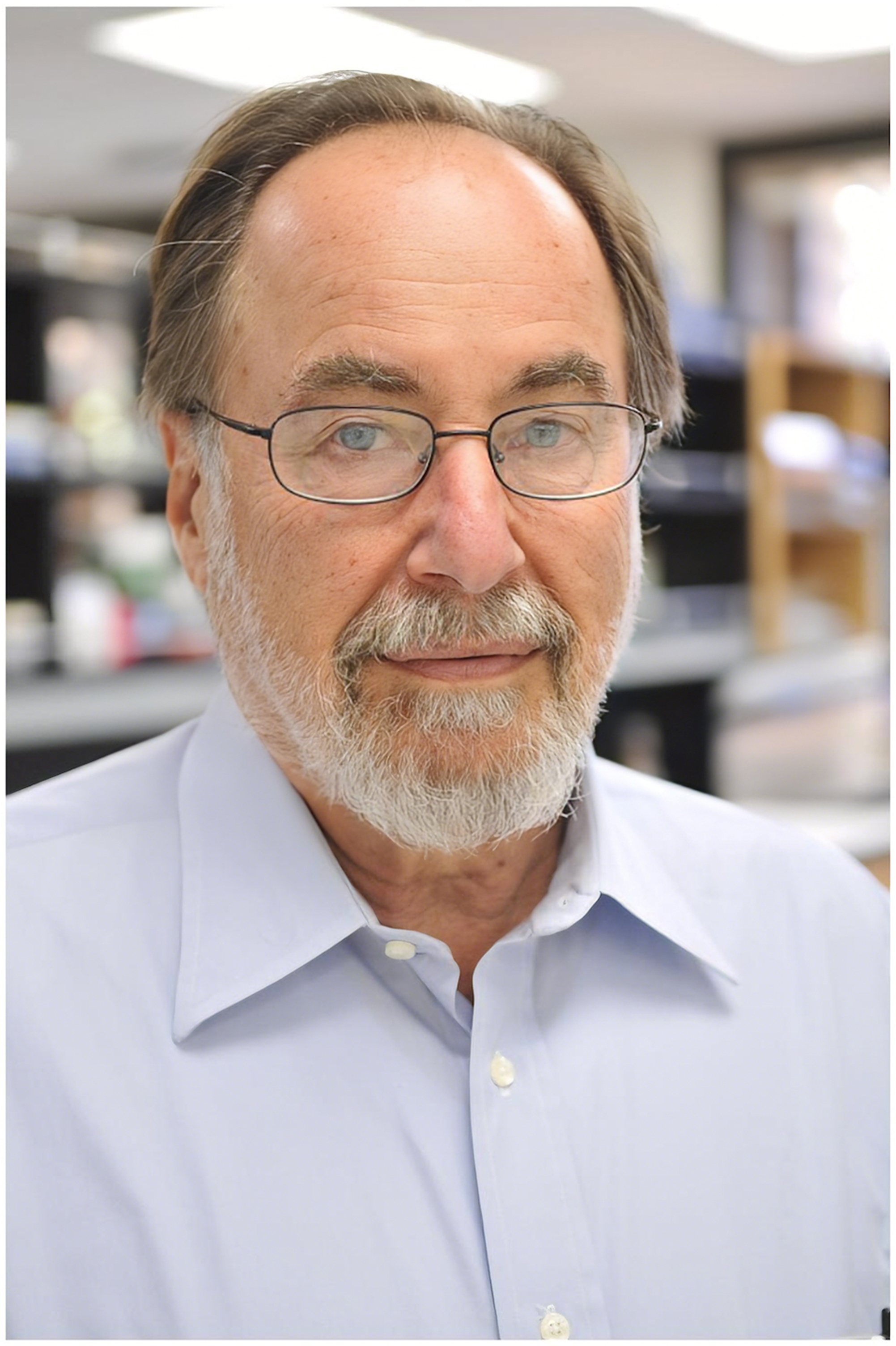
Figure 1. Portrait of David Baltimore
Image courtesy of Bob Paz. This file is licensed under the Creative Commons Attribution-Share Alike 3.0 Unported license. https://commons.wikimedia.org/wiki/File:Dr._David_Baltimore2.jpg
TRAILBLAZING DISCOVERIES: REDEFINING BIOLOGICAL DOGMA
David’s career was a masterclass in turning bold questions into transformative truth. In 1970, at 32 years old, he published a landmark Nature study identifying reverse transcriptase[6] - an enzyme that enables genetic information to flow from RNA to DNA. This discovery upended core assumptions of molecular biology and laid the foundation for understanding retroviruses, human immunodeficiency virus (HIV) research, and gene therapies. For this pivotal work, and at just 37 years of age, he shared the 1975 Nobel Prize in Physiology or Medicine with Howard Temin and Renato Dulbecco[1-3].
Later, David et al. discovered the nuclear factor kappa B (NF-κB) pathway, a master regulator of immunity, inflammation, and cell survival[7-9], which became a cornerstone of global bio-metal/element research. For our field, his insight that “basic science is the most practical science of all” is not just a quote - it is a guiding principle that continues to shape research worldwide. David never stopped at discovery; he built platforms for progress. As co-founder of the Whitehead Institute and leader of the Massachusetts Institute of Technology (MIT) Center for Cancer Research, the Rockefeller University, and Caltech[3], he created spaces where young scientists could dare to ask unorthodox questions, embrace failure as a lesson, and remember that science thrives on collaboration, not solitude.
A LEGACY OF EMPATHY: MENTORSHIP THAT TRANSCENDS GENERATIONS
His brilliance was matched only by his empathy - a trait that made him the gold standard for mentorship. Insights from his laboratory into the breakpoint cluster region/Abelson (BCR/ABL) oncoprotein paved the way for imatinib (Gleevec), turning chronic myeloid leukemia from a death sentence into a manageable condition - an iconic example of his “science for humanity” ethos. What struck me most as a young researcher was that his work always began and ended with addressing human suffering. That empathy was evident in the mentorship legacy he fostered: I witnessed this spirit firsthand at Harvard, where Nancy - a former PhD student of David’s and an elected member of the U.S. National Academies of Sciences, Medicine, and Arts & Sciences - nurtured my work on iron transporter trafficking with the same patience and rigor David instilled in her.
As the Executive Vice President and Chief Scientific Officer at Boston Children’s Hospital (Helen M. Ranney, MD, Endowed Chair) and former Dean of the Duke University School of Medicine, Nancy is a pioneering iron metabolism researcher: her lab uncovered key mechanisms of mammalian iron use and molecular causes of human iron disorders. This blend of impactful research and institutional leadership embodies the influence of David’s mentorship. Our 2007 Nature Genetics study - uncovering Mon1a’s role in macrophage iron homeostasis[5] - is a tangible reflection of this intergenerational legacy, passed from David to Nancy, then to me.
I have carried that torch forward, mentoring graduate students and postdocs - many now leading top biology or medicine laboratories - each inspired by David’s ethos of “science that serves”. Notably, his final scholarly work on NF-κB, paired with a heartfelt memorial by Xuetao Cao and Genhong Cheng[10], stands as a testament to his enduring support for the development of life sciences in China and global scientific solidarity.
BORDERLESS SCIENCE: UNITING RESEARCH THROUGH A COMMON INQUIRY
David viewed science as a universal language, and his engagement with China embodied this vision - a mission I have strived to continue in my career. A steadfast champion of China’s scientific growth, he lent his wisdom to the establishment of the Suzhou Institute of Systems Medicine in 2015, chairing forums, mentoring early-career researchers, and forging cross-border bonds. He joined Westlake University as a member of its Board of Trustees and International Advisory Board in 2018, standing alongside visionary leaders, including Yigong Shi, as the institution grew into a global hub for cutting-edge research. I witnessed this commitment firsthand at the 2016 World Life Science Conference in Beijing, China, which he co-chaired with Qide Han [Figures 2 and 3]. His keynote declaration - “Science has no borders - only questions worth answering” - resonated far beyond the hall; I watched him linger to converse with young Chinese scientists, many of whom later became leaders in biology or medicine.
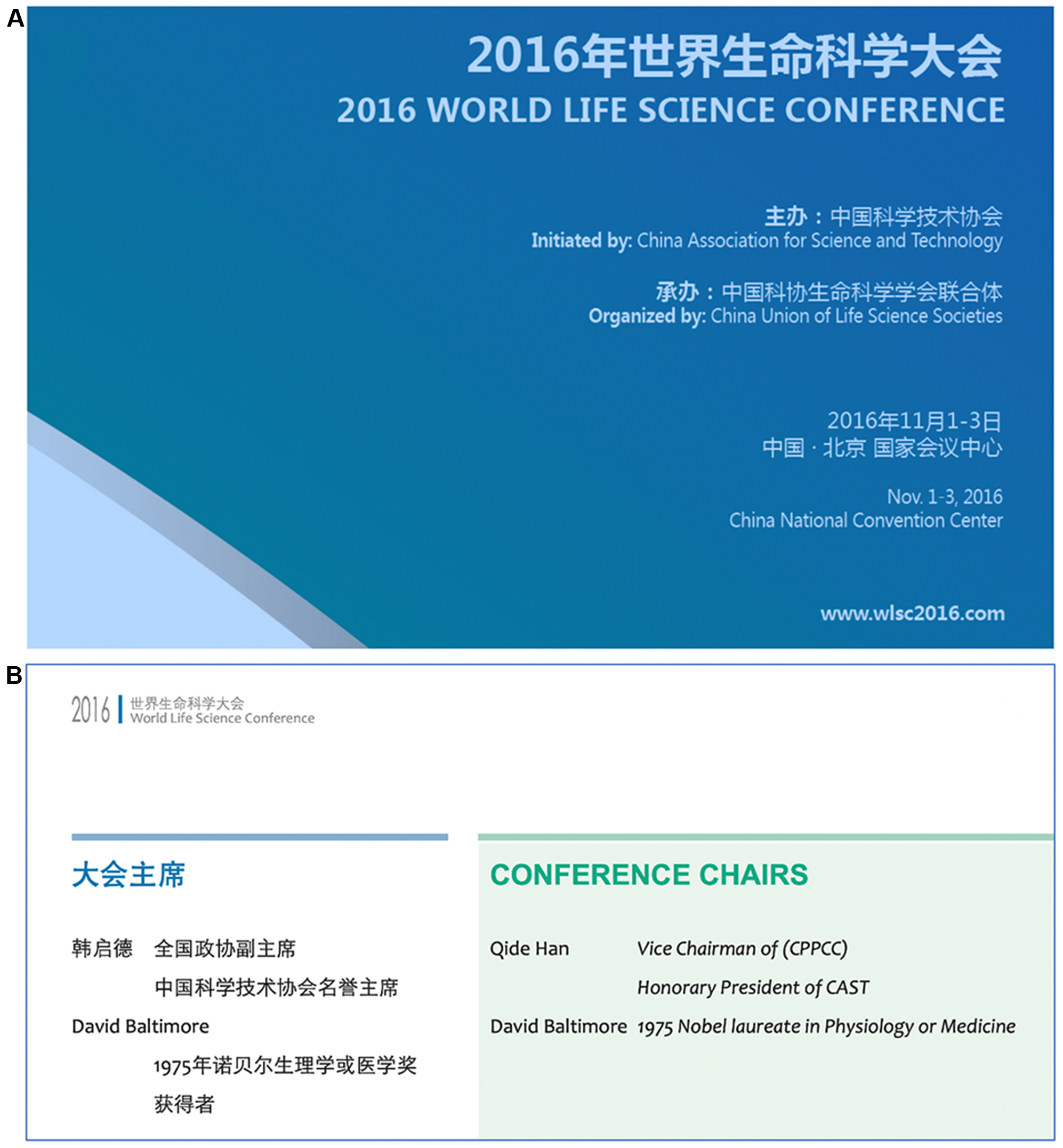
Figure 2. Materials from the 2016 World Life Science Conference
(A) Front page of the 2016 World Life Science Conference handbook.
(B) Conference chair listing from the 2016 World Life Science Conference handbook, showing Dr. David Baltimore as co-chair with Prof. Qide Han - a vivid reflection of his commitment to borderless scientific collaboration.
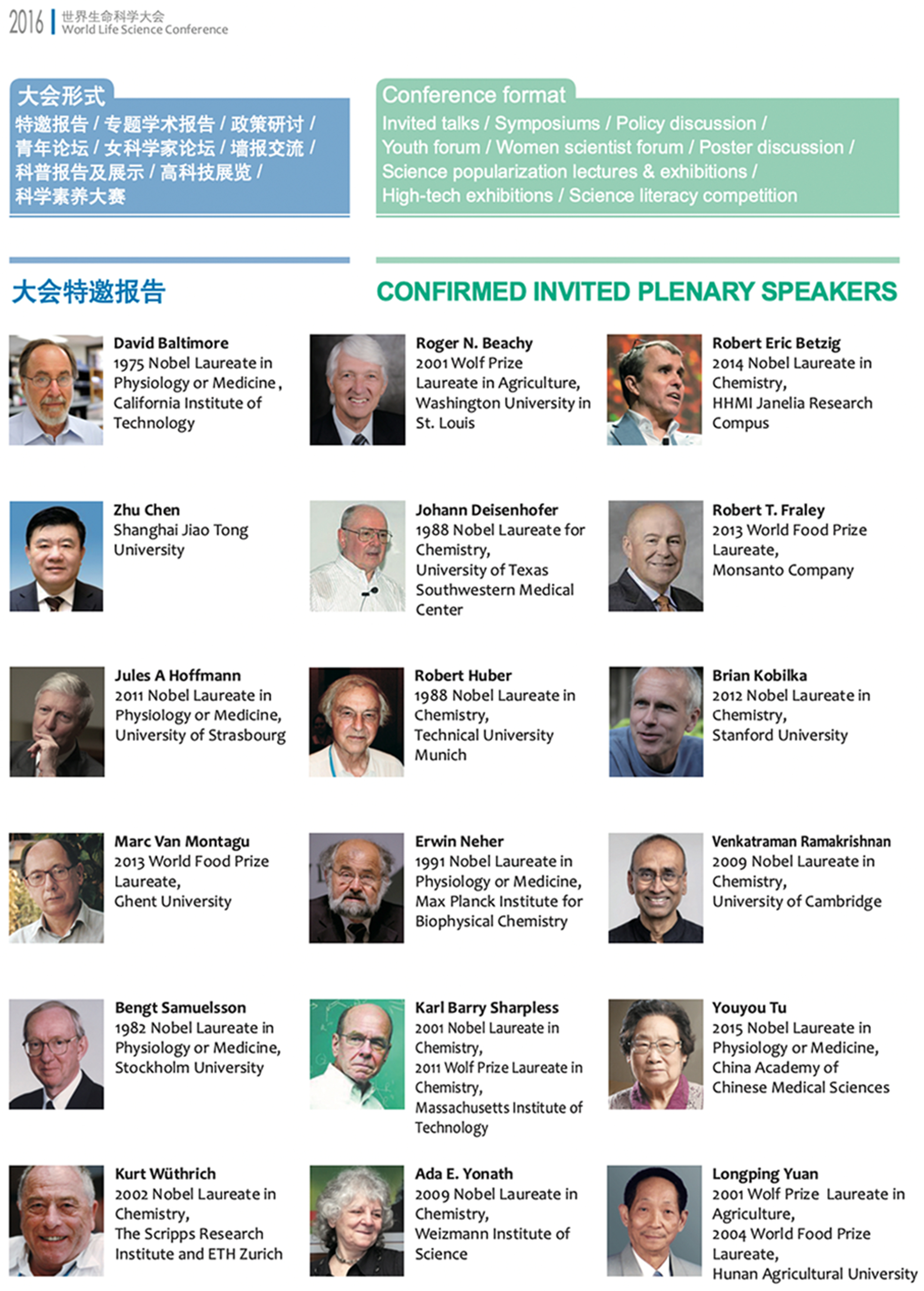
Figure 3. Listing of the invited plenary speakers from the 2016 World Life Science Conference handbook
Dr. David Baltimore was featured as a keynote speaker in this panel listing.
In the years since, I have built on that foundation: fostering cross-border partnerships, advocating for open data in nutritional/bio-metal/element science, and mentoring young scientists leading global health initiatives. This is David’s legacy - science as a bridge, not a barrier. Notably, the last paper he published during his lifetime, NF-κB: Master Regulator of Cellular Responses in Health and Disease, was featured in the inaugural 2025 issue of Immunity & Inflammation[9] - a new journal where Xuetao Cao serves as Editor-in-Chief. By choosing to publish his research in an academic platform founded in China, he demonstrated his unwavering commitment to the equitable development of global science.
HUMILITY IN GREATNESS: A MODEL FOR WHAT A SCIENTIST CAN BE
David approached genius with profound humility - a trait I strive to emulate, as do countless young scientists inspired by him. He once said, “Productive careers follow curiosity, not rigid plans” - a truth I lived when a surprising finding in iron metabolism diverted our team and led to a breakthrough in ferroptotic signaling discovery[11]. He never let fame overshadow purpose; he spoke plainly, avoided jargon, and reminded us that even Nobel laureates are just people trying to solve problems.
In the days following his passing - within 48 hours - I received a memorial email from Boston Children’s Hospital and Harvard Medical School, half of which featured reflections from three of his former trainees (George Daley, Nancy Andrews, and Luke Frankiw): “He asked about my work like it mattered, even when I was a student”; “He taught me that ‘wrong data’ is just an unread story”; “His mentorship wasn’t just about science - it was about being a good person.” These reflections align with the broader accounts of his mentorship shared by the scientific community, and they echoed my own experience. Tributes poured in from across the globe - Jon Cohen’s reflective obituary in Science[1], George Q. Daley’s heartfelt homage in Cell[2] (a tribute from a long-time trainee who continued his mentorship legacy as current Dean of Harvard Medical School) - each capturing his dual legacy as a scientific giant and compassionate human. I have sought to honor this by championing David’s “pioneering curiosity” in nurturing the next generation - establishing cross-disciplinary training programs, advocating for high-risk, high-reward research funding, and embedding his ethos of “science with purpose” into institutional governance.
David Baltimore is no longer with us, but his legacy endures: in the therapies that save lives, in the scientists he mentored, in the cross-border bonds he forged, and in the values that guide our work. When our team publishes findings on iron dysregulation and ferroptosis - building on his NF-κB foundation - when we collaborate across borders, when we ask a young scientist, “What problem does your work solve?” - we are carrying forward what he started.
The light of great scientists never fades. It lives in the curiosity they inspire, the lives they touch, and the belief that science can make the world better. For me, David’s light is not just a memory - it is a call to action: to pursue science with purpose, mentor with empathy, and build a future where science serves all humanity. That is the greatest tribute we can pay him - and it is the legacy I am proud to carry forward in the nutrition, biometal, and element community.
He did not just change what we know - he changed why we do science. That is the mark of a true titan, and the standard to which we will always strive.
DECLARATIONS
Acknowledgements
We sincerely thank Drs. Xuetao Cao (Chinese Academy of Medical Sciences), Genhong Cheng (University of California, Los Angeles), Wange Lu (Sun Yat-sen University), and Zhou Songyang (Sun Yat-sen University) - all closely connected to Baltimore’s legacy - for their invaluable insights. We also acknowledge Harvard Medical School and Boston Children’s Hospital for supporting my formative training on iron biology under Dr. Nancy C. Andrews’ extraordinary mentorship, including the 2007 Nature Genetics study[5]. Their perspectives deepen this tribute, and their contributions embody the legacy we honor. I thank my laboratory’s past and present members: they are the living manifestation of Baltimore’s belief in the next generation.
Authors’ contributions
The author contributed solely to the article.
Availability of data and materials
Not applicable.
Financial support and sponsorship
None.
Conflicts of interest
Wang, F. is the Editor-in-Chief of the journal Element. Wang, F. was not involved in any steps of the editorial process, notably including reviewers’ selection, manuscript handling or decision making.
Ethical approval and consent to participate
Not applicable.
Consent for publication
Not applicable.
Copyright
© The Author(s) 2025.
REFERENCES
1. Cohen, J. Remembering David Baltimore, a titan who transformed biology and spoke bluntly. Science (Washington, D.C., USA), September 9, 2025, updated September 10, 2025.
3. Whitehead Institute. Remembering David Baltimore, influential biologist and founding director of the Whitehead Institute. Massachusetts Institute of Technology (Cambridge, CA, USA), September 8, 2025. https://news.mit.edu/2025/remembering-david-baltimore-0908 (accessed 2025-11-26).
4. McElroy, M. Molecular regulator found for iron balance and immune response. Harvard Medical School (Boston, MA, USA), August 31, 2007. https://hms.harvard.edu/news/molecular-regulator-found-iron-balance-immune-response (accessed 2025-11-26).
5. Wang, F. et al. Genetic variation in Mon1a affects protein trafficking and modifies macrophage iron loading in mice. Nat. Genet. 39, 1025-32 (2007).
6. Baltimore, D. Viral RNA-dependent DNA polymerase: RNA-dependent DNA polymerase in virions of RNA tumour viruses. Nature 226, 1209-11 (1970).
7. Sen, R.; Baltimore, D. Inducibility of κ immunoglobulin enhancer-binding protein NF-κB by a posttranslational mechanism. Cell 47, 921-8 (1986).
8. Nabel, G.; Baltimore, D. An inducible transcription factor activates expression of human immunodeficiency virus in T cells. Nature 326, 711-3 (1987).
9. Hoffmann, A.; Cheng, G.; Baltimore, D. NF-κB: master regulator of cellular responses in health and disease. Immun. Inflamm. 1, 2 (2025).
10. Cheng, G.; Cao, X. David Baltimore (1938-2025): a visionary in science, education, and leadership. Immun. Inflamm. 1, 5 (2025).
Cite This Article
 Open Access
How to Cite
Download Citation
Export Citation File:
Type of Import
Tips on Downloading Citation
Citation Manager File Format
Type of Import
Direct Import: When the Direct Import option is selected (the default state), a dialogue box will give you the option to Save or Open the downloaded citation data. Choosing Open will either launch your citation manager or give you a choice of applications with which to use the metadata. The Save option saves the file locally for later use.
Indirect Import: When the Indirect Import option is selected, the metadata is displayed and may be copied and pasted as needed.
Article Notes
About This Article
Copyright



His academic trajectory was profoundly shaped by his tenure as a Junior Faculty Instructor at Harvard Medical School and Boston Children’s Hospital (2004–2008), where he trained under Dr. Nancy C. Andrews, an esteemed protégé of Dr. David Baltimore. It was during this period that he embraced the ethos of rigorous, human-centric science, and Dr. Baltimore’s question—“What problem does your work solve for people?”—became a guiding principle for his research. This focus has driven his team’s efforts to uncover mechanistic links between biometal dysregulation and diseases, bridging laboratory discoveries to potential clinical solutions. Grateful for the foundation built at Harvard, he has since devoted himself to supporting the global Chinese academic community: since 2015, he has chaired the Harvard Medical School Chinese Alumni Forum, fostering collaboration and mentorship for early-career researchers; as Executive Vice President of the American Chinese Experts Association, he has further strengthened cross-border academic ties, embodying the borderless spirit of science he learned from Dr. Baltimore.
Rooted in a commitment to “science for humanity,” Dr. Wang’s work advances understanding of metabolic, cardiac, hepatic, and neurodevelopmental diseases to address unmet health challenges worldwide. His contributions lie not only in transformative research and academic administration, but in upholding the values of rigor, empathy, and service—core to the legacy of Dr. David Baltimore that he strives to carry forward.
Data & Comments
Data
 0
0








Comments
Comments must be written in English. Spam, offensive content, impersonation, and private information will not be permitted. If any comment is reported and identified as inappropriate content by OAE staff, the comment will be removed without notice. If you have any queries or need any help, please contact us at [email protected].