

Challenges to environmental litigation posed by emerging contaminants and possible strategies
 0
0 
Abstract
Emerging contaminants (ECs), with continuously expanding list, exert a significant impact on the environment and are increasingly becoming a subject of environmental litigation. They present various challenges to the environmental damage assessment processes involved in such litigation. Based on several typical cases, this work identifies the challenges encountered at each stage of environmental damage assessment and proposes potential strategies to address them. The strategies are categorized into four types: (i) conducting fundamental research to produce accurate data and establish background knowledge regarding sources and potential targets; (ii) sharing publicly recognized datasets, models, and other information, with regular updates; (iii) standardizing advanced technical methods, including the screening, identification, and quantification of ECs in the environment; and (iv) providing specific regulations and financial support for typical case studies while facilitating information sharing.
Keywords
ENVIRONMENTAL LITIGATION CASES INVOLVING EMERGING CONTAMINANTS
In environmental litigation cases, technical means and professional activities - namely environmental damage assessment[1], environmental forensics[2], and environmental judicial appraisal[3] - are essential. In recent decades, emerging contaminants (ECs) have become increasingly involved in environmental litigation. Some ECs that attracted attention at the end of the last century, such as methyl tertiary butyl ether[4] and polybrominated diphenyl ethers[2], are now widely regulated. Perfluoroalkyl and polyfluoroalkyl substances (PFAS) are probably among the most concerning ECs at present. At least 25 environmental conflicts concerning PFAS were recorded by February 2025[5], some of which became environmental litigation cases. As a recent typical case, DuPont/Chemours agreed to pay $2 billion for the PFAS-induced drinking water pollution case in New Jersey on August 4, 2025[6]. This amount is second only to the compensation paid by Minnesota Mining and Manufacturing Company (3M) to U.S. public water suppliers ($10.3 billion), also related to PFAS contamination[7]. In the U.S., groundwater, which serves as a drinking water source for 71 to 95 million people, is supposed to be widely affected by PFAS pollution[8].
Microplastics, another widely discussed EC, have been involved in environmental litigation. On July 24, 2025, Sri Lankan Supreme Court fined $1 billion for the losses caused by the sinking accident of container vessel X-Press Pearl in 2021[9]. On-site records, including photographs collected by the United Nations Environment Programme (UNEP)[10], supported the conclusion that marine ecological damage caused by this incident was at least partially related to plastic nurdles.
Furthermore, according to a case report in China Judgements Online[11], brominated dioxins, an endocrine disruptor, were suspected to be generated in a metal smelting plant, with public welfare compensation of 0.5 million RMB (Renminbi)[12].
REQUIREMENTS FROM ENVIRONMENTAL LITIGATION AND THE CHALLENGES CAUSED BY EC
Environmental litigation often requires detailed information during the damage assessment process [Figure 1]. Table 1 summarizes the challenges encountered at each key step of environmental damage assessment for ECs, including the lack of critical information. Generally, cases originate from different types of clues: (i) suspected discharge activity or incident from a contaminant source; (ii) suspected contaminants from unknown sources; or (iii) suspected environmental damage. Regardless of the starting point, the entire damage assessment process involves many uncertainties, particularly when dealing with ECs. For instance, source identification (tracing or apportioning the source) is especially difficult for clue type (ii). The presence of certain contaminants in the target, along with similar substances in nearby suspicious sources, does not necessarily prove that the contaminants migrated from these specific sources to the target. Consequently, in 2023, the United States Court of Appeals for the Sixth Circuit dismissed a plaintiff’s claim that 3M caused PFAS pollution and related health damage[13]. Only five types of PFAS were detected in his body, and the plaintiff failed to establish their traceability. In other words, they could not provide evidence that the PFAS entered the environment or his body from the defendant’s product, nor could they exclude the possibility that the PFAS originated from other sources. This limitation is attributed to insufficient information on ECs in the targets (e.g., the body) and the migration characteristics of specific ECs (e.g., each type of PFAS). Moreover, interactions between ECs and other contaminants can alter their environmental behavior and effects. In the X-Press Pearl case, microplastics were believed to act as carriers for hazardous materials (such as nitric acid and oil[10]) that simultaneously entered the sea during the accident. This should not be considered an isolated case, as plastic waste and hazardous chemicals frequently co-occur in shipwreck incidents[14]. Additionally, events such as wildfires can further influence contaminant migration[15]. Consequently, extensive research data on ECs should be collected to support practical cases.
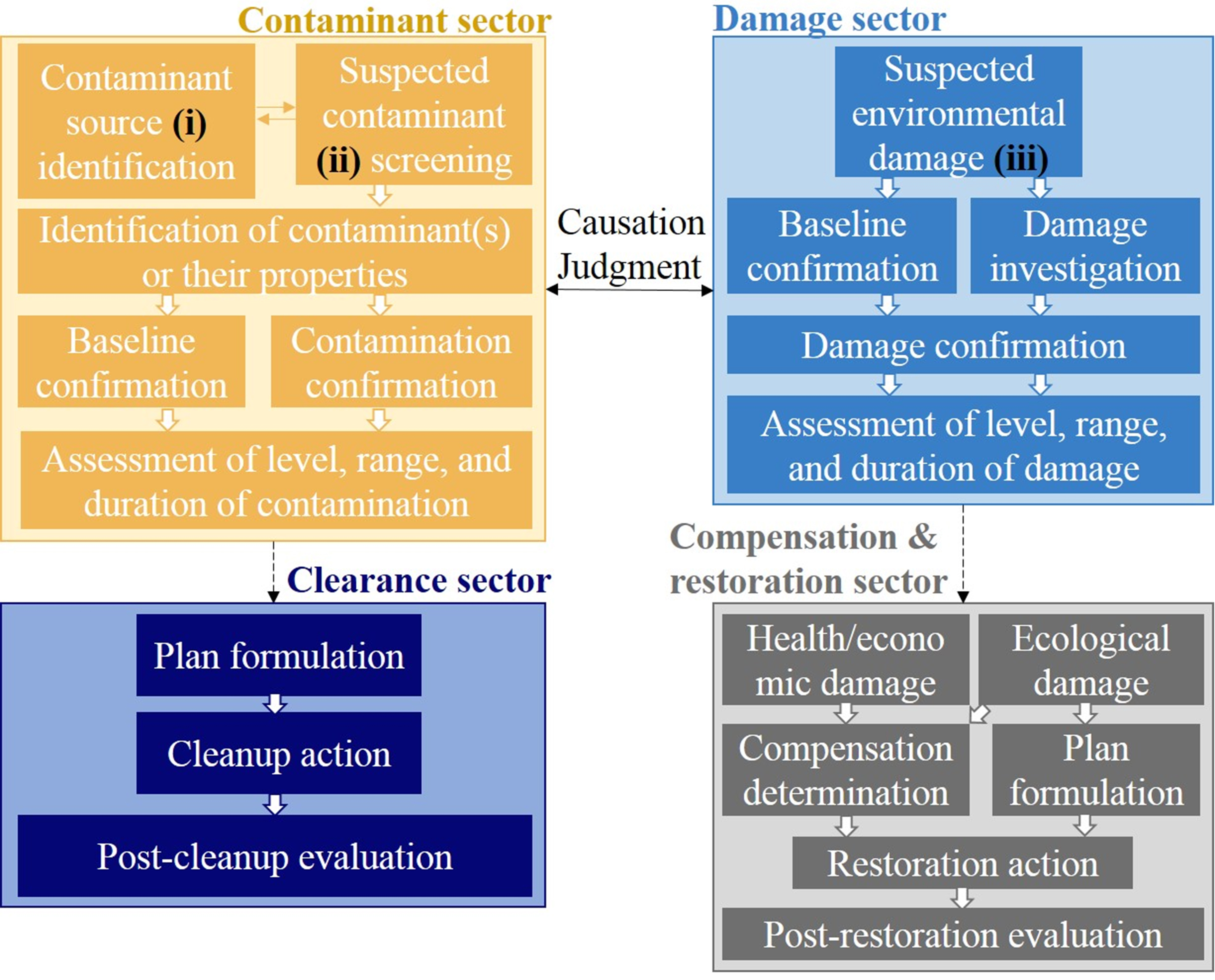
Figure 1. Framework diagram for key steps in environmental damage assessment involving contamination. The figure is produced with Microsoft PowerPoint. Three symbols (i), (ii), and (iii) represent the types of clues mentioned in the main text.
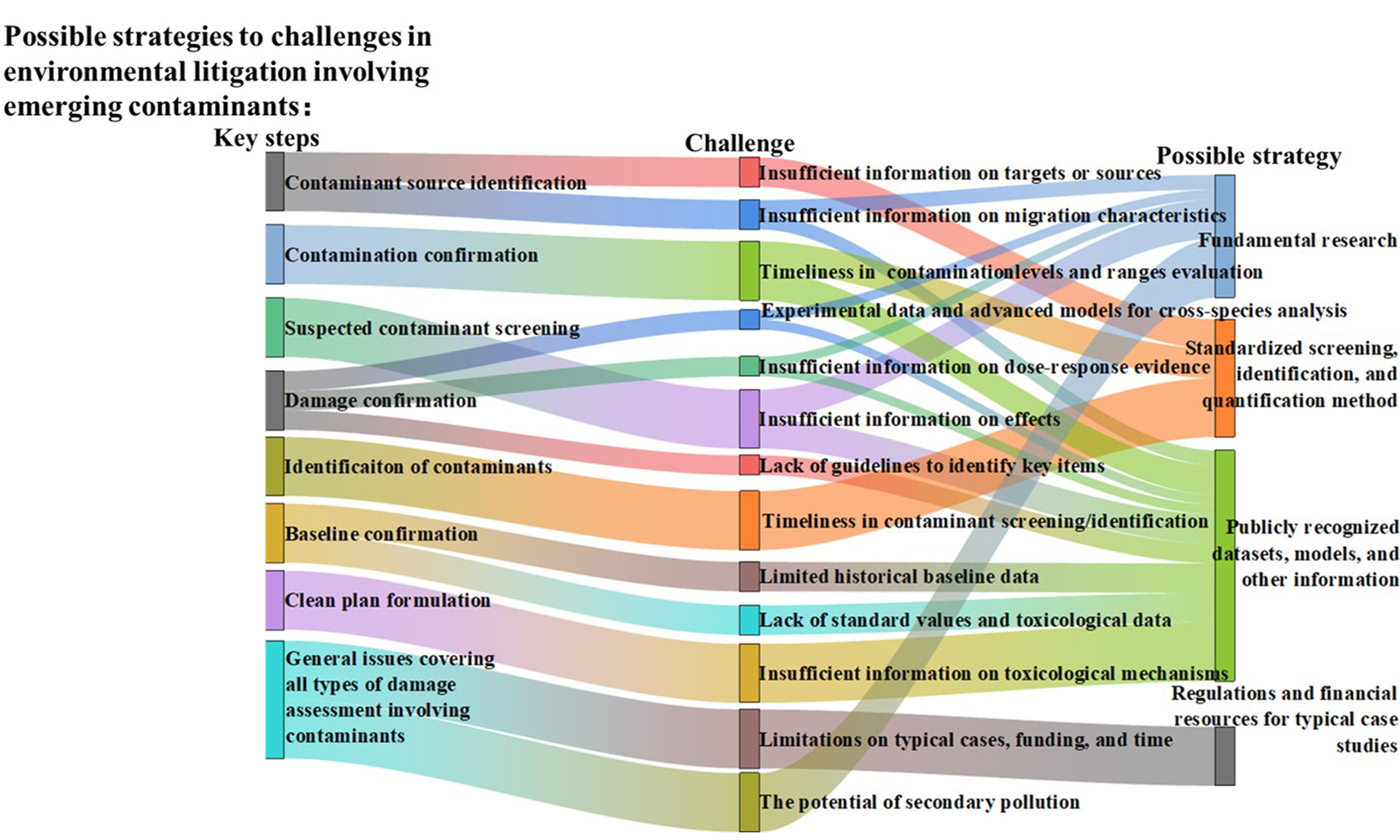
Brief summary of challenges and possible strategies in key steps (as those in Figure 1) of environmental damage assessment involving ECs
| Sector | Key step | Challenge | Possible strategy |
| Contaminant | Contaminant source identification | Insufficient information on ECs in targets or sources | Development and popularization of traceability methods |
| Insufficient information on migration characteristics of ECs | Experiment and model reasoning on environmental behavior of specific contaminants | ||
| Suspected contaminant screening | Various types of ECs, and insufficient information on their effects | Continuous fundamental research and advanced simulation tools | |
| Baseline confirmation | Lack of standard values; insufficient toxicological data | Criteria generation; new toxicity prediction models | |
| Limited historical baseline data | Environmental monitoring data | ||
| Identification of contaminants | Timeliness in contaminant screening/identification | Non-target screening and traceability method | |
| Contamination confirmation | Timeliness in quantitative evaluation of levels and ranges of contamination | Rapid detection technology; widely accepted diffusion and estimation models | |
| Damage | Damage confirmation (causation judgement issue) | Lack of guidelines to identify key items | Legally binding guidelines |
| Limited toxicological experimental data and deficiencies in traditional models for cross-species analysis | Experimental data and advanced models for cross-species analysis | ||
| Insufficient information on dose-response evidence | Experimental and simulated data | ||
| Clearance | Plan formulation | Insufficient information on toxicological mechanisms | Related research; case collection |
| General issues covering all types of damage assessment involving contaminants | Limitations on typical cases, funding, and time | Special funding, typical case sharing, public database and information platform | |
| Risk of secondary pollution | Related research | ||
When only clues (i) and/or (iii) are found, contaminant screening is complicated. The toxic effects of various ECs are still being investigated. This situation is analogous to a “menu with only dish names” - you cannot determine which EC is responsible for the observed effect; sometimes it is even worse, as the specific effect of interest is unknown when only suspected sources are present. Moreover, appraisers or judges dealing with traditional contaminants often focus on which contaminants surpass the baseline (i.e., environmental background value) and/or the standard values/criteria (i.e., officially recognized or toxicologically recommended allowable ranges), as well as the degree of exceedance. However, historical baseline data for ECs only occasionally cover the relevant area; ECs are not yet widely regulated, so there are usually no standard values available; and with limited toxicological data, the criteria for many ECs have not yet been established. Therefore, it is difficult to quantify the damage caused by ECs.
Another challenge in the assessment of EC contamination is timeliness. The fixation of evidence, including contaminant screening/identification and quantitative evaluation of the levels and ranges of contamination, requires timeliness. However, the wide variety of ECs and the lack of related knowledge/data mean that investigation plans for ECs in the environment may be exceptionally complex and time-consuming. Owing to timeliness constraints, the damage assessors in the case concerning brominated dioxins failed to directly collect samples of the toxic gas. Instead, they relied on existing literature data on brominated dioxins produced from the incineration of circuit board waste to conduct simulations[12]. This approach can only be applied to cases involving small quantities, given its limited evidentiary capability.
The dose-response relationship is an important basis for causation judgment and damage assessment. However, the effects of ECs on humans, other living organisms, and the ecological system are complex. Taking the interference of endocrine disruptors with metabolism as an example, there are 12 key factors[16]. However, there is a lack of appropriate guidelines (similar to those for clinical diagnosis published by official institutions or academic organizations) on how to quickly identify key items for each type of EC. Moreover, some effects of ECs can currently only be demonstrated by observational evidence (such as the relationship between endocrine-disrupting chemicals and adverse effects shown in statistical data[17]), making it difficult to determine causation among various confounding factors. Epidemiological evidence is another type of evidence used for causation judgment. However, in some cases, the transitional period between exposure to endocrine disruptors and the manifestation of adverse effects[16] hinder the collection of epidemiological evidence.
In the clearance sector, the lack of knowledge about ECs’ toxicological mechanisms also negatively affects pollution control. The substitution of bisphenol A with bisphenol S is an example of an unsuccessful mitigation approach[16].
In addition to the specific issues caused by ECs [Table 1], there are some general issues affecting damage assessment involving all types of contaminants. These may be perceived as more problematic in the context of ECs due to the paucity of data and limited experience. The first and foremost issue is the contradiction between funding and time in most cases. Sometimes, significant differences between cases make it necessary to obtain specific data for each case[18]. Case-by-case studies are not designed to address broad issues and are not suitable for supporting fundamental research. They are unlikely to generate profits and may even yield unfavorable evidence for enterprises, complicating the acquisition of long-term financial support. The unpredictable occurrence of similar cases does not incentivize government- or self-funded preliminary research. Damage appraisers often receive sufficient funding only in cases involving severe or widespread pollution to conduct these extensive studies. However, in such instances, both governmental bodies and the public impose strong demands regarding fairness and strict time constraints. As a consequence, appraisers often hesitate to use new technological methods or models that lack broad acceptance or to allocate additional time for large-scale on-site experiments.
POSSIBLE STRATEGIES
It should be pointed out that the strategies presented here are not specific to particular types of ECs. The following are some possible strategies [Figure 2].
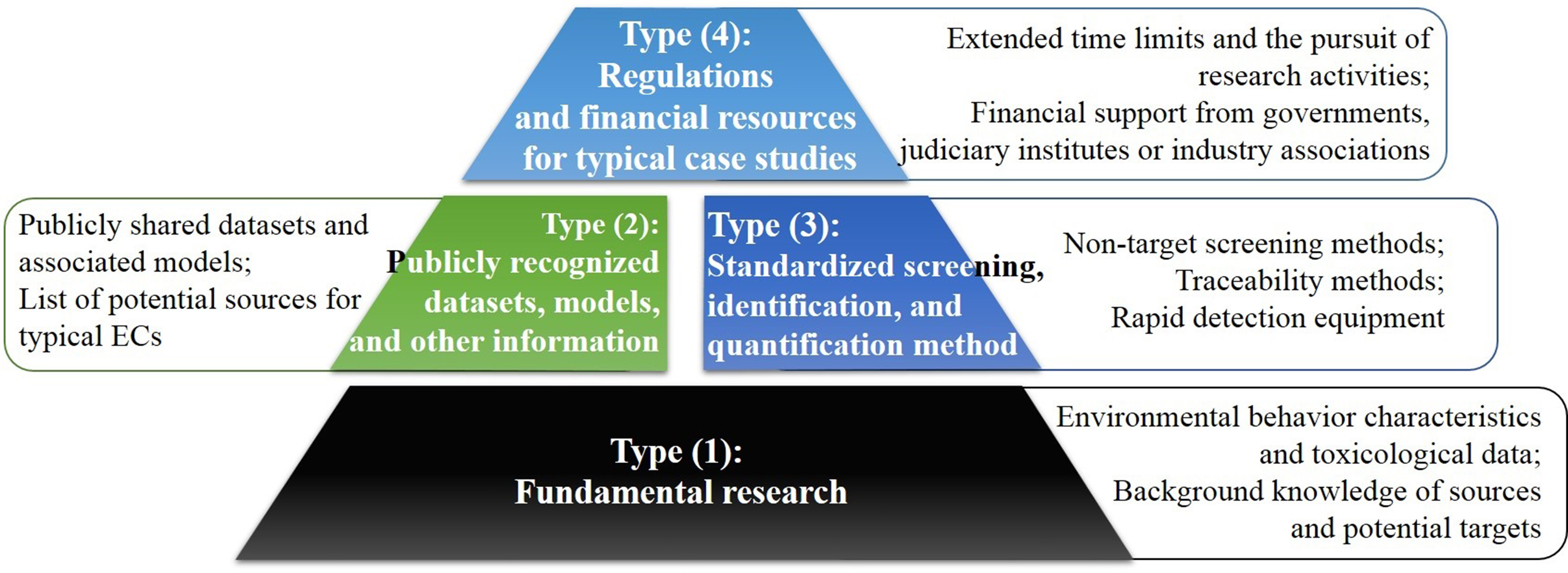
Figure 2. Four types of possible strategies to deal with challenges in environmental damage assessment involving ECs. The figure is produced with Microsoft PowerPoint. ECs: Emerging contaminants.
(1) Fundamental research is the cornerstone. Any reliable model requires sufficient and accurate data, such as the environmental behavior characteristics and toxicological data of ECs. Understanding the background knowledge concerning EC-related sources and potential targets is also a prerequisite for establishing traceability methods.
(2) Datasets and models should be made publicly accessible on information platforms that offer public recognition. Given the wide variety of ECs and the numerous receptors and endpoints in the environment, there is a massive demand for environmental behavior characteristics and toxicological data. Effective models should be applied to efficiently fill these data needs. Multiple models have been used to simulate several basic physicochemical parameters of compounds[19], while new tools, such as machine learning and artificial intelligence (AI), have been applied to improve toxicity prediction models[20-22]. For environmental litigation, it is crucial that the data are publicly recognized. Establishing a platform that includes publicly shared datasets and the associated models responsible for generating these data, along with continuous updates of both, appears to be a viable approach. KAshinhou Tool for Ecotoxicity (current version: KATE2025 version 1.1), a quantitative structure-activity relationship (QSAR)-based tool maintained by the National Institute for Environmental Studies of Japan, exemplifies a typical application in this domain. Furthermore, it is imperative that additional information, such as comprehensive lists of potential sources for typical ECs, be provided and regularly updated. This is important given rapid industrial advancements and evolving applications of various compounds.
(3) Advanced methods for the screening, identification, and quantification of ECs should be introduced and standardized. Standardized monitoring methods are available for many ECs. For example, PFAS can be monitored with ISO 21675:2019 (International Organization for Standardization), and pharmaceuticals and personal care products can be monitored with U.S. Environmental Protection Agency (USEPA) Method 1694. However, these methods are mainly targeted for specific ECs and are time-consuming and labor-intensive. Non-target screening methods should be developed. Moreover, the sensitivity and resolution of existing methods often cannot meet the information requirements for environmental damage identification[23]. More detailed information from traceability methods, such as refined fingerprint spectra, biomarkers, or element isotope characteristic signals, is needed to show similarities/distinctions between potential sources and target matrices. Meanwhile, rapid detection equipment can maximize the timeliness of quantification.
(4) Special regulations and financial resources are essential for the analysis and dissemination of typical case studies. In emerging fields such as those involving ECs, there is significant demand for guidance from exemplary case documents, including judicial records, damage assessment reports, and remediation plans. It is imperative to establish legal assurances for these cases, permitting extended time limits and facilitating research activities such as simulation experiments. Governmental financial support or dedicated funds from industry associations should be allocated to these cases.
DECLARATIONS
Authors’ contributions
Made substantial contributions to the conception, design, and initial drafting of the manuscript: Zhang, P.; Chen, H.
Review and editing: Lin, K.; Pang, J.; Huang, S.
Provided administrative, technical, and material support: Zhang, Y.
Availability of data and materials
Not applicable.
AI and AI-assisted tools statement
Not applicable.
Financial support and sponsorship
This work was supported by Fujian Provincial Natural Science Foundation of China (No. 2023J011372).
Conflicts of interest
Chen, H. is an Editorial Board Member of Emerging Contaminants and Environmental Health. Chen, H. was not involved in any steps of the editorial process, notably including reviewers’ selection, manuscript handling, or decision-making. The other authors declare that there are no conflicts of interest.
Ethical approval and consent to participate
Not applicable.
Consent for publication
Not applicable.
Copyright
© The Author(s) 2026.
REFERENCES
1. Andreotti, F.; Montanaro, D.; Calcagni, L. A new approach for environmental damage assessment pursuant to the European Union Environmental Liability Directive. Integr. Environ. Assess. Manag. 2024, 20, 2050-9.
3. China sees improved judicial appraisal of environmental damage: ministry. 2024. https://govt.chinadaily.com.cn/s/202402/08/WS65c443df498ed2d7b7ea784b/china-sees-improved-judicial-appraisal-of-environmental-damage-ministry.html. (accessed 2026-03-26).
4. Hollaender, K.; Kaminsky, M. A. The past, present, and future of environmental insurance including a case study of MTBE litigation. Environ. Forensics. 2000, 1, 205-11.
5. van der Donk, L. L.; Llavero-Pasquina, M. PFAS and the pollution trap: contested knowledge in environmental justice struggles. Environ. Sci. Policy. 2025, 174, 104281.
6. Department of Environmental Protection. DuPont/Chemours PFAS settlement. 2025. https://dep.nj.gov/dupont/. (accessed 2026-03-26).
8. Tokranov, A. K.; Ransom, K. M.; Bexfield, L. M.; et al. Predictions of groundwater PFAS occurrence at drinking water supply depths in the United States. Science 2024, 386, 748-55.
9. Manaadiar, H. Sri Lankan supreme court orders USD 1 billion payout for X-Press Pearl disaster. 2025. https://www.shippingandfreightresource.com/sri-lankan-supreme-court-orders-usd-1-billion-payout-for-x-press-pearl-disaster/#:~:text=On 24 July 2025%2C the Court ordered the,billion in compensation to the Sri Lankan state. (accessed 2026-03-26).
10. UN Environment Programme. Oil, acid, plastic: Inside the shipping disaster gripping Sri Lanka. 2022. https://www.unep.org/news-and-stories/story/oil-acid-plastic-inside-shipping-disaster-gripping-sri-lanka. (accessed 2026-03-26).
11. Supreme People’s Court of the People’s Republic of China. China Judgements Online (in Chinese). https://wenshu.court.gov.cn/. (accessed 2026-03-26).
12. The intermediate people’s court of Quzhou city of Zhejiang province. Civil judgment of first instance on Zhang Bobo’s environmental pollution liability dispute [(2019) Zhejiang No. 08 Civil First Instance Case No. 546]. China Judgements Online (in Chinese).
13. United States court of appeals for the sixth circuit. In Re: E. I. du Pont de Nemours and company C-8 personal injury litigation. 2023. https://www.opn.ca6.uscourts.gov/opinions.pdf/23a0256p-06.pdf. (accessed 2026-03-26).
14. Saliba, M.; Frantzi, S.; van Beukering, P. Shipping spills and plastic pollution: a review of maritime governance in the North Sea. Mar. Pollut. Bull. 2022, 181, 113939.
15. Liu, X.; Wang, R.; Xie, C.; Liu, Y. Wildfires mobilize soil pollutants. Science 2025, 390, 1238.
16. Alonso-Magdalena, P. The hidden health effects of endocrine-disrupting chemicals. Nat. Rev. Endocrinol. 2026, 22, 70-1.
17. Chen, J.; Song, P.; Li, C.; et al. Endocrine disrupting chemicals exposure and health: an umbrella review. Ecotoxicol. Environ. Saf. 2025, 302, 118574.
18. Zhang, X.; Jiang, M.; Zhu, Y.; Li, B.; Wells, M. The X-Press Pearl disaster underscores gross neglect in the environmental management of shipping: review of future data needs. Mar. Pollut. Bull. 2023, 189, 114728.
19. USEPA. Estimation programs interface suiteTM for microsoft® windows v4.11. https://www.epa.gov/tsca-screening-tools/download-epi-suitetm-estimation-program-interface-v411. (accessed 2026-03-26).
20. Liang, W.; Li, J.; Wang, X.; Giesy, J. P.; Zhao, X. Machine learning-driven cross-species toxicity prediction for advancing ecologically relevant PFAS water quality criteria. Environ. Sci. Technol. 2025, 59, 25688-702.
21. Seal, S.; Mahale, M.; García-Ortegón, M.; et al. Machine learning for toxicity prediction using chemical structures: pillars for success in the real world. Chem. Res. Toxicol. 2025, 38, 759-807.
22. Kim, D.; Choi, J. AI-based toxicity prediction models using ToxCast data: current status and future directions for explainable models. Toxicology 2025, 517, 154230.
23. Advanced environmental forensics in emerging contaminant detection and site remediation. 2024. https://eecma.org/wp-content/uploads/2024/04/J-CSI-EECMA-Advanced-Environmental-Forensics-in-Emerging-Contaminant-Detection_FINAL.pdf. (accessed 2026-03-26).
Cite This Article
 Open Access
How to Cite
Download Citation
Export Citation File:
Type of Import
Tips on Downloading Citation
Citation Manager File Format
Type of Import
Direct Import: When the Direct Import option is selected (the default state), a dialogue box will give you the option to Save or Open the downloaded citation data. Choosing Open will either launch your citation manager or give you a choice of applications with which to use the metadata. The Save option saves the file locally for later use.
Indirect Import: When the Indirect Import option is selected, the metadata is displayed and may be copied and pasted as needed.
About This Article
Copyright

Data & Comments
Data
0










Comments
Comments must be written in English. Spam, offensive content, impersonation, and private information will not be permitted. If any comment is reported and identified as inappropriate content by OAE staff, the comment will be removed without notice. If you have any queries or need any help, please contact us at [email protected].