


The synthesis of zirconium-based metal-organic framework mixed-matrix membranes toward molecular separation
 0
0  ,
, Abstract
With the increasing demand for stable membrane separation materials with potential for industrial applications, extensive research has been conducted on advanced synthesis strategies for zirconium-based metal-organic framework mixed-matrix membranes (Zr-MOF MMMs). Traditional MMMs synthesis strategies face significant challenges, including balancing high loading capacity with mechanical performance, poor interfacial compatibility, low overall uniformity, and high mass transfer resistance, which collectively limit their performance. In this perspective, we summarized a series of advanced synthesis strategies for Zr-MOF MMMs that enhance the upper limit of Zr-MOF loading capacity while maintaining mechanical performance, improving interfacial compatibility and overall uniformity, and reducing mass transfer resistance. Furthermore, we discuss and provide insights into future directions for the synthesis and design of Zr-MOF MMMs.
Keywords
Molecular separation is one of the most energy-intensive industrial processes, accounting for a substantial proportion of global annual energy consumption[1]. Traditional separation technologies, characterized by high energy demand and operational costs, have been extensively utilized to meet the requirements of chemical processing, gas separation, and liquid treatment[2]. Membrane separation technology, due to its advantages of low energy consumption, compact footprint, and operational simplicity[3,4], has emerged as a viable solution to address these challenges.
Polymer membranes offer advantages such as low cost and ease of fabrication; however, the conventional phase inversion method struggles to precisely control pore architecture at the molecular level, limiting their effectiveness in precise molecule separations[1]. To address these challenges, zeolites, metal-organic frameworks (MOFs), and covalent organic frameworks (COFs) have attracted significant attention due to their highly tunable pore sizes and exceptional selectivity, positioning them as promising candidates for advanced separation applications[5,6]. MOFs exhibit remarkable potential in separation technologies owing to their ultrahigh specific surface areas, structural diversity, and tailorable chemical functionalities[7,8]. Zr-MOFs are known for their exceptional chemical stability, high surface area, and tunable porosity, which sets them apart from many conventional MOFs, making Zr-MOF membranes potentially more suitable for harsh operating conditions[9,10]. Continuous growth methods, such as solvothermal/hydrothermal synthesis and liquid-phase epitaxy, enable the formation of high-purity MOF membranes with excellent selective separation performance. However, these methods are prone to producing cracks and defects during membrane growth, and scaling up remains a significant challenge[11]. Polymers exhibit broad compatibility with a wide range of MOFs, making mixed matrix membranes (MMMs) particularly promising for large-scale industrial applications due to their enhanced performance and scalability[7]. The fabrication of Zr-MOF MMMs still faces several challenges. Firstly, scalable fabrication methods for producing flexible MMMs with ultrahigh MOF loading often result in phase segregation, increasing fragility and complicating the production of large-area membranes free of cracks[11]. Secondly, the uneven dispersion of MOF fillers within the polymer matrix, as filler agglomeration disrupts the overall uniformity of the membrane and negatively impacts its separation performance[12]. Thirdly, the synthesis of Zr-MOF membranes requires complex control over various synthesis parameters, including temperature, pH, and the selection of organic linkers, to achieve both stability and high performance. Additionally, mass transfer resistance at the interface between the MOFs filler and the polymer matrix is another critical factor that limits membrane permeability[3]. The “mass transfer jump” phenomenon, caused by discontinuities between the filler pores and the polymer matrix, further increases the irregularity of molecular sieving pathways. To address these issues, numerous studies have focused on upgrading and refining the fabrication methods of Zr-MOF MMMs.
Wang et al. proposed a thermally induced phase separation-hot pressing (TIPS-HoP) method for the scalable industrial production of Zr-MOF MMMs[11]. They employed ultra-high molecular weight polyethylene (UHMWPE) as a flexible matrix, mixing MOF particles [such as NH2-UiO-66, MIL-100(Cr) and Zn-BLD] with liquid paraffin at 200 °C to form MOF-PE MMMs [Figure 1A]. The mixture was thermoplastically molded, and the paraffin was subsequently removed using a solvent, resulting in a porous membrane with a MOF loading of up to 86%. The hierarchical porous structure of this membrane comprises micropores within the MOF particles and micron-sized channels between the particles, which enable molecular sieving and rapid mass transfer. More importantly, UHMWPE facilitates the interconnection of MOF particles, imparting flexibility, while the micron-sized channels between the particles, combined with the intrinsic nanosized cavities within the MOFs, enable the material to function as a separation membrane adsorber with both high selectivity and flux [Figure 1B]. More critically, this roll-to-roll manufacturing methodology demonstrates scalable potential through retrofitting existing industrial infrastructure and production workflows, enabling seamless integration with legacy manufacturing systems while maintaining cost-effectiveness.
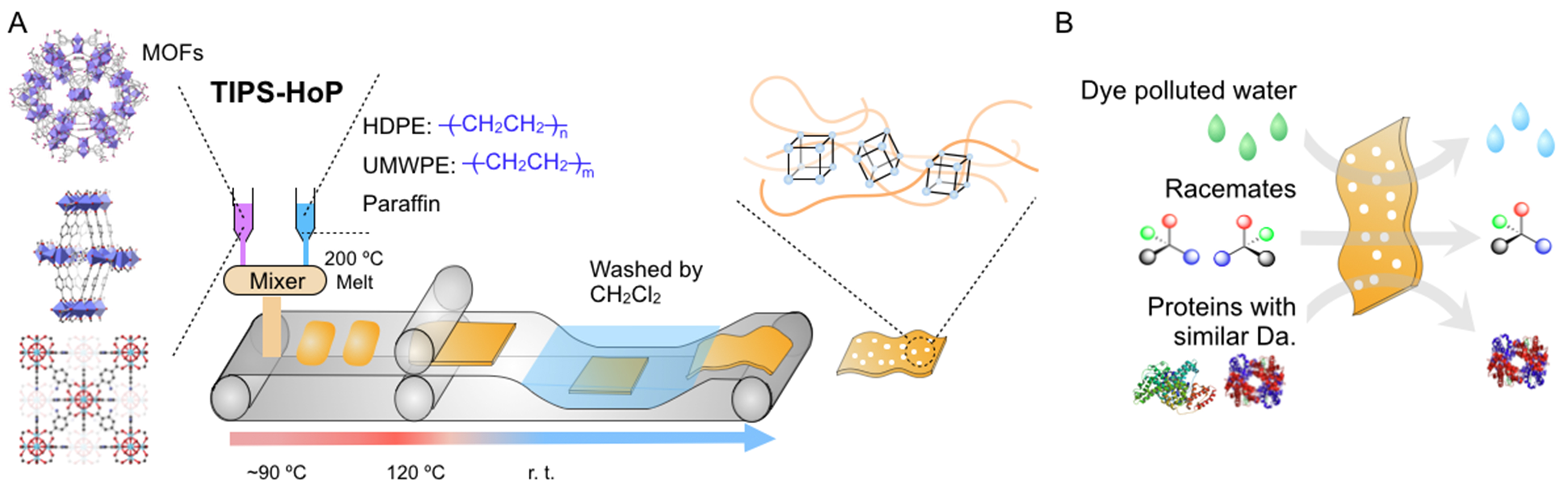
Figure 1. MOF-PE MMMs prepared by TIPS-HoP. (A) Schematic of the MOF-PE MMMs fabrication process using the TIPS-HoP method; (B) Schematic illustration of the MOF-PE MMMs for dye (Congo red), racemates (R-/S-methyl phenyl sulfoxide), and protein (BSA 14 × 3.8 × 3.8 nm, 65 kDa and BHb 6.4 × 5.5 × 5 nm, 66 kDa) separations[11]. Copyright 2019 Springer Nature. MOF-PE MMMs: Metal-organic framework-polyethylene mixed-matrix membranes; TIPS-HoP: thermally induced phase separation-hot pressing.
To further enable the efficient and rapid preparation of Zr-MOFs from precursors, Wang et al. proposed a deep eutectic solvent (DES)-assisted hot pressing (HoP) method, which efficiently removed heavy metal contaminants and micro/nanoplastics from seawater [Figure 2][13]. This approach utilizes the distinctive properties of DES, composed of choline chloride and urea, to accelerate the formation of Zr-MOF. Additionally, optimized temperature and pressure conditions enhance the interfacial adhesion between Zr-MOFs and substrates, consequently reinforcing their mechanical robustness on nonwoven fabrics. Under mild conditions (120 °C and a pressure of 0.4 MPa), Zr-MOF crystals were grown in situ on nonwoven fabric, yielding a highly crystalline membrane material within 20 min. The multifunctional linkers in the UiO-66 series MOFs (such as UiO-66 and UiO-66-NH2) further enhance the membrane’s adsorption performance and molecular sieving capability, enabling the efficient separation of nanoplastics and heavy metal ions. This study also demonstrates the capability to fabricate large-area membrane filters (11 ×
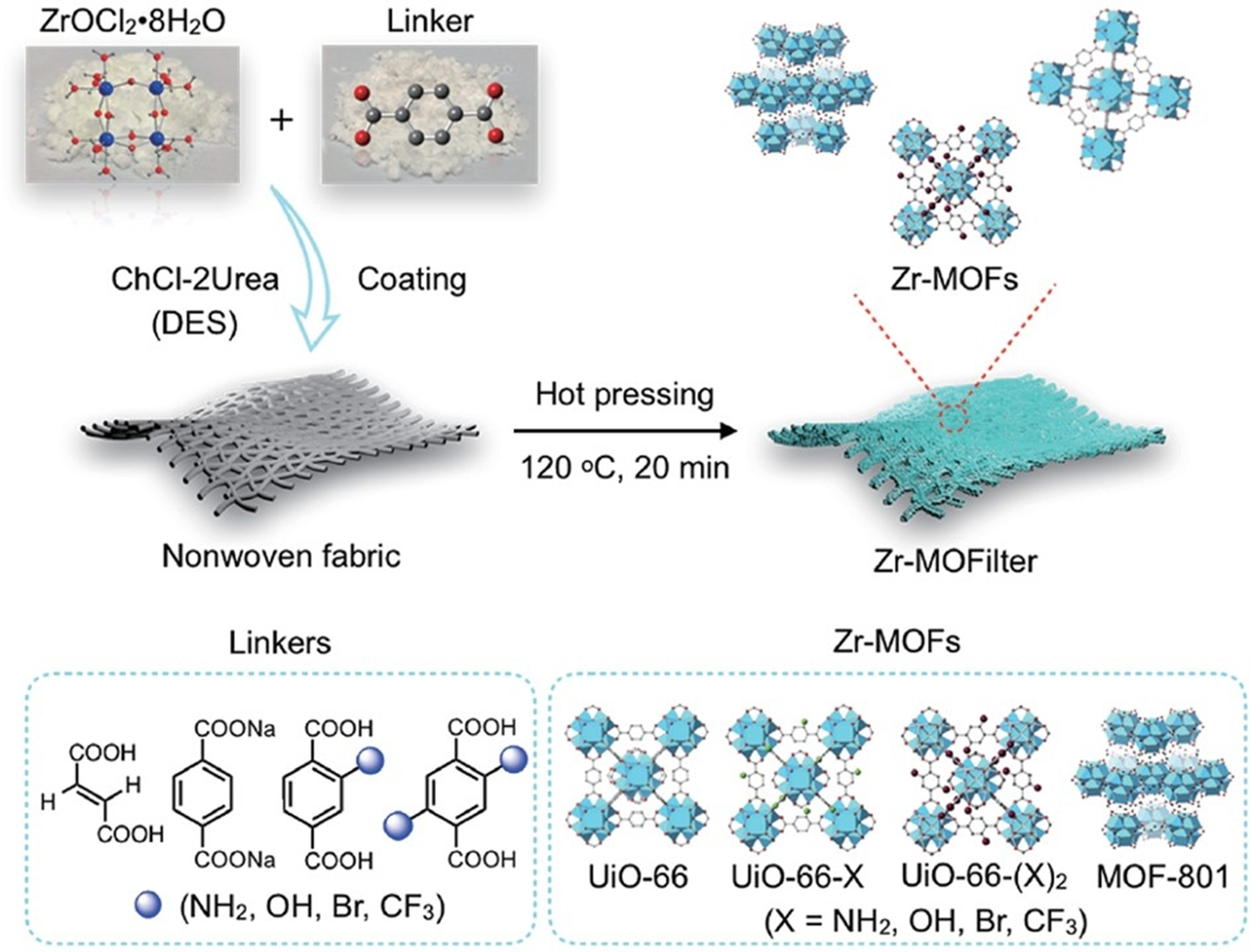
Figure 2. Schematic representation of in situ rapid preparation of Zr-MOFilters by DES-assisted HoP method[13]. Copyright 2022 Springer Nature. DES: Deep eutectic solvent; HoP: hot pressing.
To effectively address the challenges of poor interfacial compatibility between the MOFs and polymer, as well as insufficient defect control in MMMs, Chen et al. proposed an innovative strategy based on solid-state solvent processing (SSP) to fabricate ultrathin, high-loading MMMs [Figure 3][12]. The high co-solubility of metal salts and polymers enables the formation of ultrathin precursor layers with high metal salt loading within the polymer matrix. During this process, the solid solvent suppresses MOF particle aggregation while ensuring their tight integration within the polymer matrix, thereby establishing a continuous MOF-polymer interface. To demonstrate the SSP methodology, a Cu(SiF6)(pyz)3@PEG MMM was prepared as an example. The CuSiF6:polyethylene glycol (PEG) (5:1 wt%) precursor was initially dried at 40 °C for 3 h, followed by sealing with pyrazine ligands in a sealed autoclave for 12 h at 60 °C. This method achieved a MOF loading of up to 80% by volume while ensuring the uniform distribution of MOF particles within the polymer and maintaining interfacial integrity, effectively eliminating cracks and defects commonly encountered with traditional methods.
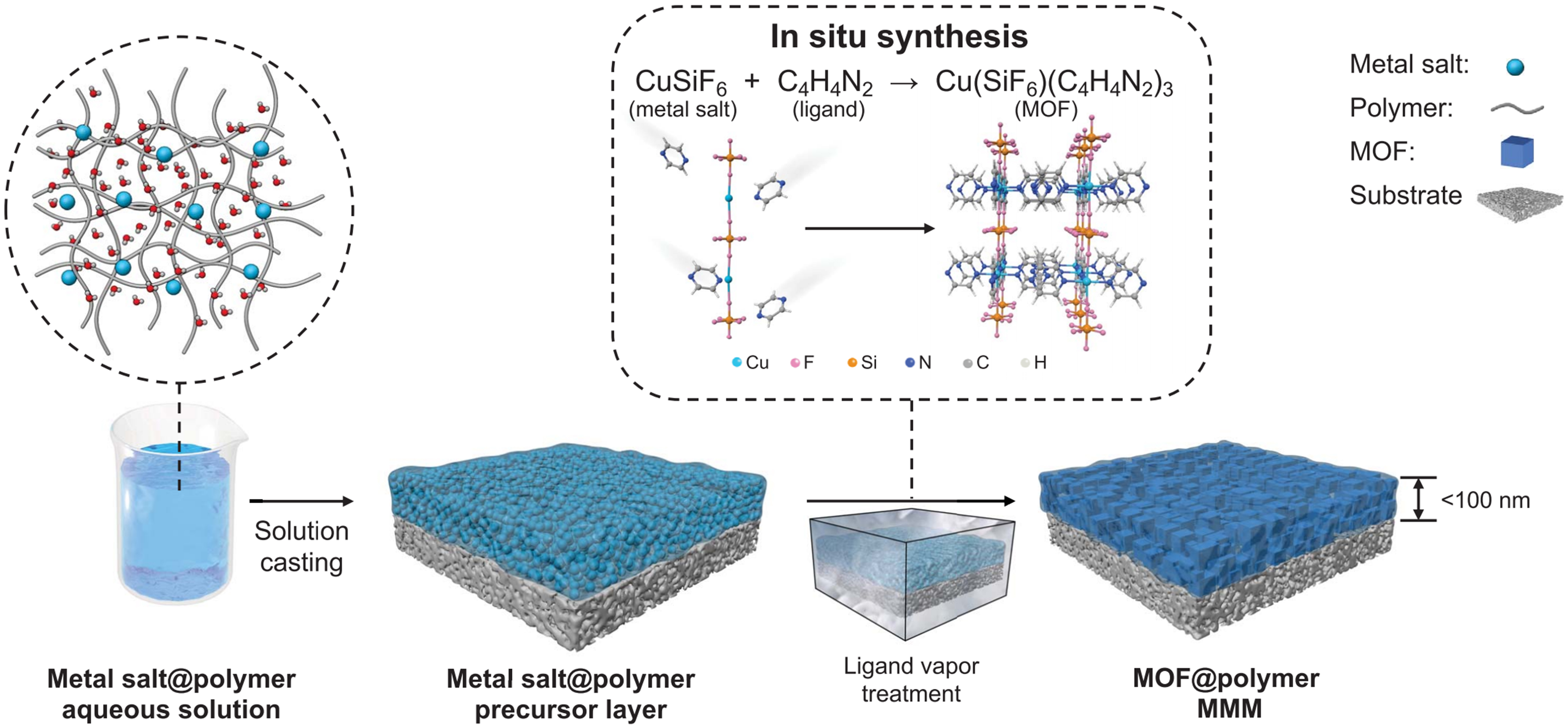
Figure 3. Schematic of the MMM fabricated by a solid-solvent processing strategy[12]. Copyright 2023 The American Association for the Advancement of Science. MMM: Mixed-matrix membrane.
Furthermore, to enhance the overall uniformity of the membrane, Liu et al. proposed a high-probability coordination strategy based on probability distribution theory to overcome steric hindrance in nanoscale confined spaces and achieve complete coordination between ligands and metal clusters [Figure 4][14]. Using fumaric acid and terephthalic acid (BDC) as linkers, high-performance Zr-MOF MMMs were synthesized on various substrates through hydrothermal synthesis and secondary growth methods, combined with precise regulation of ligand concentration. Characterization results showed that the connectivity of these membranes approaches the theoretical maximum (11.7 out of 12 connections), with a defect concentration of less than 3%. This ensures the integrity and stability of the molecular sieving channels. Such exceptional structural integrity significantly enhances the material’s rigidity and durability. Furthermore, the material exhibited improved stability under harsh conditions, such as high temperature and high humidity, and its chemical and physical properties demonstrated excellent adaptability in multiphase separation processes.
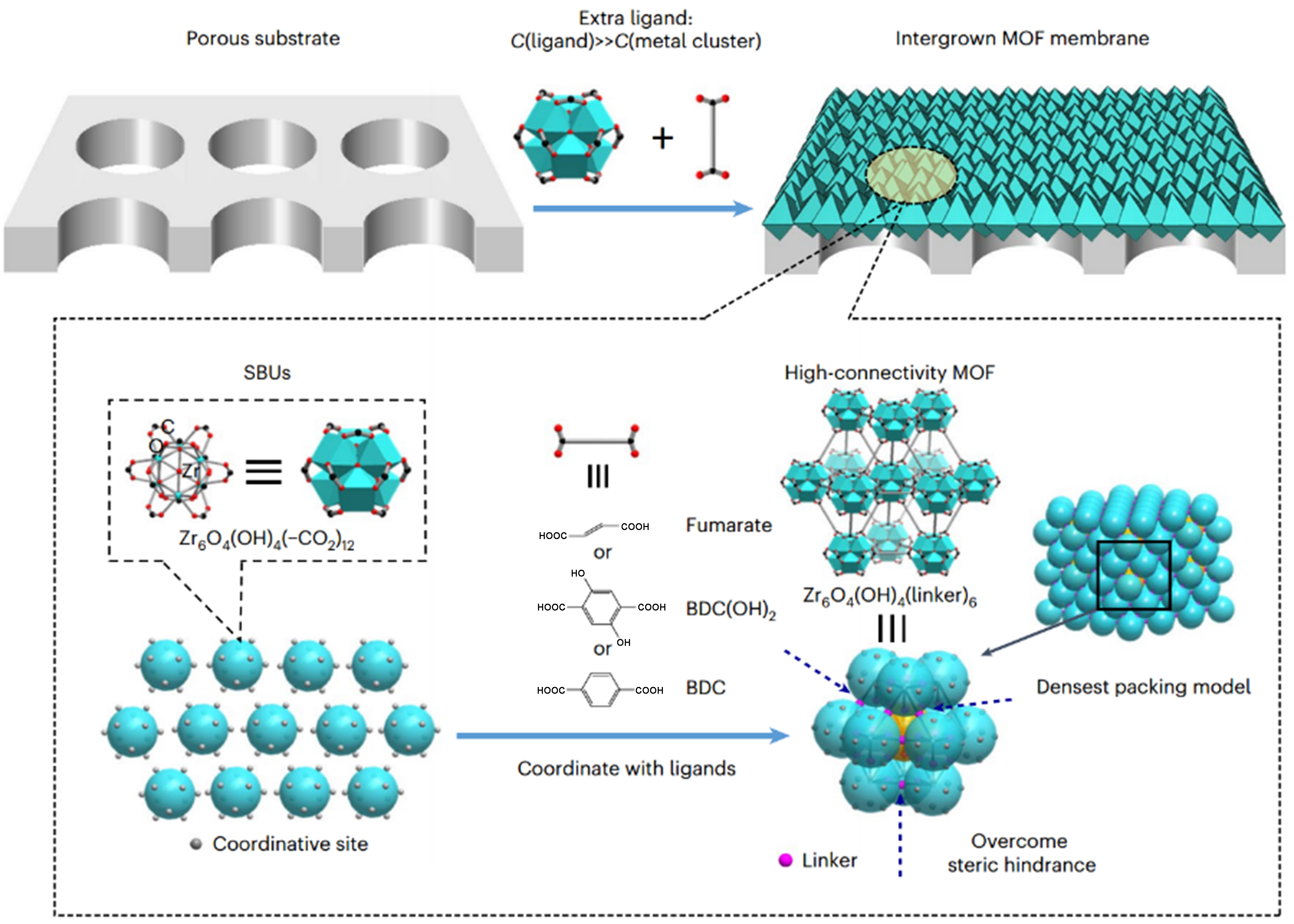
Figure 4. Formation of MOF membranes with perfect lattices. Zr6O4(OH)4(-CO2)12 SBUs coordinate with diacid ligands to form a 12-connected Zr-MOF intergrown membrane on the surface of a porous substrate. This is the densest packing model of equal spheres in MOF crystals, analogous to a certain number of ligands touching 12 pairs of coordinative sites to weld a core SBU with the surrounding 12 SBUs. A sufficient driving force enabled by extra ligands-i.e., C (ligand) > C (metal cluster): C, concentration-can overcome the steric hindrance of nanoconfined spaces within intergrown MOF crystals to achieve complete coordination of a perfect MOF lattice in the membrane[14]. Copyright 2023 Springer Nature. MOF: Metal-organic framework; SBUs: secondary building units.
To address the issue of mass transfer resistance, Sun et al. proposed an innovative design based on oriented monolayer polyhedral (OMP) membranes[3]. This design leveraged the face-centered cubic crystal structure of octahedral MOFs (such as UiO-66) and employed spin-coating to achieve the controlled, single-layer orientation of the crystals [Figure 5]. This approach ensured that the (111) crystal facets of the MOF aligned perpendicularly to the membrane surface, creating straight molecular sieving channels that efficiently facilitated the transport of small molecules. The ultrathin monolayer structure shortens the transport pathways of molecules within the membrane, significantly reducing mass transfer resistance. This allows molecules to rapidly traverse the directionally aligned MOF channels, thereby avoiding non-selective regions and extended transport pathways caused by the disordered stacking of fillers. Through these highly ordered channels, molecules efficiently achieved selective permeation, resulting in a substantial improvement in separation performance and permeation flux. Ultimately, in the separation of toluene and n-heptane, the membrane achieved a separation factor of 10.6 and a high permeation flux of 1,230 g·m-2·h-1, which surpassed the performance of conventional membrane materials [for example, BTAPPPI–IA (PEAI) membrane displayed a separation factor of 6.2 and a permeance of 0.43 kg·m-2·h-1; Calix/PVAc membrane showed a separation factor of 1.5 and flux of 0.05 kg·m-2·h-1; PUU membrane showed a separation factor of 6.3 and a permeance of 0.277 kg·m-2·h-1][3].
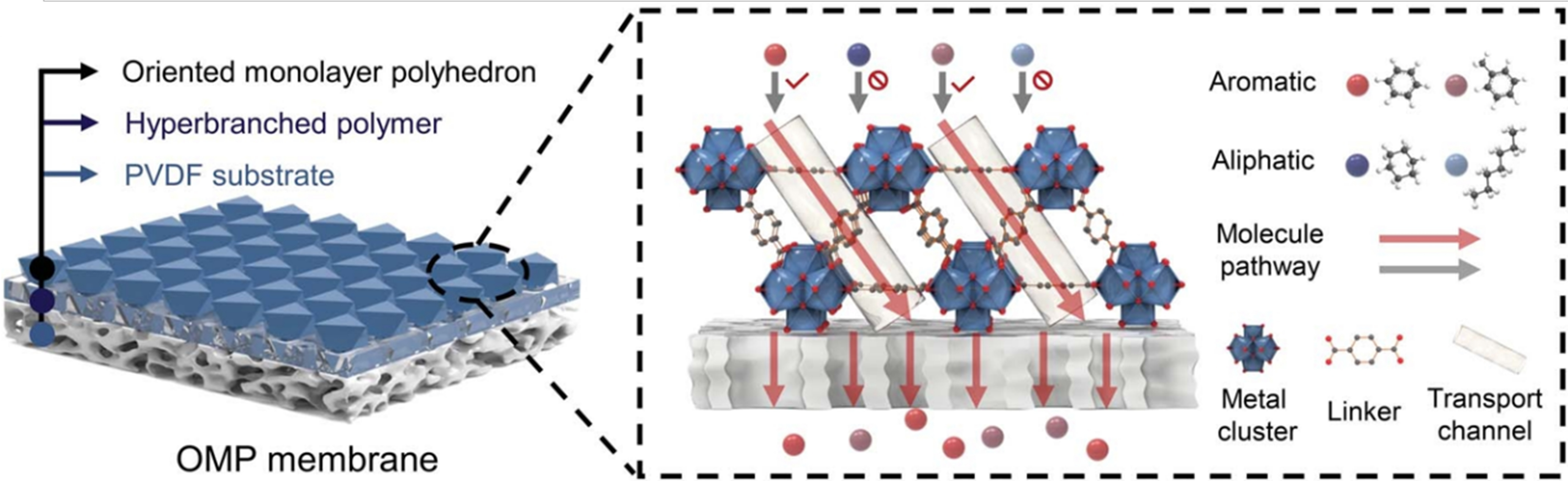
Figure 5. Design of the OMP membrane. The structure and selective molecular transport of OMP membranes in which aromatic molecules selectively pass through the ordered interconnected straight channels in the polyhedron[3]. Copyright 2024 The American Association for the Advancement of Science. OMP: Oriented monolayer polyhedral.
Zr-MOF MMMs, with their excellent stability and extensive tunable functionalization, are considered ideal candidates for separation membrane applications and have achieved significant progress in numerous studies. However, several areas still require further development.
(1) Enhancing membrane mechanical robustness is critical, as structural fragility under high-pressure/dynamic conditions limits industrial viability. Integrating Zr-MOFs with flexible polymers or reinforcing fibers via composite strategies improves mechanical strength and compression resistance, ensuring durability for scalable applications while maintaining separation efficiency.
(2) Cost-effective functionalization is crucial, as adsorption-enhancing multifunctional group integration often relies on costly reagents/processes, hindering material scalability. Implementing green synthesis protocols with renewable feedstocks for MOF MMMs modification offers a sustainable pathway to reduce production costs while maintaining performance, enabling scalable manufacturing of commercial-grade separation materials.
(3) Adsorbent recovery and reuse are critical to prevent secondary pollution and resource inefficiency. Membrane material performance degradation during recycling necessitates cost-effective solutions. Modular membrane component design enables efficient maintenance and replacement, mitigating operational costs while ensuring sustainable separation process scalability under repeated use conditions.
(4) Advanced technologies are revolutionizing MOF MMMs development through multiple innovative approaches. Artificial intelligence (AI) platforms tackle the combinatorial complexity by establishing data-driven structure-performance correlations, integrating supervised learning for prediction, unsupervised methods for classification, and reinforcement learning for synthesis optimization, thereby minimizing experimental iterations while enhancing MOF-polymer compatibility. Dynamic covalent chemistry (DCC) enables rational design through controlled surface functionalization via dynamic bonds, ensuring robust filler-matrix adhesion, while reversible secondary building unit/linker reorganization modulates pore size and topology. Additionally, biomimetic design guides synthesis by mimicking natural selection-optimized structures, leveraging biological adaptability and damage tolerance to enable synergistic property enhancement and robust structural reconfiguration for extreme-environment applications. Together, these approaches accelerate cost-effective membrane development with scalable manufacturing capabilities, supporting durable industrial-scale separation performance under dynamic conditions.
DECLARATIONS
Authors’ contributions
Drafted the manuscript: Liu, Z.
Initiated, supervised, and revised the manuscript: Wang, H.; Wu, C. D.
Availability of data and materials
Not applicable.
Financial support and sponsorship
This research was supported by the National Natural Science Foundation of China (No. 22105226) and the Fundamental Research Funds for the Central Universities (23CX06019A, R20220132).
Conflicts of interest
All authors declared that there are no conflicts of interest.
Ethical approval and consent to participate
Not applicable.
Consent for publication
Not applicable.
Copyright
© The Author(s) 2026.
REFERENCES
1. Dou, H.; Xu, M.; Wang, B.; et al. Microporous framework membranes for precise molecule/ion separations. Chem. Soc. Rev. 2021, 50, 986-1029.
3. Sun, H.; Wang, N.; Xu, Y.; et al. Aromatic-aliphatic hydrocarbon separation with oriented monolayer polyhedral membrane. Science 2024, 386, 1037-42.
4. Xu, L. H.; Li, S. H.; Mao, H.; et al. Highly flexible and superhydrophobic MOF nanosheet membrane for ultrafast alcohol-water separation. Science 2022, 378, 308-13.
5. Knebel, A.; Caro, J. Metal-organic frameworks and covalent organic frameworks as disruptive membrane materials for energy-efficient gas separation. Nat. Nanotechnol. 2022, 17, 911-23.
6. Slater, A. G.; Cooper, A. I. Porous materials. Function-led design of new porous materials. Science 2015, 348, aaa8075.
7. Denny, M. S.; Moreton, J. C.; Benz, L.; Cohen, S. M. Metal–organic frameworks for membrane-based separations. Nat. Rev. Mater. 2016, 1, 16078.
8. Trickett, C. A.; Helal, A.; Al-Maythalony, B. A.; Yamani, Z. H.; Cordova, K. E.; Yaghi, O. M. The chemistry of metal–organic frameworks for CO2 capture, regeneration and conversion. Nat. Rev. Mater. 2017, 2, 17045.
9. Bai, Y.; Dou, Y.; Xie, L. H.; Rutledge, W.; Li, J. R.; Zhou, H. C. Zr-based metal-organic frameworks: design, synthesis, structure, and applications. Chem. Soc. Rev. 2016, 45, 2327-67.
10. Ding, M.; Cai, X.; Jiang, H. L. Improving MOF stability: approaches and applications. Chem. Sci. 2019, 10, 10209-30.
11. Wang, H.; Zhao, S.; Liu, Y.; et al. Membrane adsorbers with ultrahigh metal-organic framework loading for high flux separations. Nat. Commun. 2019, 10, 4204.
12. Chen, G.; Chen, C.; Guo, Y.; et al. Solid-solvent processing of ultrathin, highly loaded mixed-matrix membrane for gas separation. Science 2023, 381, 1350-6.
13. Wang, H.; Zhang, X.; Yao, R.; et al. In situ rapid versatile method for the preparation of zirconium metal-organic framework filters. Sci. China. Chem. 2022, 65, 2462-7.
Cite This Article
 Open Access
How to Cite
Download Citation
Export Citation File:
Type of Import
Tips on Downloading Citation
Citation Manager File Format
Type of Import
Direct Import: When the Direct Import option is selected (the default state), a dialogue box will give you the option to Save or Open the downloaded citation data. Choosing Open will either launch your citation manager or give you a choice of applications with which to use the metadata. The Save option saves the file locally for later use.
Indirect Import: When the Indirect Import option is selected, the metadata is displayed and may be copied and pasted as needed.
About This Article
Special Topic
Copyright

Data & Comments
Data
0










Comments
Comments must be written in English. Spam, offensive content, impersonation, and private information will not be permitted. If any comment is reported and identified as inappropriate content by OAE staff, the comment will be removed without notice. If you have any queries or need any help, please contact us at [email protected].