
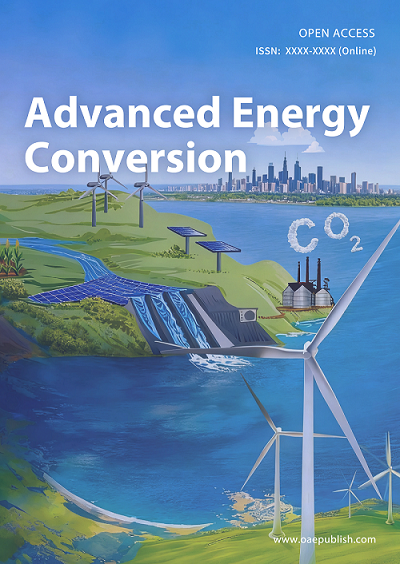
Advanced Energy Conversion: driving the next wave of energy
 0
0 
Advanced Energy Conversion is an open-access, international, and peer-reviewed journal publishing original research from across all areas of the energy conversion sciences. The journal is established to address the most urgent global issue of the transformation of energy systems toward sustainability, carbon neutrality, and even carbon negativity. The journal aims to be a leading platform for presenting and discussing innovative research in energy conversion, helping to advance knowledge that supports science, industry, and society.
Energy remains at the core of global development; however, it is also the most significant contributor to greenhouse gas emissions and climate change. Approaching the Paris Agreement targets requires more effort; it demands disruptive techniques in energy conversion, integration, and utilization. Energy conversion plays a pivotal role in modern society because it can transform natural resources into power and energy services. Whether converting sunlight, tides, or geothermal resources into electricity, chemical fuels into motion, or waste heat into usable energy, efficient conversion processes are vital for supporting industrial, commercial, residential, and transportation sectors. Advanced energy conversion technologies can improve efficiency, reduce environmental impacts, and enable integration of renewable resources into global energy systems.
In the pursuit of carbon neutrality and sustainable development, innovations in energy conversion are essential for reducing emissions, conserving resources, and ensuring a resilient, secure energy future. The mission of Advanced Energy Conversion is to support this transition by publishing high-quality, impactful research that advances both fundamental understanding and technological deployment.
As highlighted in the Aims and Scope, Advanced Energy Conversion welcomes original research and review papers on thermochemical, biochemical, electrochemical, and photochemical pathways for converting renewable and conventional resources. Topics range from biomass upgrading and waste-to-energy systems to advanced fuel cells, batteries, and hybrid energy integration. Recognizing the importance of efficiency and resource recovery, the journal also addresses waste heat utilization technologies, such as organic Rankine cycles and thermoelectric generation, and negative-emission strategies, including CO2 capture, utilization, and storage. In addition to experimental and practical studies, the journal also welcomes research using modeling, simulation, optimization, techno-economic analysis (TEA), and life cycle assessment (LCA) that play a key role in shaping real-world applications.
We warmly invite our readers, contributors, and collaborators to join us in this endeavor. By sharing your most creative, innovative, and forward-looking research, you will help shape a knowledge base that supports the transition to a net-zero world, and we can accelerate the science and practice of energy conversion for the challenges and opportunities of the decades ahead. With the launch of Advanced Energy Conversion, we look forward to building a vibrant and collaborative community dedicated to pioneering solutions for a resilient, low-carbon, and circular energy future.
DECLARATIONS
Authors’ contributions
The author contributed solely to the article.
Availability of data and materials
Not applicable.
Financial support and sponsorship
Not applicable.
Conflicts of interest
Yan, W. M. serves as the Editor-in-Chief of Advanced Energy Conversion, but was not involved in any aspects of the editorial process, particularly in reviewer selection, manuscript handling, or decision making.
Ethical approval and consent to participate
Not applicable.
Consent for publication
Not applicable.
Copyright
© The Author(s) 2025.
Cite This Article
 Open Access
How to Cite
Download Citation
Export Citation File:
Type of Import
Tips on Downloading Citation
Citation Manager File Format
Type of Import
Direct Import: When the Direct Import option is selected (the default state), a dialogue box will give you the option to Save or Open the downloaded citation data. Choosing Open will either launch your citation manager or give you a choice of applications with which to use the metadata. The Save option saves the file locally for later use.
Indirect Import: When the Indirect Import option is selected, the metadata is displayed and may be copied and pasted as needed.
About This Article
Copyright

Data & Comments
Data
0







Comments
Comments must be written in English. Spam, offensive content, impersonation, and private information will not be permitted. If any comment is reported and identified as inappropriate content by OAE staff, the comment will be removed without notice. If you have any queries or need any help, please contact us at [email protected].