


Bibliometric analysis of research trends and emerging hotspots in plastic surgery publications
 0
0 Abstract
Aim: The field of plastic surgery has experienced substantial growth in annual publications over the past decades. A comprehensive analysis of global publication trends is needed to map the evolving research landscape and identify future directions.
Methods: A bibliometric analysis was conducted on publications affiliated with global plastic surgery institutions from 2001 to 2025, sourced from the PubMed database. Analyses of publication trends, geographic distributions, journal preferences, and research hotspots were performed using R (Bibliometrix) and CiteSpace.
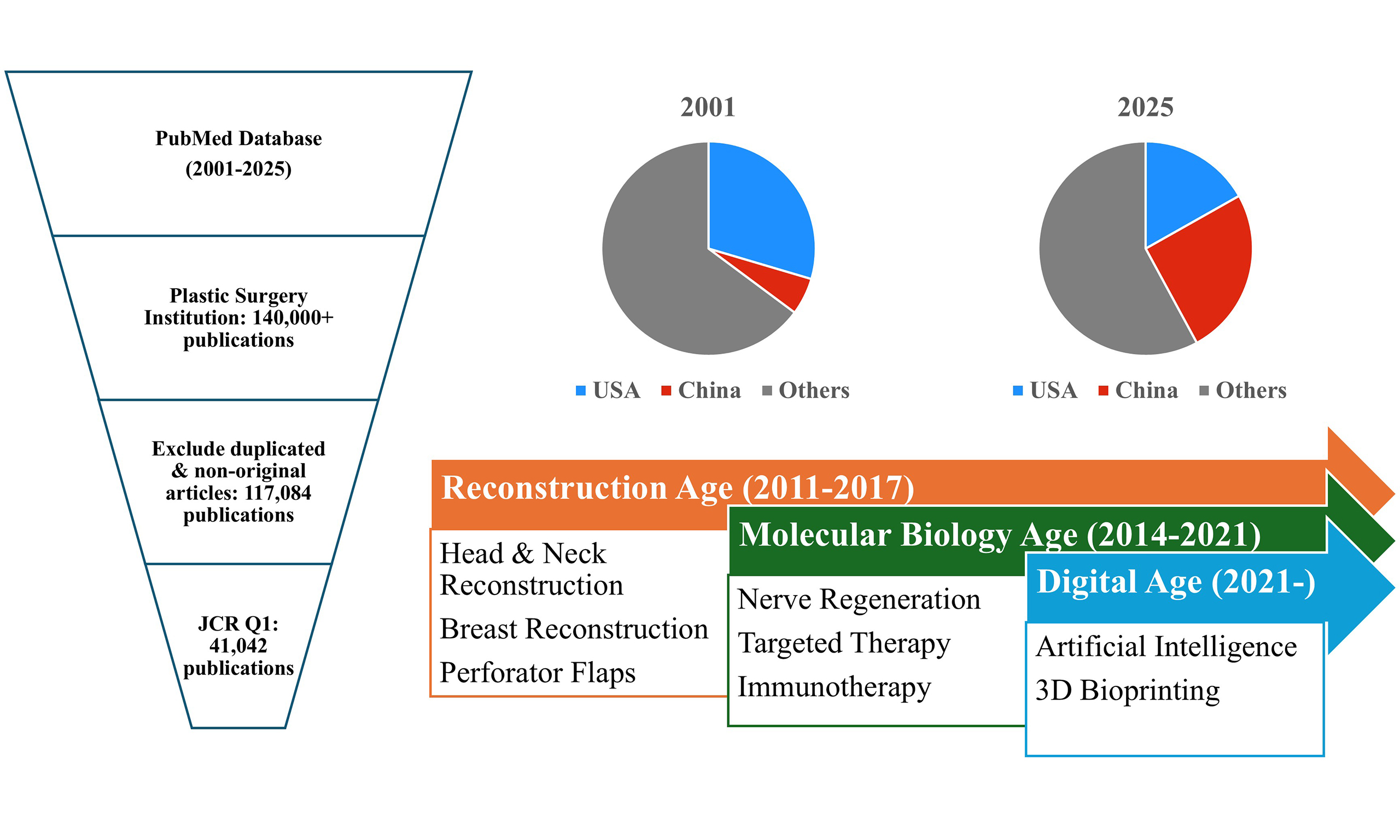
Results: A total of 117,084 articles were identified, showing an 8.8-fold increase in annual publications from 2001 to 2025. China demonstrated the most rapid growth, with its share of global publications rising from 5.5% to 25.2%. Analysis of Journal Citation Reports (JCR) Q1 publications revealed similar growth, with China’s share increasing to 34.3% in 2025. Research hotspots have evolved from reconstructive techniques (e.g., perforator flaps) to molecular biology (e.g., nerve regeneration, targeted cancer therapy) and, most recently, artificial intelligence.
Conclusion: Plastic surgery research is dynamically evolving, characterized by increasing volume, a shifting global contribution led by China, and a transition towards molecular biology, regenerative medicine, and data science. Future efforts should focus on addressing methodological challenges and leveraging emerging technologies to advance personalized and regenerative treatments.
Keywords
INTRODUCTION
The first quarter of the 21st century has witnessed a remarkable and quantifiable increase in the number of plastic surgery procedures performed globally. According to reports from major international societies such as the International Society of Aesthetic Plastic Surgery (ISAPS), the total number of both surgical and non-surgical cosmetic procedures has risen dramatically since 2001, with the global figure exceeding 30 million annually in 2024[1,2]. This growth is paralleled by a substantial expansion of the global market, which is projected to surpass USD 100 billion by 2030, underscoring the field’s significant economic and societal impact[3]. This upward trend is fueled by a confluence of factors, including technological advancements that have improved safety and efficacy, rising societal acceptance, and increased accessibility driven by both medical necessity and aesthetic desire.
Parallel to the increase in amount, a paramount emphasis has been placed on enhancing the quality of surgical outcomes. The period from 2001 to 2025 has been defined by a shift from merely achieving technical success to pursuing excellence in both functional and aesthetic results. Key developments include the refinement of microsurgical techniques like perforator flaps, which minimize donor-site morbidity, the integration of three-dimensional imaging for precise preoperative planning, and the adoption of enhanced recovery protocols that improve patient experiences[4,5]. Furthermore, the field has increasingly embraced evidence-based medicine, with research focusing on objective outcome measures, patient-reported satisfaction, and long-term safety data, thereby elevating the standard of care[6].
Concurrently, the field of plastic surgery has seen a substantial expansion in both treatable indications and available techniques, reflecting an evolution beyond its traditional boundaries. The field now seamlessly integrates principles from regenerative medicine, most notably through the use of autologous fat grafting and the application of adipose-derived stem cells for wound healing, scar revision, and even peripheral nerve regeneration. Technological innovations such as robotic-assisted surgery and the exploration of artificial intelligence (AI) for outcome prediction are opening new frontiers. This broadening scope reflects the specialty’s dynamic and innovative character, addressing a wider range of clinical challenges from craniofacial reconstruction to gender-affirming surgery.
While several previous bibliometric studies have mapped specific facets of this specialty, they have predominantly been restricted to dedicated plastic surgery journals. Consequently, these studies often feature limited sample sizes and fail to capture the growing contributions from comprehensive medical journals and cross-disciplinary research[7-9]. Given the growing importance of the plastic surgery field, this study aims to synthesize its research trends and hot topics. Through a bibliometric analysis of publications from 2001 to 2025, we summarize the current research landscape and identify unresolved issues, thereby providing a reference and framework for future research directions.
METHODS
In January 2026, we searched the PubMed database for articles published from 2001 to 2025 using the affiliation search query: “plastic”[Affiliation] AND “surgery”[Affiliation]. Journals were identified by their International Standard Serial Number (ISSN). We then used the Clarivate Analytics 2025 Journal Citation Reports (JCR) to assign each journal an impact factor and JCR quartile, metrics which serve as proxies for journal influence and importance. These metrics were utilized strictly as journal-level bibliometric proxies, rather than direct measures of absolute scientific quality. Any publications categorized as reviews, comments, duplicate publications, meta-analyses, letters, editorials, corrections, biographical items, news items, or retractions were excluded.
Bibliometric analyses and statistical analyses were performed using R software (version 4.4; https://www.r-project.org) and Bibliometrix package[10]. Furthermore, CiteSpace (version 6.4.R5; http://cluster.ischool.drexel.edu/~cchen/citespace/) was employed to analyze the keywords with highest citation bursts between 2001 and 2025, which are indicative of emerging research trends[11].
Rather than limiting the analysis to the first or corresponding author, country assignment was based on the affiliations of all contributing authors using a standard full-counting method. Publications were then classified into three categories: exclusively mainland China, exclusively other regions, and collaborative publications involving both.
Publications were classified by scanning the Title, Abstract, and Keywords for the presence of these predefined terms. A publication was assigned to a specific category if it contained any of the corresponding keywords. For instance, the “Ear” category was defined by the presence of terms such as ears, auditory, cochlea, vestibular, tympan, hearing, anotia, or microtia. This deterministic string-matching approach ensured high specificity and reproducibility in categorizing the large-scale dataset.
RESULTS
Spatiotemporal trends of plastic surgery publications
Over 140,000 records published between 2001 and 2025 were retrieved from the PubMed database. After removing duplicates and non-original articles, 117,084 publications from global plastic surgery institutions remained for further analysis. A marked growth in annual publications was observed, increasing from 1,359 in 2001 to 12,026 in 2025. This represents an approximately 8.8-fold rise over the period, corresponding to a compound annual growth rate (CAGR) of 9.5% [Figure 1A]. A strong and statistically significant upward trend was observed in the annual publications from Chinese institutions (R = 0.893, P < 0.001), which increased from 76 (5.5%) in 2001 to 3,038 (25.2%) in 2025. The annual publication output from USA plastic surgery institutions was relatively stable during 2001-2015, contrasting with a period of rapid growth from 2015 to 2025. The number increased from 469 articles (9.3%) in 2015 to 2,023 articles (16.8%) in 2025. Plastic surgery institutions from Germany, Japan, and South Korea followed, with publications of 906 (7.6%), 630 (5.2%), and 506 (4.2%) in 2025, respectively. A notable increase was also observed in India (R = 0.960, P < 0.001), where the number of publications grew from 19 in 2001 to 309 in 2025, representing a rise in its global share from 1.3% to 2.5% [Figure 1B and C].
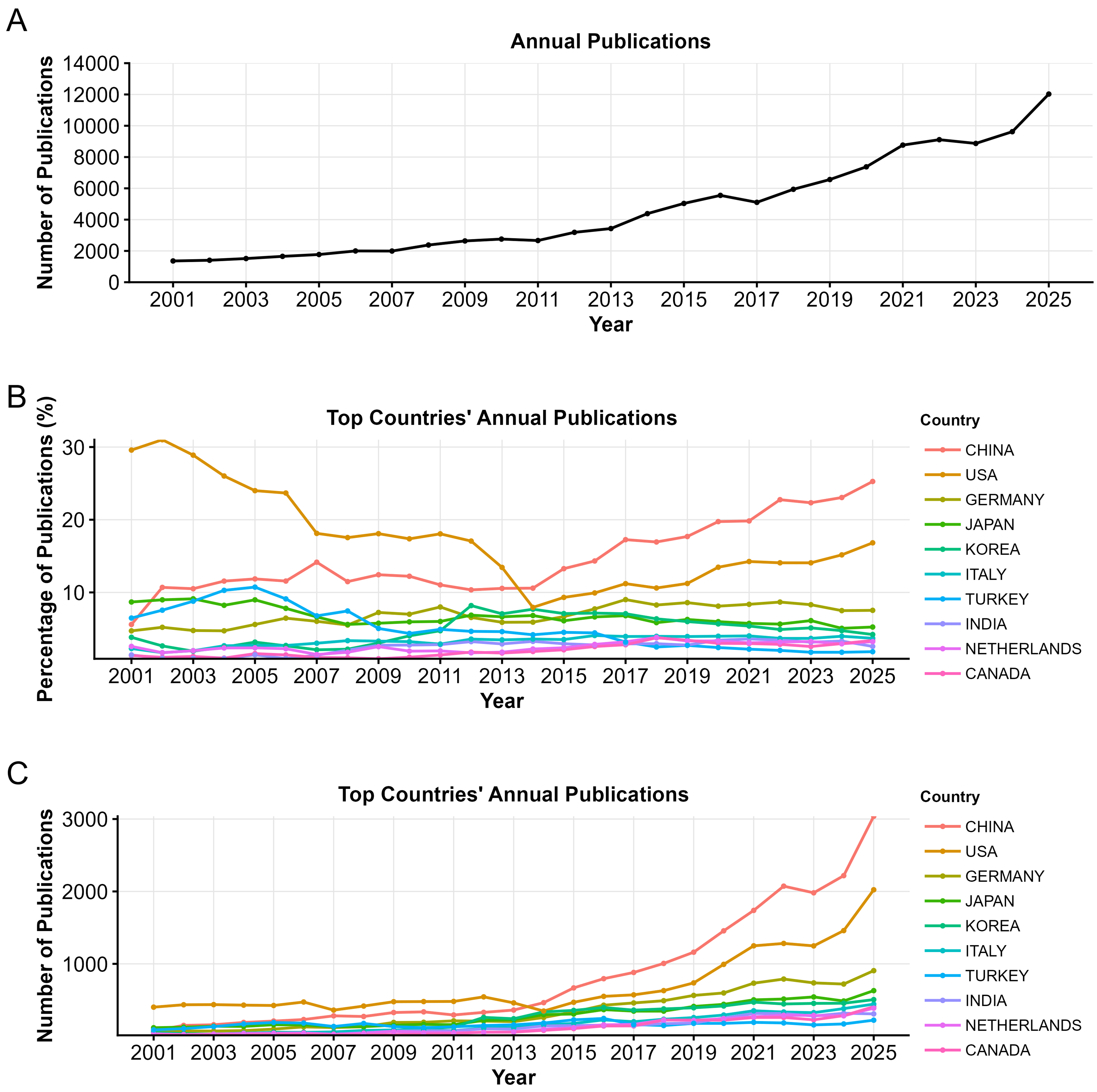
Figure 1. Spatiotemporal trends of publication volumes for global plastic surgery institutions in PubMed database. (A) Annual publication volumes; (B) Top countries’ annual publication proportions; (C) Top countries’ annual publication volumes. Data source: PubMed database (2001-2025). Inclusion Criteria: “plastic”[Affiliation] AND “surgery”[Affiliation]. Exclusion criteria: Reviews, comments, duplicate publications, meta-analyses, letters, editorials, corrections, biographical items, news items, and retractions.
To analyze spatiotemporal publication trends, we focused on articles from journals ranked within the JCR Q1 quartile, utilizing this ranking as a proxy indicator for journal prestige. Globally, a total of 41,042 publications from plastic surgery institutions were published between 2001 and 2025. The annual output demonstrated substantial growth, increasing from 509 in 2001 to 4,753 in 2025, with a CAGR of approximately 9.7% [Figure 2A]. The annual number of JCR Q1 publications from Chinese plastic surgery institutions increased markedly from 18 (3.5%) in 2001 to 1,634 (34.3%) in 2025, reflecting a significant expansion in research output and a growing presence in high-impact journals among Chinese plastic surgery institutions. The United States also maintained a steady upward trajectory from 2011 to 2025, with its annual publications rising from 116 (11.1%) to 881 (18.5%). Institutions from Germany, Italy, and Japan followed, with 2025 JCR Q1 publications of 458 (9.6%), 226 (4.7%), and 198 (4.1%), respectively [Figure 2B and C].
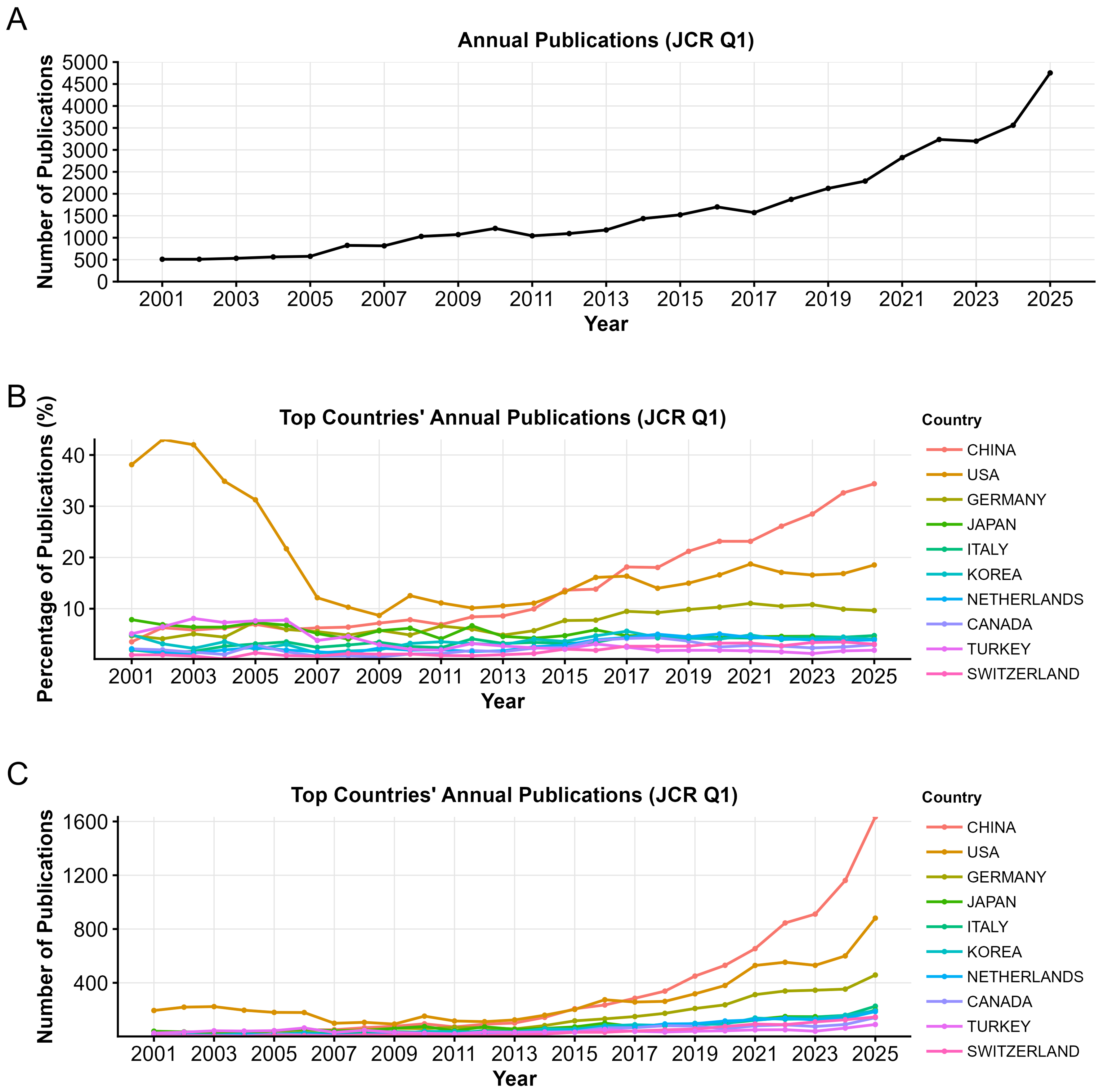
Figure 2. Spatiotemporal trends of publication volumes for global plastic surgery institutions in JCR Q1 journals. (A) Annual publication volumes; (B) Top countries’ annual publication proportions; (C) Top countries’ annual publication volumes. Data source: PubMed database (2001-2025). JCR: Journal Citation Reports; Q1: quartile 1.
To investigate global collaboration in plastic surgery research, we analyzed whether publications included authors from both mainland China and other regions. We found that from 2001 to 2012, most publications from mainland China featured only domestic institutions. Since 2013, however, collaboration between mainland China and other regions has increased significantly. The number of collaborative publications rose from 6 in 2013 to 362 in 2025, accounting for 11.9% of all publications from mainland China. A similar trend was observed in JCR Q1 journals, where collaborative publications increased from 3 in 2013 to 228 in 2025, constituting 13.9% of mainland China’s total Q1 output. These results indicate that while maintaining a foundation of research independence, Chinese plastic surgery institutions have actively engaged in international collaboration, a trend that coincides with an increased publication volume in high-impact (JCR Q1) journals [Figure 3].
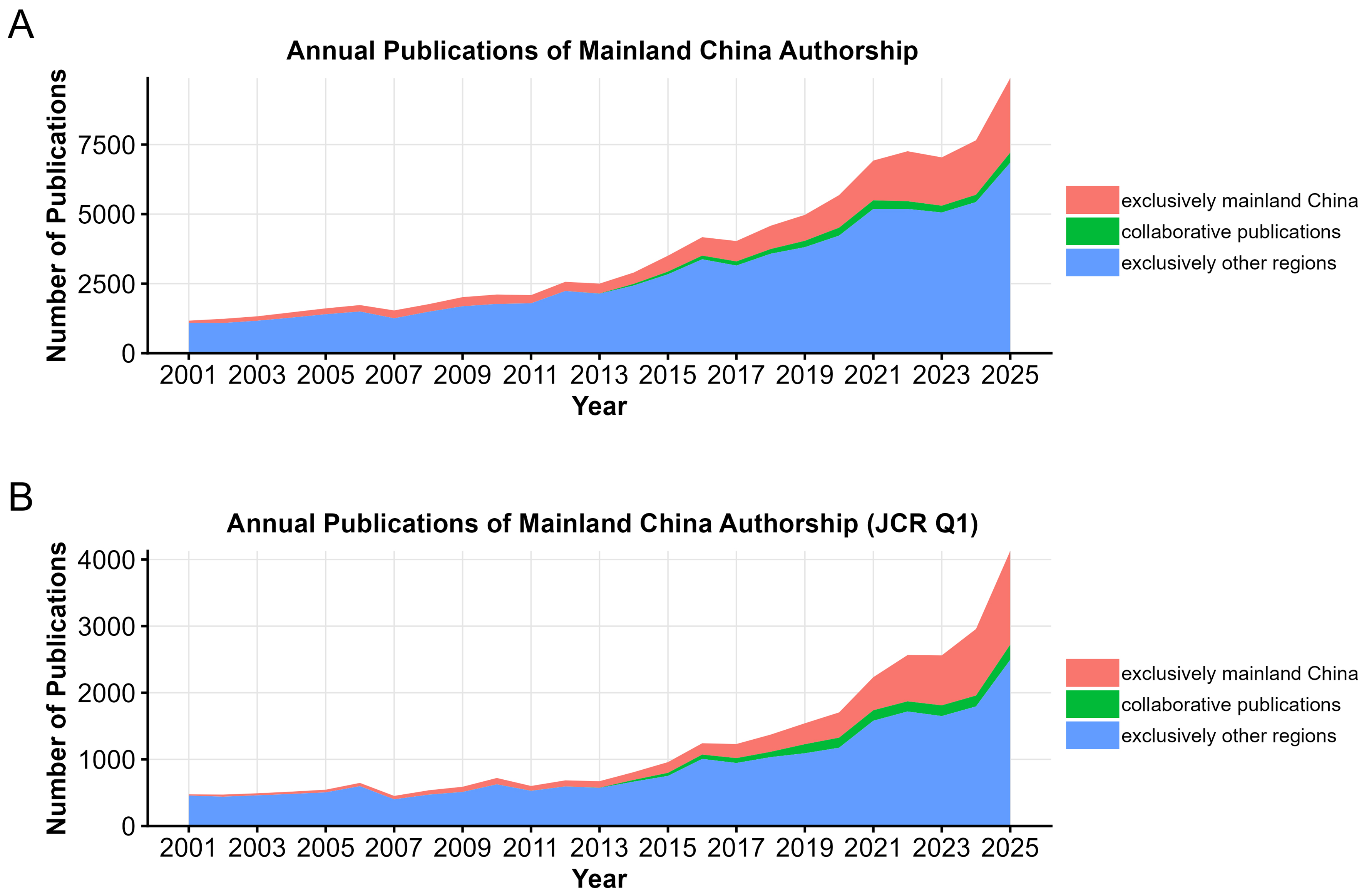
Figure 3. Temporal trends of institutional co-authorship in Mainland China in (A) PubMed database and (B) JCR Q1 journals. Data source: PubMed database (2001-2025). JCR: Journal Citation Reports; Q1: quartile 1.
To identify high-impact research institutions in plastic surgery, we analyzed the affiliations of authors in JCR Q1 journals. Among the top 10 institutions by publication numbers, the majority were from the United States. These included Harvard Medical School, the University of California, the University of Michigan, the University of Texas Southwestern Medical Center, and Stanford University School of Medicine. Concurrently, several Chinese institutions demonstrated rapid development, notably Shanghai Jiao Tong University School of Medicine, Chang Gung University, Chinese Academy of Medical Sciences & Peking Union Medical College, and Central South University. These findings align with the established recognition of leading institutions in the field of plastic surgery and are consistent with the global spatiotemporal trends [Figure 4].
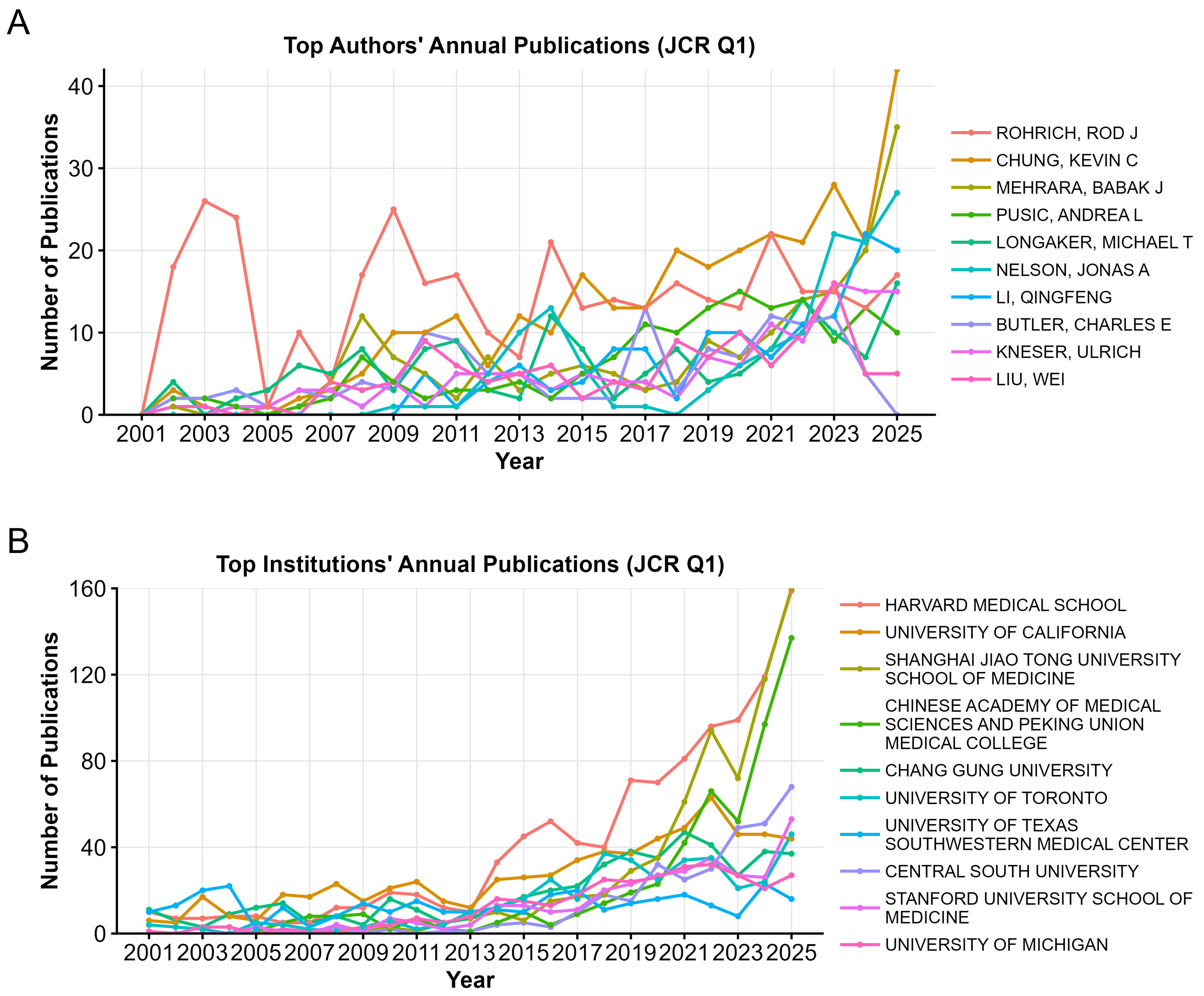
Figure 4. Annual publications of top plastic surgery (A) authors and (B) institutions in JCR Q1 journals. Data source: PubMed database (2001-2025). JCR: Journal Citation Reports; Q1: quartile 1.
Analysis of top contributing journals in plastic surgery
The ten journals with the largest annual number of articles in plastic surgery are shown in [Figure 5A], including Plastic and Reconstructive Surgery, The Journal of Craniofacial Surgery, Plastic and Reconstructive Surgery Global Open, Annals of Plastic Surgery, Journal of Plastic, Reconstructive & Aesthetic Surgery (JPRAS), Aesthetic Plastic Surgery, Journal of the International Society for Burn Injuries (Burns), Journal of Reconstructive Microsurgery, Archives of Plastic Surgery, and Microsurgery. The JCR Q1 journals within this group are Plastic and Reconstructive Surgery, JPRAS, Aesthetic Plastic Surgery, and Burns [Figure 5B]. The share of publications from global plastic surgery institutions found in these ten journals rose from 27.8% (2001) to 32.0% (2010), then decreased to 13.7% in 2025. This trend suggests that since around 2010, a growing number of journals have become significant venues for research in this field, offering authors a wider choice for publication. The development of more high-quality, specialized journals is therefore of great importance, as it reflects a more diverse and dynamic scholarly landscape that parallels the advancement of plastic surgery.
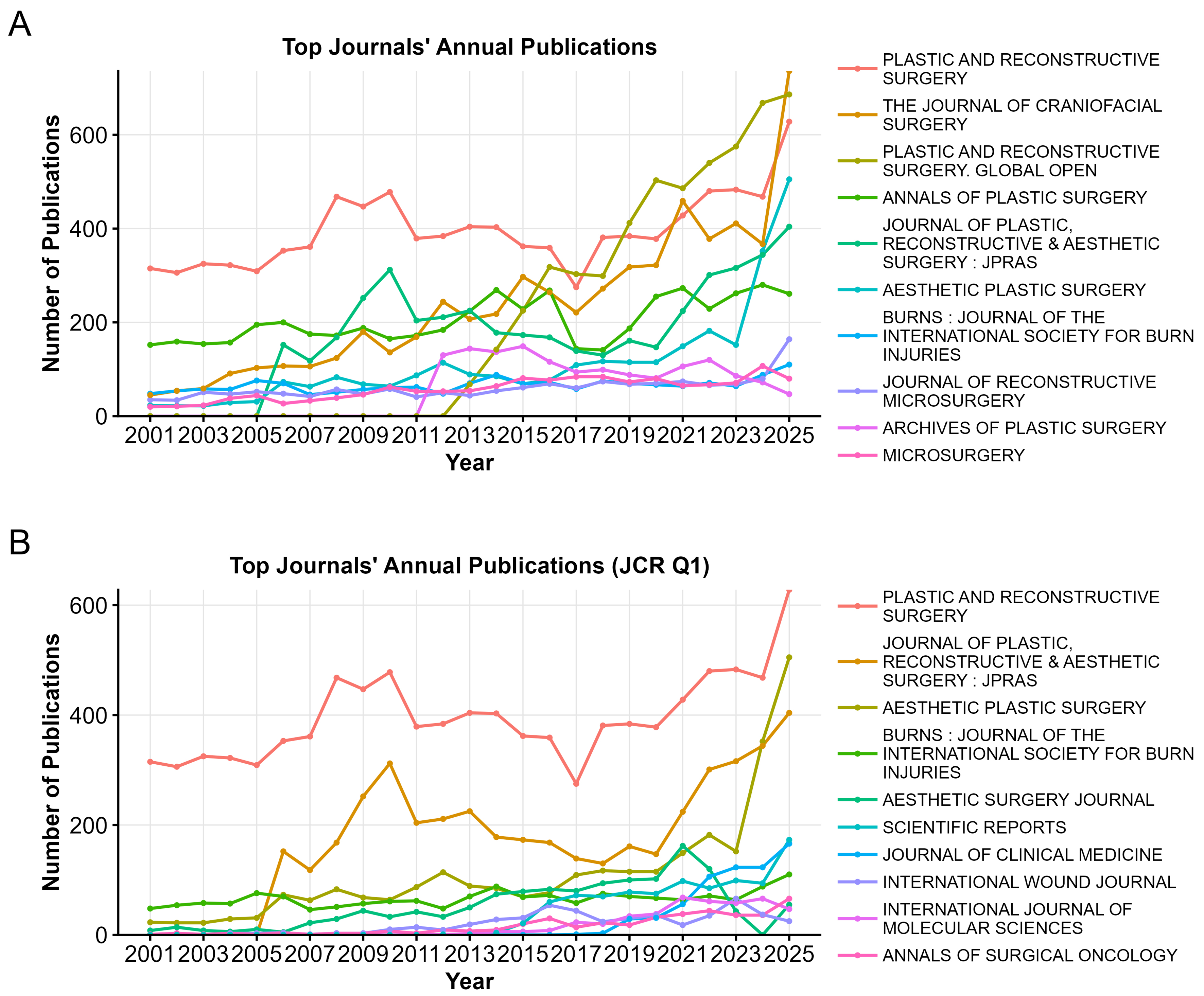
Figure 5. Top publication journals for global plastic surgery institutions in (A) PubMed database and (B) JCR Q1 journals. Data source: PubMed database (2001-2025). JCR: Journal Citation Reports; Q1: quartile 1.
Thematic landscape of plastic surgery research based on keywords
As definitively stated in the textbook[12], plastic surgery is defined by a core set of techniques rather than by an anatomic region or organ system, which results in a clinical practice characterized by exceptionally diverse and personalized conditions. Therefore, to systematically evaluate evolving trends across subspecialties, we categorized JCR Q1 publications by global plastic surgery institutions using medical keywords. Our analysis revealed that the breast and face were the predominant anatomical sites, with publications showing consistent growth from 2001 to 2025, reaching 650 and 502 articles, respectively, by 2025. This was followed by the limbs, nose, abdomen, tooth, eye, and ear [Figure 6A]. Research focused on skin and blood vessels surpassed other tissue types including nerve, adipose, and scar [Figure 6B]. Etiologically, injury & burn, neoplasms, and infections were the most significant categories, demonstrating marked increases in publications - reaching 1,394, 1,004, and 771 articles in 2025, respectively - while research on congenital diseases, obesity, and aging remained relatively stable during 2001-2025 [Figure 7A]. While surgical interventions constituted the core focus of research - evidenced by an increase from 357 to 1,846 articles during the period, growing attention has been directed toward biomaterials, stem cells, and targeted therapies in recent years [Figure 7B]. Oncologic therapies like immunotherapy, chemotherapy, and radiotherapy were also well-represented for neoplasms like breast cancer, melanoma and neurofibroma. These findings indicate that the advancement of plastic surgery research is closely intertwined with progress in molecular biology, materials science, and computer science. Innovations in these disciplines continuously broaden the therapeutic arsenal of plastic surgery, thereby expanding the spectrum of diseases it can effectively treat.
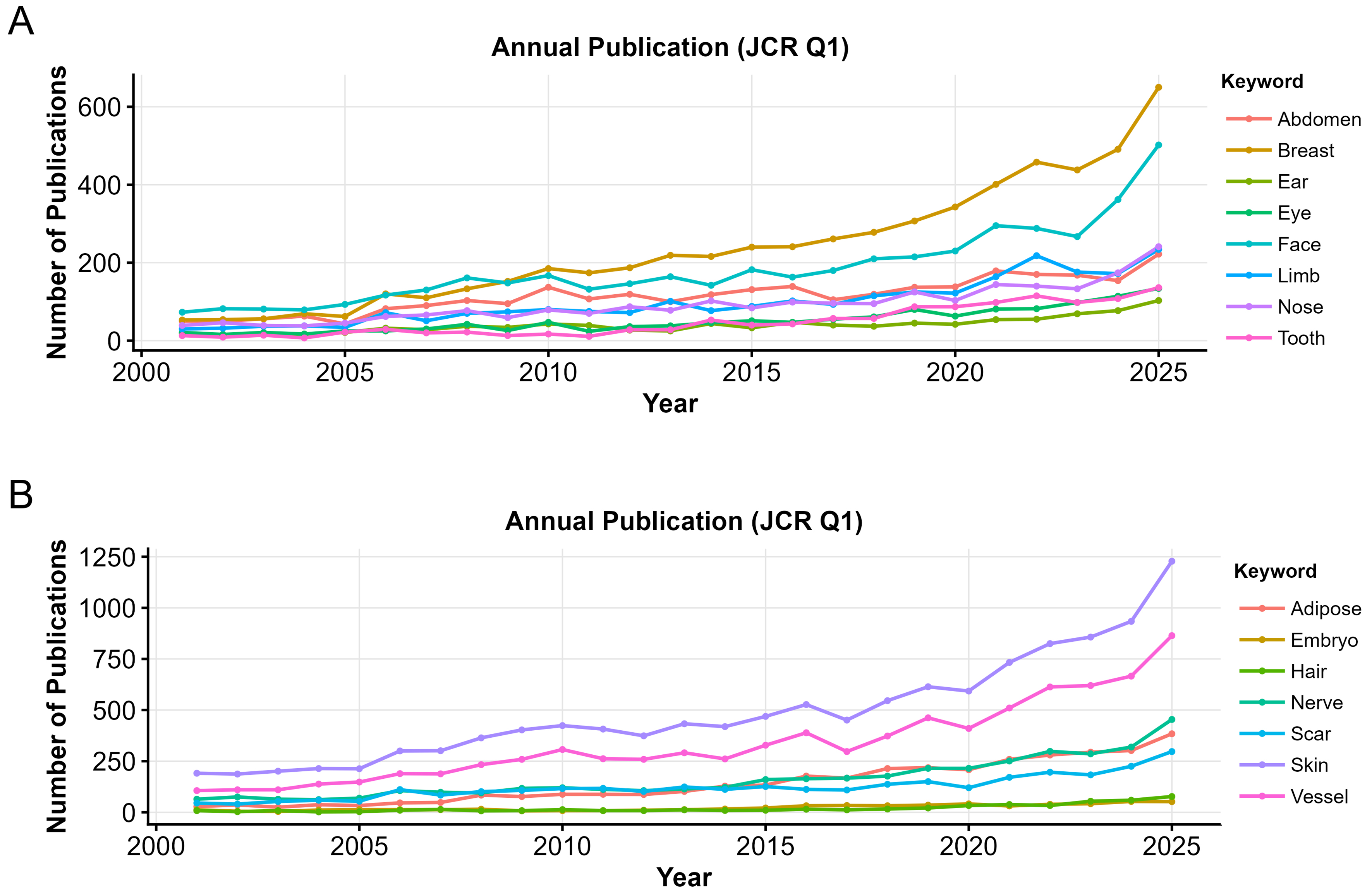
Figure 6. Annual trends categorizing (A) anatomical and (B) histological distribution based on keyword analysis of JCR Q1 publications. Data source: PubMed database (2001-2025). JCR: Journal Citation Reports; Q1: quartile 1.
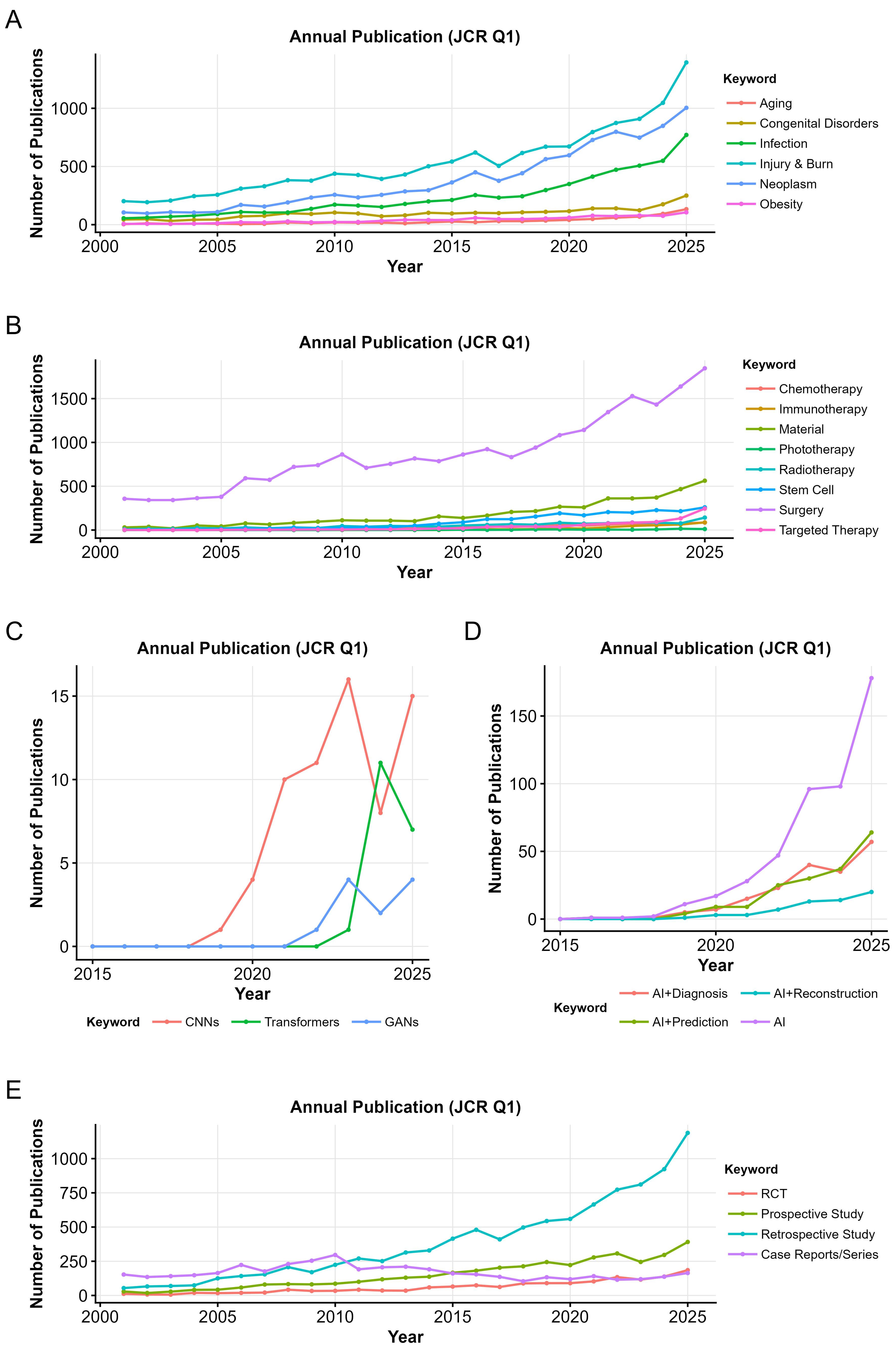
Figure 7. Annual trends categorizing (A) etiology; (B) therapeutic interventions; (C) AI models; (D) AI applications; and (E) clinical study types based on keyword analysis of JCR Q1 publications. Data source: PubMed database (2001-2025). JCR: Journal Citation Reports; Q1: quartile 1; CNNs: Convolutional Neural Networks; GANs: Generative Adversarial Networks; RCT: randomized controlled trial.
Temporal evolution of hotspots in plastic surgery publications
To systematically analyze the evolving trends in research hotspots, we performed a keyword burstness analysis using CiteSpace on publications from global plastic surgery institutions in JCR Q1 journals. The results for the period 2001-2025 are presented in Supplementary Figures 1 and 2.
Reconstructive surgical procedures (2011-2017)
From 2011 to 2017, key hotspots included “head and neck reconstruction” and “breast reconstruction”, highlighting the central role of functional and morphological restoration in plastic surgery. Recent advances in head and neck reconstruction have been revolutionized by microvascular free tissue transfer techniques. The most widely used free flaps include the fibula, radial forearm, anterolateral thigh, and rectus abdominis flaps, which enable restoration of both form and function following oncologic resection or trauma[13]. Additionally, functional surgery approaches now emphasize organ preservation strategies, such as endoscopic laser surgery for small vocal cord cancers and techniques to avoid permanent laryngeal mutilation, while ensuring early functional restoration of speech and swallowing[14]. Breast reconstruction has seen transformative advancements with the refinement of autologous tissue transfer techniques. The DIEP (deep inferior epigastric perforator) flap has become the gold standard, preserving abdominal muscles while transferring skin and fat to the breast area, resulting in faster recovery and better abdominal strength retention compared to traditional transverse rectus abdominis myocutaneous (TRAM) flaps[15]. Pre-pectoral breast reconstruction represents another major innovation, placing implants above the chest muscles to reduce postoperative pain, minimize animation deformities, and allow for quicker recovery[16]. Nipple-sparing mastectomy techniques preserve the nipple-areola complex, enhancing aesthetic outcomes and maintaining sensation[17].
Flap and skin graft (2013-2019)
During 2013-2019, a significant focus was placed on “perforator flap”, “tissue expander”, and “skin graft”, underscoring the critical importance of flap techniques and tissue expansion in reconstructive surgery. Recent advancements in flap and skin graft techniques have been dominated by the refinement of perforator flaps and the integration of super-microsurgery. The principle of “replacing like with like” has driven the evolution of highly tailored flaps, such as propeller flaps, chimeric flaps, and freestyle designs, which maximize functional and cosmetic outcomes while minimizing donor-site morbidity[18,19]. A major research focus has been on improving flap survival and preventing ischemia-reperfusion injury. This involves investigating pharmacological agents, the therapeutic application of stem cells to enhance angiogenesis, and the use of advanced monitoring technologies like near-infrared fluorescence imaging (e.g., with indocyanine green) for real-time assessment of flap perfusion[20,21].
Concurrently, skin grafting has evolved beyond simple autografts. A significant hotspot is the development and clinical application of bioengineered skin substitutes and dermal matrices (e.g., Integra®, Matriderm®)[22]. These technologies are crucial for managing complex wounds where donor sites are limited. Furthermore, the combination of negative pressure wound therapy (NPWT) with skin grafting has become a standard of care to enhance graft take. The most cutting-edge research explores cell-based therapies, such as the use of autologous skin cell suspensions for repigmentation and wound coverage[23], and the field of 3D bioprinting to create customized, multi-layered skin constructs containing fibroblasts and keratinocytes[24].
Nerve regeneration (2012-2019)
Another prominent cluster from 2012 to 2019, featuring terms such as “nerve regeneration” and “neural regeneration”, indicated the deepening integration of neurobiology and plastic surgery for treating peripheral nerve disorders. Surgical techniques have evolved with innovations like dual innervation strategies combining cross-face nerve grafts with masseteric nerve transfers, which provide both emotional and voluntary facial movement. Minimally invasive static procedures and dynamic temporalis tendon transfers have expanded treatment options for different patient presentations. Additionally, novel muscle transfers beyond the traditional gracilis muscle have been explored to optimize smile restoration and facial symmetry. Stem cell therapies have demonstrated enhanced nerve regeneration in preclinical models, with Schwann-like differentiated cells showing superior effects compared to undifferentiated cells[25]. The development of nerve conduits has provided alternatives to autografts, particularly for nerve gaps[26]. Research on central plasticity of brain network has advanced our understanding of the sequelae of facial nerve injuries, providing a theoretical foundation for developing potential central therapeutic interventions such as transcranial magnetic stimulation (TMS)[27].
Immunotherapy and targeted therapy of tumor (2014-2021)
Between 2014 and 2021, emerging hotspots like “oral cancer”, “head and neck cancer”, and “targeted therapy” reflected the growing influence of molecular biology in advancing oncologic treatments within the field. The landscape of targeted therapy for head and neck squamous cell carcinoma (HNSCC) has evolved from reliance on the anti-EGFR antibody cetuximab (approved based on the EXTREME trial[28]) towards exploring new agents for resistant disease. Recent advances include the irreversible ErbB family blocker afatinib, validated in the LUX-Head & Neck 1 trial[29], and investigational drugs targeting specific molecular alterations, such as PI3K inhibitors (e.g., buparlisib in the BERIL-1 trial[30]). The most promising direction is highly selective, biomarker-driven therapy, exemplified by the antibody-drug conjugate tipifarnib, which showed significant efficacy in the AIM-HN trial for tumors with HRAS mutations, signaling a shift towards personalized treatment[31].
Immunotherapy has revolutionized treatment, with immune checkpoint inhibitors now forming the standard of care. The anti-PD-1 antibodies pembrolizumab and nivolumab are central to this progress. The pivotal KEYNOTE-048 trial established pembrolizumab, with or without chemotherapy, as a first-line standard for recurrent/metastatic disease[32], while the CheckMate 141 trial proved nivolumab superior to chemotherapy in the platinum-refractory setting[33]. Current research focuses on moving these agents into earlier-stage, locally advanced diseases to improve cure rates and on developing novel combination strategies to overcome resistance and benefit more patients.
AI (2021-present)
Since 2021, AI and machine learning have surged as dominant hotspots in plastic surgery research. Notably, the technological methodology has undergone a rapid evolution from traditional Convolutional Neural Networks (CNNs) to Transformers and Generative Adversarial Networks (GANs) [Figure 7C]. Furthermore, keyword-based analysis of these AI-related articles demonstrates that recent publication output is primarily concentrated in three distinct research domains [Figure 7D]: (1) Computer Vision for Clinical Diagnostics, such as automated scar assessment[34] and auricular deformities categorization[35]; (2) Predictive Modeling for Surgical Outcomes, such as the prediction of outcomes in abdominal wall reconstruction[36] or breast reconstruction[37]; (3) 3D Reconstruction and Preoperative Planning, such as the design system of mandibular osteotomy[38]. Future multidisciplinary research should prioritize the transition of advanced models from theoretical algorithms to clinically validated, ethically regulated diagnostic tools.
Clinical trials
High-quality clinical trials, particularly randomized controlled trials (RCTs), constitute the highest level of evidence for guiding clinical practice. Large-scale, Phase III RCTs are crucial for generating robust, generalizable evidence; their scarcity directly impacts the ability to establish strong, evidence-based guidelines in the field. For example, a phase III randomized trial demonstrated that while robotic mastectomy required longer operative time, it resulted in significantly superior quality of life outcomes and comparable surgical safety and short-term oncologic results compared to the open technique[39]. However, the field of plastic surgery continues to face a significant shortage of such studies. Between 2001 and 2025, the number of case reports and series remained relatively stable at approximately 200, and retrospective studies increased from 54 to 1,188. The annual number of RCTs increased from 12 to 185 and prospective studies from 29 to 391, remaining limited in absolute numbers [Figure 7E].
DISCUSSION
Current challenges in plastic surgery research
Despite the rapid evolution reflected in plastic surgery publications, significant challenges and research gaps remain. A primary observation is the inadequacy of research dedicated to rare and genetic diseases, such as microtia and hemifacial microsomia. Compared to highly published conditions like breast cancer or keloids, these disorders appear to receive disproportionately less attention and investment from both national funding bodies and the commercial sector. However, existing literature on these conditions highlights their clinical and biological relevance. Such research deciphers the role of specific genes in human development - for instance, demonstrating that retinoic acid pathway repression downregulates HOXB6, leading to chondrocyte proliferation inhibition and apoptosis in microtia[40]. Furthermore, advancing this knowledge facilitates crucial genetic counseling, which may contribute to reducing pathogenic gene carrier rates and hereditary disorder incidence. Progress is currently hindered by the complexities of polygenic gene-gene interactions, reliance on sophisticated animal models, and small patient cohorts that limit the feasibility of well-powered clinical trials.
Another prominent challenge identified in the literature is the absence of standardized, objective outcome assessment metrics. Surgical success, particularly in aesthetic and reconstructive procedures, frequently relies on non-validated patient satisfaction scales or subjective surgeon evaluations. For instance, in assessing functional restoration like facial nerve recovery, widely used tools such as the House-Brackmann (HB) grade, the Sunnybrook facial grading system (FGS), and the Terzis scale depend heavily on the evaluator’s subjective judgment rather than quantitative benchmarks[41,42]. This heterogeneity is driven by the multidimensional nature of surgical outcomes (encompassing anatomical, functional, and psychosocial domains) and the predominance of small, single-center studies utilizing institution-specific criteria. To address these limitations, recent publication trends suggest a growing interest in integrating emerging technologies - such as 3D topography for precise morphological quantification and laser speckle contrast imaging (LSCI) for objective, real-time tissue perfusion monitoring[43,44]. Ultimately, the lack of a defined core outcome set (COS) impedes meaningful cross-study comparisons, hampers meta-analyses, and slows the establishment of robust, evidence-based clinical guidelines[45,46].
Future directions in plastic surgery research
While the field navigates these clinical and evaluative challenges, publication trajectories indicate a shift moving beyond traditional reconstruction toward exploring regeneration, personalization, and complex functional restoration. In regenerative medicine, stem cell therapies increasingly focus on the potent secretome and extracellular vesicles (exosomes), which mediate regenerative effects via paracrine signaling. Studies suggest this cell-free approach may offer a potentially safer modality for enhancing flap survival, treating radiation-induced fibrosis, and actively modulating the microenvironment for chronic wound healing[47]. Future advancements will rely on standardizing precise cell characterization[48] and engineering “smart” biomaterial scaffolds capable of spatiotemporally controlled delivery[49]. Concurrently, molecular biology is transforming the field into a precision medicine specialty. By understanding individual multi-omics profiles, surgeons can preemptively address predispositions to hypertrophic scarring[50,51]. The development of diagnostic biomarkers will enable targeted risk stratification for free flap surgeries and facilitate the integration of precision biologics into individualized surgical care[52,53].
Simultaneously, the literature reflects expanded interest in reconstructive capabilities via vascularized composite allotransplantation (VCA) for severe, irreparable injuries. However, its widespread adoption remains constrained by the necessity for long-term immunosuppression[54]. Future research is critically directed toward inducing donor-specific immune tolerance. Preclinical evidence suggests that mixed hematopoietic chimerism, stem cell-based immunomodulation [including Tregs and mesenchymal stem cells (MSCs)], and costimulation blockade (e.g., CTLA4-Ig) hold significant promise for eliminating reliance on systemic immunosuppressants and broadening VCA therapeutic opportunities[55-57].
Limitations of the study
Unlike previous bibliometric analyses restricted to specialty journals, our affiliation-based approach captures a broader spectrum of multidisciplinary literature, uniquely revealing emerging cross-disciplinary hotspots such as machine learning and targeted immunotherapy[7-9]. Despite providing comprehensive insights into global publication trends, this bibliometric study has several limitations. First, an affiliation-based search strategy was employed to maintain a focused scope and avoid irrelevant literature. However, this approach may under-capture relevant multi-disciplinary studies where authors are not affiliated with plastic surgery departments. This limitation is particularly pronounced in emerging fields such as artificial intelligence and regenerative medicine, which are driven by data scientists and basic biologists prior to clinical integration. Second, relying exclusively on PubMed to manage our massive sample size inherently introduces database and language biases. This approach may omit non-English literature and articles exclusive to databases like Web of Science or Scopus, while also restricting the evaluation of citation linkages, such as self-citation rates. Third, our analysis emphasizes absolute publication volume without normalizing for national population, funding, or researcher count; thus, our findings are fundamentally descriptive and cannot establish strict causal inferences regarding research quality. Finally, while JCR Q1 status was employed as a bibliometric proxy, it is important to note that journal-level rankings do not inherently equate to the scientific quality or impact of individual papers. Because manual verification of each article was unfeasible, future studies might leverage artificial intelligence and machine learning for bulk semantic comprehension to mitigate these constraints and capture deeper scientific nuances.
DECLARATIONS
Authors’ contributions
Study concepts: Zhang T
Study design: Zhang T, Yu Q
Data acquisition: Zhang C, Yu Q
Manuscript writing: Zhang C, Yu Q, Zhang T
Manuscript editing: Zhang C, Yu Q, Zhang T
Availability of data and materials
The data supporting the findings of this study are available from the corresponding author upon reasonable request.
AI and AI-assisted tools statement
Not applicable.
Financial support and sponsorship
This study was supported by Shanghai Science and Technology Innovation Action Plan (23Y21900200, Zhang T).
Conflicts of interest
Zhang T is an Editorial Board Member of the journal Plastic and Aesthetic Research. Zhang T was not involved in any steps of editorial processing, notably including reviewers’ selection, manuscript handling, and decision making. The other authors declare that there are no conflicts of interest.
Ethical approval and consent to participate
Not applicable.
Consent for publication
Not applicable
Copyright
© The Author(s) 2026.
Supplementary Materials
REFERENCES
1. 2024 Plastic Surgery Statistics Report. Available from: https://www.plasticsurgery.org/documents/news/statistics/2024/plastic-surgery-statistics-report-2024.pdf. [Last accessed on 15 Jun 2026].
2. ISAPS. Global survey 2024: full report and press releases. Available from: https://www.isaps.org/discover/about-isaps/global-statistics/global-survey-2024-full-report-and-press-releases/. [Last accessed on 15 Jun 2026].
3. Aesthetic Medicine Market (2026 - 2033). Available from: https://www.grandviewresearch.com/industry-analysis/medical-aesthetics-market. [Last accessed on 15 Jun 2026].
4. Chartier C, Safran T, Alhalabi B, Murphy A, Davison P. “Locoregional perforator flaps in breast reconstruction: an anatomic review & quadrant algorithm”. J Plast Reconstr Aesthet Surg. 2022;75:1328-41.
5. Berkane Y, Beaufils T, Saget F, et al. Parasacral perforator flaps for buttock enhancement. Aesthet Surg J. 2023;43:NP64-5.
6. Rohrich RJ, Cohen JM, Savetsky IL, Avashia YJ, Chung KC. Evidence-based medicine in plastic surgery: from then to now. Plast Reconstr Surg. 2021;148:645e-9.
7. Efanov JI, Shine J, Ghazawi N, Ricard MA, Borsuk DE. Publication rates and author characteristics from 3 Plastic Surgery Journals in 2006 and 2016. Ann Plast Surg. 2018;81:128-36.
8. Ma C, He L. Trend and hotspots of plastic surgery guidelines: a bibliometric and visualization analysis. J Plast Reconstr Aesthet Surg. 2024;93:242-5.
9. Zeng H, Jin X, Lai C. Global and Chinese publications in plastic surgery journals between 2010 and 2020: a bibliometric analysis. Ann Transl Med. 2022;10:535.
10. Aria M, Cuccurullo C. bibliometrix: an R-tool for comprehensive science mapping analysis. J Informetr. 2017;11:959-75.
11. Chen C. Searching for intellectual turning points: progressive knowledge domain visualization. Proc Natl Acad Sci U S A. 2004;101:5303-10.
12. Sukato DC, Timashpolsky A, Ferzli G, Rosenfeld RM, Gordin EA. Systematic review of supraclavicular artery island flap vs free flap in head and neck reconstruction. Otolaryngol Head Neck Surg. 2019;160:215-22.
13. Hartl DM, Ferlito A, Silver CE, et al. Minimally invasive techniques for head and neck malignancies: current indications, outcomes and future directions. Eur Arch Otorhinolaryngol. 2011;268:1249-57.
14. van Rooij JAF, Bijkerk E, van der Hulst RRJW, van Kuijk SMJ, Tuinder SMH. Replacing an implant-based with a DIEP flap breast reconstruction: breast sensation and quality of life. Plast Reconstr Surg. 2023;152:293-304.
15. Parmeshwar N, Knox JA, Piper ML. Evaluation of pre-pectoral direct-to-implant breast reconstruction with post-mastectomy radiation: a systematic review and meta-analysis. J Clin Med. 2025;14:5004.
17. Ismail T, Padilla P, Kurlander DE, et al. Profunda artery perforator flap tongue reconstruction: an effective and safe alternative to the anterolateral thigh flap. Plast Reconstr Surg. 2024;153:1191e-200.
18. Goh TLH, Park SW, Cho JY, Choi JW, Hong JP. The search for the ideal thin skin flap: superficial circumflex iliac artery perforator flap--a review of 210 cases. Plast Reconstr Surg. 2015;135:592-601.
19. Nakagawa T, Sasaki M, Kataoka-Sasaki Y, et al. Intravenous infusion of mesenchymal stem cells promotes the survival of random pattern flaps in rats. Plast Reconstr Surg. 2021;148:799-807.
20. Matsui A, Lee BT, Winer JH, Laurence RG, Frangioni JV. Predictive capability of near-infrared fluorescence angiography in submental perforator flap survival. Plast Reconstr Surg. 2010;126:1518-27.
21. Philandrianos C, Andrac-Meyer L, Mordon S, et al. Comparison of five dermal substitutes in full-thickness skin wound healing in a porcine model. Burns. 2012;38:820-9.
22. Mrigpuri S, Razmi TM, Sendhil Kumaran M, Vinay K, Srivastava N, Parsad D. Four compartment method as an efficacious and simplified technique for autologous non-cultured epidermal cell suspension preparation in vitiligo surgery: a randomized, active-controlled study. J Eur Acad Dermatol Venereol. 2019;33:185-90.
23. Cubo N, Garcia M, Del Cañizo JF, Velasco D, Jorcano JL. 3D bioprinting of functional human skin: production and in vivo analysis. Biofabrication. 2016;9:015006.
24. Abbas OL, Borman H, Uysal ÇA, et al. Adipose-derived stem cells enhance axonal regeneration through cross-facial nerve grafting in a rat model of facial paralysis. Plast Reconstr Surg. 2016;138:387-96.
25. Cho G, Moon C, Maharajan N, Ang MJ, Kim M, Jang CH. Effect of pre-induced mesenchymal stem cell-coated cellulose/collagen nanofibrous nerve conduit on regeneration of transected facial nerve. Int J Mol Sci. 2022;23:7638.
26. Zhang CH, Wang HQ, Lu Y, Wang W, Ma H, Lu YC. Exploration of rich-club reorganization in facial synkinesis: insights from structural and functional brain network analysis. Cereb Cortex. 2023;33:11570-81.
27. Vermorken JB, Mesia R, Rivera F, et al. Platinum-based chemotherapy plus cetuximab in head and neck cancer. N Engl J Med. 2008;359:1116-27.
28. Machiels JP, Haddad RI, Fayette J, et al.; LUX-H&N 1 investigators. Afatinib versus methotrexate as second-line treatment in patients with recurrent or metastatic squamous-cell carcinoma of the head and neck progressing on or after platinum-based therapy (LUX-Head & Neck 1): an open-label, randomised phase 3 trial. Lancet Oncol. 2015;16:583-94.
29. Soulières D, Faivre S, Mesía R, et al. Buparlisib and paclitaxel in patients with platinum-pretreated recurrent or metastatic squamous cell carcinoma of the head and neck (BERIL-1): a randomised, double-blind, placebo-controlled phase 2 trial. Lancet Oncol. 2017;18:323-35.
30. Ho A, Adkins D, Hanna G, et al. LBA47 A phase II study evaluating tipifarnib in mHRAS, recurrent or metastatic (R/M) head and neck squamous cell carcinoma (HNSCC)(AIM-HN study). Ann Oncol. 2023;34:S1286-7.
31. Burtness B, Harrington KJ, Greil R, et al.; KEYNOTE-048 Investigators. Pembrolizumab alone or with chemotherapy versus cetuximab with chemotherapy for recurrent or metastatic squamous cell carcinoma of the head and neck (KEYNOTE-048): a randomised, open-label, phase 3 study. Lancet. 2019;394:1915-28.
32. Ferris RL, Blumenschein G Jr, Fayette J, et al. Nivolumab for recurrent squamous-cell carcinoma of the head and neck. N Engl J Med. 2016;375:1856-67.
33. Yang W, Wang X, Chen G, et al. A dual encoder network with multiscale feature fusion and multiple pooling channel spatial attention for skin scar image segmentation. Sci Rep. 2025;15:22810.
34. Ren LJ, Yang RJ, Chen LL, et al. Artificial intelligence assisted identification of newborn auricular deformities via smartphone application. EClinicalMedicine. 2025;81:103124.
35. Ayuso SA, Elhage SA, Zhang Y, et al. Predicting rare outcomes in abdominal wall reconstruction using image-based deep learning models. Surgery. 2023;173:748-55.
36. Kim DY, Lee SJ, Kim EK, et al. Feasibility of anomaly score detected with deep learning in irradiated breast cancer patients with reconstruction. NPJ Digit Med. 2022;5:125.
37. Qiu X, Han W, Dai L, et al. Assessment of an artificial intelligence mandibular osteotomy design system: a retrospective study. Aesthetic Plast Surg. 2022;46:1303-13.
38. Toesca A, Sangalli C, Maisonneuve P, et al. A randomized trial of robotic mastectomy versus open surgery in women with breast cancer or BrCA mutation. Ann Surg. 2022;276:11-9.
39. Yang R, Chen X, Wu S, et al. HOXB6 down-regulation induced by retinoic acid pathway repression leads to chondrocyte proliferation inhibition and apoptosis in microtia. Genes Dis. 2025;12:101367.
40. Terzis JK, Noah ME. Analysis of 100 cases of free-muscle transplantation for facial paralysis. Plast Reconstr Surg. 1997;99:1905-21.
41. Ross BG, Fradet G, Nedzelski JM. Development of a sensitive clinical facial grading system. Otolaryngol Head Neck Surg. 1996;114:380-6.
42. Schreiber JE, Stern CS, Garfein ES, Weichman KE, Tepper OM. A novel approach to surgical markings based on a topographic map and a projected three-dimensional image. Plast Reconstr Surg. 2016;137:855e-9.
43. Zötterman J, Tesselaar E, Farnebo S. The use of laser speckle contrast imaging to predict flap necrosis: An experimental study in a porcine flap model. J Plast Reconstr Aesthet Surg. 2019;72:771-7.
44. Pusic AL, Lemaine V, Klassen AF, Scott AM, Cano SJ. Patient-reported outcome measures in plastic surgery: use and interpretation in evidence-based medicine. Plast Reconstr Surg. 2011;127:1361-7.
45. Cano SJ, Klassen AF, Scott AM, Cordeiro PG, Pusic AL. The BREAST-Q: further validation in independent clinical samples. Plast Reconstr Surg. 2012;129:293-302.
46. Jiang J, Liang H, Ye Y, et al. Stem cell secretome armed magneto-actuated micromotors as spatio-temporal manipulators for wound healing acceleration. Nat Commun. 2025;16:6754.
47. Li JY, Ren KK, Zhang WJ, et al. Human amniotic mesenchymal stem cells and their paracrine factors promote wound healing by inhibiting heat stress-induced skin cell apoptosis and enhancing their proliferation through activating PI3K/AKT signaling pathway. Stem Cell Res Ther. 2019;10:247.
48. Zhou X, Wang Z, Li T, et al. Enhanced tissue infiltration and bone regeneration through spatiotemporal delivery of bioactive factors from polyelectrolytes modified biomimetic scaffold. Mater Today Bio. 2023;20:100681.
49. Wang Y, Wang X, Yuan Z, Liu F, Luo X, Yang J. Identifying potential drug targets for keloid: a mendelian randomization study. J Invest Dermatol. 2025;145:77-84.e6.
50. Wang J, Song Y, Tan X, et al. Targeting PIM1 by Bruceine D attenuates skin fibrosis via myofibroblast ferroptosis. Redox Biol. 2025;82:103619.
51. Rocans RP, Zarins J, Bine E, et al. Early postoperative increase in transforming growth factor beta-1 predicts microvascular flap loss in reconstructive surgery: a prospective cohort study. Medicina. 2025;61:863.
52. Shi G, Hao D, Zhang L, et al. Endocytosis-associated patterns in nerve regeneration after peripheral nerve injury. J Orthop Translat. 2021;31:10-9.
53. Shores JT, Brandacher G, Lee WPA. Hand and upper extremity transplantation: an update of outcomes in the worldwide experience. Plast Reconstr Surg. 2015;135:351e-60.
54. Lin CH, Wang YL, Anggelia MR, et al. Combined anti-CD154/CTLA4Ig costimulation blockade-based therapy induces donor-specific tolerance to vascularized osteomyocutaneous allografts. Am J Transplant. 2016;16:2030-41.
55. Huang CH, Chen WY, Chen RF, Ramachandran S, Liu KF, Kuo YR. Cell therapies and its derivatives as immunomodulators in vascularized composite allotransplantation. Asian J Surg. 2024;47:4251-9.
Cite This Article
 Open Access
How to Cite
Download Citation
Export Citation File:
Type of Import
Tips on Downloading Citation
Citation Manager File Format
Type of Import
Direct Import: When the Direct Import option is selected (the default state), a dialogue box will give you the option to Save or Open the downloaded citation data. Choosing Open will either launch your citation manager or give you a choice of applications with which to use the metadata. The Save option saves the file locally for later use.
Indirect Import: When the Indirect Import option is selected, the metadata is displayed and may be copied and pasted as needed.
About This Article
Copyright

Data & Comments
Data
0









Comments
Comments must be written in English. Spam, offensive content, impersonation, and private information will not be permitted. If any comment is reported and identified as inappropriate content by OAE staff, the comment will be removed without notice. If you have any queries or need any help, please contact us at [email protected].