


Special Interview with Prof. Harry Steinbusch
On November 18, 2025, our editorial team conducted an exclusive interview with Prof. Harry Steinbusch, a neuroscientist named in the "World's Top 2% Scientists 2025." and the H-index is 93. During the talk, Harry shared key insights: the comorbidity of depression and Alzheimer's disease (AD), noting 70% of AD patients have depression (which often precedes AD) and early depression treatment may slow AD progression, plus AD amyloid formation starts in the brainstem's Nucleus raphe dorsalis (linked to depression-related neurons and vascular dementia); the need for a "bed-to-bench" approach to translate rodent model findings to human neurodegenerative disorders; the rewards of mentoring nearly 106 PhD students (10 now professors globally); and his alternative career vision as an international firm businessman or entrepreneur.
Questions:
1. Your research has highlighted the brainstem's role in the early stages of Alzheimer's disease and its connection to depression. What do you see as the key implications of this for early diagnosis and potential intervention?
2. Having worked across molecular neurobiology, neuroanatomy, and epigenetics, what do you think are the main challenges in translating findings from rodent models to meaningful insights for human neurodegenerative disorders?
3. You've mentored nearly 106 PhD students. Looking back, what has been the most rewarding part of guiding so many young scientists?
4. If you hadn't chosen neuroscience, what other field or career could you imagine yourself enjoying?
About Prof. Harry Steinbusch:
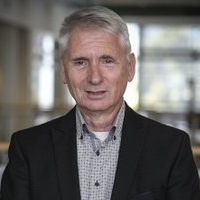
Prof. Steinbusch is appointed as Emeritus Professor in Cellular and Translational Neuroscience at University of Maastricht (UM) in the Netherlands. Currently, he is Coordinator of the China Scholarship Council PhD Program at UM comprising close to 324 PhD students and Strategic Advisor for China policies at Ruhr University Bochum, Germany. He is Co-Chair of the IBRO-ECC Mentorship Initiative to train PhD students and postdocs as an international group to write commissioned review articles. He is Founding and Current Editor-in-Chief of the Journal of Chemical Neuroanatomy, current SCI: 3.1, by Elsevier, since 1984. He is co-organizer of the Bright Focus Foundation initiated Alzheimer Fast Track Annual 4 days' workshop for young career scientists for 23 years. He is Fellow of the Indian Society for Neuroscience. He is Past-President of the Neurotoxicity Society. Founding Director of the European Graduate School of Neuroscience (EURON), starting 1997, a gathering of 8 universities in the EUregio and Founding Director of NENS - Network of European Neuroscience Schools. He has been involved as Founding and Full Director of the School for Mental Health and Neuroscience at Maastricht University.
His main research focus is on the neuroanatomical aspects of development and aging in rodent and post-mortem human brain. The general working hypothesis is that pre/peri or postnatal stress could lead to depression, which could alone be an early initiator of further progression of neurodegeneration like AD. The focus is on the role of the Brainstem in the early pathophysiology of AD and the relation between depression and AD using a broad range of techniques, i.e., molecular neurobiology, quantitative neuromorphology, animal behaviour and epigenetics.
He has thus far guided 98 Ph.D. students and published 505 papers. He has been twice coordinating a Marie Curie Early-Stage Training site and coordinator of an Erasmus Mundus + program between 4 European and 3 Japanese Universities. His current Hirsch factor is 103, citations without self-citations 39,840, from 2018: 9,558 and M-factor is 2.3. Citation classic with more than 2,000 citations: Steinbusch H.W.M. Distribution of serotonin immunoreactivity in the rat CNS. Neuroscience 6 (1981) 557-618, in the Current Contents/ Life Sciences 32 (1989) 26, p. 17.
For international achievements he received the title of Knight in the Order of the Dutch Lion, 2018. Lifetime Achievement Awards were received from the Italian Neuroscience Society, 2017, from the South Korean Neuroscience Society, 2018 and of the International Society for Serotonin Research, 2018.
Editor: Yana Wei
Production Editor: Ting Xu
Respectfully submitted by the Editorial Office of Journal of Translational Genetics and Genomics